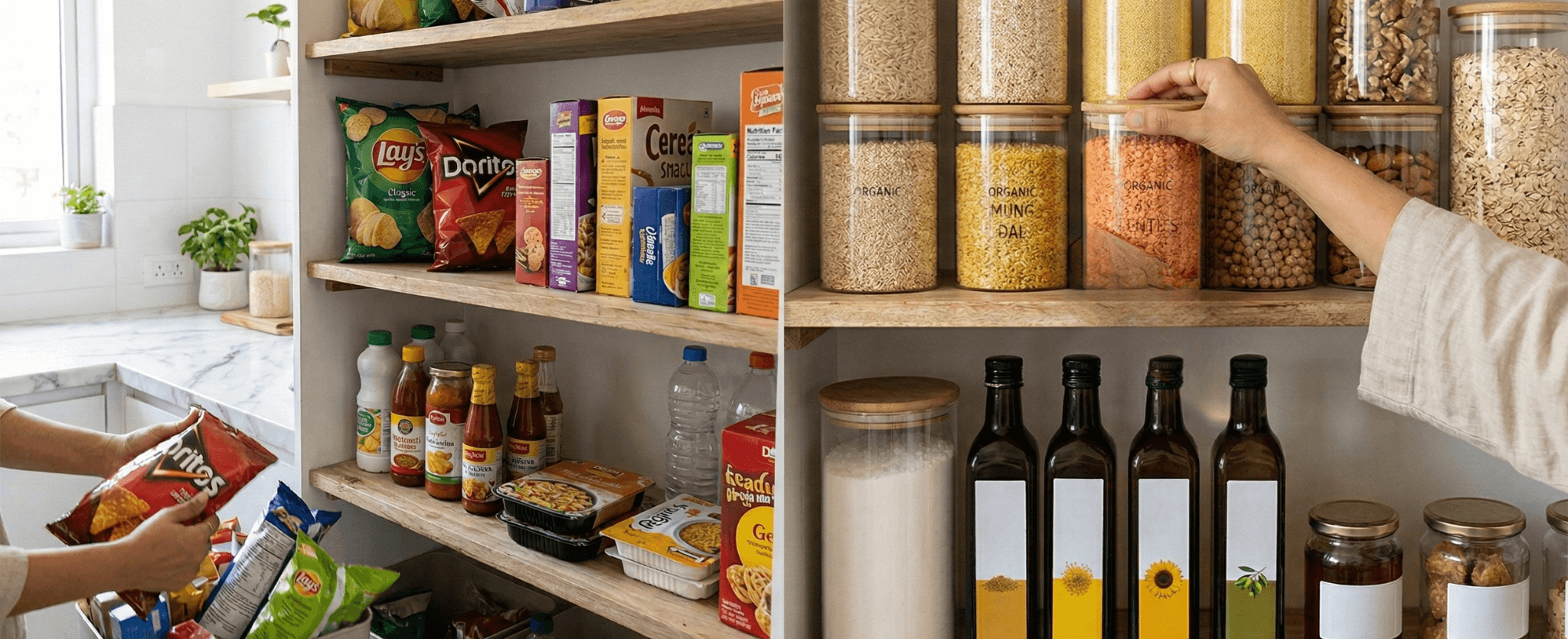
Open your kitchen pantry right now. Really look at what’s inside. Chances are, you’ll find packets of instant noodles, refined white rice, polished dal, refined oil in plastic bottles, white sugar, packets of ready-to-eat foods with ingredient lists you can’t pronounce, and maybe some “healthy” packaged snacks that are actually loaded with hidden sugars and preservatives.
Now imagine opening that same pantry six months from now and finding traditional rice varieties, organic millets, cold-pressed oils in glass bottles, unpolished pulses, natural sweeteners, whole spices, and real food ingredients your great-grandmother would recognize.
The difference between these two pantries isn’t just about organic labels or trendy health foods. It’s about fundamentally changing how you nourish yourself and your family. It’s about choosing food that supports health rather than slowly undermining it.
A healthy pantry makeover sounds overwhelming. Where do you even start? Do you throw everything away and start from scratch? How much will it cost? What if your family resists the changes?
The good news: you don’t have to do everything at once. A successful pantry transformation happens gradually, strategically, and sustainably. Today, we’ll give you a complete, step-by-step roadmap to transform your pantry from processed to organic, without breaking the bank or your family’s patience.
Let’s begin your journey to a pantry that truly nourishes.
Why Your Pantry Needs a Makeover
Before diving into how, let’s understand why this matters.
The Problem with Processed Foods
What “processed” really means:
- Stripped of nutrients through refining (white rice, white flour, refined oil)
- Added chemicals for preservation, color, flavor
- High in refined sugar, unhealthy fats, sodium
- Designed for shelf life, not nutrition
- Often contains hidden ingredients you wouldn’t cook with at home
Health consequences of processed diets:
- Chronic inflammation
- Blood sugar imbalances
- Weight gain and obesity
- Reduced nutrient intake
- Increased risk of diabetes, heart disease, cancer
- Digestive issues
- Reduced energy and vitality
The Benefits of Organic Whole Foods
What you gain:
- Maximum nutrition (vitamins, minerals, fiber intact)
- No pesticide residues or chemical additives
- Better taste and satisfaction
- Sustained energy without crashes
- Support for local and sustainable agriculture
- Connection to traditional food wisdom
- Long-term health protection
Important reality: Organic isn’t magic. But choosing whole, organic foods over heavily processed ones is one of the most impactful health decisions you can make.
Step 1: Pantry Audit (The Reality Check)
You can’t transform what you don’t understand. Start with honest assessment.
The Pantry Audit Process
Set aside 30 minutes and:
- Empty everything: Take every single item out of your pantry
- Create categories: Grains, oils, pulses, sweeteners, spices, snacks, ready-to-eat, condiments
- Read labels: Check every processed item for ingredients
- Make three piles:
- Keep: Whole foods, organic items, healthy staples
- Replace gradually: Processed staples you use regularly
- Discard/donate: Junk food, expired items, things you never use
Red Flags to Look For
On ingredient labels:
- More than 5 ingredients (especially unpronounceable ones)
- “Refined” anything (oil, flour, sugar)
- Artificial colors (tartrazine, sunset yellow, etc.)
- Preservatives (sodium benzoate, potassium sorbate)
- High fructose corn syrup
- Trans fats or hydrogenated oils
- Excessive sodium (more than 400mg per serving)
- Sugar listed in first 3 ingredients
Physical signs:
- Expired or near-expiry dates
- Plastic packaging (especially for oils)
- No ingredient list or nutritional info
- Items you bought but never used
Your Audit Results
After auditing, you’ll likely find:
- 60-80% of packaged items are heavily processed
- Many items expired or rarely used
- Duplicates (3 half-empty oil bottles, 2 types of rice barely touched)
- Impulse purchases gathering dust
Don’t feel guilty. This is normal. You’re identifying the problem so you can fix it.
Step 2: Prioritize What to Replace First
You can’t replace everything at once. Strategic prioritization ensures success.
The Priority Framework
Replace in this order:
Tier 1 – Daily Staples (Month 1): Items you use every single day have the highest impact on health.
- Primary cooking oil
- Main rice variety
- Main dal/pulse
- Salt and sugar
Tier 2 – Weekly Staples (Month 2): Items used several times a week.
- Secondary grains (wheat, millets)
- Other pulses
- Spices used regularly
- Cooking basics
Tier 3 – Specialty Items (Month 3+): Items used occasionally.
- Special occasion ingredients
- Baking supplies
- Snacks and treats
- Condiments
High-Impact Swaps
These changes give maximum health benefit:
- Refined oil → Cold-pressed oil: Removes trans fats, adds nutrients
- White rice → Traditional rice varieties: Adds fiber, minerals, lowers GI
- Polished dal → Unpolished dal: Retains nutrients and fiber
- White sugar → Jaggery/natural sweeteners: Adds minerals, reduces glycemic impact
- Table salt → Quality salt: Better mineral profile (but iodine consideration!)
Step 3: The Category-by-Category Replacement Guide
Let’s tackle each pantry category systematically.
Cooking Oils: The Foundation Swap
Out: Refined vegetable oil, blended oils, oils in plastic bottles
In: Cold-pressed, wood-pressed oils in glass/metal
Recommended swaps:
- Daily cooking: Cold-pressed sesame oil or groundnut oil
- South Indian cooking: Sesame oil
- General purpose: Groundnut oil
Why it matters: You use oil daily. Refined oils are one of the most harmful processed foods. Cold-pressed oils retain nutrients and healthy fats.
Budget tip: Buy one good oil first, add variety later
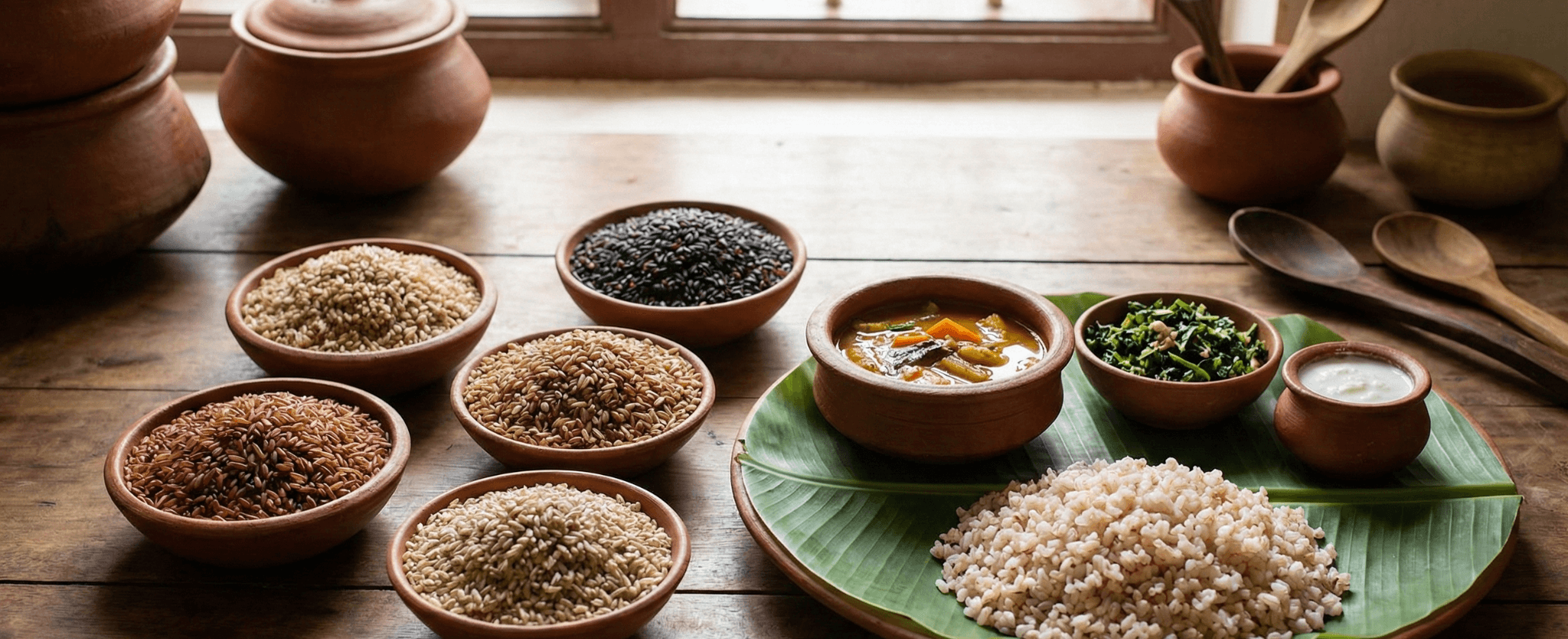
Rice: The Daily Grain Transformation
Out: Polished white rice (often old, chemically treated)
In: Traditional, organic rice varieties
Recommended swaps:
- For diabetics/weight loss: Kattuyanam rice (GI 48-52)
- For women’s health: Poongar rice
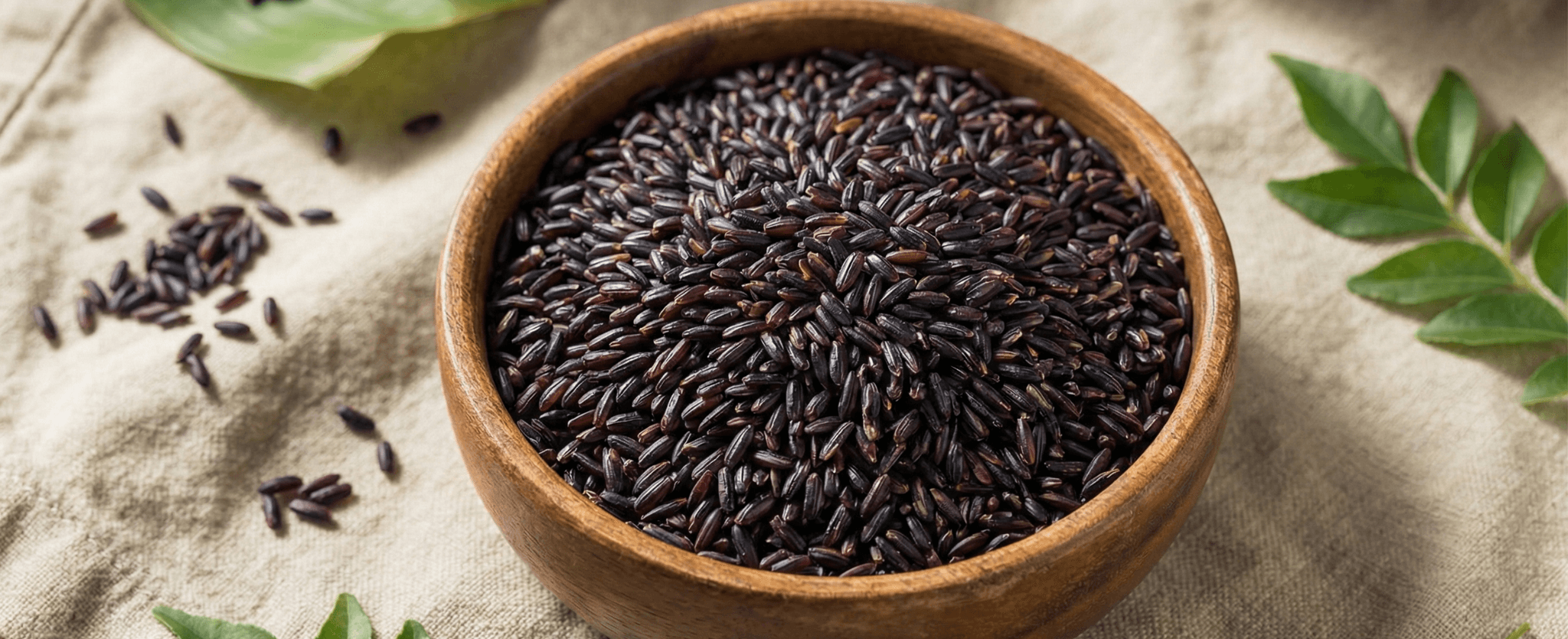
- For overall nutrition: Red rice or black rice
- For aromatic preference: Thooyamalli rice
- Browse all options: Traditional rice varieties
Transition strategy: Mix 50-50 with white rice initially, gradually increase proportion
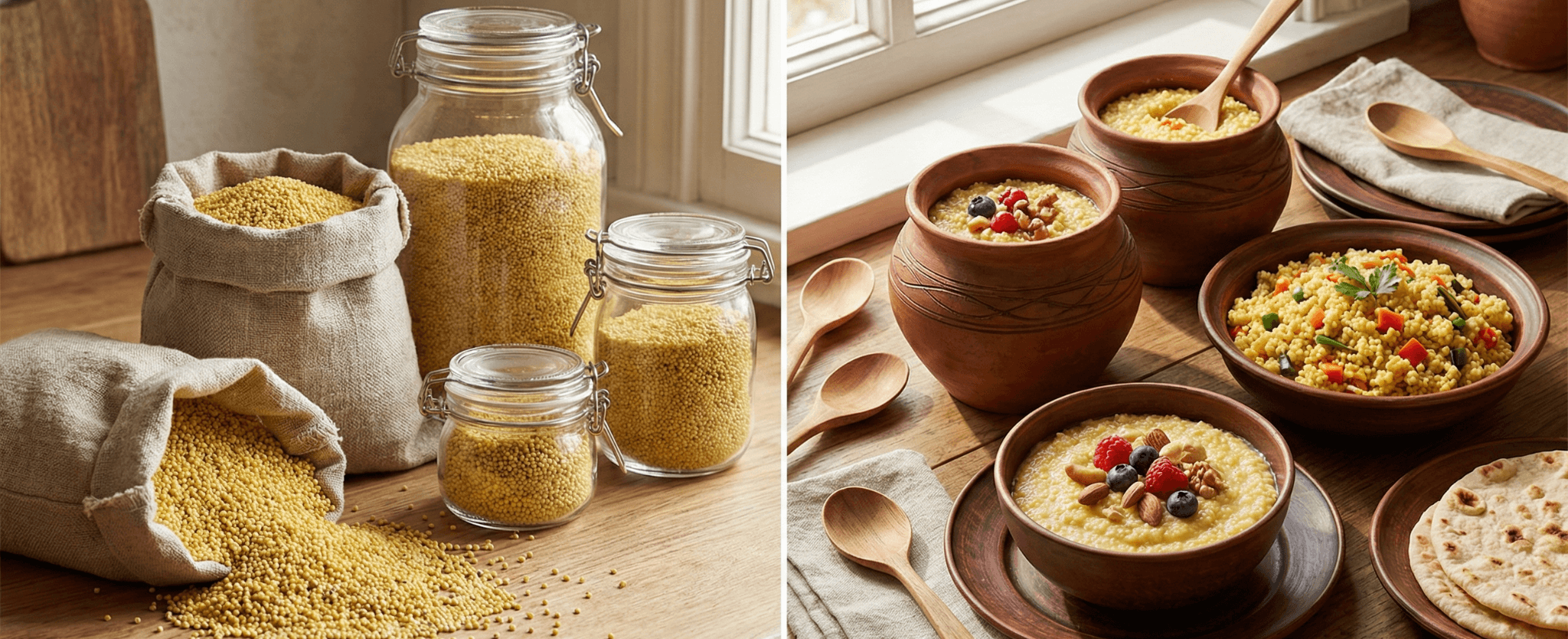
Millets: Adding Nutritional Diversity
Out: Relying solely on rice and wheat
In: Rotate various millets
Start with these:
- Easiest to cook: Foxtail millet
- For fasting days: Barnyard millet
- For iron needs: Little millet
- For calcium: Ragi (finger millet)
- For winter: Pearl millet
- Explore all: Organic millets
How to start: One millet variety, one meal per week. Gradually increase.
Pulses and Lentils: Protein Power
Out: Polished, shiny dal (nutritious outer layer removed)
In: Unpolished, organic pulses
Essential swaps:
Difference you’ll notice: Slightly longer cooking time, more fiber, better nutrition
Sweeteners: Breaking Sugar Addiction
Out: White refined sugar
In: Natural, unrefined sweeteners
Healthy alternatives:
- Country sugar (jaggery powder)
- Palm sugar
- Organic honey (from our honey range)
- Dates (for smoothies, energy balls)
Transition tip: Don’t go cold turkey. Gradually reduce overall sweetness while switching to natural options.
Salt: A Nuanced Choice
Out: Iodized table salt with anti-caking agents (for some uses)
In: Quality natural salt
Smart approach:
- Keep iodized salt for family meals (iodine is important!)
- Natural sea salt (non-iodized) for finishing, special preparations
- Rock salt for fasting
Read our complete guide: Iodized vs Non-Iodized Salt for detailed decision-making
Spices: Fresh and Whole
Out: Old, ground spices in plastic (losing potency and flavor)
In: Whole spices, freshly ground
Essential organic spices:
Pro tip: Buy whole spices, grind small batches as needed for maximum freshness
Snacks: The Toughest Category
Out: Packaged chips, biscuits, instant noodles, ready-to-eat
In: Homemade or minimally processed alternatives
Better snack options:
- Traditional murukku
- Roasted nuts (buy plain, roast at home)
- Fresh fruits
- Flattened rice (poha) for quick upma
- Homemade energy balls with dates and nuts
Reality check: This is the hardest transition. Start slow. Replace one snack at a time.
Flours: Beyond White Flour
Out: Refined white flour (maida), old wheat flour
In: Fresh, whole grain flours
Healthy flour options:
- Whole wheat atta (buy fresh monthly)
- Ragi flour
- Pearl millet flour
- Poongar rice flour
- Black rice flour
Storage: Keep flours refrigerated, buy in smaller quantities (flour goes rancid faster than whole grains)
Step 4: Budget-Friendly Transition Strategies
Organic costs more. Here’s how to manage it.
The 70-30 Rule
Spend strategy:
- 70% of budget on Tier 1 items (daily staples) – buy organic
- 30% on everything else – buy organic when possible, conventional when necessary
This ensures: Maximum health impact within budget constraints
Money-Saving Tactics
- Buy in bulk for non-perishables:
- Rice (5-10 kg)
- Pulses (2-5 kg per variety)
- Whole spices
- Natural sweeteners
- Buy less of perishables:
- Flours (1 month supply maximum)
- Ground spices (grind fresh from whole)
- Eliminate waste:
- Follow proper grain storage guidelines
- Use FIFO (first in, first out)
- Plan meals to use everything
- Cut out junk, invest in real food:
- Money saved on chips, biscuits, sodas, instant foods
- Redirect to quality organic staples
- Often breaks even or saves money!
- Grow what you can:
- Herbs in pots (coriander, mint, curry leaves)
- Sprouts from whole moong, chana
- Reduces grocery bills
Phase-Wise Investment
Month 1 (~₹3000-4000):
- 1 cold-pressed oil (500ml-1L)
- 1 traditional rice variety (5 kg)
- 1-2 unpolished dals (2 kg total)
- Country sugar/jaggery (1 kg)
- 2-3 essential spices
Month 2 (~₹2000-3000):
- 1 millet variety (2 kg)
- 2 more pulses
- Natural salt
- Additional spices
- Replace processed snacks
Month 3 onwards (~₹2000-2500/month):
- Add variety in rice and millets
- Expand spice collection
- Organic honey
- Specialty flours
- Maintenance and restocking
Total transformation: ₹7000-9000 over 3 months, then ₹2000-3000 monthly for a family of 4
Step 5: Reorganize and Store Properly
A makeover isn’t complete until organization supports your new choices.
Storage Containers You Need
Essential investments:
- 3-4 large airtight containers (5-10 kg capacity) for rice, millets
- 6-8 medium containers (1-2 kg) for different pulses
- 4-6 small containers for spices
- Glass bottles for oils
- Smaller containers for daily use
Material preferences:
- Stainless steel (opaque, durable, best for long-term)
- Glass (good visibility, non-reactive)
- Food-grade plastic (budget option, but not for oils)
Organization System
By category:
- Grains section: All rice varieties, millets together
- Protein section: All pulses and lentils
- Cooking essentials: Oils, spices, salt, sugar
- Quick access: Daily-use containers near stove
- Bulk storage: Larger quantities in cool, dark area
Labeling:
- Type of grain/pulse
- Date of purchase
- Best before date (6-9 months from purchase for most items)
See our complete guide: Storing Organic Rice and Millets
Creating Visual Appeal
Why it matters: An attractive pantry encourages use and maintains motivation
Simple beautification:
- Uniform containers create visual calm
- Clear labels make cooking easier
- Visible healthy options = more likely to use them
- Group similar items together
Step 6: Getting Family Buy-In
The best pantry makeover fails if family resists.
Communication Strategies
Before starting:
- Explain why (health, energy, long-term benefits)
- Involve family in decision-making
- Address concerns openly
- Set realistic expectations
During transition:
- Make changes gradual, not overnight
- Cook delicious meals (nutrition alone doesn’t motivate)
- Acknowledge that some things taste different initially
- Celebrate small wins
Managing Different Family Members
Children:
- Involve in cooking
- Make it fun (trying new grains, colors like black rice)
- Don’t eliminate treats entirely (homemade healthy treats)
- Lead by example
Spouse/Partner:
- Share the “why” backed by health data
- Show budget neutrality (or savings)
- Request a trial period (3 months)
- Make favorite dishes with new ingredients
Elderly Parents:
- Connect to their childhood foods (they ate traditional varieties!)
- Emphasize digestibility
- Start with familiar preparations
- Go even slower with changes
Dealing with Resistance
“This tastes different!” Response: “Let’s give it 2 weeks. Taste buds adapt. If you still don’t like it after that, we’ll try something else.”
“This takes longer to cook!” Response: “Let’s use pressure cooker. Or cook bigger batches and store. We’ll find a rhythm.”
“Why spend more money?” Response: “Let me show you what we save by cutting junk food. And which would you rather spend on – good food now or medical bills later?”
“I want my regular snacks!” Response: “Let’s keep some treats but try healthier options too. Not all or nothing.”
Step 7: Maintaining Your Healthy Pantry
Transformation is only the beginning. Maintenance ensures long-term success.
Monthly Pantry Check
Set a recurring reminder:
- Review what’s running low
- Check for any signs of pests or moisture
- Rotate stock (use older items first)
- Plan next month’s purchases
- Adjust quantities based on usage patterns
Quarterly Deep Audit
Every 3 months:
- Empty and clean containers
- Wash and sun-dry containers
- Check all stored items for freshness
- Discard anything past prime
- Reorganize as needed
- Assess what worked and what didn’t
Avoiding Backsliding
Common pitfalls:
- Busy weeks lead to convenience food creep
- Sale on processed items tempts you
- Family pressure for old favorites
- Travel breaks the routine
Prevention:
- Meal prep on weekends (cook extra, freeze)
- Keep quick healthy options ready (poha, upma ingredients)
- Stay focused on how good you feel
- Plan for indulgences (occasional treats are fine)
- Return to basics after disruptions
Continued Learning
Stay motivated:
- Try one new grain or millet monthly
- Experiment with traditional recipes
- Connect with others making similar changes
- Read about traditional food systems
- Visit farmers markets when possible
Common Challenges and Solutions
Challenge 1: “Organic is too expensive”
Solutions:
- Focus on Tier 1 items only initially
- Eliminate processed junk (frees up budget)
- Buy in bulk, buy in season
- Grow herbs and sprouts
- Remember: health is an investment, not an expense
Challenge 2: “I don’t have time to cook from scratch”
Solutions:
- Batch cooking on weekends
- Pressure cooker makes everything faster
- Prep-ahead strategies (soak grains overnight)
- Start with one simple swap, not everything
- Simple food is fine (dal-rice doesn’t need to be elaborate)
Challenge 3: “My family won’t eat this”
Solutions:
- Make familiar dishes with new ingredients
- Mix old and new (50-50 rice blend)
- Focus on taste, not just health
- Be patient (taste preferences take 2-3 weeks to shift)
- Don’t preach, just serve good food
Challenge 4: “I don’t know how to cook these ingredients”
Solutions:
- Start with familiar preparations (rice, dal, basic vegetables)
- Follow traditional recipes (grandmothers knew what they were doing!)
- YouTube for visual learning
- Ask older family members
- One new grain at a time (master it before adding another)
Challenge 5: “I keep forgetting and buying processed stuff”
Solutions:
- Shopping list template (stick to it)
- Shop with full stomach (avoid impulse)
- Avoid aisles with processed foods
- Buy online from curated organic stores
- Keep pantry stocked so you’re not desperate
Your 12-Week Pantry Transformation Timeline
A clear timeline keeps you accountable and prevents overwhelm.
Weeks 1-2: Audit and Plan
- Complete pantry audit
- Research replacement options
- Set budget
- Order first batch of organic staples
- Start using while finishing existing items
Weeks 3-4: Begin Tier 1 Swaps
- Switch to cold-pressed oil
- Introduce first traditional rice variety
- Replace primary dal with unpolished version
- Switch to natural sweetener for tea/coffee
Weeks 5-6: Complete Tier 1
- Add second oil variety
- Try first millet variety
- Switch salt strategy (iodized + natural)
- Replace all refined sugar with jaggery/country sugar
Weeks 7-8: Begin Tier 2
- Add more pulse varieties
- Introduce second millet
- Start replacing processed snacks
- Switch to whole spices
Weeks 9-10: Expand Variety
- Add specialty rice (for special occasions)
- Try more millet varieties
- Experiment with different natural sweeteners
- Add organic honey
Weeks 11-12: Fine-Tune and Maintain
- Assess what worked and what didn’t
- Adjust quantities based on usage
- Establish sustainable buying routine
- Celebrate your success!
Final Thoughts: The Pantry as Foundation
Your pantry isn’t just a storage space. It’s the foundation of your family’s health. Every meal begins with ingredients from that pantry. Every choice you make while stocking it ripples out to affect energy levels, disease risk, mood, longevity.
A healthy pantry makeover isn’t about perfection. You don’t need to eliminate every processed item or buy everything organic overnight. It’s about direction, not destination.
When you replace refined oil with cold-pressed, you’re choosing nourishment over convenience. When you swap white rice for traditional varieties, you’re honoring both health and heritage. When you eliminate packaged snacks for real food, you’re teaching children what real food looks like.
Small changes compound. One swap leads to another. After three months, your pantry looks completely different. After six months, your health markers improve. After a year, you can’t imagine going back.
Start small. Start today. Pick one category from this guide and make that first swap. Next week, make another. Build momentum gradually.
Your grandmother’s pantry probably looked a lot like the healthy pantry you’re building: whole grains, unpolished pulses, cold-pressed oils, natural sweeteners, real spices. She didn’t call it “organic” or “healthy eating.” She just called it food.
You’re not doing anything radical. You’re just returning to what food should be.
Ready to start your pantry makeover? Browse our complete range of organic staples:
Cooking Oils:
Traditional Rice:
- Kattuyanam Rice (Low GI)
- Poongar Rice (Women’s Health)
- Red Rice & Black Rice (Antioxidants)
- Thooyamalli Rice (Aromatic)
- Browse All Rice
Organic Millets:
Unpolished Pulses:
Natural Sweeteners:
Quality Salt:
Organic Spices:
Flours:
Start your transformation today. Your healthier pantry (and healthier you) awaits!
Pantry Makeover Checklist:
Week 1:
- [ ] Pantry audit complete
- [ ] Priority swaps identified
- [ ] Budget planned
Week 2-4:
- [ ] Cold-pressed oil purchased
- [ ] Traditional rice variety added
- [ ] Unpolished dal in pantry
- [ ] Natural sweetener ready
Week 5-8:
- [ ] First millet variety tried
- [ ] More pulse varieties added
- [ ] Whole spices stocked
- [ ] Storage containers organized
Track your progress and celebrate each swap!