South Indian Food Is Much More Than Idli and Dosa
When people think of South Indian dishes, Idli and Dosa are often the first foods that come to mind. They are undoubtedly popular, but South Indian cuisine has a much wider variety of flavours, textures, grains and cooking styles.
Across Tamil Nadu, Kerala, Karnataka and other southern regions, traditional kitchens have long used rice, lentils, millets, coconut, spices and seasonal ingredients to create simple yet satisfying meals. Steaming, roasting, fermenting and slow cooking are also common techniques that give these dishes their distinctive character.
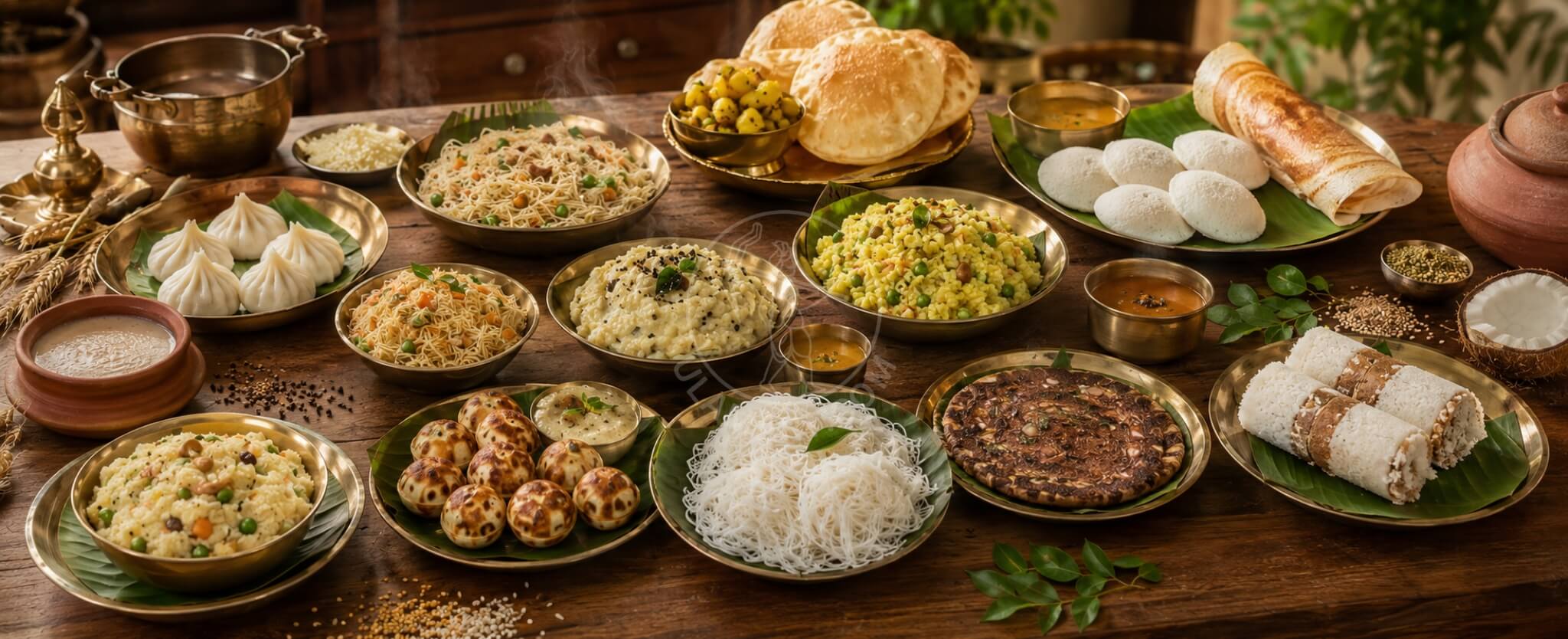
From soft Ven Pongal and delicate Idiyappam to crispy Paniyaram, earthy Ragi Adai, steamed Kolukattai and comforting Puttu, there are plenty of South Indian dishes other than idli and dosa worth exploring.
The best part is that many of these dishes are easy to adapt. Traditional rice varieties can be used for some rice-based recipes, while millets can bring new flavours and textures to familiar preparations.
So, if you are looking beyond the usual Idli-Dosa combination, here are some delicious South Indian foods that can be enjoyed not just across India, but anywhere in the world.
1. Ven Pongal – A Bowl of Comfort
Ven Pongal is one of the simplest and most comforting South Indian breakfast recipes. Traditionally made with rice and moong dal, it is cooked until soft and creamy, then flavoured with ghee, black pepper, cumin, ginger and curry leaves.
Its mild spices and soft texture make it easy to enjoy even if you are trying South Indian food for the first time. It can be served with coconut chutney, sambar or simply enjoyed on its own.
Simple way to make Ven Pongal
Cook rice and moong dal together until soft. Prepare a tempering with ghee, cumin, crushed pepper, ginger, curry leaves and cashews. Mix everything together and adjust the consistency with hot water if needed.
Try a traditional grain twist: Instead of regular white rice, you can experiment with millet varieties such as foxtail millet (Thinai), little millet (Saamai), barnyard millet (Kuthiraivali) or kodo millet (Varagu). Millet-based Pongal is also a good way to introduce traditional grains into an everyday meal. Millet-based Pongal variations are well established in South Indian recipe collections.
2. Idiyappam – Delicate South Indian String Hoppers
Idiyappam, also called string hoppers or nool puttu, is made by pressing rice-flour dough into thin strands and steaming them. The result is a light, delicate dish with a soft texture.
It is particularly interesting for people who enjoy noodles or other steamed grain-based foods. Idiyappam can be served with vegetable stew, coconut milk, kurma or a mildly spiced curry.
Simple way to make Idiyappam
Mix Idiyappam flour with salt and hot water to form a soft dough. Place the dough in an idiyappam press and squeeze thin strands onto an idli plate or steaming tray. Steam until cooked and serve hot.
But regular rice flour is not the only option.
You can make Idiyappam with traditional rice varieties or millet flours for a different colour, flavour and texture. Ragi Idiyappam, for example, is a popular variation made with finger millet flour and rice flour.
Traditional rice varieties such as red rice can also add a naturally earthy flavour to this familiar dish.

3. Paniyaram and Ragi Adai – Small Changes, Big Flavour
Paniyaram, also known as kuzhi paniyaram or appe, is a fun South Indian dish cooked in a special pan with small round cavities. It develops a lightly crisp exterior while remaining soft inside.
It can be savoury or sweet, but a simple savoury version with onion, curry leaves and green chilli makes an excellent breakfast or evening snack.
Simple Paniyaram
Prepare a batter using idli rice and urad dal or use suitable leftover fermented batter. Add finely chopped onion, curry leaves, green chilli and salt. Pour the batter into a lightly greased paniyaram pan and cook until golden on both sides.
For a millet-based variation, Little Millet Paniyaram is another option. Saamai flour can be combined with rice flour or batter and cooked in the same type of pan.
Ragi Adai
Ragi Adai is another wonderful way to enjoy finger millet. Unlike the soft and fluffy texture of Idli, Ragi Adai is typically prepared as a thin, rustic flatbread with a slightly crisp outside and earthy millet flavour.
Mix ragi flour with finely chopped onion, green chilli, curry leaves, grated vegetables and salt. Add water to make a soft dough, flatten portions on a greased surface and cook on a tawa until done.
The beauty of Ragi Adai is its flexibility. You can make it plain, add vegetables or experiment with other millet flours depending on what you have at home.
4. Kolukattai, Semiya and Kambu Koozh – Traditional Foods with a Modern Appeal
Some traditional South Indian food may sound unfamiliar to people outside the region, but their simplicity makes them surprisingly easy to appreciate.
Kolukattai – Steamed Dumplings
Kolukattai is a steamed dumpling generally made with rice flour. It can be prepared in savoury or sweet versions and shaped into small balls or dumplings.
For a simple savoury version, make a soft dough with rice flour and hot water. Shape it into small pieces and steam until cooked. You can also add grated coconut, spices or cooked lentils depending on the style.
Because it is steamed and uses simple ingredients, Kolukattai offers a completely different experience from the fried or baked dumplings familiar in many other cuisines.
Traditional rice flours can also be used to give Kolukattai a more distinctive flavour.
Semiya – South Indian-Style Vermicelli
Semiya is the South Indian name commonly used for vermicelli. It can be transformed into a quick breakfast such as Semiya Upma or prepared in other sweet and savoury forms.
For Semiya Upma, roast vermicelli lightly, then cook it with vegetables, onion, curry leaves and simple spices. The result is quick, light and easy to customize.
Millet-based or ragi semiya can also be used as an alternative. Millet-based semiya preparations are already part of the wider range of traditional and modern South Indian breakfast recipes.
Kambu Koozh – A Cooling Traditional Porridge
Kambu Koozh, also called Kammang Kool, is a traditional fermented pearl millet porridge. It is especially associated with warm-weather eating and is valued for its cooling, refreshing nature.
Pearl millet flour is cooked into a porridge, allowed to ferment and then mixed with water or buttermilk to reach the desired consistency. It is usually enjoyed with simple accompaniments.
For someone discovering South Indian food, Kambu Koozh is an excellent example of how traditional cuisine can be simple, grain-based and completely different from the usual breakfast dishes. Pearl millet koozh is also documented among traditional South Indian millet preparations.
5. Puttu and Millet Roti – Simple, Wholesome and Versatile
Puttu – Steamed Layers of Rice and Coconut
Puttu is one of the most recognisable traditional foods from Kerala. It is made by combining flour with water and steaming it in layers, usually along with grated coconut.
The traditional version uses rice flour varieties like mappillai samba, karuppu kavuni, rakthasali, poongar and more, but Ragi Puttu and other millet-based versions can also be prepared. Ragi Puttu, for example, combines finger millet flour and coconut and is cooked by steaming.
A basic Puttu is surprisingly easy to understand: moisten the puttu flour, layer it with coconut and steam it until cooked.
It can be served with kadala curry, vegetables, banana or other accompaniments. This combination of a mildly flavoured steamed grain preparation with a strongly flavoured side dish is part of what makes Puttu so enjoyable.
Millet Roti
Millet Roti offers another way to enjoy traditional grains without using wheat.
Ragi, pearl millet, foxtail millet and other millet flours can be used to prepare different styles of flatbreads. Depending on the flour, the roti can have an earthy flavour and rustic texture.
A simple version requires millet flour, salt and hot water. Knead into a soft dough, flatten carefully and cook on a hot tawa.
For people around the world who already enjoy flatbreads, Millet Roti can be an easy introduction to South Indian grains.
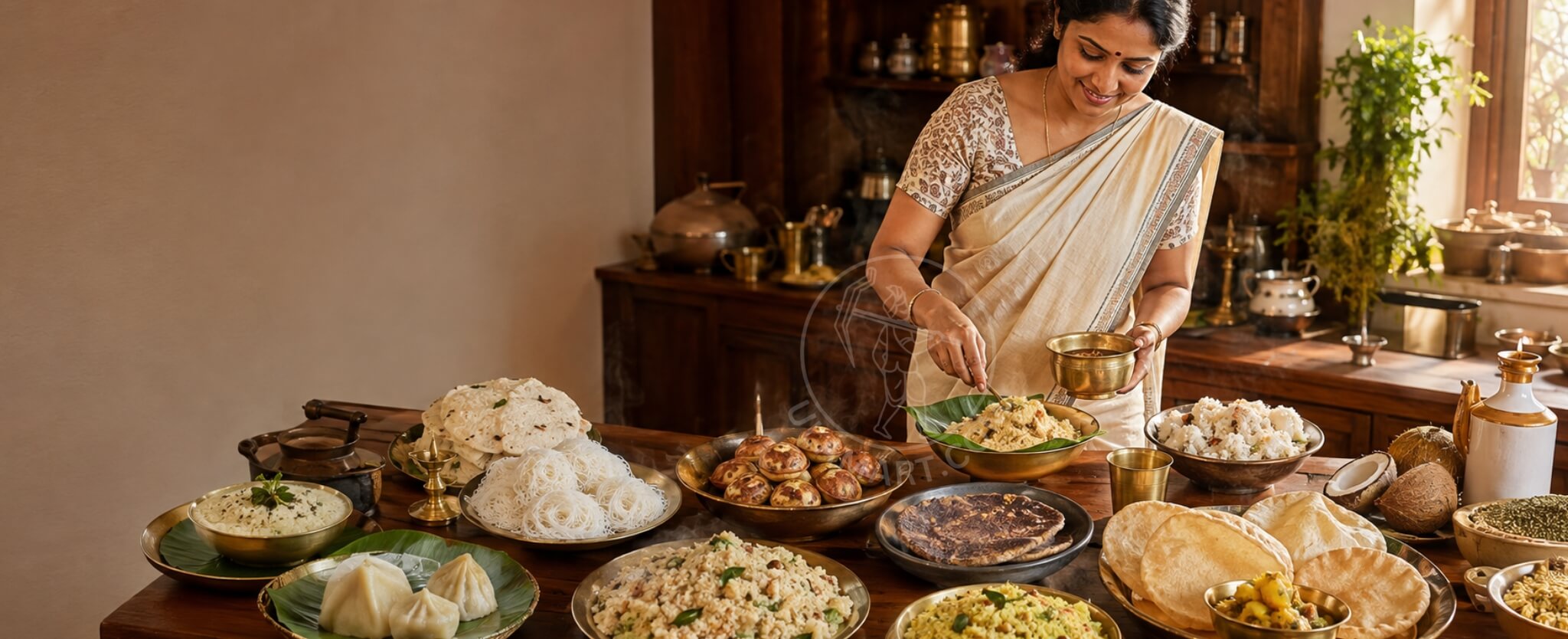

6. Upma, Kichidi and Poori with Potato Masala – Familiar Comfort Foods
Upma – One Dish, Many Possibilities
Upma is one of the easiest South Indian breakfast recipes to adapt to different ingredients. The familiar version uses semolina, but variations can be prepared with millet, rice flakes, vermicelli and other grains.
A basic vegetable Upma starts with roasting the base ingredient, followed by cooking it with water, onion, vegetables, mustard seeds, curry leaves and other simple seasonings.
Millet Upma can be prepared using foxtail millet, little millet, kodo millet or other varieties. Rice flakes and millet flakes can also create quick alternatives with different textures.
This adaptability makes Upma particularly suitable for modern kitchens where people want traditional flavours but also want to experiment with different grains.
Kichidi – A One-Pot Meal
South Indian-style Kichidi is another comforting one-pot preparation. Rice or other grains are cooked together with dal, vegetables and mild spices until soft.
For a simple version, sauté vegetables and spices, add washed rice and moong dal, pour in water and cook until soft. The finished dish should be moist and comforting rather than dry.
You can replace regular rice with traditional rice varieties or millets such as little millet or foxtail millet. Such substitutions allow you to enjoy the same familiar one-pot format while exploring different grains. South Indian recipe collections include millet-based Kichidi variations such as little millet Kichidi.
Poori with Potato Masala
Poori with potato masala is perhaps one of the easiest combinations for anyone new to South Indian food because both components are familiar and comforting.
Poori is a deep-fried, puffed wheat bread, while the accompanying potato masala is generally prepared with cooked potatoes, onion, mustard seeds, curry leaves, green chilli and turmeric.
The combination is particularly popular as a breakfast or special meal. Unlike the lighter steamed dishes mentioned earlier, Poori brings a crisp, indulgent texture to the table.
For those exploring South Indian cuisine globally, this is a good reminder that the region’s food is not limited to steamed rice-based dishes. It includes a wide range of textures, from soft and creamy to crisp and fluffy.
Why These South Indian Dishes Deserve a Place on Every Table
One of the biggest strengths of South Indian cuisine is its ability to work with simple ingredients while creating completely different eating experiences.
Consider the variety:
- Ven Pongal is soft, creamy and mildly spiced.
- Idiyappam is delicate, steamed and noodle-like.
- Paniyaram has crisp edges and a soft centre.
- Ragi Adai has an earthy millet flavour and rustic texture.
- Kolukattai brings the simplicity of steamed dumplings.
- Semiya is quick, versatile and familiar.
- Kambu Koozh offers a traditional fermented millet preparation.
- Puttu combines steamed flour with coconut.
- Millet Roti brings traditional grains into a flatbread format.
- Upma can be adapted to several grains and ingredients.
- Kichidi is a comforting one-pot meal.
- Poori with potato masala offers a crisp and satisfying combination.
These differences are exactly what make South Indian dishes interesting to people beyond the region.
They also show that traditional food does not have to remain unchanged. Using traditional rice varieties, millet flours, millet flakes or different grains can create new versions while retaining the basic character of familiar dishes.
Bringing South Indian Flavours to the World
South Indian cuisine has everything needed to appeal to a global audience: simple ingredients, distinctive flavours, varied textures and cooking methods that range from steaming and fermenting to roasting and frying.
For someone outside South India, starting with familiar formats can make the cuisine easier to explore. Idiyappam can be thought of as delicate steamed noodles, Paniyaram as small savoury bites, Kolukattai as steamed dumplings, Puttu as layered steamed grain and coconut, and Millet Roti as a traditional grain-based flatbread.
At the same time, these comparisons should not take away from their South Indian identity. Their ingredients, preparation methods and traditional accompaniments are what give them their unique character.
And there is plenty of room for experimentation. Try Ven Pongal with a traditional millet, Idiyappam with a traditional rice flour, Ragi Adai with vegetables, Puttu with finger millet, or Upma with millet flakes.
If you are looking for easy South Indian recipes beyond Idli and Dosa, these dishes are a great place to start. They show just how diverse South Indian food can be and why its flavours deserve to be enjoyed by everyone, wherever they live.