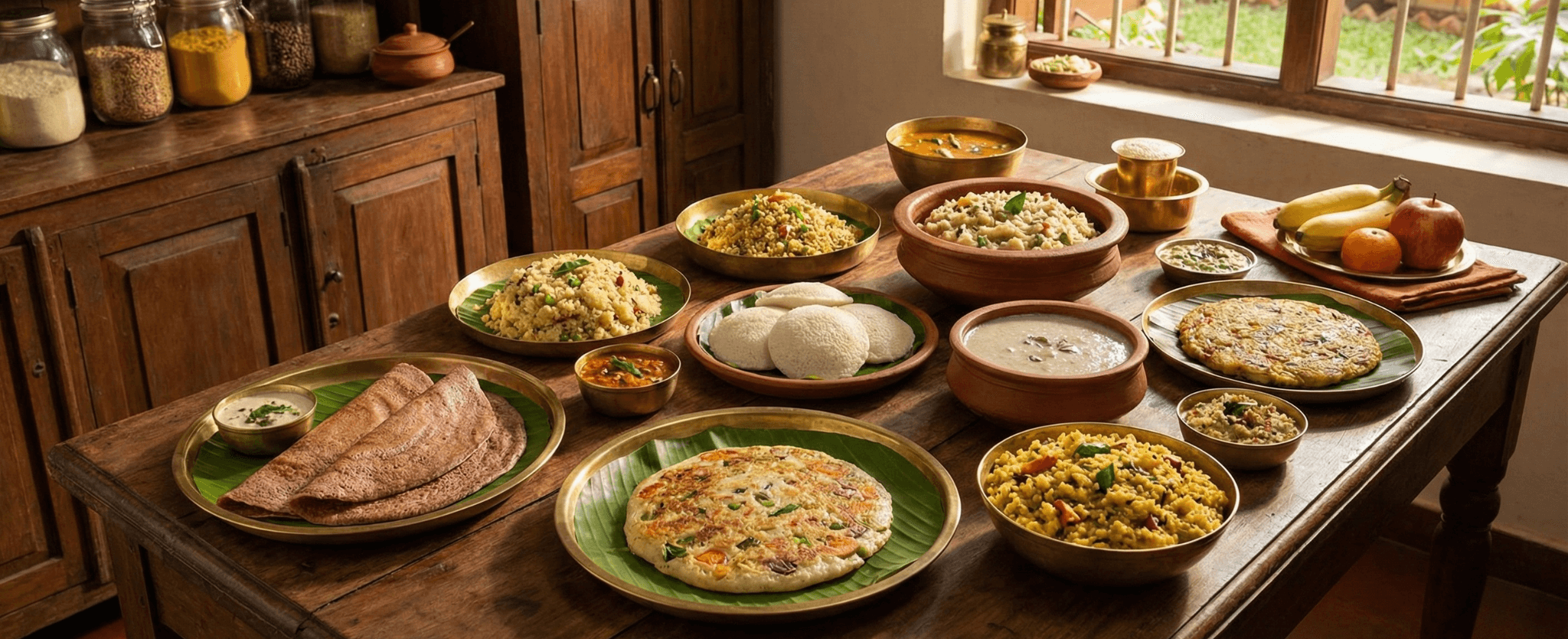
Here are 7 yummy & tasty millet recipes for breakfast:
- Thinai Arisi Pongal (Foxtail Millet Pongal)
- Ragi Dosa (Finger Millet Dosa)
- Varagu Arisi Upma (Kodo Millet Upma)
- Pani Varagu dosa (Proso Millet dosa)
- Kambu Kool (Pearl Millet Porridge)
- Kuthiraivali Kozhukattai (Barnyard Millet Dumplings)
- Samai Khichdi (Little Millet Khichdi)
Millets are traditional grains that have been part of Indian diets for centuries. Long before polished rice and wheat became common, Millets were the regular ingredient in everyday meals, valued for the nourishment and steady energy they provided. These grains are naturally rich in fibre and essential nutrients, and they digest slowly, helping maintain balanced energy levels throughout the day.
What makes millets especially suitable for modern lifestyles is their versatility. They can be easily used in familiar dishes like pongal, idli, dosa, and upma without changing the taste of traditional cooking.
Including millets in breakfast helps support digestion, keeps you full for longer, and offers a simple way to move towards healthier eating while staying rooted in traditional food habits.
Here are 7 yummy & tasty millet recipes for breakfast:
1. Thinai Arisi Pongal (Foxtail Millet Pongal)
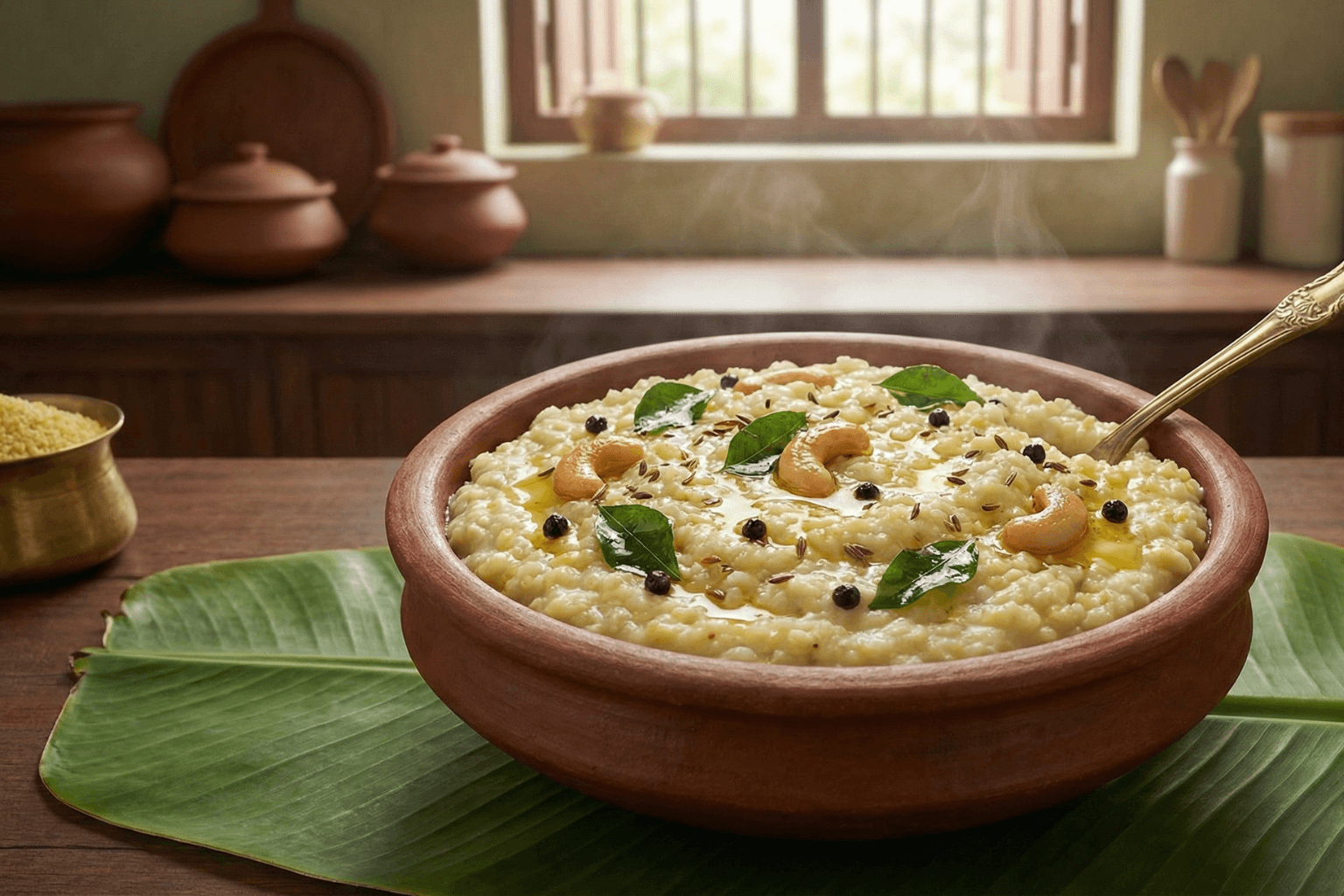
Thinai Arisi Pongal is a healthy alternative to regular rice pongal. It is light on the stomach, rich in fibre, and suitable for daily breakfast, especially for diabetics and health-conscious families.
Ingredients:
Thinai Arisi (Foxtail Millet) – ½ cup, Split yellow moong dal – ¼ cup, Water – 3 to 3½ cups, Ghee – 1½ tbsp, Black pepper (crushed) – 1 tsp, Cumin seeds – 1 tsp, Ginger (finely chopped) – 1 tsp, Cashew nuts – 1 tbsp, Curry leaves, Salt.
Preparation Method:
- Wash and soak foxtail millet for 20 – 30 minutes.
- Dry roast the moong dal until aromatic.
- Add soaked thinai and moong dal to a pressure cooker.
- Add water and salt, mix well, and pressure cook for 3 – 5 whistles or until soft.
- Heat ghee in a small pan.
- Add cumin seeds, crushed pepper, ginger, cashews, and curry leaves.
- Pour this tempering over the cooked pongal and mix well.
Serve hot with coconut chutney or sambar.
Health Benefits of Thinai Millet:
- Low glycemic index – good for diabetics
- High fibre – keeps you full longer
- Easy to digest compared to rice pongal
- Helps maintain steady energy levels
2. Ragi Dosa (Finger Millet Dosa)
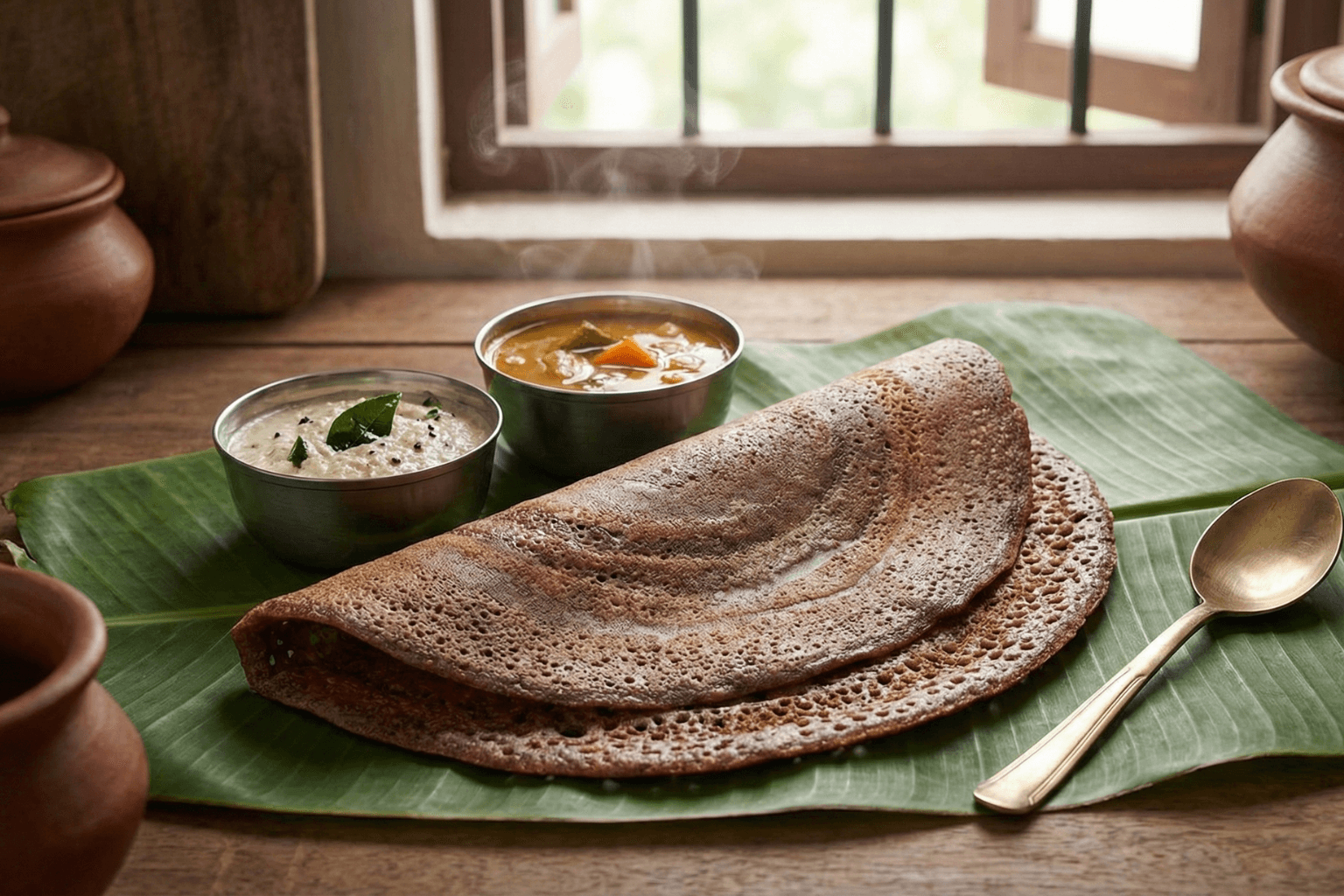
Ragi dosa is a nutritious and filling breakfast made using finger millet. It is naturally rich in calcium and fibre, making it suitable for daily consumption, especially for growing children, elders, and health-conscious families.
Ingredients
Ragi flour – 1 cup, Rice flour – ¼ cup, Onion (finely chopped) – 1 small, Green chilli (finely chopped) – 1, Ginger (grated) – ½ tsp, Cumin seeds – 1 tsp, Curry leaves (chopped), Salt, Water – as needed (thin batter), Oil.
Preparation Method
- In a bowl, add ragi flour, rice flour, salt, cumin seeds, ginger, green chilli, onion, and curry leaves.
- Add water gradually and mix well to form a thin, flowing batter (similar to rava dosa batter).
- Heat a dosa tawa and grease lightly with oil.
- Pour the batter from the outer edge towards the centre.
- Drizzle oil around the dosa and cook on medium flame until crisp.
- Flip if required and cook briefly.
Serve hot with coconut chutney or tomato chutney.
Why Ragi Millet Is a Good Breakfast Choice
- Keeps you full for longer
- Supports bone health due to high calcium
- Helps maintain steady blood sugar levels
- Light yet nourishing
3. Varagu Arisi Upma (Kodo Millet Upma)
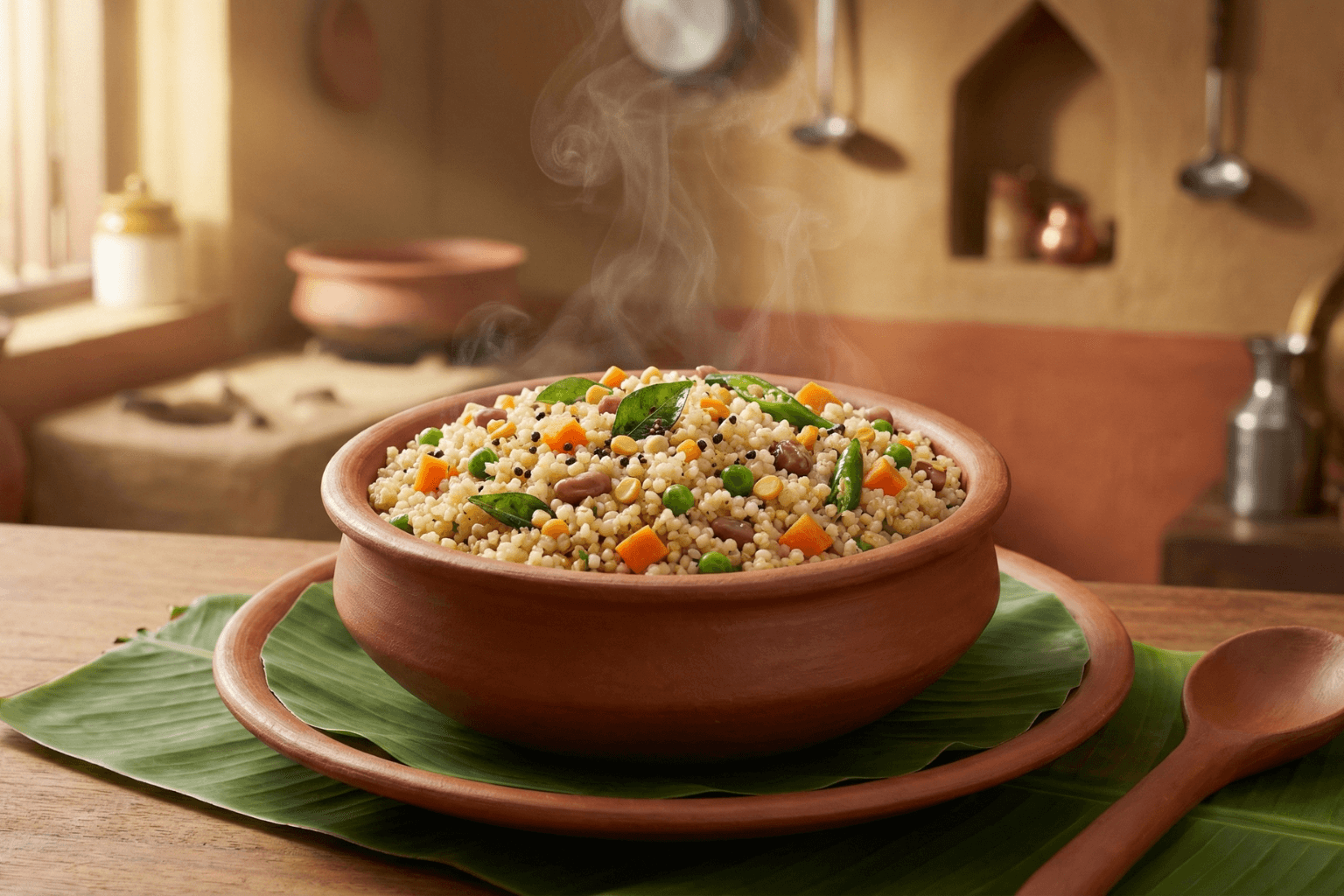
Varagu arisi upma is a wholesome breakfast made using kodo millet, a traditional grain known for its high fibre content and slow digestion. It is a healthy replacement for regular rava upma and works well for daily meals, especially for those looking to reduce polished rice intake.
Ingredients
Varagu (Kodo Millet) – ½ cup, Water – 1½ cups, Onion (finely chopped) – 1 small, Green chilli – 1, Ginger (finely chopped) – ½ tsp, Mustard seeds – 1 tsp, Urad dal – 1 tsp, Chana dal – 1 tsp, Curry leaves – few, Vegetables (carrot, beans, peas – optional) – ¼ cup, Oil – 1½ tbsp, Salt.
Preparation Method
- Wash varagu thoroughly and soak for 20–30 minutes. Drain and keep aside.
- Heat oil in a kadai. Add mustard seeds and let them splutter.
- Add urad dal and chana dal; roast until golden.
- Add ginger, green chilli, curry leaves, and onion. Sauté until onions turn soft.
- Add vegetables (if using) and sauté for a minute.
- Add water and salt; bring it to a boil.
- Add soaked kodo millet, mix well, and cook on low flame with lid closed until the millet absorbs water and turns soft.
- Switch off the flame and let it rest for 5 minutes. Fluff gently before serving.
Serve hot with coconut chutney, lemon pickle or curd.
Health Benefits of Varagu Arisi:
- High in fibre, helps keep you full
- Slow digestion supports stable blood sugar levels
- Light yet nourishing breakfast option
- Easy alternative to rice or rava-based dishes
4. Pani Varagu dosa (Proso Millet dosa)
Panivaragu dosa is a soft and healthy alternative to regular dosa. Made using proso millet, it is light on the stomach, easy to digest, and well suited for daily breakfast. This dosa retains the familiar taste and texture of traditional dosa while offering better fibre and nutrient content.
Ingredients
Pani Varagu (Proso Millet) – 1 cup, Split black Urad dal – ½ cup, Fenugreek seeds – ½ tsp, Salt, Water as needed
Preparation Method
- Take Proso millet, split black urad dal, fenugreek in a bowl, wash thoroughly and soak for 4–5 hours.
- Grind into smooth batter. Add water if needed to get thick batter consistency.
- Add salt, mix well, close and allow it to ferment for 6 to 8 hours.
- Once fermented, gently mix the batter.
- Pour into a greased dosa tawa.
Serve hot with coconut chutney, tomato chutney or sambhar.
How Pani Varagu Millet Is a Good Breakfast Choice
- Easy to digest compared to rice dosa
- Rich anti-oxidants, fibre, proteins keeps you full longer
- Suitable for diabetics when eaten in moderation
- Maintains traditional dosa crispness and taste
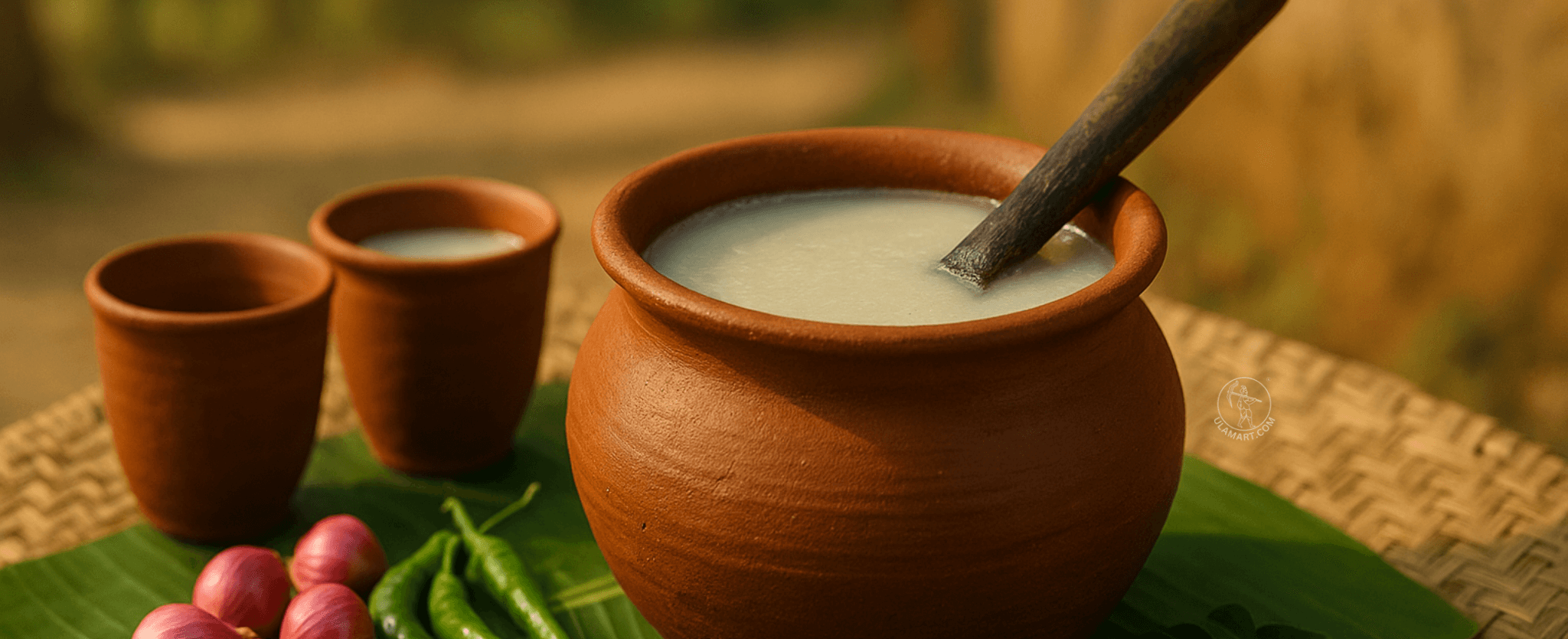
5. Kambu Kool (Pearl Millet Porridge)
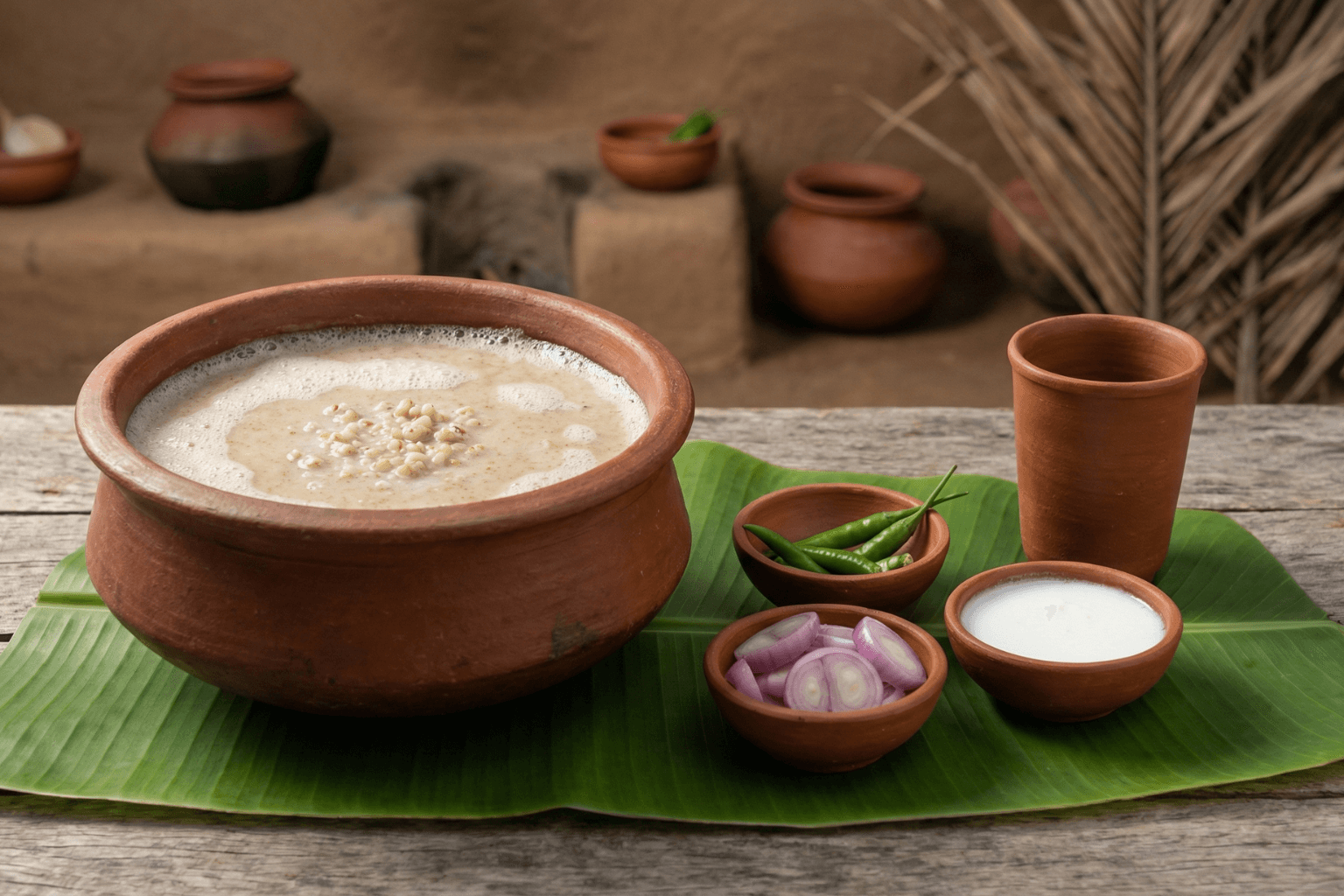
Kambu Kool (Khoozh) is a traditional South Indian breakfast made using pearl millet (kambu). It has been a staple food in Tamil households for generations, especially during hot weather, as it is cooling, filling, and nourishing. This dish is simple, naturally fermented, and provides long-lasting energy.
Ingredients
Kambu (Pearl Millet) – 1 cup, Water – 3 cups, Butter milk – 1.5 cups, Salt – to taste
For serving, shallots, green chilli, curd or buttermilk
Preparation Method
- Wash Pearl Millet well and drain the water.
- Grind the soaked pearl millet into a coarse powder.
- Mix water and salt to the powder in a thick-bottomed pan and cook well on medium flame, stirring continuously to avoid lumps.
- Cook until the mixture thickens and becomes glossy. Switch off the flame.
- Allow it to cool completely.
- Once cooled, add buttermilk and salt for added taste and bring to drinking consistency.
- Serve with raw onion shallots, roasted peanuts, fryums or pickle.
Health Benefits of Kambu
- Naturally cooling for the body
- High in fibre and iron
- Keeps you full for long hours
- Supports digestion and gut health
6. Kuthiraivali Kozhukattai (Barnyard Millet Dumplings)
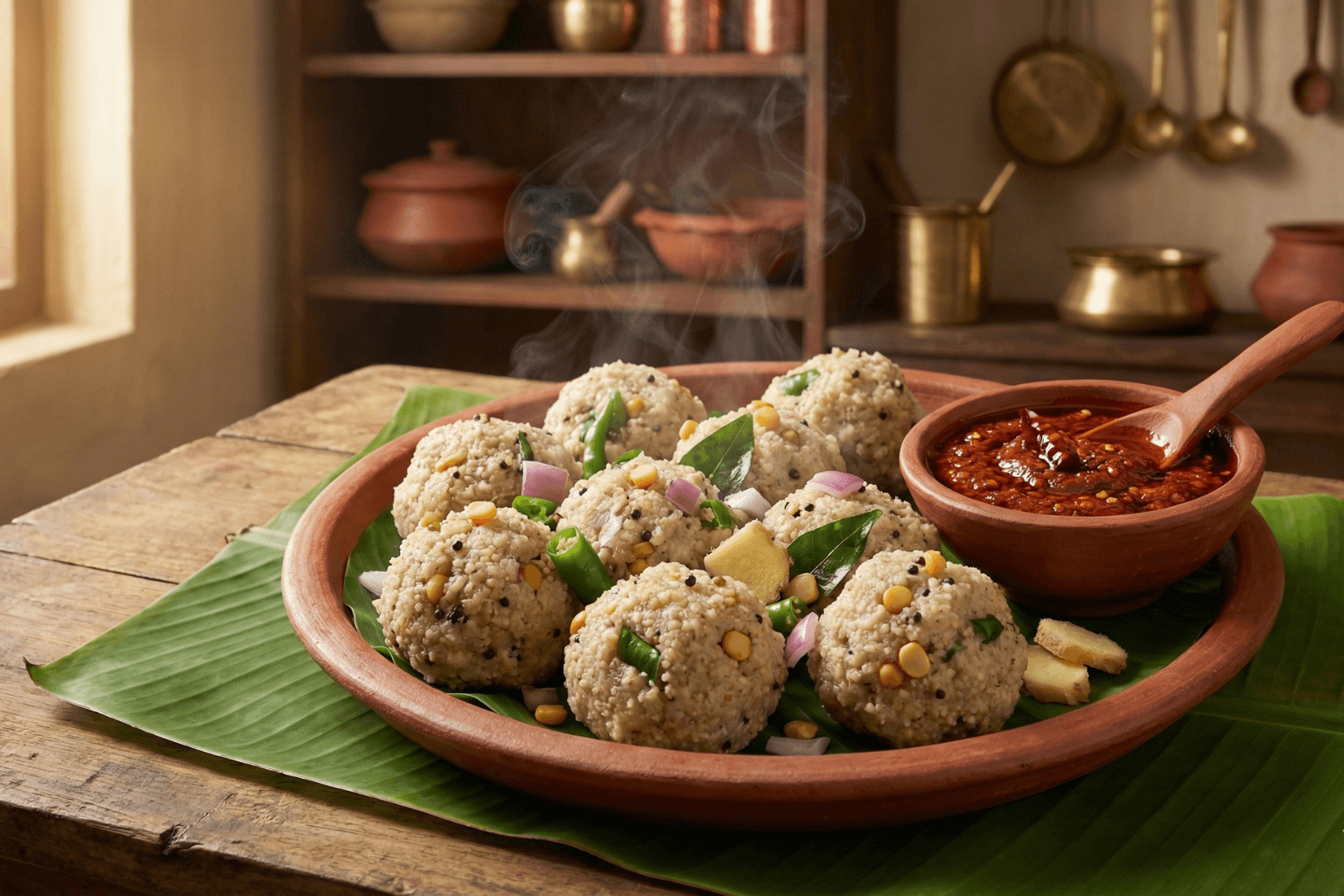
Kuthiraivali Kozhukattai is a wholesome, steamed breakfast made using barnyard millet, known for its light texture and easy digestibility. This traditional dish is a healthier alternative to rice kozhukattai and works well as a filling breakfast or evening snack, especially for those following diabetic-friendly or low-GI diets.
Ingredients
For the kozhukattai dough
Kuthiraivali (Barnyard Millet) – 1 cup, Water – 2½ cups, Salt – to taste, Oil – 1 tbsp, Mustard seeds – 1 tsp, Urad dal – 1 tsp, Chana dal – 1 tsp, Finely chopped onion – 1, Green chilli (finely chopped) – 1, Ginger (finely chopped) – ½ tsp, Curry leaves – few
Preparation Method
- Wash kuthiraivali thoroughly and soak for 30 minutes. Drain well.
- Dry roast the millet lightly until aromatic. Grind it into a slightly coarse flour.
- Heat oil in a pan. Add mustard seeds and let them splutter.
- Add urad dal and chana dal; roast until golden.
- Add green chilli, ginger, and curry leaves. Sauté briefly.
- Add water and salt; bring it to a boil.
- Add the ground kuthiraivali flour slowly, stirring continuously to avoid lumps.
- Cook on low flame until the mixture thickens and leaves the sides of the pan.
- Switch off the flame and allow it to cool slightly.
- Grease your hands, shape the mixture into small oblong dumplings.
- Steam the kozhukattai for 8–10 minutes.
Serve with Spicy kara chutney.
Health Benefits of Kuthiraivali Kozhukattai
- Low glycemic index – suitable for diabetics
- Light on the stomach, easy to digest
- High fibre content keeps you full longer
- Steamed preparation makes it oil-free and healthy
7. Samai Khichdi (Little Millet Khichdi)
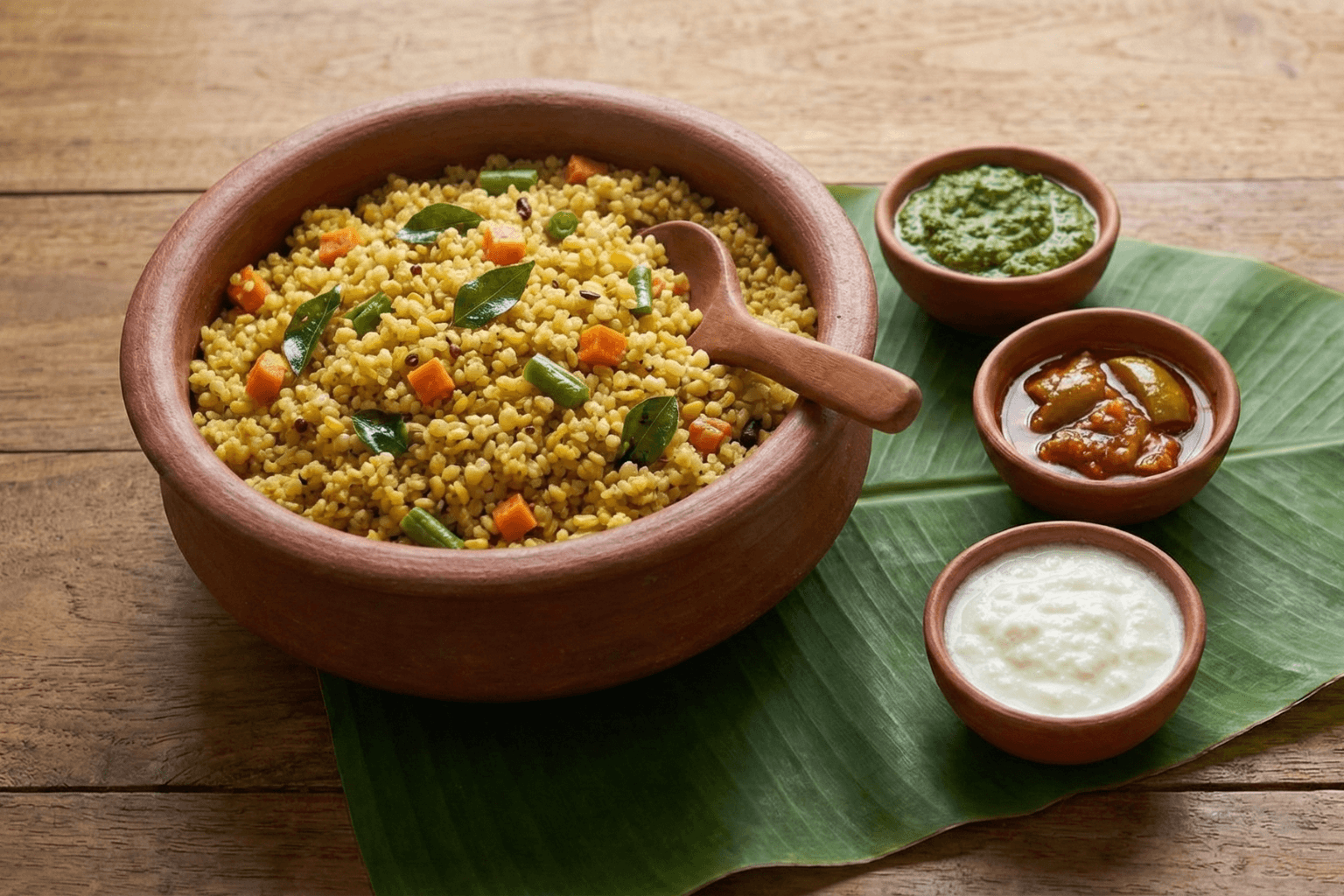
Samai Khichdi is a light yet nourishing one-pot breakfast made using little millet (samai) and lentils. It is easy to digest, mildly spiced, and ideal for mornings when you want something filling without heaviness. This dish works well for all age groups and is especially suitable for those transitioning from rice-based meals to millet-based meals.
Ingredients
Samai (Little Millet) – ½ cup, Water – 2½ to 3 cups, Ginger (finely chopped) – 1 tsp, Green chilli – 1 (optional, slit), Turmeric powder – a pinch, Bay leaf – 1, Cinnamon – 1 small piece, Cloves – 1 to 2, Cumin seeds – 1 tsp, Fennel seeds (saunf) – ½ tsp, Black pepper (crushed) – ½ to 1 tsp, Curry leaves – few, Ghee – 1 tbsp, Salt – to taste, include any veggies of your choice: carrot, beans, potato, etc.
Preparation Method
- Rinse the samai thoroughly 2–3 times and soak it in clean water for about 15–20 minutes. Drain and keep aside.
- Wash and chop the vegetables of your choice (carrot, beans, potato, etc.) into small, even pieces so they cook evenly and blend into the khichdi.
- Place an earthen pot or heavy-bottomed vessel on low heat. Add the soaked samai to the pot.
- Add 2½ to 3 cups of water, turmeric powder, bay leaf, cinnamon, cloves, and salt. Mix gently.
- Add the chopped vegetables to the pot and stir once. Cover and allow it to cook slowly on low flame, stirring occasionally to avoid sticking.
- Cook until the samai becomes soft and slightly mushy and the vegetables are fully cooked. Add a little hot water if the khichdi thickens too much.
- In a small pan, heat ghee on low flame.
- Add cumin seeds and fennel seeds and let them crackle gently.
- Add crushed black pepper, chopped ginger, slit green chilli (if using), and curry leaves. Sauté briefly until aromatic.
- Pour this tempering over the cooked samai khichdi and mix well.
- Simmer for 2–3 minutes on low heat so the flavours blend well.
- Turn off the heat and let the khichdi rest for a minute before serving.
Serve hot with Pudhina chutney, mango pickle, plain curd.
Conclusion: A Simple Way to Begin Every Day with Millets
Including millets in your breakfast is not about changing your food habits overnight, it is about making small, sustainable improvements to everyday meals. This 7-day millet breakfast plan shows how easily traditional dishes like pongal, dosa, upma, koozhu, and khichdi can be prepared using different millets without compromising on taste or familiarity. Each recipe offers steady energy, better digestion, and lasting fullness, making millets a practical choice for modern lifestyles while staying rooted in traditional Indian cooking.
Rotating millets across the week also helps bring nutritional balance to your diet, as every millet has its own unique fibre, mineral, and health benefits. Whether you are managing blood sugar, looking for lighter breakfasts, or simply aiming to eat cleaner, millet-based breakfasts provide a dependable foundation for long-term wellness.
If you are planning to start or continue your millet journey, choosing good-quality grains is just as important as the recipe itself. You can explore a carefully curated range of traditional millets at Ulamart, where you’ll find naturally sourced millets suitable for everyday cooking. With the right ingredients and simple recipes, millets can easily become a regular and enjoyable part of your breakfast routine.