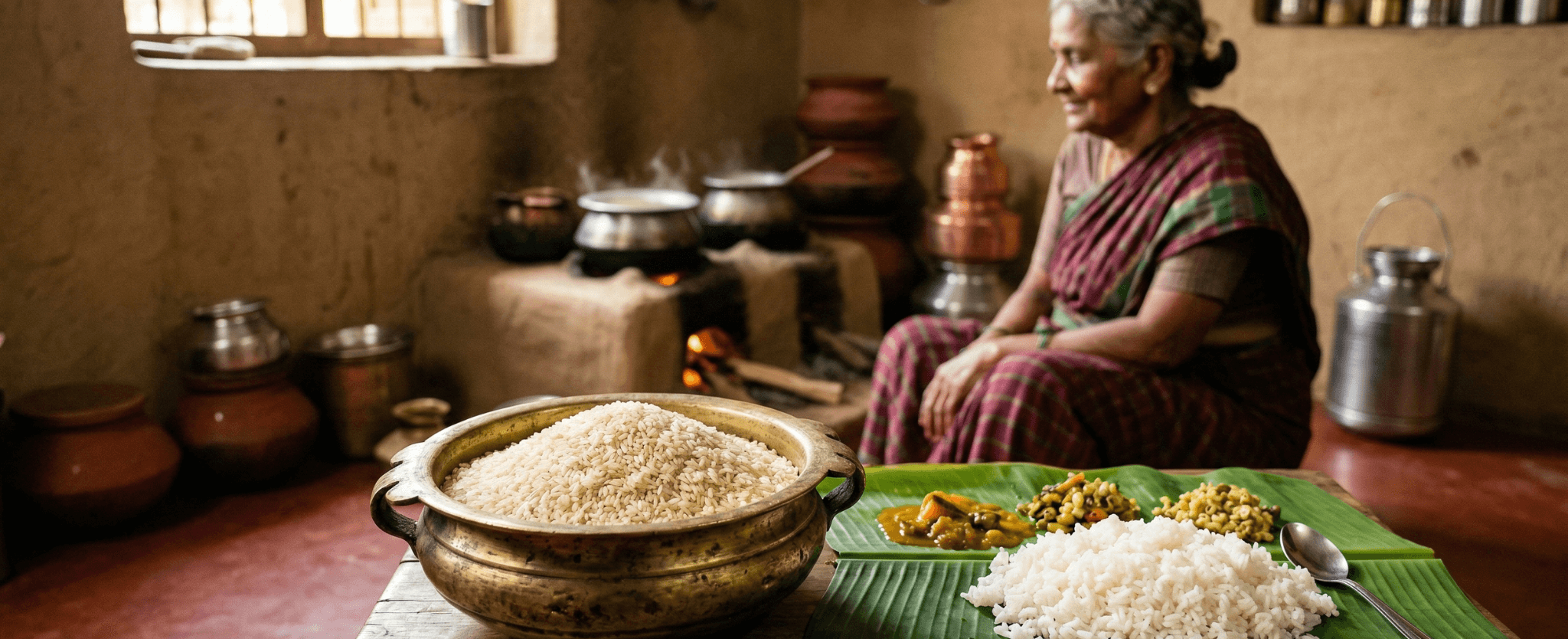
Close your eyes and think back to your grandmother’s kitchen. Can you smell it? That distinctive, floral aroma rising from the rice pot. The scent that made you hungry even before you saw the food. The fragrance that meant something special was being cooked, not just everyday rice.
That rice was probably Thooyamalli.
In Tamil households, particularly in the Cauvery delta region, Thooyamalli rice held a special place. It wasn’t the everyday rice. It was the rice for festivals, for guests, for special occasions when you wanted the meal to be memorable. The name itself tells you this: “Thooya” means pure, “Malli” means jasmine. Pure jasmine rice.
Unlike hybrid aromatic rice varieties created in labs, Thooyamalli’s fragrance is natural, developed over centuries of careful cultivation by Tamil farmers who understood that rice should delight all the senses, not just fill your stomach. Its aroma is subtle yet unmistakable, a fragrance that makes even simple preparations taste special.
Today, Thooyamalli is experiencing a revival. People are rediscovering what their grandmothers knew all along: that this fragrant, nutritious, versatile rice is worth seeking out. Let’s explore why Thooyamalli rice deserves a place in your kitchen, just as it had in your grandmother’s.
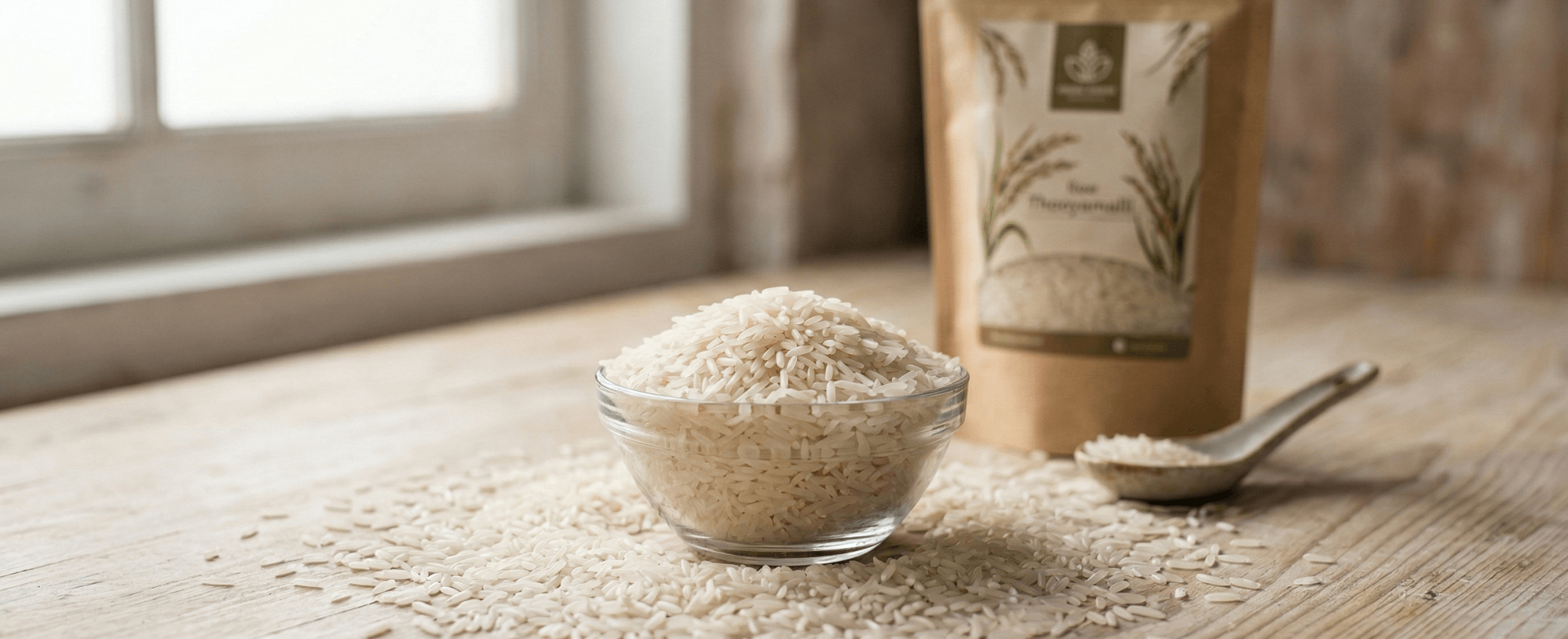

What is Thooyamalli Rice?
Thooyamalli is a traditional aromatic rice variety indigenous to Tamil Nadu, particularly grown in the fertile plains of the Cauvery delta.
Name Origin:
- Thooya: Pure, clean
- Malli: Jasmine flower
- Together: Pure jasmine rice (referring to its natural fragrance)
Physical Characteristics:
- Medium to short grain
- White to cream colored when milled
- Slightly sticky when cooked (good for making various preparations)
- Natural floral aroma (not artificially enhanced)
- Delicate, fine texture
Growing Regions:
- Primarily Thanjavur district (Tamil Nadu)
- Some cultivation in Trichy and Pudukkottai districts
- Requires specific soil and water conditions
- Traditional farming practices still used
At Ulamart, we offer authentic Thooyamalli rice and Thooyamalli raw rice, sourced directly from farmers in the Cauvery delta who maintain traditional cultivation methods.
The Aroma: What Makes Thooyamalli Special
The most distinctive feature of Thooyamalli rice is its natural fragrance.
Natural vs Artificial Aroma
Thooyamalli’s aroma:
- Naturally occurring compound (2-acetyl-1-pyrroline)
- Develops during grain maturation
- Present in the grain itself, not added
- Subtle, floral, jasmine-like
- Becomes more pronounced when cooked
Comparison to other aromatic rice:
- Similar compound to Basmati but different concentration
- More delicate than Basmati’s stronger perfume
- Less pronounced than Gobindobhog or Ambemohar
- Unique to Thooyamalli among Tamil varieties
Why the Aroma Matters
Beyond just smelling good, the natural aroma indicates:
- Authenticity (you can’t fake this specific fragrance)
- Quality grain (aroma weakens in old or poorly stored rice)
- Proper growing conditions (soil, water, climate all affect aroma)
- Traditional variety (hybrids don’t capture this exact fragrance)
Cooking experience: The aroma fills your kitchen while cooking, making meal preparation more enjoyable. Family members know something special is being prepared.
Nutritional Profile: More Than Just Fragrance
Thooyamalli isn’t just about aroma. It offers solid nutrition too.
Thooyamalli Rice Nutritional Content (Per 100g Cooked)
| Nutrient | Thooyamalli Rice | Regular White Rice | Red Rice |
| Calories | 130 kcal | 130 kcal | 125 kcal |
| Carbohydrates | 28g | 28g | 27g |
| Protein | 2.7g | 2.7g | 2.7g |
| Fiber | 0.6g | 0.4g | 2.2g |
| Iron | 0.4mg | 0.2mg | 1.0mg |
| Calcium | 12mg | 10mg | 23mg |
| B Vitamins | Moderate | Low | Moderate |
Note: Nutritional content varies slightly between raw (unparboiled) and parboiled versions. Parboiled Thooyamalli retains more nutrients.
Key Points:
- Similar macronutrients to regular white rice
- Slightly better micronutrient profile than standard white rice
- More digestible than some heavier rice varieties
- Easy on the stomach while being nutritious
Traditional Uses: Why Grandmothers Chose Thooyamalli
Understanding traditional uses helps us appreciate this rice’s versatility.
Festival and Ceremonial Uses
Temple Offerings (Prasadam): Thooyamalli was preferred for making prasadam (sacred food offerings) because:
- Its purity aligned with religious requirements
- The fragrance made offerings more appealing
- Considered sattvic (pure) in Ayurvedic classification
- Traditional association with auspicious occasions
Wedding and Celebrations:
- Used for preparing special biryanis and pulaos
- Made into sweet pongal for festive occasions
- Considered appropriate for serving honored guests
- Part of traditional wedding feast menus
Everyday Special Preparations
Pongal (Sweet and Savory): Thooyamalli makes exceptional pongal because:
- Creamy texture when cooked soft
- Fragrance enhances both sweet and savory versions
- Traditionally used for Pongal festival
- Our Thooyamalli pongal rice combo provides everything you need
Biryani and Pulao:
- The fragrance complements spices beautifully
- Grains remain separate yet tender
- Absorbs flavors while maintaining identity
- Elevates simple preparations to special status
Idli and Dosa:
- Thooyamalli makes wonderfully soft idlis
- Dosas have excellent texture and aroma
- Fermentation enhances the natural fragrance
- Traditional choice for special occasion tiffin
Flattened Rice (Aval):
- Thooyamalli flattened rice for breakfast preparations
- More fragrant than regular poha
- Perfect for upma, pongal, or sweet preparations
- Quick cooking with premium taste
Snack Preparations
Murukku: Traditional Thooyamalli murukku is a special South Indian snack made from Thooyamalli rice flour. The natural fragrance makes these crispy spirals even more irresistible.
For easy homemade murukku, try our instant murukku mix (Thooyamalli).
Culinary Advantages: Why Chefs Love Thooyamalli
Versatility in Cooking
Works for:
- Plain steamed rice
- Biryani and pulao
- Pongal (sweet and savory)
- Fried rice
- Idli and dosa batter
- Kheer and payasam
- Rice flour preparations
Rare compatibility: Most aromatic rice varieties are best for specific dishes. Thooyamalli works across the full range of Tamil cuisine.
Cooking Characteristics
Texture:
- Slightly sticky when cooked (not too separate, not too mushy)
- Perfect for eating with hand (traditional Tamil style)
- Each grain is tender yet distinct
- Doesn’t become hard when cooled (good for lunch boxes)
Absorption:
- Absorbs flavors beautifully
- Takes to both delicate and strong spice profiles
- Ghee and oil distribute well through Thooyamalli rice
- Excellent for layered preparations like biryani
Timing:
- Cooks in standard rice cooking time (no special handling)
- Doesn’t require long soaking
- Forgiving if slightly overcooked (doesn’t turn mushy immediately)
Pairing with Other Foods
Perfect with:
- Rich gravies and curries (Chettinad style)
- Sambhar and rasam (absorbs liquid well)
- Coconut-based preparations
- Ghee rice preparations
- Yogurt-based dishes (curd rice)
Enhances: Simple dal-rice meals become special with Thooyamalli’s fragrance, making everyday food feel festive.
Health Benefits Beyond Basic Nutrition
Easy Digestibility
Thooyamalli is known for being gentle on digestion:
- Lighter than heavy red or black rice varieties
- Easier to digest than some aromatic varieties
- Suitable for people with sensitive stomachs
- Good for recovery meals after illness
- Traditional choice for feeding children and elderly
Ayurvedic perspective: Considered cooling and balancing (neither too heating nor too cooling), making it suitable year-round.
Suitability for Different Ages
For Children:
- Pleasant aroma makes rice more appealing to kids
- Soft texture is easy to chew
- Nutritious without being heavy
- Good for lunch boxes (doesn’t harden when cool)
For Elderly:
- Easy to digest
- Soft enough for those with dental issues
- Light on the stomach
- Familiar taste for older generations
For Adults:
- Satisfying without being too filling
- Works for both light and heavy meals
- Suitable for regular consumption
- Good energy source
Blood Sugar Consideration
Glycemic Impact:
- Similar to regular white rice (medium to high GI)
- Not specifically a low-GI rice
- Better than some white rice due to slight fiber retention
- Diabetics should practice portion control
Better alternatives for diabetics: If blood sugar control is your primary concern, consider Kattuyanam rice (GI 48-52) or millets instead.
For others: Thooyamalli is perfectly fine as part of a balanced diet.
How to Cook Thooyamalli Rice Perfectly
Get the most out of this special rice with proper cooking technique.
Basic Cooking Method (Stovetop)
Ratio: 1 cup Thooyamalli rice to 2 cups water (for slightly firm rice) or 2.25 cups water (for softer rice)
Steps:
- Rinse: Wash rice 2-3 times until water runs mostly clear (preserves some starch for good texture)
- Optional soak: 15-20 minutes (not essential but can improve texture)
- Boil water: Bring measured water to rolling boil
- Add rice: Add rinsed rice to boiling water
- Simmer: Reduce to low heat, cover with tight lid
- Cook: 15-18 minutes without opening lid
- Rest: Turn off heat, let sit covered for 5-10 minutes
- Fluff: Gently fluff with fork, enjoy the aroma!
Result: Fragrant, tender, slightly sticky rice perfect for Tamil meals
Pressure Cooker Method
Ratio: 1 cup rice to 1.75 cups water
Steps:
- Rinse rice
- Add rice and water to pressure cooker
- Cook for 2 whistles on medium heat
- Natural pressure release
- Open and fluff gently
Faster and foolproof!
Rice Cooker Method
Ratio: 1 cup rice to 2 cups water (adjust based on your rice cooker)
Steps:
- Rinse rice
- Add to rice cooker with water
- Use “white rice” setting
- Let it complete and rest for 5 minutes
- Fluff and serve
Most convenient for daily use
Cooking Tips for Maximum Fragrance
Enhance the aroma:
- Add a few drops of ghee while cooking
- Include a small piece of cinnamon or cardamom
- Don’t over-rinse (removes some aromatic compounds)
- Cook with lid tightly closed (traps fragrance)
Preserve fragrance:
- Don’t overcook (destroys delicate aroma)
- Serve soon after cooking (aroma fades when reheated)
- Store cooked rice covered (preserves warmth and fragrance)
Traditional Recipes Showcasing Thooyamalli
Thooyamalli Sweet Pongal (Sakkarai Pongal)
The classic festival preparation:
Ingredients:
- 1 cup Thooyamalli rice
- 1/4 cup moong dal
- 3/4 cup jaggery (from our country sugar range)
- 1/4 cup ghee
- Cardamom powder, cashews, raisins
Method:
- Cook rice and dal together until very soft and mushy
- Melt jaggery with little water to make syrup
- Mix jaggery syrup into cooked rice-dal
- Add ghee generously
- Temper with cashews, raisins, cardamom
- Serve warm
Why Thooyamalli: The fragrance makes this already-special dish even more festive
Thooyamalli Ghee Rice
Simple yet elegant:
Ingredients:
- 1 cup Thooyamalli rice
- 2 tablespoons ghee
- Whole spices (cinnamon, cloves, bay leaf, cardamom)
- Cashews and raisins
- Salt
Method:
- Heat ghee, add whole spices
- Add cashews and raisins, fry until golden
- Add washed rice, sauté for 2 minutes
- Add water and salt
- Cook until rice is done
- Serve hot
Perfect with: Any rich curry or dal
Thooyamalli Curd Rice (Thayir Sadam)
Comfort food at its best:
Ingredients:
- 2 cups cooked Thooyamalli rice
- 1 cup yogurt
- 1/4 cup milk
- Tempering: mustard seeds, curry leaves, ginger, green chilies
- Salt to taste
Method:
- Mash cooked rice slightly
- Mix with yogurt and milk
- Add salt
- Temper with mustard, curry leaves, ginger, chilies
- Mix well and serve
Why it works: Thooyamalli’s texture is perfect for curd rice – soft but not mushy
Thooyamalli Biryani
Festive one-pot meal:
Ingredients:
- 2 cups Thooyamalli rice
- Vegetables or protein of choice
- Biryani spices, saffron, mint
- Fried onions, ghee
Method:
- Prepare spiced vegetable/protein layer
- Partially cook rice (70% done)
- Layer rice and vegetables
- Add saffron milk, fried onions, ghee
- Cook on dum (sealed pot, low heat) for 20 minutes
- Let rest 5 minutes before serving
The difference: Thooyamalli’s natural fragrance complements biryani spices beautifully
Thooyamalli Payasam (Kheer)
Creamy rice pudding:
Ingredients:
- 1/4 cup Thooyamalli rice
- 1 liter milk
- Sugar or jaggery
- Cardamom, saffron
- Nuts and raisins
Method:
- Wash rice and cook in milk until very soft
- Keep stirring to prevent sticking
- Add sweetener, cardamom, saffron
- Cook until thick and creamy
- Garnish with fried nuts
- Serve warm or chilled
Traditional occasions: Festivals, celebrations, special family gatherings
Thooyamalli vs Other Aromatic Rice Varieties
How does Thooyamalli compare to other fragrant rice?
Thooyamalli vs Basmati
Aroma: Thooyamalli more subtle and floral, Basmati stronger and nutty
Grain length: Basmati longer, Thooyamalli medium-short
Texture: Basmati very separate grains, Thooyamalli slightly sticky
Best for:
- Basmati: North Indian dishes, pilaf
- Thooyamalli: South Indian meals, versatile use
Price: Thooyamalli typically more affordable
Thooyamalli vs Seeraga Samba
Aroma: Both aromatic, Seeraga Samba stronger cumin-like scent
Grain size: Both small to medium
Texture: Similar, both good for biryani
Traditional use:
- Seeraga Samba: Primarily biryani
- Thooyamalli: Multiple preparations
Versatility: Thooyamalli more versatile
Thooyamalli vs Gobindobhog (Bengali Aromatic)
Aroma: Gobindobhog stronger, Thooyamalli more delicate
Grain: Gobindobhog short and sticky, Thooyamalli medium-short
Regional: Gobindobhog Bengali cuisine, Thooyamalli Tamil cuisine
Sweet preparations: Both excellent for payasam/kheer
Thooyamalli vs Regular White Rice
Aroma: Thooyamalli has natural fragrance, regular rice doesn’t
Nutrition: Marginally similar
Versatility: Thooyamalli can do everything regular rice does, plus adds fragrance
Price: Thooyamalli costs more but worth it for special meals
Usage: Use Thooyamalli for special occasions, regular rice for everyday if budget-conscious
Buying and Storing Thooyamalli Rice
What to Look For When Buying
Authentic Thooyamalli:
- Medium-short grain (not long)
- Cream to white color
- Clean grains, no excessive broken pieces
- Natural fragrance even in uncooked state
- Sourced from Tamil Nadu (Thanjavur region ideal)
Quality indicators:
- Recent harvest date
- Proper packaging (sealed, not exposed)
- FSSAI certification
- Organic certification (bonus)
- Reputable seller
At Ulamart, our Thooyamalli rice is sourced directly from farmers in the Cauvery delta, ensuring authenticity and quality.
Storage Guidelines
Proper storage maintains aroma:
Container: Airtight container (prevents moisture and preserves fragrance)
Location: Cool, dry, dark place
Temperature: Room temperature acceptable, refrigeration extends freshness
Duration:
- Best aroma within 6 months
- Stays good for 9-12 months properly stored
- Fragrance diminishes over time (use fresher rice for special occasions)
Tips:
- Don’t buy very large quantities unless you use it regularly
- Transfer from packaging to airtight container immediately
- Add bay leaves to deter pests
- Check monthly for any signs of moisture or insects
For complete storage guidance, refer to our comprehensive grain storage guide.
How Much to Buy
Frequent users (use weekly): 5-10 kg
Special occasion users (monthly): 2-5 kg
First-time buyers: 1-2 kg (try before committing to larger quantity)
Who Should Try Thooyamalli Rice?
Perfect For:
Lovers of aromatic rice: If you enjoy Basmati or other fragrant rice, you’ll love Thooyamalli
Tamil cuisine enthusiasts: Essential for authentic Tamil cooking
Special occasion cooks: When you want meals to be memorable
People seeking variety: Break away from standard white rice
Families with children: The pleasant aroma makes rice more appealing to kids
Traditional cooking practitioners: Those who value heritage recipes and ingredients
Worth Trying For:
Regular rice eaters looking for something special: Elevate everyday meals
People with sensitive digestion: Easier to digest than some varieties
Anyone who appreciates quality ingredients: Food that respects tradition and taste
Reviving a Tradition
There’s something profound about cooking with rice your grandmother used. It connects you to a lineage of cooks, to a region’s agricultural heritage, to generations who understood that food should nourish the soul as much as the body.
Thooyamalli rice represents this connection. In an era of hybrid varieties engineered for yield and shelf life, Thooyamalli remains true to what rice should be: fragrant, flavorful, and deeply satisfying.
When you cook Thooyamalli, you’re not just making rice. You’re preserving a tradition. Supporting farmers who maintain heirloom varieties. Choosing quality over convenience. Saying yes to food that makes you pause and appreciate the simple pleasure of a well-cooked meal.
Your grandmother chose Thooyamalli for good reasons. The fragrance that filled her kitchen, the way it made simple meals special, the satisfaction of serving something truly good to her family. Those reasons haven’t changed.
In bringing Thooyamalli into your kitchen, you’re not just trying a new rice variety. You’re honoring a tradition, supporting sustainable agriculture, and treating yourself and your family to rice that rises above the ordinary.
That’s worth a lot more than the slight price premium.
Ready to experience Thooyamalli rice? Explore our authentic Thooyamalli products:
Rice Varieties:
- Thooyamalli Rice – Premium quality
- Thooyamalli Raw Rice – Traditional unparboiled
- Thooyamalli Pongal Rice Combo – Everything for perfect pongal
Ready-to-Use Products:
- Thooyamalli Flattened Rice – Quick breakfast
- Thooyamalli Murukku – Traditional snack
- Instant Murukku Mix (Thooyamalli) – Easy homemade snacks
Explore More Traditional Rice:
- Seeraga Samba – Another aromatic variety
- Browse all traditional rice
Perfect Pairings:
- Country Sugar/Jaggery – For sweet pongal
- Organic pulses – For complete meals
- Cold-pressed oils – For authentic taste
Bring grandmother’s favorite rice to your table today!
Cooking Tip: For maximum fragrance, add a teaspoon of ghee to the rice while cooking and keep the lid tightly closed. The aroma will transport you to your grandmother’s kitchen!