Walk into a modern supermarket and you’ll find aisles of “health foods” – protein bars, vitamin-fortified cereals, superfood powders, meal replacement shakes. The message is clear: you need processed, packaged, scientifically formulated products to be healthy.
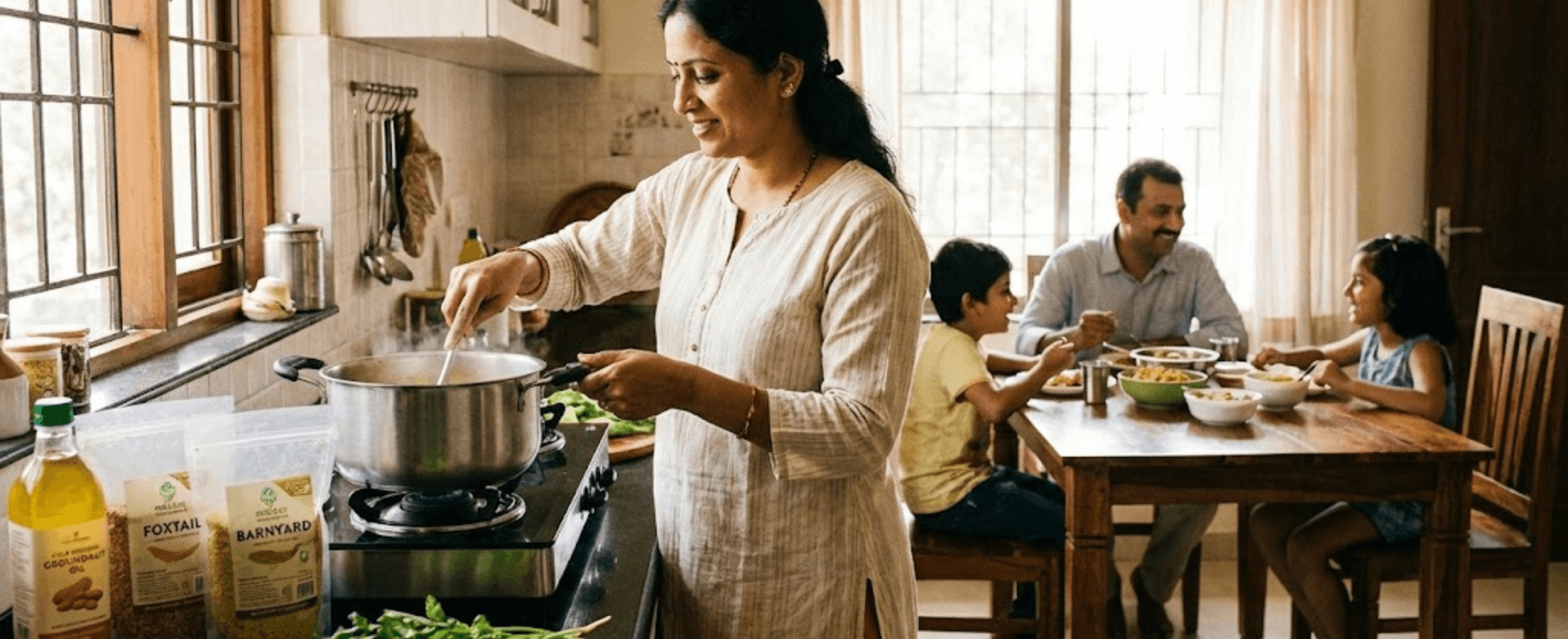
Now think about your great-grandmother’s kitchen. No protein powders. No fortified cereals. No supplement bottles. Just rice, dal, vegetables, spices, and whole grains. Yet she was probably healthier, had more energy, and maintained a healthy weight without counting calories or reading nutrition labels.
The disconnect is striking. We’ve been convinced that nutrition is complicated, requiring scientific knowledge and expensive products. But traditional Indian cuisine already provides one of the most complete, balanced, nutritionally optimal food systems ever developed.
A simple meal of rice, dal, vegetables, and a side of yogurt provides complete protein, all essential amino acids, fiber, vitamins, minerals, healthy fats, and probiotics. Add traditional spices, and you get anti-inflammatory compounds, antioxidants, and digestive support. This isn’t accidental. It’s the result of thousands of years of nutritional wisdom.
Today, we’ll break down exactly what your body needs, how traditional Indian ingredients provide it, and how to build perfectly balanced meals using foods your ancestors ate – no supplements, no processed foods, just real nutrition from real food.
Understanding Complete Nutrition: What Your Body Actually Needs
Before we talk about foods, let’s understand what “complete nutrition” means.
The Essential Nutrients
Macronutrients (needed in large amounts):
- Carbohydrates: Energy source, fiber for digestion
- Proteins: Building blocks for muscles, enzymes, hormones
- Fats: Energy, hormone production, nutrient absorption, brain health
Micronutrients (needed in small amounts but crucial):
- Vitamins: 13 essential vitamins (A, C, D, E, K, B-complex)
- Minerals: Major minerals (calcium, magnesium, potassium) and trace minerals (iron, zinc, selenium)
- Phytonutrients: Plant compounds with health benefits (antioxidants, anti-inflammatory compounds)
Water: Essential for all bodily functions
Fiber: Not absorbed but crucial for digestive health, blood sugar control, heart health
The Balanced Plate Concept
A balanced meal should include:
- 40-50% complex carbohydrates (whole grains, millets)
- 20-30% protein (dal, legumes, dairy, eggs, meat)
- 20-30% vegetables and fruits (vitamins, minerals, fiber)
- Small amount of healthy fats (oils, nuts, seeds)
- Spices and herbs (medicinal properties, flavor, digestion)
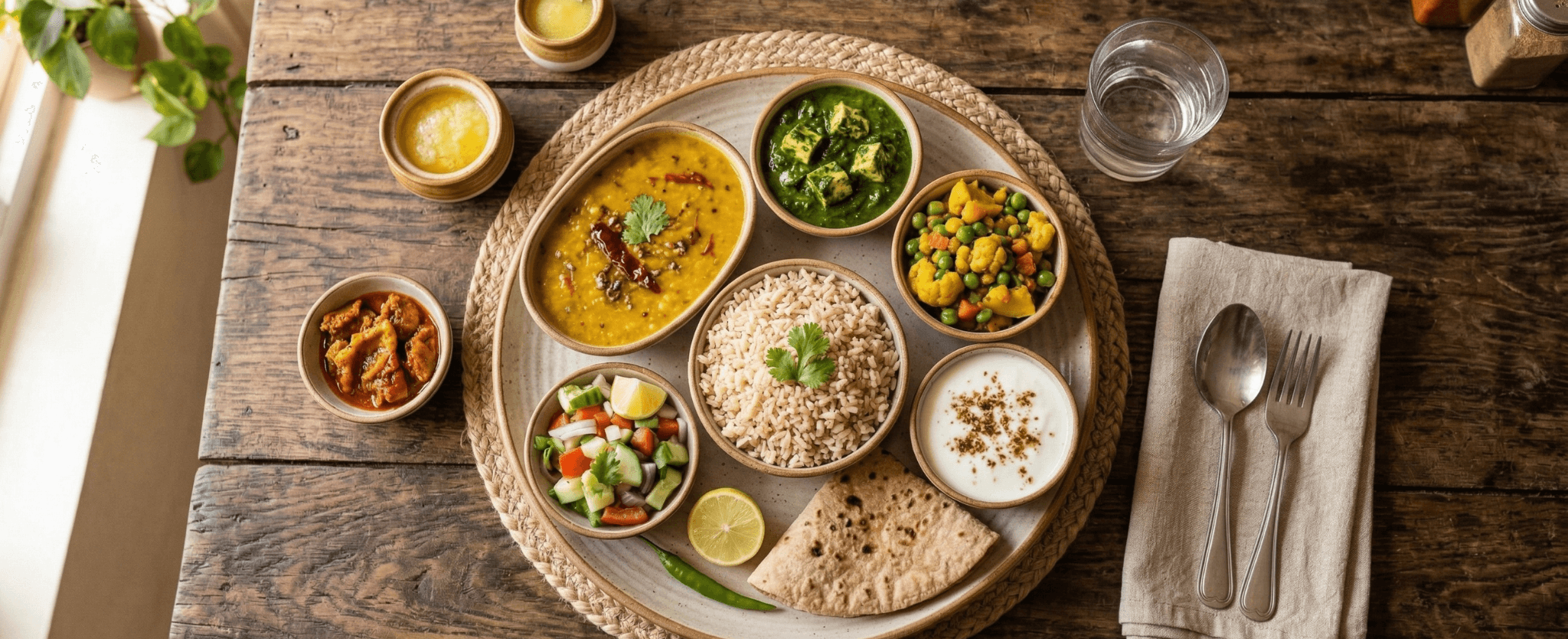
Traditional Indian thali perfectly follows this: Rice/roti (carbs) + dal (protein) + vegetables (vitamins/minerals) + raita/curd (probiotics/calcium) + small amount of ghee/oil (fats) + pickle/chutney (fermented foods, spices)
Traditional Grains: The Foundation of Balanced Meals
Grains provide energy, fiber, B vitamins, and some protein. Traditional grains are vastly superior to refined options.
Rice Varieties for Different Needs
For General Health:
- Red Rice: High fiber, minerals, antioxidants
- Thooyamalli Rice: Aromatic, versatile, easy to digest
For Diabetes/Weight Loss:
- Kattuyanam Rice: Low GI (50-52), high fiber
- Kodo Millet: Lowest calories among grains, very filling
For Women’s Health:
- Poongar Rice: Supports hormonal balance, lactation
For Men’s Health:
- Mappillai Samba Rice: High iron, zinc, energy
Browse all: Traditional rice varieties
Millets: Nutritional Powerhouses
For Calcium:
- Ragi (Finger Millet): 344mg calcium per 100g (3x more than milk!)
For Weight Loss:
- Foxtail Millet: High protein, blood sugar control
- Little Millet: High fiber
For Iron:
- Pearl Millet: 8mg iron per 100g
Browse all: Organic millets
Protein Sources: Building Blocks of Life
Dal and Pulses
Complete Protein: Rice/grains + dal = complete protein with all essential amino acids
Essential Dals:
Browse all: Organic pulses
Healthy Fats: Essential for Health
Traditional Cooking Oils
- Cold-Pressed Sesame Oil: South Indian cooking
- Cold-Pressed Groundnut Oil: High smoke point, versatile
Browse all: Cold-pressed oils
Spices: Medicinal Powerhouses
Essential Spices:
- Turmeric: Anti-inflammatory
- Black Pepper: Enhances absorption 2,000%
- Cumin: Digestive aid
- Cinnamon: Blood sugar control
Browse all: Organic spices
Building Perfectly Balanced Meals
Traditional South Indian Thali
Grain: 1 cup rice/millet Protein: 1 cup sambhar with dal Vegetable: 1/2 cup poriyal Probiotic: 1/2 cup curd Fat: 1 tsp ghee/oil Pickle: Fermented, probiotic
This ONE meal provides complete nutrition.
Simple Dal-Rice Bowl
Base: 1 cup cooked rice/millet Protein: 1 cup dal Vegetables: Mixed in Fat: 1 tsp oil tempering Spices: Turmeric, cumin, black pepper
Complete, simple, nutritious.
Portion Control: The Hand Method
At each meal:
- Grains: Your fist (1 cup)
- Protein: Palm (3/4-1 cup)
- Vegetables: Two handfuls
- Fats: Thumb size (1 tbsp)
Special Dietary Needs
For Diabetics: Low GI grains, portion control, high fiber For Weight Loss: More vegetables, less grain, adequate protein For Athletes: More carbs, more protein, higher calories For Pregnancy: More iron, calcium, folate, calories
Sample Balanced Day
Breakfast: Idli + Sambhar + Chutney Lunch: Rice + Dal + 2 Vegetables + Raita Dinner: Khichdi + Curd (lighter)
This provides:
- Complete protein
- All vitamins and minerals
- Healthy fats
- Fiber
- Probiotics
- Medicinal spices
The Bottom Line
Traditional Indian cuisine already provides perfect nutrition. You don’t need:
- Protein powders (dal provides it)
- Vitamin supplements (vegetables provide them)
- Superfood powders (spices are superfoods)
- Meal replacements (real food is better)
You need:
- Variety of grains and millets
- Daily dal
- Plenty of vegetables
- Healthy traditional oils
- Medicinal spices
- Fermented foods
Rotate grains, eat the rainbow of vegetables, include dal daily, use real spices, and you’ll have complete nutrition naturally.
Your great-grandmother was right all along.
Build complete nutrition with traditional ingredients:
Grains: Rice varieties | Organic millets Protein: Organic pulses Healthy Fats: Cold-pressed oils Medicine: Organic spices
Complete nutrition, traditional wisdom, modern health!