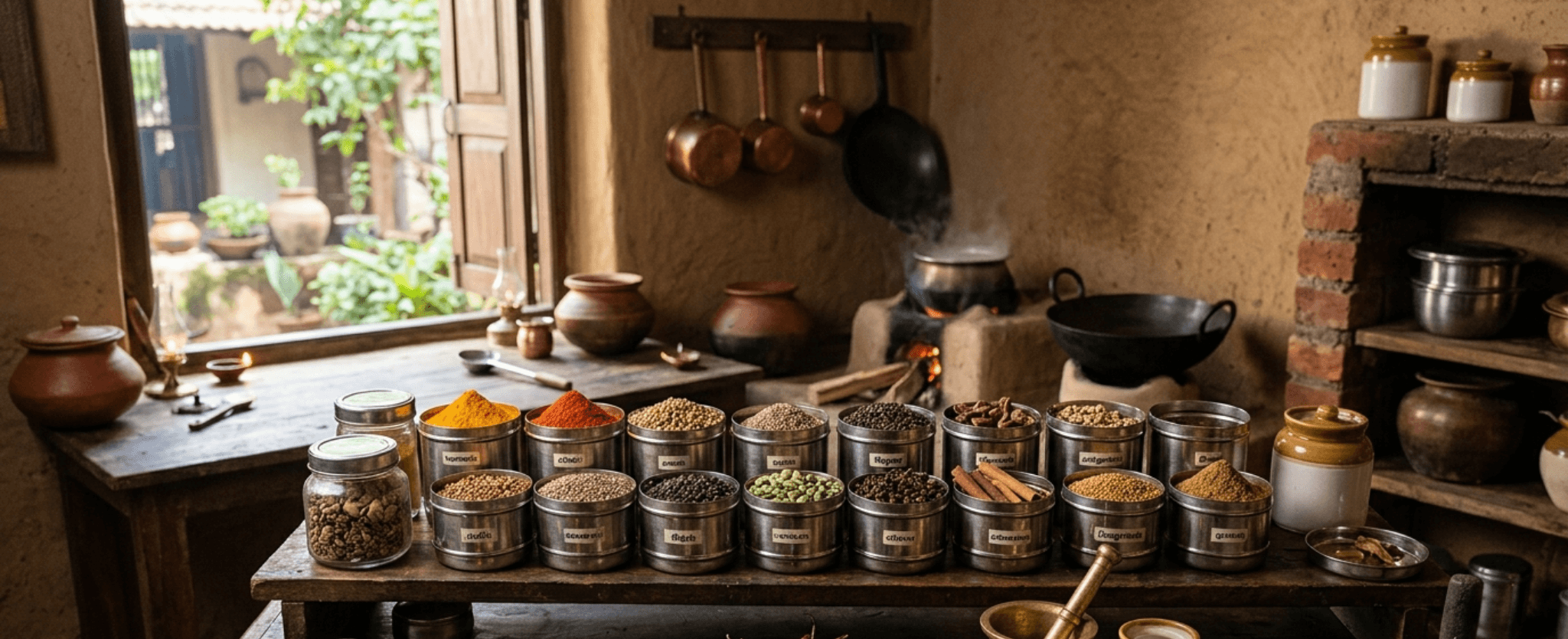
Walk into most Indian kitchens and you will find both whole spices in small steel tins and ground spice powders in a masala box, often used almost interchangeably without much thought about which one actually tastes better in a given dih. The truth is that whole and ground spices behave very differently once they leave the packet, and how you store each one has a direct effect on how much flavor survives by the time it hits your pan.
Why Whole Spices Last Longer
A whole spice, whether it is a cardamom pod, a cumin seed, or a clove, keeps its essential oils sealed inside its natural structure. Those oils are where nearly all the aroma and flavour actually live, and as long as the outer shell or skin stays intact, oxidation happens slowly. This is why a jar of whole cardamom can stay genuinely fragrant for well over a year if stored correctly, while the same spice ground into powder loses noticeable potency within a few months.
Why Ground Spices Fade Faster
Grinding breaks open the cell structure that was protecting those aromatic oils, exposing a much larger surface area to air, light, and moisture all at once. This is simply chemistry: more exposed surface means faster oxidation, and oxidation is what dulls flavour over time. A freshly ground spice can smell dramatically more vivid than the same spice that has sat, already ground, in a jar for six months, even if both were stored in a cupboard away from direct sunlight.
Shelf Life Comparison
| Spice Form | Typical Shelf Life | Flavour Retention |
|---|---|---|
| Whole seeds and pods | 2 to 3 years if stored airtight | High, oils remain sealed inside |
| Ground powders | 6 months to 1 year | Moderate, drops steadily after grinding |
| Home-ground fresh batches | Best used within 4 to 6 weeks | Highest immediately after grinding |
Storage Practices That Actually Extend Freshness
- Use airtight containers, not the paper or thin plastic packaging spices are often sold in; transfer everything into glass or steel jars with tight lids.
- Keep spices away from the stove, since heat from daily cooking accelerates the breakdown of aromatic oils even in a closed container nearby.
- Store in a dark cupboard rather than an open rack, since light exposure fades both colour and flavour over time.
- Buy whole spices in quantities you will use within a year, and grind smaller batches as needed rather than buying a large tin of powder upfront.
- Label jars with a purchase date, since it is easy to lose track of how long a spice has actually been sitting in the cupboard.
When Ground Spices Are Still the Right Choice
None of this means ground spices are inferior; convenience genuinely matters on a weeknight, and a good quality homemade sambar powder blended and packed fresh is a reasonable middle ground between raw whole spices and a mass-produced masala tin. The key is buying ground spices in smaller quantities more frequently, rather than one large jar meant to last a year, and checking that the seller grinds in small batches rather than stocking pre-ground powder for long periods before sale.
Quick Reference: What to Buy Whole vs Ground
| Spice | Recommended Form |
|---|---|
| Cumin, coriander, black pepper | Whole, toast and grind fresh as needed |
| Turmeric | Ground is generally fine, since fresh turmeric root is used separately when needed |
| Cloves, cinnamon, cardamom | Whole, add directly to tempering or grind just before use |
| Blended masalas (sambar, garam masala) | Buy fresh-ground in small batches, use within 6 to 8 weeks |
A simple test at home: take a pinch of an older ground spice and a freshly opened whole spice of the same type, crush the whole one between your fingers, and compare the smell side by side. The difference is usually obvious enough that it settles the whole vs ground debate on its own, without needing to read further into the chemistry behind it. For readers curious about the science of how spices lose potency over time, the Wikipedia entry on spice covers the broader background on volatile oils and preservation, though the storage habits above are what actually make the difference in a home kitchen.
Building a Smarter Spice Shelf
A practical approach for most households is to keep a small core of whole spices, black pepper, cumin, cloves, and cardamom, for everyday tempering, and buy pre-blended powders in smaller packs for convenience dishes. This balances the superior shelf life of whole spices with the time savings of ready ground blends, without forcing every meal to start with a mortar and pestle.