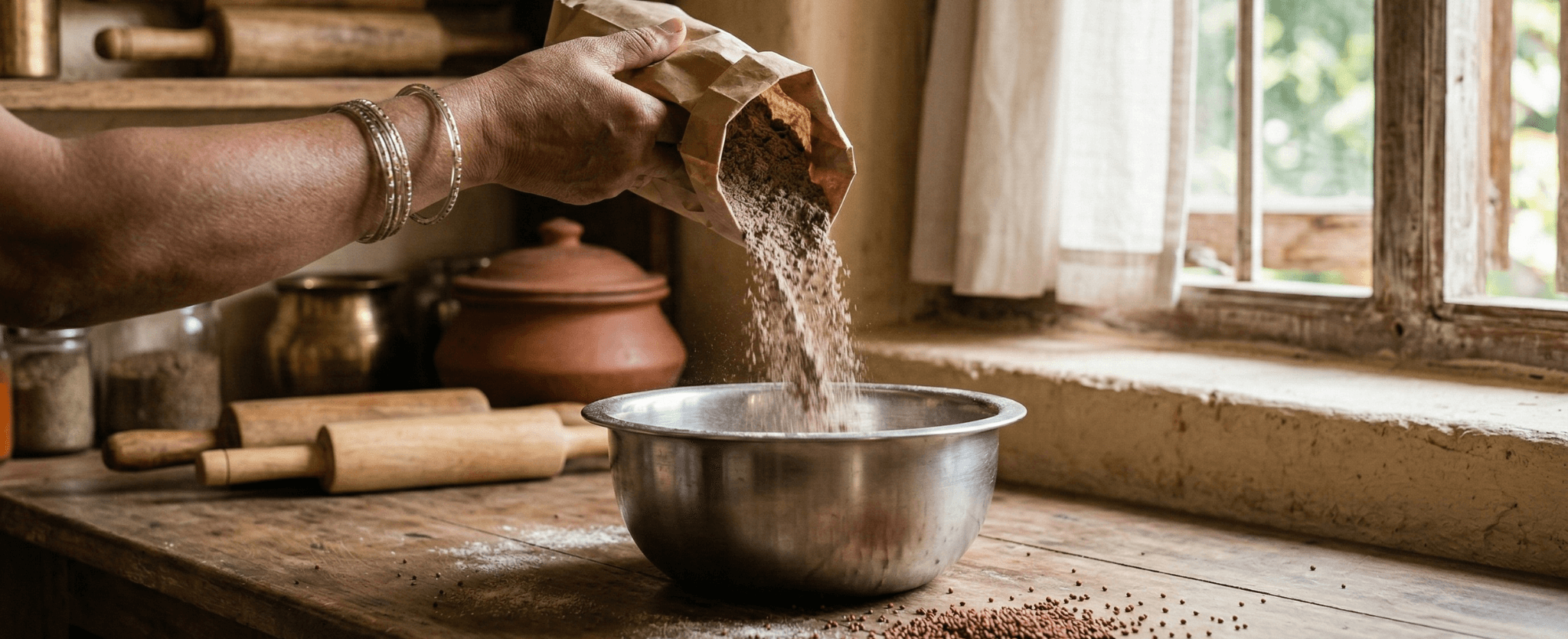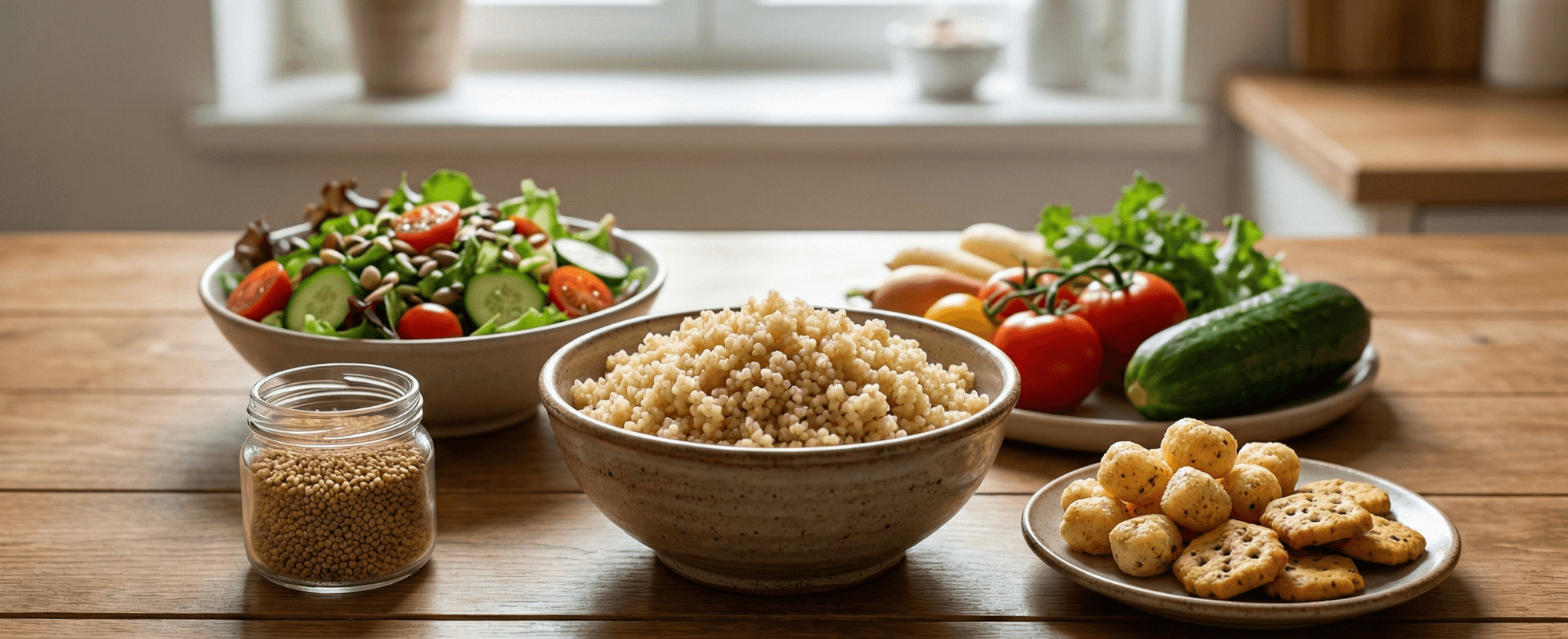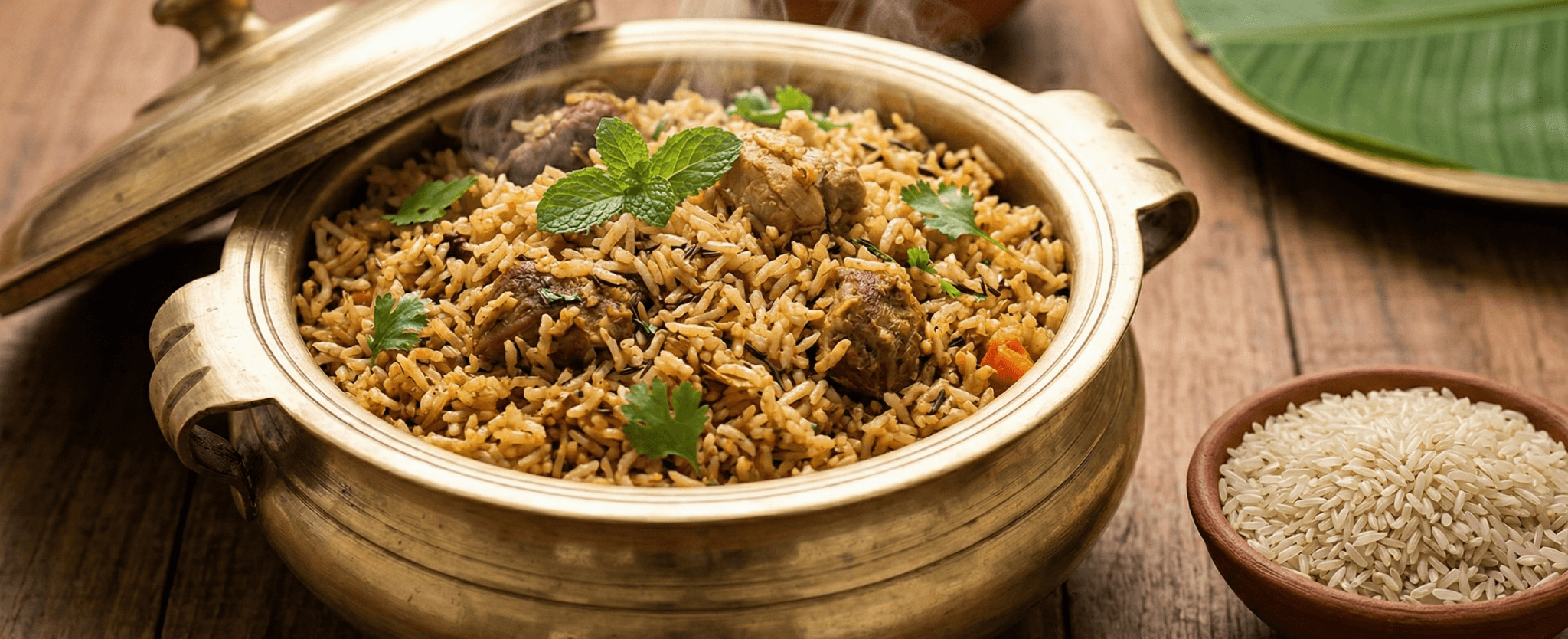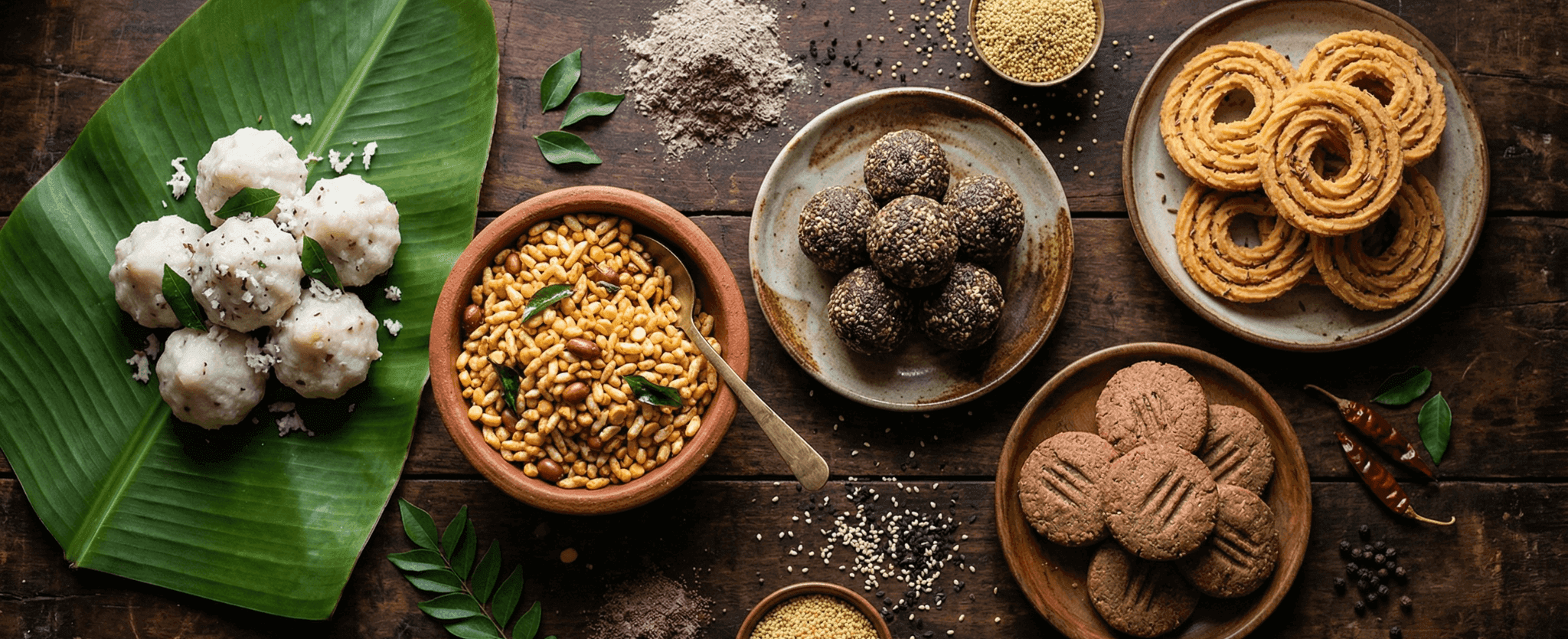
There is a moment every afternoon, around three or four o’clock, when the kitchen starts calling. Not for a full meal, but for something that satisfies without weighing you down. In most Indian households, that moment used to be answered by something made at home: murukku from a grandmother’s hand, ragi laddu rolled the evening before, puffed rice tossed with roasted peanuts and a squeeze of lemon. It was never called healthy. It was simply food made the right way, with known ingredients, prepared with intention.
The packaged snack industry has largely displaced these traditions. Chips, puffs, flavoured crackers, and biscuits with lengthy ingredient lists of refined flour, synthetic flavours, and industrial oils now fill the same gap that traditional homemade snacks once occupied. The trade has not been nutritionally neutral. Most packaged snacks are built on maida, refined vegetable oils high in omega-6, added sugar, and sodium levels that exceed what any homemade preparation would use.
This guide returns to the original. It covers eight traditional Indian snacks made from rice flour, millets, and other whole-food ingredients that can be prepared at home using ingredients from your own pantry. Each recipe is practical, uses ingredients available at Ulamart, and produces snacks that are genuinely worth making for the whole family.
What Makes Traditional Homemade Snacks Genuinely Better
The nutritional case for homemade traditional snacks over packaged products is not built on a single argument. It rests on several distinct advantages that compound with each other.
Traditional Indian snack ingredients, particularly millets and whole rice flours, provide dietary fiber that refined maida does not. Ragi (finger millet) flour contains 344 mg of calcium per 100 grams alongside 11.5 grams of fiber, making ragi murukku or ragi laddu a nutritionally active snack rather than an empty-calorie delivery mechanism. Foxtail millet flour adds protein and a low glycaemic response to preparations that would otherwise spike blood sugar. Rice flour from traditional varieties like Mappillai Samba carries anthocyanins and iron that standard commercial white rice flour lacks.
Beyond nutrition, homemade snacks are made with oils you choose. Cold-pressed coconut oil or groundnut oil used for frying transfers the beneficial fatty acids and antioxidants of those oils into the finished snack. Refined commercial frying oils, which have been heated and filtered through industrial processes, are not the same. The salt you control, the sugar you add (or do not add), the absence of synthetic preservatives and colour: these are all meaningful differences when snacks are consumed daily over years.
| Factor | Homemade Traditional | Packaged Commercial |
| Base flour | Ragi, rice, millet flour | Refined maida or cornstarch |
| Frying oil | Cold-pressed coconut or groundnut | Refined palm or vegetable oil |
| Fiber content | Meaningful, from whole grains | Minimal to none |
| Additives | None | Preservatives, synthetic flavours |
| Freshness | Made and consumed within days | Shelf life of months to years |
Ragi Murukku: Crispy, Calcium-Rich, and Genuinely Satisfying
Murukku is the defining South Indian savory snack. Crispy, coiled, deeply seasoned with cumin and sesame, it is as much a part of Indian festive traditions as it is an everyday tea-time staple. Traditional murukku uses rice flour as its base. Substituting a portion of the rice flour with ragi flour produces a murukku that retains the characteristic crunch while adding the calcium, fiber, and antioxidant content that makes ragi one of the most nutritionally complete millets available.
Ragi Murukku Recipe
Ingredients:
- 1 cup ragi flour (finger millet flour)
- 1/2 cup rice flour
- 2 tablespoons roasted white sesame seeds
- 1 teaspoon cumin seeds
- 1/2 teaspoon asafoetida (hing)
- Salt to taste
- 2 tablespoons cold-pressed coconut oil (for the dough)
- Cold-pressed groundnut or coconut oil for frying
Method:
- Mix ragi flour and rice flour together in a wide bowl. Add sesame seeds, cumin, asafoetida, and salt.
- Add 2 tablespoons of warm coconut oil and mix until the flour takes on a slightly crumbly texture.
- Add warm water gradually, mixing to form a firm but pliable dough. The dough should not be sticky.
- Fill a murukku press with the star disc. Pack the dough into the press firmly.
- Heat oil in a deep pan to 175 to 180 degrees Celsius. Press murukku directly into the hot oil in slow circular motions.
- Fry on medium heat until the sizzling subsides and the murukku turns firm and crispy. This takes approximately 4 to 5 minutes.
- Drain on paper and allow to cool completely before storing in an airtight container.
Store in an airtight container at room temperature. Ragi murukku stays crispy for up to two weeks.
Ulamart’s organic ragi flour (finger millet flour) is freshly ground and free of synthetic additives, making it ideal for this preparation.
Ragi Laddu: The No-Fry Snack That Builds Bones
Ragi laddu is perhaps the most nutritionally efficient traditional Indian snack. It requires no frying, uses minimal sugar, and concentrates ragi’s 344 mg of calcium per 100 grams in a form that is genuinely enjoyable to eat. It has been given to children, nursing mothers, and the elderly in South Indian households for generations specifically because of its bone-strengthening properties. Making a batch takes under 30 minutes.
Ragi Laddu Recipe
Ingredients:
- 1 cup ragi flour
- 3 tablespoons ghee or cold-pressed coconut oil
- 3 to 4 tablespoons country sugar (nattu sarkarai) or jaggery powder, adjust to taste
- 2 tablespoons roasted peanuts, roughly crushed
- 1 tablespoon roasted white sesame seeds
- 1/4 teaspoon cardamom powder
Method:
- Heat a heavy-bottomed pan on low flame. Add ghee and allow it to melt.
- Add ragi flour and roast on low to medium heat, stirring continuously for 8 to 10 minutes until the flour smells nutty and turns slightly darker. Do not rush this step.
- Remove from heat and allow to cool for 5 minutes until warm but not hot.
- Add country sugar, crushed peanuts, sesame seeds, and cardamom powder. Mix well.
- While still warm, take small portions and roll firmly between your palms to form laddus. The warmth helps them bind.
- If the mixture feels too dry to bind, add a small additional amount of warm ghee, a teaspoon at a time.
Ragi laddus stay fresh in an airtight container at room temperature for up to a week, or refrigerated for two weeks.
Mappillai Samba Kara Pori: Traditional Puffed Rice Mixture
Puffed rice mixture, called kara pori or masala pori in South India, is one of the simplest and most beloved traditional snacks. Made with puffed rice tossed in a spiced groundnut oil tempering with peanuts, curry leaves, and a squeeze of lemon, it is filling, low in calories, and infinitely more satisfying than any bagged puffed snack from a supermarket shelf.
Using Mappillai Samba puffed rice (pori) instead of standard commercial puffed rice elevates this simple preparation significantly. Mappillai Samba pori carries the anthocyanins and iron of the original red rice, giving the snack a distinctive flavour and genuine nutritional depth that standard puffed white rice cannot match.
Mappillai Samba Kara Pori Recipe
Ingredients:
- 3 cups Mappillai Samba puffed rice
- 2 tablespoons cold-pressed groundnut oil
- 1/2 teaspoon mustard seeds
- 1 dried red chilli, broken
- 1 sprig fresh curry leaves
- 3 tablespoons roasted peanuts
- 1/4 teaspoon turmeric powder
- 1/4 teaspoon red chilli powder
- Salt to taste
- Juice of half a lemon
Method:
- Heat groundnut oil in a wide pan. Add mustard seeds and allow to splutter.
- Add dried red chilli and curry leaves. Fry for 30 seconds.
- Add roasted peanuts and fry for another 30 seconds until they begin to colour slightly.
- Add turmeric, red chilli powder, and salt. Mix quickly.
- Immediately add puffed rice and toss well over low heat for 2 minutes until evenly coated.
- Remove from heat, add lemon juice, and toss again. Serve immediately for maximum crispness.
Ulamart’s Mappillai Samba puffed rice (pori) makes this traditional snack genuinely nutritious rather than merely satisfying.
Thinai (Foxtail Millet) Mixture: A Nutritious Festival Snack
Mixture (South Indian savoury trail mix) is traditionally made during festivals and stored in large batches to serve visiting family. Standard mixture uses fried rice flour noodles (sev), fried peanuts, fried cashews, and curry leaves tossed in spiced oil. Replacing the standard rice flour sev with foxtail millet sev produces a mixture with a meaningfully lower glycaemic index, higher protein content, and the same festive crunch.
Foxtail Millet Sev (for Mixture)
Ingredients for the sev component:
- 1 cup foxtail millet flour (or a mix of thinai flour and rice flour in equal parts)
- 1/2 teaspoon cumin seeds
- 1/4 teaspoon turmeric
- Pinch of asafoetida
- Salt to taste
- Water to bind into a firm dough
- Oil for frying
Method for sev:
- Mix foxtail millet flour with cumin, turmeric, asafoetida, and salt.
- Add water gradually to form a firm, smooth dough.
- Fill a murukku press with the fine sev disc. Press directly into hot oil at 175 degrees Celsius.
- Fry until crispy and golden, drain, and break into small pieces.
For the final mixture, combine the fried sev with roasted peanuts, fried curry leaves, raisins, a few cashews, and a light tossing in a spiced cold-pressed oil with red chilli powder, chaat masala, and salt. Store in an airtight tin.
Browse organic foxtail millet (thinai) at Ulamart to grind fresh millet flour at home for snack preparations.
Kozhukattai: Steamed Rice Dumplings with No Oil
Kozhukattai are steamed rice dumplings, made from a simple dough of rice flour mixed with water and a pinch of salt. They are shaped into balls, cylinders, or small cups, filled with a sweet or savoury filling, and steamed until cooked through. They are entirely oil-free, require no frying, and are one of the lightest, most easily digested traditional Indian snacks in existence.
Kozhukattai made with Mappillai Samba rice flour carry the distinctive earthy sweetness and reddish hue of the traditional red rice, making them visually striking alongside their nutritional advantage.
Mappillai Samba Kozhukattai Recipe
Ingredients:
- 1 cup Mappillai Samba rice flour (or any traditional rice flour)
- 1 cup water
- Salt to taste
For sweet coconut filling:
- 1/2 cup fresh grated coconut
- 3 tablespoons country sugar or jaggery powder
- 1/4 teaspoon cardamom powder
For savoury filling:
- 1/2 cup grated coconut
- 2 tablespoons roasted chana dal, coarsely ground
- 1/2 teaspoon mustard seeds, 1 dried red chilli, curry leaves, salt
Method:
- Bring water to a boil with a pinch of salt. Remove from heat.
- Add Mappillai Samba rice flour gradually to the hot water while stirring to avoid lumps.
- Mix into a smooth dough. Cover and rest for 5 minutes.
- For sweet filling: mix grated coconut with jaggery and cardamom.
- Take a small portion of dough, flatten into a disc, place a spoonful of filling in the centre, and seal by bringing the edges together.
- Place on a greased steamer plate and steam for 10 to 12 minutes.
Ulamart’s Mappillai Samba rice flour (bridegroom rice flour) gives kozhukattai a beautiful reddish tint and the nutritional richness of traditional red rice, perfect for this preparation.
Ragi Biscuits: Baked Snacks for Everyday Munching
Ragi biscuits made at home are crispy, lightly sweet, and far more nutritionally complete than the biscuits in any commercial packet. They can be made without butter using cold-pressed coconut oil, without refined sugar using country sugar or dates, and without any synthetic raising agents by using a small amount of baking soda.
Basic Ragi Biscuit Recipe
Ingredients:
- 1 cup ragi flour
- 1/4 cup whole wheat flour or any coarse flour
- 3 tablespoons cold-pressed coconut oil
- 3 tablespoons country sugar or date powder
- 1/4 teaspoon cardamom powder
- Pinch of salt
- 3 to 4 tablespoons milk or plant milk to bind
Method:
- Preheat oven to 170 degrees Celsius.
- Mix ragi flour, wheat flour, cardamom, salt, and country sugar in a bowl.
- Add coconut oil and rub into the flour until it resembles coarse breadcrumbs.
- Add milk gradually, a tablespoon at a time, mixing until a firm dough forms. Do not over-mix.
- Roll out to 5 mm thickness on a lightly floured surface.
- Cut into rounds or shapes and place on a lined baking tray.
- Bake for 15 to 18 minutes until firm to touch. They will crisp further as they cool.
- Cool completely before storing in an airtight container.
Ragi biscuits stay fresh in an airtight container for up to two weeks. For a savoury version, replace the sugar and cardamom with cumin powder, sesame seeds, and a pinch of chilli, and reduce the milk slightly for a firmer dough.
Which Ingredient Works Best for Which Snack
| Snack | Best Flour / Grain | Why This Combination |
| Murukku | Ragi + rice flour blend | Crispy structure, calcium boost |
| Laddu | Ragi flour | High calcium, roasts well |
| Puffed rice mixture | Mappillai Samba pori | Anthocyanins, iron, distinctive taste |
| Steamed kozhukattai | Mappillai Samba rice flour | Traditional texture, no oil required |
| Baked biscuits | Ragi flour | Gluten-free base, crispy when baked |
Kambu (Pearl Millet) Laddu: The Winter Warming Snack
Pearl millet, called kambu in Tamil and bajra in Hindi, is classified in Ayurvedic tradition as thermogenic, meaning it generates body heat during digestion. Pearl millet laddus made with jaggery are a traditional winter snack across Rajasthan, Gujarat, and Tamil Nadu. The iron content of pearl millet, at 8 mg per 100 grams, is among the highest of any grain, making these laddus particularly valuable for people managing iron-deficiency anaemia.
Kambu (Pearl Millet) Laddu Recipe
Ingredients:
- 1 cup pearl millet flour
- 3 tablespoons ghee
- 4 tablespoons jaggery powder
- 2 tablespoons roasted peanuts, crushed
- 1/4 teaspoon dry ginger powder (sukku)
- Pinch of cardamom powder
Method:
- Dry roast pearl millet flour in a heavy pan on low heat for 6 to 8 minutes, stirring continuously, until a toasty aroma develops.
- Remove from heat and allow to cool slightly. Add ghee, jaggery, peanuts, dry ginger, and cardamom.
- Mix well while still warm. Roll into firm laddus.
Ulamart carries organic pearl millet flour (kambu maavu) freshly ground for preparations like this.
Practical Tips for Home Snack Making
Making traditional snacks at home is a skill that rewards consistency more than perfection. A few practical principles make the process easier and the results more reliable.
- Roasting the flour before use: For laddu and dry preparations, dry-roasting the flour until fragrant removes any raw taste and develops a nutty complexity that improves the final snack’s flavour significantly
- Oil temperature is everything for fried snacks: Too cool and the snacks absorb oil and turn greasy. Too hot and they brown on the outside while remaining soft inside. The ideal temperature for murukku and sev is 175 to 180 degrees Celsius. A small piece of dough dropped in should sizzle actively and rise to the surface within 5 seconds
- Dough consistency for murukku: The dough must be firm enough to hold shape when pressed through the murukku disc but not so stiff that it cracks. If the pressed murukku breaks immediately in the oil, add a tablespoon of warm water to the dough and remix
- Cooling before storing: All fried and baked snacks must be cooled completely to room temperature before placing in airtight containers. Storing warm snacks traps steam and causes them to go soft quickly
- Batch cooking: Most traditional snacks keep well for 2 to 3 weeks. Making a larger batch once a week or once every ten days is more practical than preparing fresh portions daily
Nutritional Profile of Snack Ingredients at a Glance
| Ingredient | Key Nutrient | Benefit in Snacks |
| Ragi flour | 344 mg calcium/100g | Bone strength, gluten-free base |
| Pearl millet flour | 8 mg iron/100g | Energy, anaemia prevention |
| Mappillai Samba rice flour | Anthocyanins, iron, fiber | Antioxidant-rich traditional base |
| Foxtail millet flour | Low GI, 8g fiber/100g | Blood sugar stability, light crunch |
The National Institute of Nutrition, Hyderabad has published extensive data on the nutritional profiles of Indian millets and traditional grain-based foods, consistently showing that traditional millet-based snacks provide superior fiber, mineral, and antioxidant content compared to refined-flour commercial alternatives. Their food composition tables confirm the nutritional values of ragi, pearl millet, and foxtail millet used in the preparations above.
For a broader understanding of how daily millet consumption supports health, the Ulamart blog on traditional millet breakfast recipes provides seven daily breakfast ideas using the same ingredients that go into these snack preparations, extending millet use across the full day.
The snacks described here are not difficult. They do not require specialised equipment beyond a murukku press and a heavy-bottomed pan. They do not require exotic ingredients. Everything comes from a well-stocked traditional Indian pantry.
What they do require is the decision to make them. That decision, made consistently, turns an afternoon habit that currently involves a packet of chips into one that involves ragi, millet, and traditional oils. The hands-on time is similar. The outcome is not.
All the flours, millets, and traditional grain ingredients used in these recipes are available through Ulamart’s flour and millet range, sourced from verified organic farms and processed to retain the nutritional integrity of each grain.
Note: Ingredient quantities and cooking times in recipes are guidelines. Adjust salt, sugar, and oil to household preference and dietary needs. People with specific conditions such as celiac disease or gluten sensitivity should verify flour sources before use.