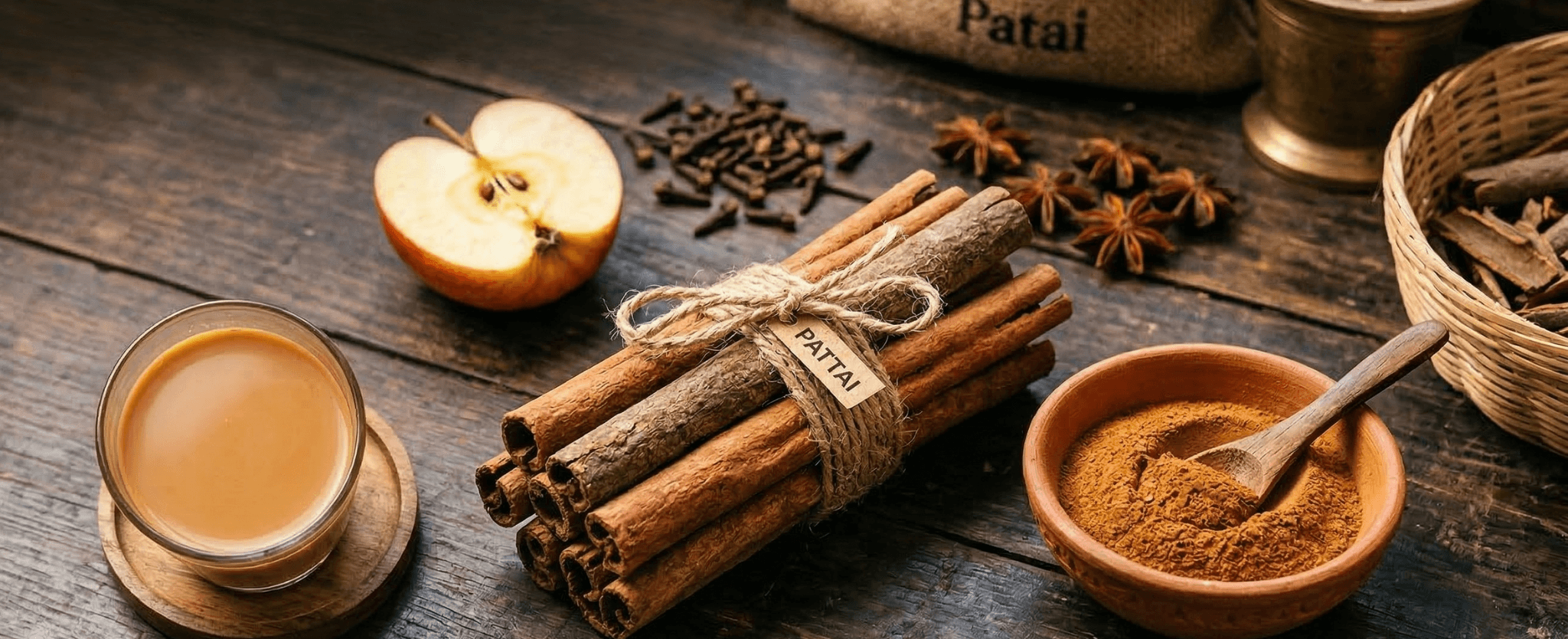
Cinnamon sits in almost every Indian kitchen. It goes into the biryani masala, the chai, the kheer, the halwa. It is ground into garam masala, simmered in curries, and slipped into sweet dishes by cooks who do it by instinct more than measurement. As a spice, cinnamon is so familiar that most people stop noticing it. It is simply there, adding warmth and depth, doing its job quietly in the background.
But that familiarity has come at a cost to its reputation as a health food. Because cinnamon shows up in sweet things, it gets filed mentally under indulgence rather than medicine. This is a significant misreading. Cinnamon (dalchini in Hindi, pattai in Tamil, dalchinachekka in Telugu) has one of the most extensively researched health profiles of any culinary spice on earth. The research that has accumulated across the past three decades covers blood sugar regulation, cardiovascular health, antimicrobial activity, brain function, and anti-inflammatory action. The conclusion is consistent: this warming, fragrant bark is one of the most powerful functional foods in your spice rack.
This guide covers exactly what cinnamon does inside the body, which type of cinnamon matters for health, how to use it correctly, and why people managing blood sugar in particular should be paying much closer attention to this spice than most currently are.
What Cinnamon Actually Is: Bark, Not a Powder
Cinnamon is the dried inner bark of trees belonging to the Cinnamomum genus. The bark is harvested, the outer layer scraped away, and the inner bark allowed to curl naturally into the familiar quills (sticks) as it dries. Ground cinnamon powder is simply these quills reduced to a fine dust.
There are two primary types of cinnamon in commercial use, and the distinction matters significantly for health applications.
Ceylon Cinnamon (True Cinnamon)
Cinnamomum verum, commonly called Ceylon cinnamon or true cinnamon, is native to Sri Lanka (formerly Ceylon) and parts of South India. It has a thin, papery, multi-layered bark that forms tightly wound quills with a delicate, complex sweetness. It contains very low levels of coumarin, a naturally occurring compound that can cause liver stress at high doses. Ceylon cinnamon is the preferred type for therapeutic use, particularly for people planning to consume cinnamon consistently over months.
Cassia Cinnamon (Common Cinnamon)
Cinnamomum cassia, Chinese cinnamon or cassia, is the type most commonly sold in Indian markets and used in Indian cooking. It has a thicker, harder bark, a stronger, more pungent flavour, and significantly higher coumarin content than Ceylon cinnamon. The cinnamaldehyde concentration, which is responsible for most of cinnamon’s health benefits, is also higher in cassia. For culinary use in normal cooking quantities, cassia cinnamon is completely safe. For therapeutic supplemental use (consuming one teaspoon or more daily as a health practice), Ceylon cinnamon is the safer long-term choice.
| Feature | Ceylon (True) Cinnamon | Cassia Cinnamon |
|---|---|---|
| Origin | Sri Lanka, South India | China, Indonesia, Vietnam |
| Bark texture | Thin, papery, multi-layered | Thick, hard, single layer |
| Flavour | Delicate, sweet, complex | Strong, pungent, bold |
| Coumarin level | Very low (safe for daily use) | High (limit daily supplemental use) |
| Best for | Therapeutic daily use, teas | Cooking, biryani, masalas |
Ulamart carries cinnamon sticks (pattai) sourced from quality-checked suppliers. Browse cinnamon sticks at Ulamart for your cooking and wellness needs.
The Active Compounds in Cinnamon
Cinnamon’s health properties are driven by a small group of bioactive compounds, each with distinct mechanisms of action in the body.
Cinnamaldehyde
Cinnamaldehyde is the primary active compound in cinnamon, comprising 55 to 90 percent of cinnamon bark essential oil. It is responsible for the characteristic sweet-spicy aroma and flavour of cinnamon, and it is also the compound most directly linked to cinnamon’s antimicrobial, anti-inflammatory, and blood-sugar-regulating effects. Cinnamaldehyde inhibits the growth of a broad range of bacteria and fungi, and it activates TRPA1 channels in cell membranes in a way that modulates inflammatory pathways.
Procyanidins and Polyphenols
Cinnamon bark contains a class of polyphenolic compounds called type-A procyanidins, which are also found in dark chocolate and grape seeds. These compounds have been specifically studied for their insulin-sensitising properties. They appear to mimic insulin activity and enhance glucose uptake by muscle cells independently of insulin signalling, which is the primary mechanism through which cinnamon reduces post-meal blood sugar spikes.
Cinnamtannin B1
Cinnamtannin B1 is a compound unique to cinnamon that has demonstrated insulin-like activity in laboratory studies, activating the same cellular signalling pathways as insulin. This compound is among the reasons cinnamon has attracted significant attention as a complementary strategy for blood sugar management in people with type 2 diabetes and prediabetes.
Coumarin
Coumarin is a naturally occurring compound present in cinnamon that gives it part of its characteristic sweet aroma. It is entirely safe in the amounts consumed through normal cooking. At very high daily doses (equivalent to several teaspoons of cassia cinnamon every day for extended periods), coumarin can stress the liver in individuals with pre-existing liver sensitivity. This concern applies specifically to cassia cinnamon consumed in therapeutic quantities, not to cinnamon used in everyday Indian cooking.
Blood Sugar Regulation: The Most Important Benefit
Of all cinnamon’s documented health effects, its impact on blood sugar regulation is the most extensively studied and clinically relevant, particularly in a country where type 2 diabetes affects over 100 million people and prediabetes affects an estimated 136 million more.
How Cinnamon Affects Blood Sugar
Cinnamon exerts its blood sugar benefits through multiple complementary mechanisms, which is one reason the research has shown consistent results across different study populations and designs.
- Slows carbohydrate digestion: Cinnamaldehyde inhibits digestive enzymes including alpha-glucosidase and alpha-amylase, which are responsible for breaking down complex carbohydrates into glucose. By slowing this breakdown, cinnamon reduces the rate at which glucose enters the bloodstream after a carbohydrate-containing meal
- Improves insulin sensitivity: The procyanidins and cinnamtannin B1 in cinnamon enhance the insulin signalling cascade in cells, making existing insulin more effective at moving glucose out of the bloodstream and into muscle cells
- Reduces fasting blood glucose: Multiple clinical trials have demonstrated reductions in fasting blood glucose levels of 10 to 29 percent in people with type 2 diabetes consuming 1 to 6 grams of cinnamon daily
- Improves HbA1c: Several studies have shown statistically significant reductions in HbA1c (the 3-month blood sugar average) in people with type 2 diabetes consuming cinnamon as a supplement alongside standard care
What the Research Shows
A meta-analysis published in the Journal of Medicinal Food examined 10 randomised controlled trials of cinnamon supplementation in people with type 2 diabetes. The analysis found consistent reductions in fasting blood glucose, total cholesterol, LDL cholesterol, and triglycerides, alongside increases in HDL (good) cholesterol, across the pooled study population.
A study published in Diabetes Care found that consuming 1, 3, or 6 grams of cinnamon per day for 40 days reduced fasting serum glucose, triglycerides, LDL cholesterol, and total cholesterol in people with type 2 diabetes, with the effects persisting for 20 days after cinnamon consumption was stopped.
It is critical to emphasise that cinnamon is not a replacement for diabetes medication prescribed by a doctor. It is, however, a well-evidenced complementary dietary strategy that many people with type 2 diabetes and prediabetes can safely incorporate alongside their prescribed treatment.
Heart Health: A Multi-Pathway Benefit
Cinnamon’s cardiovascular benefits arise from several of the same mechanisms that make it effective for blood sugar. The lipid-lowering and anti-inflammatory effects documented in clinical research position cinnamon as a genuinely heart-supportive spice when consumed consistently.
Cholesterol and Triglyceride Management
Multiple studies have documented reductions in total cholesterol, LDL cholesterol, and triglycerides in people consuming cinnamon, with simultaneous increases or maintenance of HDL cholesterol. The proposed mechanisms include polyphenol-mediated inhibition of cholesterol synthesis in the liver and improved fat metabolism driven by improved insulin sensitivity. For a spice commonly used in Indian cooking, these effects are achieved at doses easily reached through regular culinary use combined with intentional daily consumption.
Blood Pressure
Cinnamaldehyde has demonstrated vasodilatory effects in animal models and some preliminary human studies. By relaxing the smooth muscle of blood vessel walls, it contributes to lower peripheral vascular resistance and consequently lower blood pressure. While human evidence remains preliminary compared to the blood sugar and cholesterol data, the direction of findings is consistently positive.
Antioxidant Protection for the Cardiovascular System
Cinnamon contains an exceptionally high concentration of polyphenolic antioxidants. Among all commonly used spices and foods, cinnamon consistently ranks near the top of the ORAC (oxygen radical absorbance capacity) scale. Its antioxidants neutralise the oxidative stress that damages LDL cholesterol particles, turning them into the oxidised LDL form that triggers arterial plaque formation. Regular cinnamon consumption therefore addresses one of the root processes of atherosclerosis.
Anti-Inflammatory Properties
Chronic low-grade inflammation is increasingly understood as a driver of most non-communicable diseases: type 2 diabetes, cardiovascular disease, Alzheimer’s disease, arthritis, and certain cancers. Cinnamon addresses inflammation through several pathways simultaneously.
Cinnamaldehyde inhibits NF-kB, the primary nuclear transcription factor that regulates the expression of pro-inflammatory genes. By blocking NF-kB activation, cinnamon reduces the production of pro-inflammatory cytokines including TNF-alpha, IL-1 beta, and IL-6, the same molecular targets addressed by many anti-inflammatory pharmaceutical drugs. The polyphenols in cinnamon additionally scavenge reactive oxygen species that would otherwise trigger inflammatory cascades.
In practice, these anti-inflammatory effects manifest as reduced joint pain and stiffness in people with arthritis, reduced post-meal inflammatory responses (which spike with high-glycaemic meals), and reduced systemic inflammation markers such as C-reactive protein (CRP) in clinical study populations.
Cinnamon for Arthritis
Traditional Ayurvedic practice has used cinnamon in formulations for joint pain for centuries. The modern mechanism is clear: cinnamon’s NF-kB inhibition reduces local joint inflammation, while its warming (ushna virya) property in Ayurvedic classification reflects its vasodilatory effect that improves circulation to peripheral tissues including inflamed joints. A simple preparation of cinnamon with honey in warm water, consumed first thing in the morning, is a widely documented traditional anti-inflammatory practice that has biological plausibility.
Antimicrobial and Antifungal Action
Cinnamon has been used as a food preservative across cultures for thousands of years. Before refrigeration, adding cinnamon to foods extended their safe storage time by inhibiting the growth of spoilage bacteria and fungi. Modern food science has confirmed and quantified this effect.
Cinnamaldehyde demonstrates significant inhibitory activity against a wide range of pathogenic organisms:
- Bacteria: E. coli, Salmonella, Staphylococcus aureus, Listeria monocytogenes, Helicobacter pylori (associated with stomach ulcers)
- Fungi: Candida albicans (the most common cause of fungal infections in humans), Aspergillus species
- Foodborne pathogens: Broad-spectrum activity that has been studied for food safety applications
The mechanism involves cinnamaldehyde disrupting the cell membrane integrity of microbial organisms and inhibiting their ATP synthesis, effectively starving them of energy. This is why cinnamon tea and cinnamon-spiced foods have a long traditional association with supporting recovery during infections, particularly respiratory tract and gastrointestinal infections.
Cinnamon Against H. pylori
Helicobacter pylori infection affects an estimated 44 percent of the global population and is strongly associated with gastric ulcers, chronic gastritis, and stomach cancer risk. Cinnamon extract has demonstrated in vitro activity against H. pylori strains, including some antibiotic-resistant strains. While cinnamon is not a replacement for the standard triple-therapy antibiotic protocol for H. pylori eradication, its documented activity against this pathogen makes it a rational complementary dietary measure for maintaining gastric health.
Brain and Cognitive Health
The research on cinnamon and brain health is among the most exciting areas of current investigation, driven by findings that cinnamon compounds may address some of the molecular mechanisms underlying Alzheimer’s disease and cognitive decline.
Tau Protein Inhibition
Alzheimer’s disease is characterised partly by the abnormal aggregation of tau protein into neurofibrillary tangles within brain neurons. Laboratory research has demonstrated that certain cinnamon compounds, particularly cinnamaldehyde and epicatechin, can inhibit tau aggregation in cell models. This finding is preliminary and does not imply that cinnamon prevents or treats Alzheimer’s disease, but it has generated significant research interest in cinnamon compounds as potential neuroprotective agents.
BDNF and Neuronal Protection
Animal studies have shown that cinnamon supplementation increases the production of brain-derived neurotrophic factor (BDNF), a protein critical for the growth, maintenance, and survival of neurons. BDNF levels decline with age and are associated with depression, cognitive decline, and neurodegenerative disease risk. Whether the BDNF-elevating effects seen in animal models translate meaningfully to humans at dietary doses remains under investigation.
Improved Attention and Cognition
A human study published in the journal Advances in Neuroscience and Neurological Research found that both smelling and consuming cinnamon improved performance on cognitive tasks involving working memory, attention speed, and visual-motor response. The proposed mechanism involves cinnamon’s insulin-sensitising effects improving glucose uptake in brain tissue, where glucose is the primary fuel. Better glucose utilisation in the brain translates to sharper, more consistent cognitive performance.
Digestive Health and Gut Benefits
In Indian traditional medicine, cinnamon has a long history as a digestive aid. It was included in post-meal preparations, chai, and festive foods precisely because cooks understood that it eased digestion. The biological basis for this is well-established.
Carminative Action
Cinnamon relaxes smooth muscle in the gastrointestinal tract, reducing gas accumulation and relieving bloating. This carminative action is why chai made with cinnamon, ginger, and cardamom is an effective remedy for post-meal digestive discomfort that no pharmacological analysis can dismiss as merely placebo. The combination of these three spices addresses gas, motility, and inflammation through overlapping and complementary mechanisms.
Prebiotic Potential
Emerging research suggests that cinnamon polyphenols may act as prebiotics, selectively stimulating the growth of beneficial gut bacteria while inhibiting pathogenic species. This dual action, supporting beneficial bacteria while suppressing harmful ones, positions cinnamon as a gentle, whole-food approach to microbiome maintenance that complements the prebiotic fiber provided by millets and pulses.
Anti-Nausea and Anti-Ulcer Effects
Traditional cinnamon preparations for nausea and stomach discomfort reflect its documented gastroprotective properties. Cinnamon’s antimicrobial activity against H. pylori, combined with its ability to stimulate protective mucus secretion in the stomach lining and its anti-inflammatory action, makes it a rational traditional remedy for dyspepsia and mild gastric discomfort.
Cinnamon in Ayurveda and Traditional Medicine
Cinnamon (tvak or dalchini in Sanskrit Ayurvedic texts) is classified in Ayurveda as having ushna virya (heating quality), katu tikta rasa (pungent and bitter taste), and laghu (light) and ruksha (dry) properties. These qualities make it particularly indicated in conditions of kapha excess (sluggishness, congestion, slow digestion, weight gain) and vata imbalance (cold extremities, sluggish circulation).
Deepana and Pachana Action
In Ayurvedic pharmacology, cinnamon is classified as deepana (kindling the digestive fire, agni) and pachana (promoting the digestion of ama, metabolic toxins). This makes it one of the foundational spices in the traditional practice of spicing food not merely for flavour but for its function in supporting the digestive process. The placement of cinnamon in garam masala, which literally translates to warming spice blend, is not arbitrary. It is a deliberate deepana formulation that has been calibrated over generations of empirical use.
Cinnamon in Rasayana Preparations
In classical Ayurvedic rasayana (rejuvenative) preparations, cinnamon appears in formulations intended to support longevity, cognitive function, and metabolic balance. Triphala with cinnamon, cinnamon-ginger-cardamom teas, and cinnamon-honey preparations are all documented in the Charaka Samhita and subsequent Ayurvedic texts as part of daily rasayana practice for individuals in middle and later life.
How to Use Cinnamon for Maximum Benefit
Daily Quantities
Most clinical research on cinnamon’s health effects has used doses between 1 and 6 grams per day (roughly 0.5 to 2 teaspoons of ground cinnamon or one to two small cinnamon sticks simmered in liquid). For healthy adults seeking general health benefits, 1 to 2 grams daily (approximately half a teaspoon of ground cinnamon) incorporated into food and drinks is a practical, sustainable target. For people specifically seeking blood sugar support under medical supervision, doses of 2 to 6 grams per day have been used in clinical studies.
Forms and Their Uses
- Cinnamon sticks (pattai): Best for simmering in chai, rice preparations, biryanis, and slow-cooked curries. The extended heat extracts oil-soluble compounds into the cooking medium
- Ground cinnamon powder: Best for adding to porridges, smoothies, yoghurt, overnight oats, baked preparations, and as a finishing spice on hot drinks
- Cinnamon water: Simmering one small cinnamon stick in two cups of water for 10 to 15 minutes produces a mildly flavoured tea that delivers a consistent daily dose of cinnamaldehyde and procyanidins
- Cinnamon in chai: The traditional South Indian and North Indian practice of adding pattai to chai is one of the most effective and enjoyable daily delivery mechanisms for cinnamon’s benefits
- Cinnamon-honey combination: Widely used in Ayurvedic practice, this combination is particularly relevant for its joint anti-inflammatory and blood-sugar-moderating effects
Practical Recipes for Daily Use
Morning Cinnamon Water
- Simmer one small cinnamon stick (or half a teaspoon of ground cinnamon) in 400 ml of water for 10 minutes
- Allow to cool to drinking temperature
- Drink on an empty stomach or with breakfast
- Consistent daily consumption over 4 to 12 weeks shows the most measurable effects on fasting blood glucose
Cinnamon-Ginger Chai
- Add one cinnamon stick, two slices of fresh ginger, and two cardamom pods to 300 ml of water
- Bring to a boil and simmer for 5 minutes
- Add 100 ml of milk (dairy or plant-based) and one teaspoon of tea leaves
- Strain and serve, optionally with a small amount of jaggery or honey
Blood-Sugar-Friendly Millet Porridge with Cinnamon
Cook foxtail millet (thinai) as a porridge with water, adding one small cinnamon stick while cooking. Once cooked, remove the stick, add a small amount of jaggery or dates for sweetness, and top with a sprinkle of ground cinnamon. This preparation combines the prebiotic fiber and low glycemic index of foxtail millet with cinnamon’s enzyme-inhibiting blood sugar effect, creating a breakfast that actively moderates the morning glucose response.
Cinnamon with Other Spices: The Synergy of Indian Cooking
One of the most overlooked dimensions of cinnamon’s health profile is how it interacts with other spices commonly used alongside it in Indian cooking. These interactions are not merely flavour combinations. They are functional synergies that traditional cooking evolved through empirical observation of what worked.
| Spice Combination | Combined Benefit | Traditional Preparation |
|---|---|---|
| Cinnamon + Turmeric | Anti-inflammatory synergy, NF-kB and COX-2 inhibition from both directions | Golden milk (haldi-dalchini doodh) |
| Cinnamon + Ginger | Digestive warming, combined carminative and anti-nausea action | Adrak-dalchini chai, rasam |
| Cinnamon + Cardamom | Blood sugar moderation, digestive enzyme support, aromatic synergy | Masala chai, biryani, payasam |
| Cinnamon + Black Pepper | Piperine enhances bioavailability of cinnamon polyphenols | Garam masala, rasam, pepper chai |
Read about the powerful individual benefits of turmeric (manjal) on the Ulamart blog to understand how cinnamon and turmeric together form one of the most potent anti-inflammatory food combinations in traditional Indian cooking.
Browse Ulamart’s full organic spice range including cumin seeds (jeera), black pepper (milagu), and cardamom (elaichi) alongside cinnamon to build a complete functional spice kitchen.
Who Should Pay Special Attention to Cinnamon Intake
People with Type 2 Diabetes or Prediabetes
Cinnamon’s blood-sugar-regulating effects are most clinically relevant for this group. Adding cinnamon to daily meals, particularly to carbohydrate-heavy preparations, is a practical, low-risk, and evidence-supported strategy to moderate post-meal glucose spikes. Always inform your doctor or diabetes care team about any dietary changes, including intentional cinnamon supplementation, as blood sugar medication doses may need adjustment if cinnamon produces meaningful reductions.
People with High Cholesterol or Triglycerides
The lipid-lowering effects documented in multiple trials make cinnamon a rational daily addition for people managing elevated cholesterol or triglycerides through dietary means. The effects are modest rather than dramatic (reductions of 10 to 30 percent in triglycerides and LDL across studies) but meaningful when combined with other dietary interventions.
People with Arthritis or Inflammatory Conditions
Cinnamon’s NF-kB inhibiting anti-inflammatory action, particularly when combined with turmeric, makes it a practical complementary measure for managing chronic inflammatory conditions. Daily consumption through chai, warm water preparations, or cooking is a sustainable way to deliver consistent anti-inflammatory compound exposure.
Precautions
- Pregnancy: Medicinal quantities of cinnamon (above normal culinary use) have historically been used to stimulate uterine contractions in traditional medicine. Pregnant women should limit themselves to normal culinary quantities and consult their obstetrician before using cinnamon as a health supplement
- Liver conditions: People with existing liver disease should choose Ceylon cinnamon if consuming cinnamon daily for health purposes, to minimise coumarin exposure
- Blood-thinning medications: Cinnamon has mild anticoagulant properties. People taking warfarin or other blood thinners should discuss cinnamon supplementation with their doctor
- Allergy: Cinnamon allergy is rare but exists. Mouth sores, skin irritation, or digestive discomfort after consuming cinnamon in normal quantities warrants medical assessment
What Current Research Confirms
The National Center for Biotechnology Information (NCBI) PubMed database hosts over 1,200 indexed studies on cinnamon and human health as of 2025, covering blood sugar, cardiovascular health, antimicrobial properties, and neurological effects. The volume and consistency of this research body makes cinnamon one of the best-evidenced functional spices in clinical nutrition literature.
The Indian Council of Medical Research (ICMR) dietary guidelines for type 2 diabetes management acknowledge the role of spices including cinnamon in supporting blood sugar control as part of a balanced traditional Indian diet. The guidelines position spice-based dietary interventions as complementary to, not replacements for, pharmacological management.
The global scientific consensus is that cinnamon, particularly when consumed consistently as part of a varied whole-food diet, provides measurable benefits in blood sugar regulation, lipid profiles, and inflammatory markers. The effect sizes are meaningful for a food-based intervention and the safety profile at culinary and moderate therapeutic doses is well-established.
The Spice That Has Always Done More Than You Knew
Cinnamon was never just a sweet spice. The knowledge that it eased digestion, warmed cold mornings, settled blood after a heavy meal, and kept the body balanced through changing seasons was embedded in every grandmother’s chai recipe, every festive biryani, every winter halwa. That knowledge was not superstition. It was accumulated observation, refined across generations, encoding nutritional wisdom that modern biochemistry has spent decades catching up to.
The research now confirms what traditional practice understood intuitively: this fragrant bark is one of the most multi-functional health foods available in any kitchen. Not as a cure, not as a supplement, but as exactly what it has always been: a spice that, used daily and used well, contributes quietly and consistently to the body’s ability to regulate itself.
Pick up quality cinnamon sticks (pattai) from Ulamart, where all spices are sourced from verified organic and traditionally grown supply chains to ensure you get the genuine health properties this spice is known for.
Medical Disclaimer: This article is for general educational purposes only and does not constitute medical advice. People with diabetes, liver conditions, or those on medications should consult a qualified healthcare professional before making cinnamon a daily therapeutic supplement. Cinnamon is not a replacement for prescribed diabetes medication.