There was a time in most Indian households when mustard oil was not a choice. It was simply the oil. The sharp, nose-tingling aroma rising from a kadai was as much a part of the kitchen as the clay pot on the stove or the grinding stone in the corner. Mustard oil fried the fish in Bengal. It tempered the mustard seeds in Rajasthani dal. It was massaged into newborn skin in winters across North India, rubbed onto stiff joints by elders, and drizzled into the ear to ease aches. Grandmothers dispensed it for everything.
Then, somewhere across the 1990s and 2000s, a wave of refined oils swept through Indian kitchens. Sunflower oil, rice bran oil, and blended vegetable oil arrived in bright plastic pouches with claims of being heart-friendly and light. Mustard oil was quietly pushed to the side. In some urban households, it nearly disappeared entirely.
Today, that story is reversing. As nutritional research advances and interest in traditional food practices grows, mustard oil is reclaiming its place. Not just as a nostalgic ingredient, but as a scientifically validated cooking fat with a genuinely impressive health profile. This guide covers exactly what makes mustard oil exceptional, what the research says about its key compounds, how to use it correctly, and why the oils that replaced it may not have been the upgrade they claimed to be.
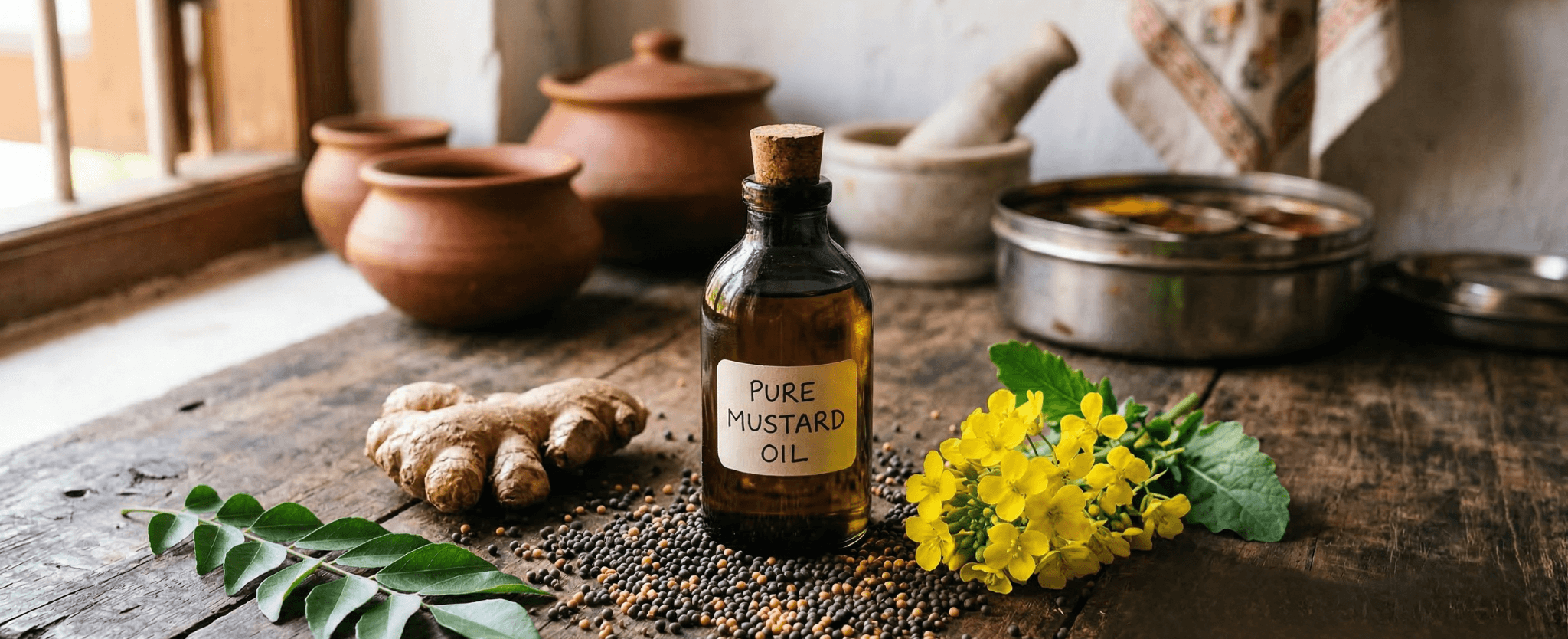
What Is Mustard Oil and Where Does It Come From
Mustard oil is extracted from the seeds of the mustard plant (Brassica nigra, Brassica juncea, or Brassica hirta), a flowering annual cultivated across the Indian subcontinent, Bangladesh, Nepal, and parts of Eastern Europe for thousands of years. India is among the largest producers of mustard seeds globally, with cultivation concentrated in Rajasthan, Uttar Pradesh, Haryana, Madhya Pradesh, and West Bengal.
The oil pressed from these seeds has a distinctive pungent, sharp flavour and aroma driven primarily by allyl isothiocyanate, the same compound responsible for the heat in wasabi and horseradish. This pungency is not a flaw. It is the marker of the oil’s authenticity and of several of its key health properties.
Cold-Pressed vs. Refined Mustard Oil
Like all cooking oils, mustard oil is available in two broad forms: traditionally cold-pressed (kachi ghani or marachekku in South India) and commercially refined. The distinction matters significantly for both flavour and nutrition.
Cold-pressed mustard oil is extracted by crushing the seeds at low temperature, preserving volatile compounds, glucosinolates, natural antioxidants, and essential fatty acids in their intact form. Refined mustard oil undergoes solvent extraction using hexane, followed by bleaching, deodorising, and filtering that removes much of the nutritional complexity alongside the pungency. The resulting oil is milder but substantially less nutritious.
For both cooking and therapeutic use, kachi ghani cold-pressed mustard oil is the appropriate choice. The refining process is a trade of flavour and nutrition for shelf-life and aesthetic palatability, which is a poor trade from a health standpoint.
The Nutritional Composition of Mustard Oil
Mustard oil has a fatty acid profile that is genuinely distinct from most commonly used cooking oils. Understanding this composition is the foundation for understanding why it behaves differently in the body.
| Fatty Acid | Percentage | Health Role |
| Erucic acid (omega-9) | 42 to 47% | Anti-inflammatory, traditional use |
| Oleic acid (omega-9) | 12 to 16% | Heart health, LDL reduction |
| Linoleic acid (omega-6) | 14 to 20% | Cell membrane structure, skin health |
| Alpha-linolenic acid (omega-3) | 5 to 12% | Cardiovascular, anti-inflammatory |
| Saturated fats | 7 to 12% | Stable at high heat, long shelf life |
The omega-6 to omega-3 ratio in mustard oil sits between 2:1 and 3:1, which is among the most balanced ratios of any cooking oil available. In comparison, refined sunflower oil carries a ratio of approximately 40:1 to 70:1. Modern research increasingly identifies the chronic inflammatory burden associated with heavily omega-6-dominant diets, making mustard oil’s natural balance one of its most clinically significant advantages.
Allyl Isothiocyanate: The Source of the Pungency and the Power
The sharp smell of mustard oil comes from allyl isothiocyanate (AITC), a sulphur-containing compound formed when myrosinase enzymes in crushed mustard seeds interact with glucosinolates. AITC is the same family of compounds found in wasabi, horseradish, and cruciferous vegetables like broccoli. Research has documented its antimicrobial, antifungal, and anti-cancer properties in laboratory studies. It is also what gives mustard oil its ability to act as a natural preservative in pickles, where it inhibits the growth of spoilage bacteria without requiring synthetic additives.
Vitamin E and Phytosterols
Cold-pressed mustard oil retains natural alpha-tocopherol (vitamin E) at around 1.5 to 2 mg per tablespoon, alongside beta-sitosterol and other phytosterols that compete with cholesterol absorption in the small intestine. These compounds are substantially reduced or destroyed in refined oil processing, which is a key reason cold-pressed kachi ghani oil confers benefits that a refined counterpart does not.
The Health Benefits of Mustard Oil
Heart Health: The Omega Balance Advantage
Cardiovascular research has increasingly focused on the omega-6 to omega-3 ratio as a predictor of inflammatory cardiovascular risk. The typical modern Indian diet has shifted toward a ratio as high as 15:1 to 25:1 due to heavy reliance on refined vegetable oils. Mustard oil’s natural 2:1 to 3:1 ratio, when used as a primary cooking fat, helps shift this balance in a cardioprotective direction.
Studies conducted in populations that use mustard oil as a primary cooking fat (notably in rural West Bengal, Bihar, and parts of Rajasthan) have consistently shown lower rates of acute coronary events compared to populations that switched to refined seed oils. A frequently cited study published in the American Journal of Clinical Nutrition noted that populations using mustard oil had lower rates of ischemic heart disease, attributed partly to its favourable fatty acid composition.
The erucic acid content of mustard oil has historically attracted scrutiny, and it is worth addressing this directly. Concerns about erucic acid arose primarily from rodent studies involving extremely high doses (well above typical human consumption levels). Subsequent research in human populations that have consumed mustard oil for generations has not demonstrated the cardiac toxicity observed in those animal studies. India’s FSSAI permits cold-pressed mustard oil for cooking based on this population-level safety record.
Antibacterial and Antifungal Properties
Mustard oil’s antimicrobial properties are among its oldest documented uses. Allyl isothiocyanate demonstrates significant inhibitory activity against a range of pathogens including E. coli, Salmonella, Staphylococcus aureus, and Listeria monocytogenes. This is the scientific basis for why mustard oil has been used for millennia in pickling, where it extends the shelf life of vegetables naturally.
When used in cooking, the antimicrobial properties contribute to food safety at the preparation stage. Applied topically, mustard oil’s antifungal action has traditionally been used to manage minor fungal skin conditions, particularly in the feet and between the toes. This is not a substitute for medical treatment, but it reflects a genuine antimicrobial mechanism.
Anti-Inflammatory Action
The alpha-linolenic acid (ALA) in mustard oil is a plant-derived omega-3 fatty acid that the body can partially convert to EPA and DHA, the long-chain omega-3 forms most associated with anti-inflammatory effects. While conversion efficiency is limited (typically 5 to 15 percent), even this partial conversion, combined with the naturally low omega-6 load in mustard oil, contributes to a lower overall inflammatory status over time.
Traditional mustard oil massage practices, particularly in North India where newborns are routinely massaged with warm mustard oil in winter, have been examined in clinical research. Studies have noted improved thermoregulation and weight gain in infants receiving mustard oil massage versus control groups. This reflects the oil’s ability to penetrate the skin barrier and provide systemic fatty acid exposure via transdermal absorption.
Digestive Health
Consumed in small quantities as part of cooked food, mustard oil stimulates the production of digestive enzymes and bile acids, improving fat digestion and absorption of fat-soluble vitamins A, D, E, and K. The AITC content also has a mild stimulant effect on intestinal motility, which can help with sluggish digestion.
Traditionally, raw mustard oil drizzled over foods or used in chutneys (particularly in Bengali cuisine) provides an unheated dose of AITC, which is the most potent form of its antimicrobial and digestive benefits. Heating destroys a portion of the AITC content, though most benefits persist at normal cooking temperatures.
Oral Health: The Oil Pulling Tradition
Oil pulling with sesame oil is the most widely documented traditional practice, but mustard oil has also been used for oil pulling and gum massage for centuries. The antimicrobial properties of allyl isothiocyanate provide genuine antibacterial action against Streptococcus mutans and other oral pathogens. Regular gum massage with a small amount of mustard oil and rock salt is a practice documented in Ayurvedic texts and reported to strengthen gums and reduce bleeding.
Skin and Hair Care
Applied topically, mustard oil functions as an emollient that seals moisture into the skin while its antimicrobial properties address surface bacteria. Its vitamin E content provides antioxidant protection for the skin barrier. In cold climates, mustard oil’s relatively thick consistency makes it particularly effective as a winter skin moisturiser, which explains its widespread traditional use for full-body massage in northern Indian winters.
For hair, mustard oil penetrates the hair shaft more effectively than many lighter oils due to its fatty acid chain structure. It stimulates scalp circulation, provides deep conditioning, and has been used to address dandruff through its antifungal action. The selenium content of mustard seeds also contributes to scalp health and has been linked to hair strength in traditional usage.
How Mustard Oil Compares to Other Cooking Oils
| Oil | Omega-6:3 Ratio | Smoke Point | Best For |
| Mustard Oil (cold-pressed) | 2:1 to 3:1 | 250°C | Deep frying, tadka, stir-fry |
| Sesame Oil (cold-pressed) | 138:1 | 177°C | Finishing, low-heat cooking |
| Coconut Oil (virgin) | Low omega-3 | 177°C | Baking, medium heat |
| Groundnut Oil (cold-pressed) | 32:1 | 232°C | Deep frying, Indian curries |
| Refined Sunflower Oil | 40:1 to 70:1 | 227°C | Not recommended daily |
Mustard oil’s smoke point of approximately 250 degrees Celsius makes it one of the most suitable cooking oils for high-heat Indian cooking methods. Deep-frying, bhunao, and tadka all involve temperatures in the 180 to 230 degree range where many cold-pressed oils begin to degrade. Mustard oil handles this heat range well while maintaining a meaningful proportion of its nutritional content.
Traditional Uses Across Indian Regions
Bengal: The Fish and Mustard Marriage
Bengali cuisine has built one of the world’s most distinctive culinary traditions on the foundation of mustard oil. Shorshe ilish (hilsa fish in mustard gravy), maach bhaja (crispy fried fish in smoking hot mustard oil), and the classic mustard oil and green chilli finishing drizzle on dal are not mere traditions. They are a food culture shaped around mustard oil’s particular flavour chemistry, which no neutral refined oil can replicate.
The traditional Bengali mustard oil press, the ghani, was a fixture in every village until recently. The oil pressed from black mustard seeds (Brassica nigra) in Bengal carries a sharper pungency than the yellow mustard oil (from Brassica juncea) more common in North India. Both are nutritionally valuable, with the black variety typically carrying slightly higher allyl isothiocyanate content.
Rajasthan and North India: The Oil of Winter Survival
In the cold, dry climate of Rajasthan and the northern plains, mustard oil served a function that went beyond flavour. Full-body mustard oil massage before a bath (tel maalish) was the daily winter practice in most families, particularly for children and the elderly. The oil’s thermogenic properties, its ability to penetrate the skin, and its deep conditioning effect on dry winter skin made it a practical necessity.
In Rajasthani cooking, mustard oil tempers the base of dals and sabzis, provides the heat for the state’s famous mirchi preparations, and is the traditional oil for panchkuta (the five desert vegetables that are sun-dried and preserved). The antimicrobial action of mustard oil is critical to these preserved preparations.
Odisha and Eastern States: Mustard Oil as Sacred Ingredient
In Odia and other eastern culinary traditions, mustard oil holds a semi-sacred status, used in temple cooking, ritual preparations, and the daily family meal with equal reverence. The pungent raw mustard oil used as a finishing oil on rice and lentils, a practice still common in rural Odisha, delivers the highest concentration of AITC and represents the most nutritionally complete form of consuming this oil.
Punjabi and Kashmiri Usage
In Punjab, mustard oil is inseparable from saag season. Makki di roti and sarson da saag would be a lesser experience without the pool of mustard oil or white butter on top. In Kashmiri wazwan cooking, mustard oil provides the base fat for slow-cooked mutton preparations, where its high smoke point handles the extended high-heat cooking without breakdown.
How to Use Mustard Oil Correctly
The Heating Step for First Use
Raw cold-pressed mustard oil contains volatile glucosinolate compounds that, at very high concentrations, can be mildly irritating to the throat and digestive tract when consumed unheated in large quantities. The traditional practice of heating the oil to its smoking point once before use (known as ‘breaking’ the oil) converts the most volatile glucosinolates while preserving the majority of beneficial fatty acids and antioxidants. This step is particularly recommended when using mustard oil for cooking unfamiliar to the palate, or when cooking for children.
For pickling, raw unheated mustard oil is used directly, and its full AITC content is intentional and beneficial. For daily cooking, the one-time heating step is standard traditional practice.
Quantity and Integration
- Use 1 to 2 teaspoons per serving for tadka (tempering), which is the most nutritionally efficient application
- For stir-fry and saute, 1 tablespoon for a 2 to 3 portion meal is appropriate
- For deep frying, mustard oil performs well at high temperatures and can be used in the same quantities as groundnut oil
- As a finishing drizzle on dal, rice, or chaat, a small amount of raw cold-pressed mustard oil delivers the most concentrated AITC benefit
- For hair or body massage, warm the oil slightly (not to smoking point) before application for better penetration
Pairing with Black Pepper and Turmeric
Mustard oil’s absorption-enhancing properties complement several traditional spices. When used as the base oil for cooking with turmeric (manjal), the fat-soluble curcumin dissolves into the oil and becomes significantly more bioavailable. The traditional practice of making turmeric paste in warm mustard oil or cooking with both together is biochemically sound. Read more about the powerful properties of turmeric on the Ulamart blog.
Mustard Oil in Ayurveda
Charaka Samhita and Sushruta Samhita, the foundational Ayurvedic texts, classify mustard oil (sarshapa taila) as having ushna virya (heating quality), tikshna (sharp, penetrating property), and sukshma (subtle, able to reach deep tissues). These properties explain its traditional application in conditions characterised by kapha dosha excess: congestion, sluggish digestion, cold and damp conditions, and ama (metabolic toxin) accumulation.
In Ayurvedic external medicine, mustard oil is the base oil for several traditional formulations used in conditions like arthritis (amavata), muscle pain (mamsagata vata), and respiratory congestion (where mustard oil was used for steam inhalation by adding a small amount to hot water). These practices align with the documented anti-inflammatory and antimicrobial properties of the oil’s chemical composition.
Nasya and Karna Purana
Two classical Ayurvedic procedures directly involve mustard oil: Nasya involves instilling warmed herbal oil (sometimes pure mustard oil or mustard-infused preparations) into the nostrils to clear sinus passages and treat respiratory conditions. The antimicrobial and mucus-clearing properties of AITC make mustard oil particularly suitable for this application. Karna purana involves filling the ear canal with warm sesame or mustard oil to address earaches, tinnitus, and wax buildup, a practice used in traditional households for generations.
Mustard Oil for Pickles: Science Behind the Tradition
Indian pickles (achar) have been made with mustard oil for thousands of years. This is not merely tradition. The antimicrobial properties of AITC, combined with the natural acidity introduced through fermentation and added acidic ingredients like raw mango or lime, create a preservation system that inhibits pathogenic bacteria and fungi without any synthetic preservatives.
Mustard oil-based pickles typically have shelf lives of one to three years at room temperature, in lidded containers away from direct light. Refined oils do not provide the same antimicrobial baseline and are not suitable substitutes in traditional pickle-making. The distinct flavour of a good mango achar is inseparable from the character of cold-pressed mustard oil.
Why Your Grandmother Never Got Food Poisoning from Her Pickles
Before refrigeration, food preservation across North and East India relied heavily on the antimicrobial and antioxidant properties of cold-pressed mustard oil. Combined with salt, sun-drying, and acidifying agents, mustard oil created a multi-barrier preservation environment. This is the empirical tradition that predates modern food science by centuries, and that modern food science has now largely confirmed.
Who Should Use Mustard Oil with Caution
Mustard oil is safe for the overwhelming majority of people when used in normal culinary quantities. However, some individuals should exercise caution or consult a doctor before significantly increasing their mustard oil intake.
- Individuals with thyroid conditions: Glucosinolates in mustard oil are goitrogenic at very high intake levels. Normal cooking quantities do not pose a meaningful risk, but individuals with hypothyroidism may wish to moderate raw oil intake
- Those with allium or sulphur compound sensitivities: The AITC content may cause irritation for individuals with known sensitivities to similar compounds in garlic, onion, or wasabi
- Infants under six months: Topical use of mustard oil on newborn skin is traditional but some dermatological research suggests it may disrupt the skin barrier in very premature or highly sensitive infants. Consult a paediatrician
- People with existing kidney or liver disease: High-fat dietary changes should always be discussed with a healthcare provider
For healthy adults using mustard oil in normal cooking quantities (2 to 3 teaspoons per meal as part of a varied diet), the evidence consistently supports both safety and benefit.
Building a Traditional Oil Rotation for Optimal Health
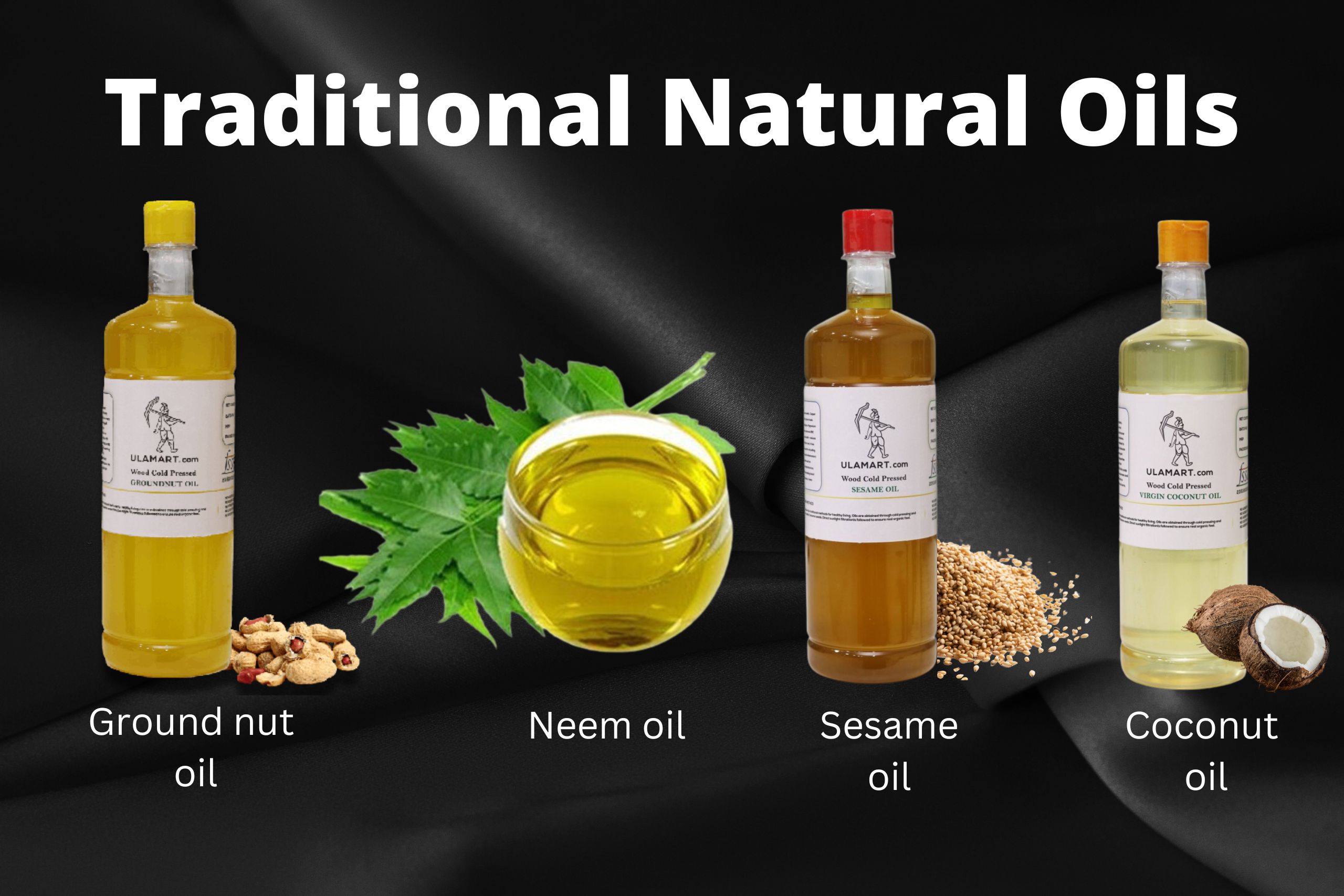
No single oil, however nutritious, should be the exclusive cooking fat in any kitchen. Traditional Indian households understood this intuitively. Mustard oil in the morning. Coconut oil in some dishes. Sesame oil for tempering certain preparations. Groundnut oil for deep frying occasions. This natural rotation provided a diverse fatty acid intake that no single-oil kitchen can achieve.
| Oil | Primary Strength | Best Cooking Use |
| Mustard Oil | Omega balance, antimicrobial | Tadka, stir-fry, pickles, high heat |
| Coconut Oil (virgin) | MCFAs, antiviral, medium heat stable | South Indian curries, baking, medium heat |
| Sesame Oil (cold-pressed) | Lignans, antioxidant, bone minerals | Finishing oil, Tamil cuisine tadka |
| Groundnut Oil (cold-pressed) | Monounsaturated fats, high smoke point | Deep frying, neutral-flavour cooking |
Shop cold-pressed sesame oil (nallenai) and cold-pressed groundnut oil (kadalai ennai) individually at Ulamart to build the complete traditional oil rotation at home.
Also explore Ulamart’s blog on cold-pressed oil versus refined oil for a deeper understanding of why the extraction method determines the health value of any cooking oil. View All Cold-Pressed Oils
What the Research Is Now Confirming
Population-level research in India has examined mustard oil usage across generations in states where it remains the primary cooking oil. Studies from institutions including the All India Institute of Medical Sciences (AIIMS) have examined mustard oil consumption in cardiac patient populations and found that regular mustard oil consumers showed lower inflammatory markers compared to sunflower oil-dominant diet groups, after controlling for other lifestyle variables.
The National Institute of Nutrition, Hyderabad has also published data on fatty acid profiles of traditional Indian cooking oils, with mustard oil consistently rated among the most nutritionally balanced options for cardiovascular health outcomes based on its omega-3 content and ratio data.
The erucic acid debate has effectively been resolved at practical consumption levels. No credible human epidemiological study has identified mustard oil consumption at normal dietary levels as a cardiac risk factor. The populations that have eaten it for generations as their primary oil are, in fact, among those studied as examples of favourable heart health outcomes in Indian nutrition research.
Returning to What Was Never Actually Wrong
The pungent smell that rises when mustard oil hits a hot pan is not an acquired taste that takes getting used to. For generations of Indian families, it was simply the smell of cooking. It meant food was being made. It meant someone was taking care of the household.
The decades-long detour through refined oils was driven more by marketing and industrial food economics than by nutritional science. The oils that promised to be lighter and heart-friendly were, in many cases, stripped of nutritional complexity and loaded with omega-6 fatty acids in ratios that human metabolism had never encountered at that scale.
Mustard oil’s return is not nostalgia. It is nutritional correction. The sharp, honest aroma is the smell of a fat that has not been processed into blandness, that has not had its character bleached out of it, that delivers what it always delivered: flavour, preservation, nourishment, and the quiet medicine of a food that grandmothers, across centuries, knew was right.
Medical Disclaimer: The information in this article is for general educational purposes only and does not constitute medical advice. Consult a qualified healthcare professional before making significant changes to your diet or for treatment of any health condition.