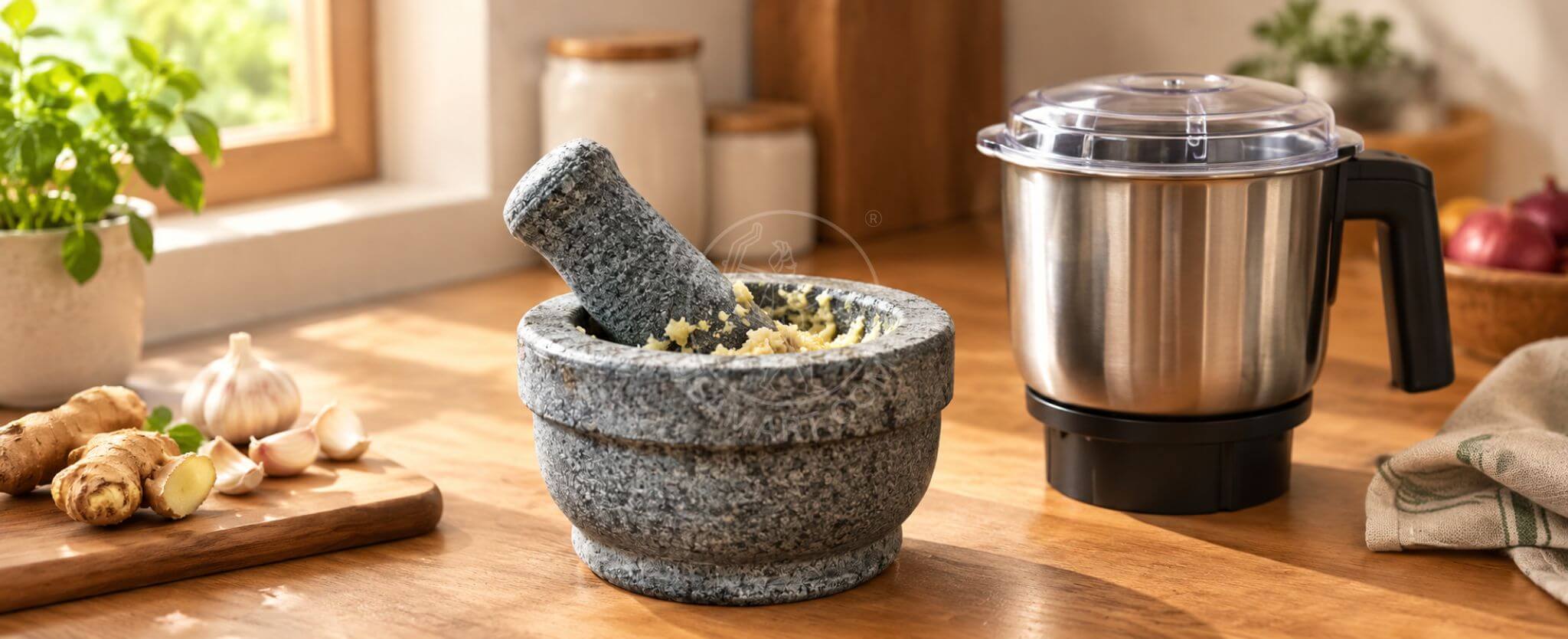
Every kitchen eventually faces this question. You are standing over a chopping board with a knob of ginger, two cloves of garlic, and a curry that will not wait, and you have to decide whether to reach for the stone mortar and pestle sitting in the corner or just pull out the electric grinder from the cabinet. Both tools crush and grind, both end up producing a paste or powder, but the results, the effort, and the everyday experience are genuinely different. If you are trying to decide which one deserves a permanent spot on your counter, here is a straightforward, practical comparison.
What Each Tool Actually Does
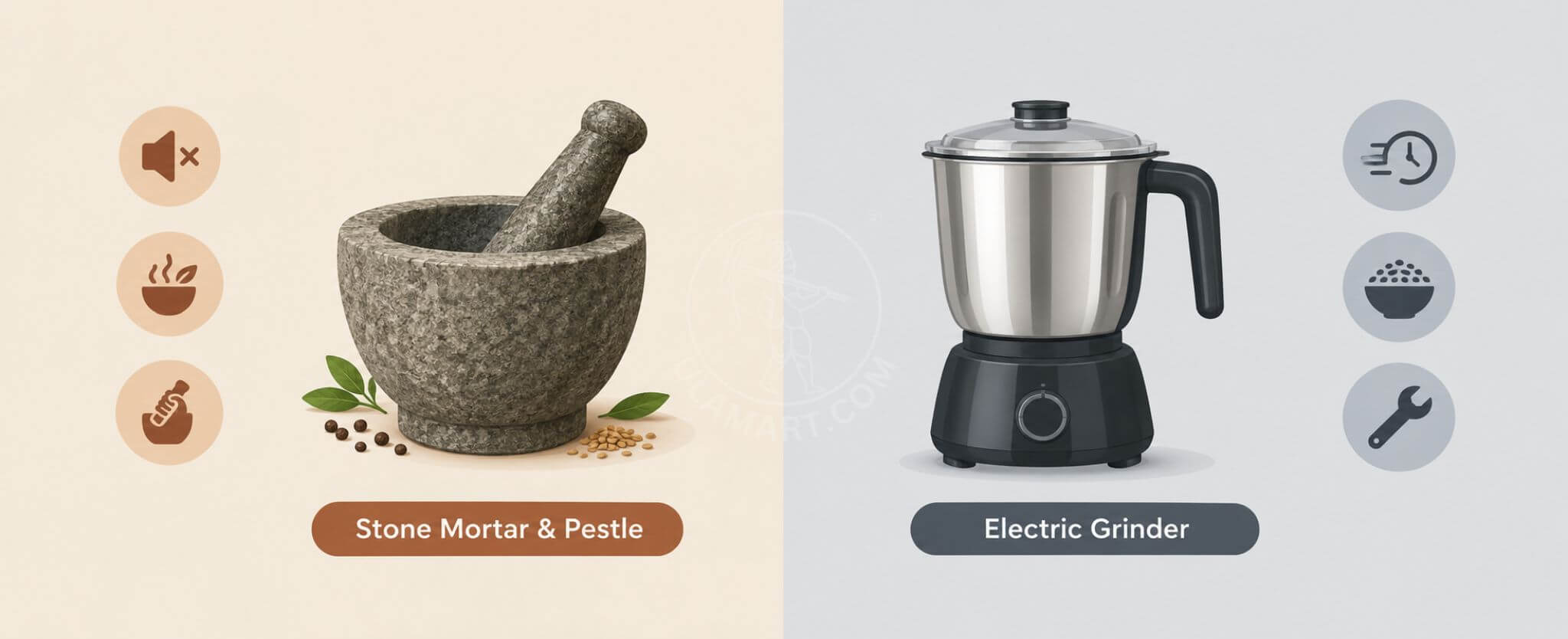
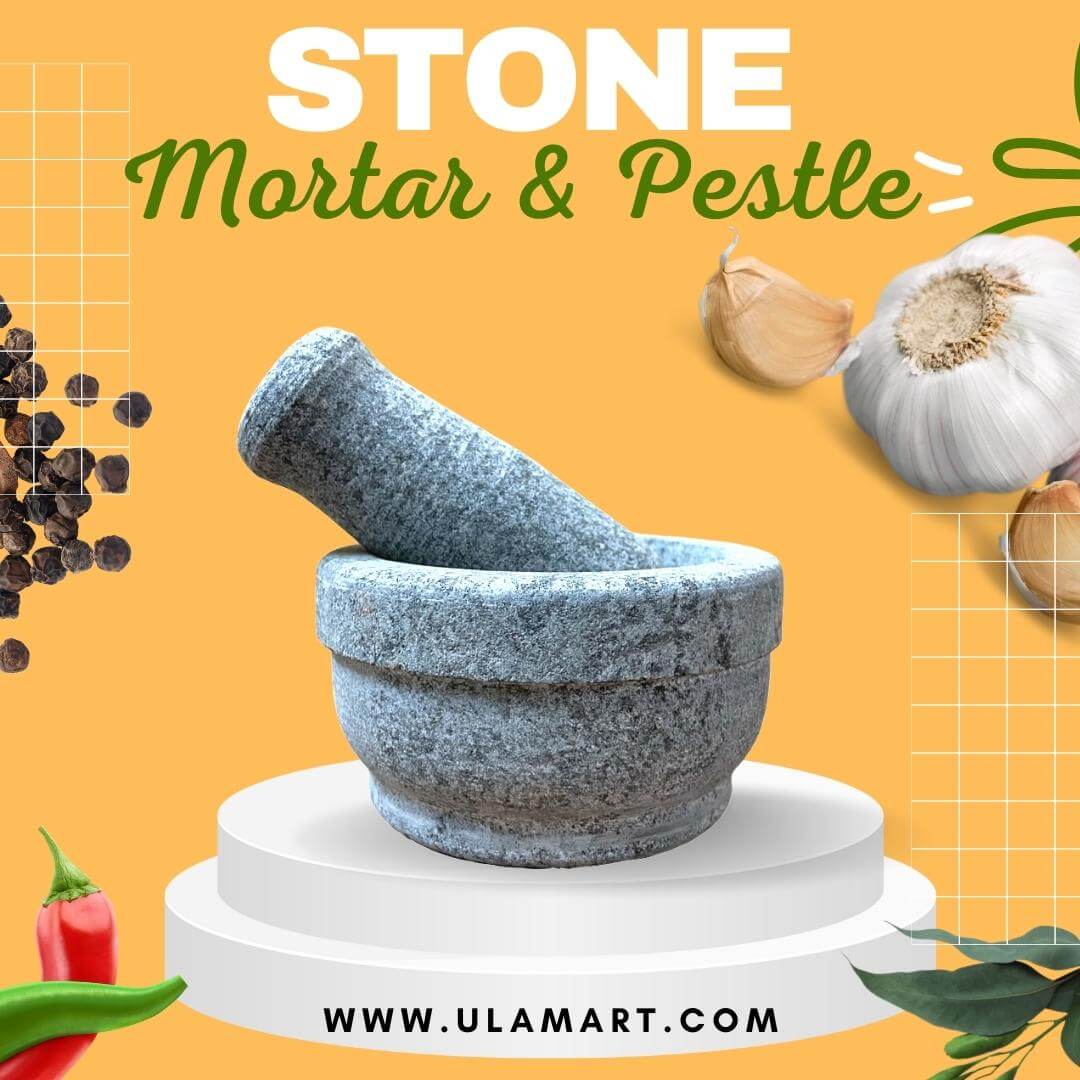
A stone mortar and pestle, often called an okhli and musal in the north or an ammikal in the south, is one of the oldest food preparation tools still in daily use. It works entirely on manual pressure and pounding. There is no motor, no blade, and no moving part that can wear out. You control exactly how coarse or fine the final texture turns out, simply by how long and how hard you pound.
The design itself has barely changed in centuries, which is part of why it remains a trusted tool across cuisines worldwide. You can read more about its long history and global use on the wikipedia: mortar and pestle reference page, which covers how different cultures have relied on the same basic crushing principle for thousands of years.
An electric grinder, on the other hand, uses a motor driven blade or a stone wheel inside a jar to do the same job at speed. It is built for volume and convenience, letting you grind a full batch of batter or masala in a fraction of the time a mortar and pestle would take.
Side by Side Comparison
| Aspect | Stone Mortar & Pestle | Electric Grinder |
| Flavor and aroma | Releases full essential oils, richer taste | Some aroma lost to heat and speed |
| Texture control | Fully adjustable, coarse to fine | Mostly fixed by blade and jar |
| Speed | Slower, needs manual effort | Fast, ready in seconds |
| Best for | Small batches, pastes, chutneys, tempering | Bulk grinding, batter, daily wet grinding |
| Noise | Silent | Noticeable motor noise |
| Maintenance | Rinse and dry, no wear parts | Blades, gaskets, jars need upkeep |
Flavor and Aroma: Where the Stone Mortar Wins
The single biggest reason cooks still keep a stone mortar and pestle around, even after buying an expensive electric grinder, is flavor. When you pound ginger, garlic, or whole spices manually, you rupture the cell walls slowly and release essential oils directly into the paste rather than spinning them around a heated blade. Electric grinders generate friction heat during operation, and that heat can cause some of the more delicate aromatic compounds in fresh ingredients to evaporate or degrade slightly before the paste even reaches the pan.
This is most noticeable with a fresh ginger garlic paste or a raw coconut chutney. Cooks who have used both consistently report that the stone ground version tastes sharper and more layered, while the electric ground version, though perfectly fine, tends to taste slightly flatter.
Texture Control and Consistency
A stone mortar and pestle gives you complete control over texture. You can stop pounding the moment you reach a coarse, rustic crush for a tempering, or keep going until you get a smooth paste. An electric grinder, by contrast, is largely at the mercy of its blade speed and jar size. Over grinding is common, especially with soft ingredients like coconut or tomatoes, and it is much harder to stop precisely at a chunky, half crushed texture.
If your cooking style depends on texture variation, a coarse crushed pepper here, a smooth paste there, the manual tool simply gives you more precision.
Speed and Everyday Convenience
This is where the electric grinder clearly takes the lead. For daily idli or dosa batter, or for grinding a large batch of sambar masala to store for the week, an electric grinder finishes in minutes what would take considerable manual effort with a mortar and pestle. If your household cooks in bulk or has limited time in the morning, this speed difference matters a great deal.
A stone mortar and pestle is genuinely more practical for small, quick jobs, a single serving of chutney, a spoon of ginger garlic paste, or a quick tempering crush, rather than large volume grinding.
Noise, Maintenance, and Durability
A stone mortar and pestle is completely silent and has no parts that can break down. It never needs a repair technician, never needs a new blade, and with basic rinsing and drying after use, it can genuinely last for generations. Many households still use pieces inherited from grandparents.
An electric grinder does the job faster but comes with ongoing maintenance. Blades dull over time, rubber gaskets wear out and can cause leaks, and the motor itself has a finite lifespan. It also runs with a fair amount of noise, which matters if you are grinding early in the morning in a shared home.
Which Tool Suits Which Everyday Task
| Everyday Task | Better Tool |
| Ginger garlic paste for daily curries | Stone mortar and pestle |
| Tempering spice crush (Pepper, cumin) | Stone mortar and pestle |
| Coconut chutney in small quantity | Either works, pestle gives better texture |
| Idli or dosa batter | Electric grinder |
| Large batch masala for weekly meal prep | Electric grinder |
| Fresh herb and green chilli paste | Stone mortar and pestle |
Cost and Long Term Value
A good stone mortar and pestle is a one time purchase. There is no electricity cost, no replacement parts, and the stone itself does not degrade with normal use. An electric grinder involves a higher upfront cost, ongoing electricity use, and periodic part replacement over its lifetime, though it does save considerable time on larger jobs.
Making the Decision for Your Kitchen
Most well equipped kitchens in South India actually keep both, using each for what it does best. The electric grinder handles daily batter and bulk masala, while a stone mortar and pestle set from Ulamart sits within arm’s reach of the stove for quick tempering crushes, fresh pastes, and small batch chutneys where flavor and texture control matter more than speed.
If you already own an electric grinder and are wondering whether a stone mortar and pestle is worth adding, the honest answer is that it fills a gap the grinder cannot, giving you better flavor and control on the small, frequent tasks that make up most of everyday cooking, without adding noise, electricity use, or moving parts that eventually need replacing.