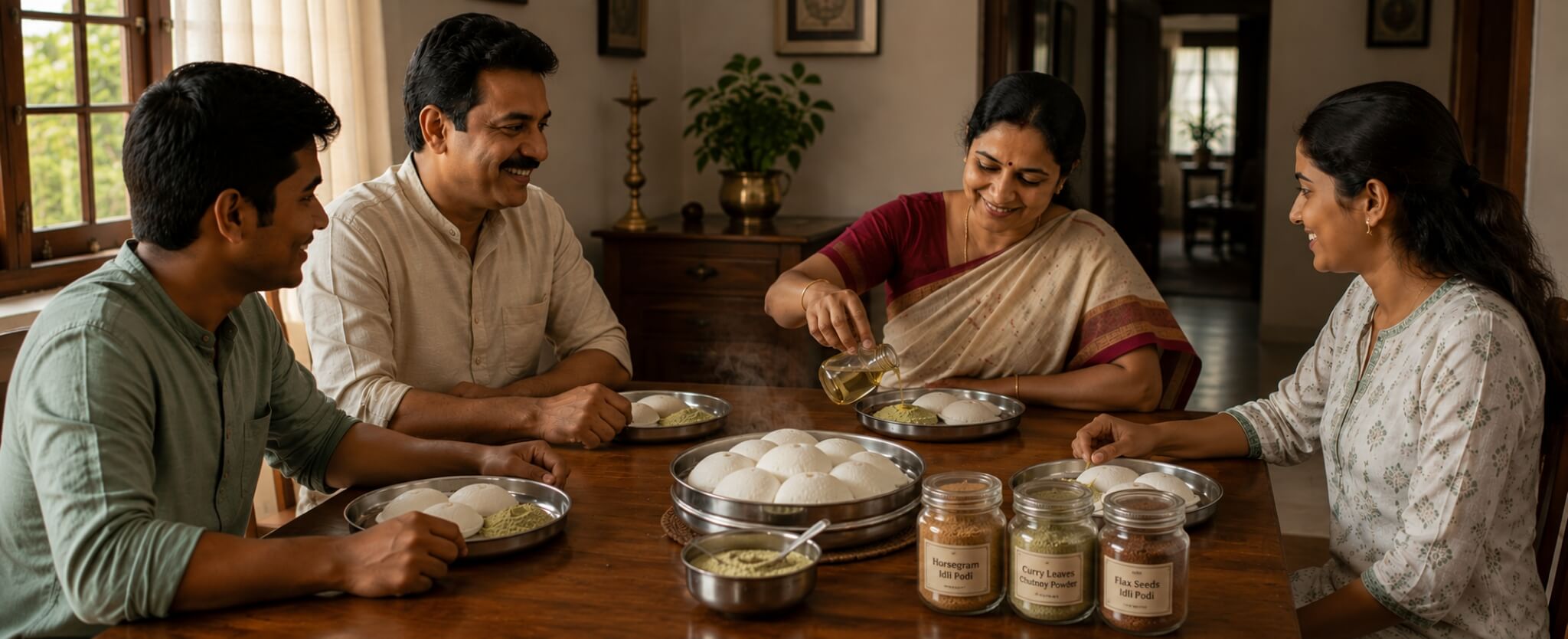
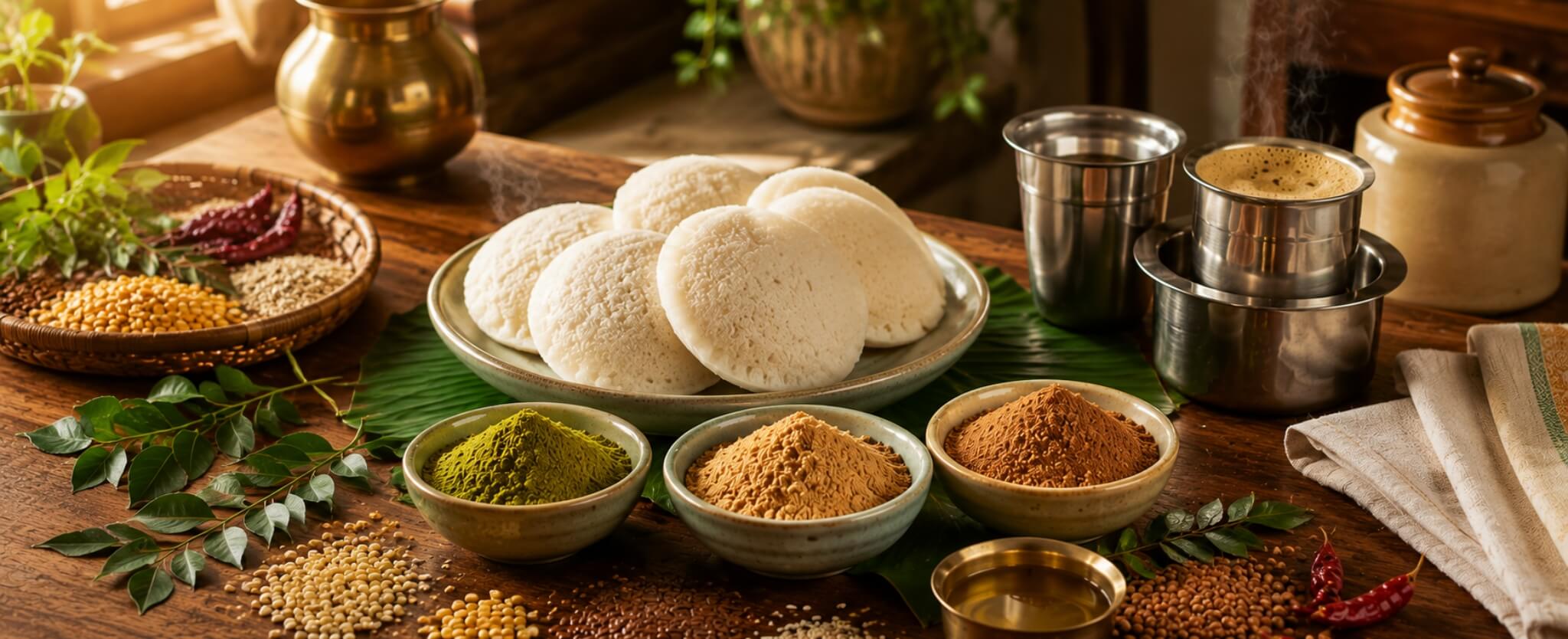
Idli podi, the dry spice powder that turns a plain steamed idli into something you actually look forward to, has quietly moved past the single curry leaf and dal blend that most kitchens grew up on. Walk into any South Indian household today and you will likely find two or three jars of podi sitting next to each other, each one made for a different mood or a different nutritional need. Curry leaf idli podi remains the classic. Flaxseed idli podi has become the quiet favourite of people watching their cholesterol. Horse gram idli podi is the one that shows up when someone in the house is trying to eat cleaner without giving up flavour.
If you have ever stood in front of these three jars wondering which one to reach for, this comparison should make the choice easier.
- What Idli Podi Actually Is
- Curry Leaf Idli Podi: The Everyday Classic
- Flaxseed Idli Podi: The Heart Health Pick
- Horse Gram Idli Podi: The Protein and Weight Management Choice
- Comparing the Three at a Glance
- How to Choose Between Them
- Storing Idli Podi the Right Way
What Idli Podi Actually Is
At its core, idli podi is a roasted, ground blend of lentils, dried red chillies, and a flavour ingredient, mixed with a generous amount of sesame oil or ghee before serving. The lentils, usually urad dal and chana dal, give the podi its body and protein. The flavour ingredient, whether that is curry leaves, roasted flaxseed, or horse gram, is what sets one podi apart from another in taste, colour, and nutritional profile.
The beauty of podi is that it needs no cooking on the day you eat it. A spoon of podi, a drizzle of oil, and a hot idli or dosa is breakfast sorted in under a minute. That convenience is exactly why so many households now keep more than one variety on hand.
Curry Leaf Idli Podi: The Everyday Classic
Curry leaf podi is the version most people grew up eating, and for good reason. Fresh or dried curry leaves are roasted until fragrant and ground with urad dal, chana dal, and red chillies. The result is an earthy, slightly bitter, deeply aromatic powder that pairs with almost anything: idli, dosa, plain rice, or even mixed into curd rice for a quick lift.
Curry leaves themselves carry a reputation in traditional Tamil kitchens for supporting hair health and digestion, and they bring iron and folate into the mix along with a distinctive aroma that no substitute quite matches. Because the flavour is familiar and not too sharp, curry leaf podi tends to be the one that even children accept without a fuss, which makes it the safest starting point if you are building a podi collection from scratch.
The quality of curry leaf podi depends heavily on how fresh the curry leaves were before roasting. Leaves that are dried too quickly at high heat lose most of their aroma and turn the podi bitter rather than earthy, which is why the best versions are made from leaves that are shade dried or slow roasted at a gentle temperature. If you have ever noticed that one jar of curry leaf podi tastes noticeably better than another, this is usually the reason. A well made batch should smell fragrant the moment the lid comes off, almost like fresh curry leaves tempering in hot oil, rather than smelling flat or dusty.
Flaxseed Idli Podi: The Heart Health Pick
Flaxseed idli podi swaps the curry leaf base for roasted flaxseeds, ground alongside garlic, sesame, and the usual lentil and chilli combination. The flavour is nuttier and slightly smoky compared to curry leaf podi, with a texture that feels a touch heavier on the tongue because of the natural oils in the flaxseed.
What makes this variety worth stocking is its omega-3 content. Flaxseed is one of the richest plant sources of alpha-linolenic acid, a fatty acid that nutrition researchers have linked to lower cholesterol and reduced inflammation. For households that already lean on flaxseed in smoothies or rotis, having it show up at breakfast in podi form is an easy way to get a second serving in without any extra effort.
One detail worth knowing before you buy is that flaxseed needs to be properly roasted and ground for the body to absorb its nutrients well. Whole, unroasted flaxseed largely passes through the digestive system without breaking down, which is why podi made from freshly roasted and coarsely ground flaxseed works better than simply sprinkling raw seeds over food. A good flaxseed idli podi will have a slightly darker, toastier colour compared to the lighter tone of curry leaf podi, and the aroma should lean warm and roasted rather than raw or grassy. Because the natural oils in flaxseed can turn slightly bitter if the powder sits too long after grinding, it also helps to buy this variety in smaller batches rather than stocking up on a large jar that will take months to finish.
Horse Gram Idli Podi: The Protein and Weight Management Choice
Horse gram, known as kollu in Tamil, has long been used in traditional South Indian cooking for its high protein and fibre content, and horse gram idli podi brings that benefit straight to the breakfast table. The lentils are dry roasted until they turn a deep brown, then ground with dal, chilli, and a touch of asafoetida for depth.
Horse gram idli podi taste is heartier and slightly more rustic than the other two, with a mild nuttiness that works particularly well with millet-based idlis rather than the softer rice idli. Horse gram is often recommended in traditional diets for weight management because of its low fat content and high fibre, which keeps hunger in check for longer. If breakfast is the meal where you are trying to add more protein without adding more oil or ghee, this is the podi that does the most work.
Horse gram also has a longer roasting time than the other two varieties, since raw kollu needs to be cooked through fully before grinding or it can taste raw and slightly chalky. This is part of why horse gram podi has a deeper, darker colour and a denser texture than curry leaf or flaxseed podi. If you are new to horse gram as an ingredient, starting with the podi form rather than cooking whole kollu at home is often the easiest way to introduce it into your diet, since the roasting and grinding are already done for you and the flavour is far milder than a straight kollu curry.
Comparing the Three at a Glance
| Podi Variety | Flavour Profile | Best Paired With |
|---|---|---|
| Curry Leaf | Earthy, mildly bitter, aromatic | Idli, dosa, curd rice |
| Flaxseed | Nutty, smoky, slightly heavy | Idli, chapati, khichdi |
| Horse Gram | Rustic, mildly nutty | Millet idli, dosa |
| Podi Variety | Standout Nutrient | Traditionally Suited For |
|---|---|---|
| Curry Leaf | Iron, folate | Everyday digestion |
| Flaxseed | Omega-3 (ALA) | Heart and cholesterol care |
| Horse Gram | Protein, fibre | Weight management |
How to Choose Between Them
There is no single right answer here, and most families end up keeping more than one jar rather than picking a favourite. A practical way to decide is to think about who is eating breakfast that day. If it is a child or someone new to podi, curry leaf is the gentlest entry point. If someone in the house is managing cholesterol or blood pressure, flaxseed podi earns its place on the table a few mornings a week. If the goal is a lighter, high-protein breakfast before a workout or a long workday, horse gram podi is worth reaching for first.
Portion size also matters more than people realise. A tablespoon of podi mixed with a teaspoon of sesame oil is enough for one idli serving. Because these powders are roasted and fairly dense in flavour, more is rarely better, and doubling the quantity mostly adds unnecessary sodium and oil rather than extra benefit.
Storing Idli Podi the Right Way
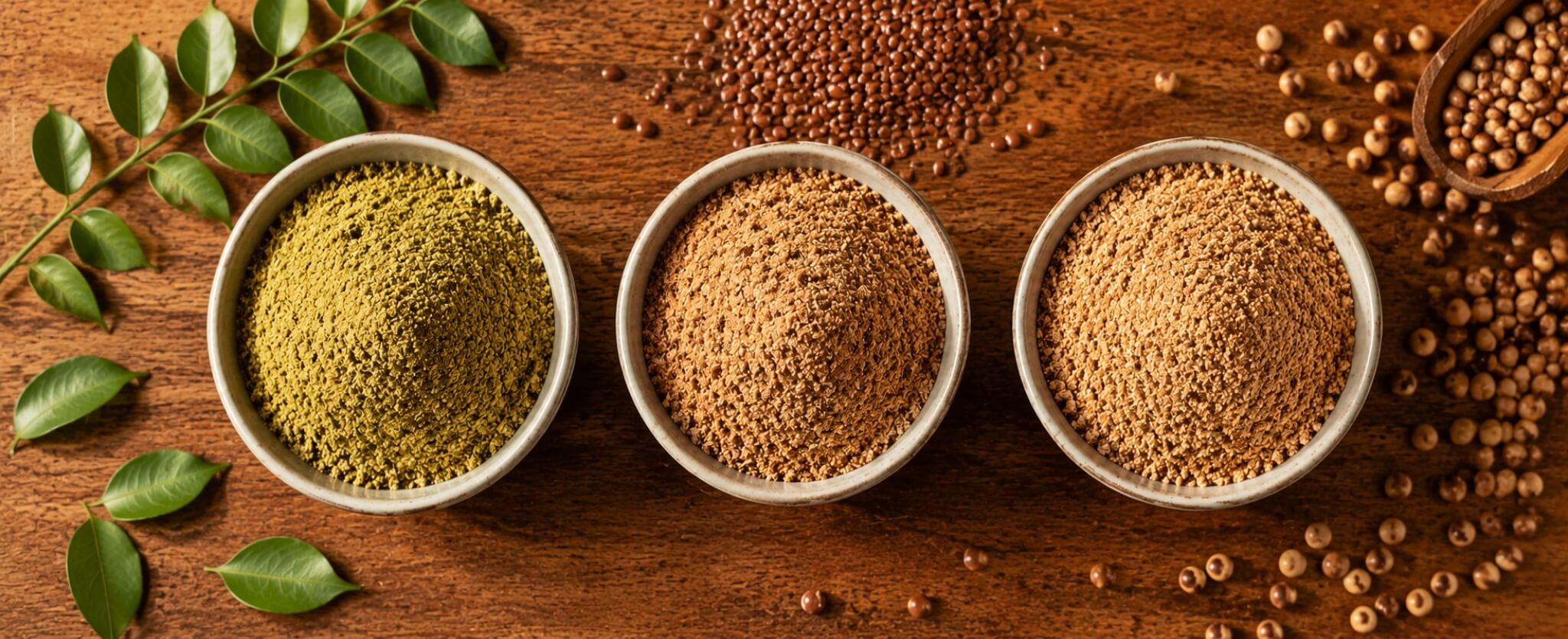
All three varieties are dry roasted and ground without added moisture, which gives them a naturally long shelf life when stored correctly. Keep podi in an airtight glass or steel container, away from direct sunlight and away from the stove where steam can creep in. Stored this way, most podi varieties stay fresh for two to three months without losing their aroma. Avoid using a wet spoon to scoop it out, since even a small amount of moisture can cause the powder to clump or turn rancid faster than expected.
If you are trying all three for the first time and do not want to commit to full-sized jars of each, a combo pack that bundles the different podi varieties together is a practical way to taste-test before deciding which one becomes a weekly staple in your kitchen. You can explore Ulamart’s idli podi combo pack to try curry leaf, flaxseed, and horse gram side by side.
Making the Switch Without Overhauling Breakfast
None of these podis require you to change how you cook idli or dosa. The batter stays the same, the steaming process stays the same, and the only thing that changes is what goes on the plate alongside it. That low-effort swap is exactly why podi has stayed relevant in South Indian kitchens for generations, and why having a rotation of two or three varieties rather than just one makes breakfast a little more interesting without adding a single extra step to your morning routine.