Walk into most bathrooms in India today and you will find a bar of soap that lists more chemical names than a lab report. Sulphates for lather, synthetic fragrance for scent, artificial colour for shelf appeal, and a preservative list that reads like an alphabet soup. Somewhere along the way, soap stopped being about skin and started being about marketing.
Handmade herbal soaps are a quiet pushback against that shift. They are built around ingredients that Indian households already trusted for generations, long before “natural” became a label printed on packaging. Vetti veru (vetiver root) and shikakai are two of the most respected names on that list, and understanding why they still matter helps explain why herbal soap is having a genuine comeback, not just a marketing moment.
What Actually Makes a Soap “Herbal”
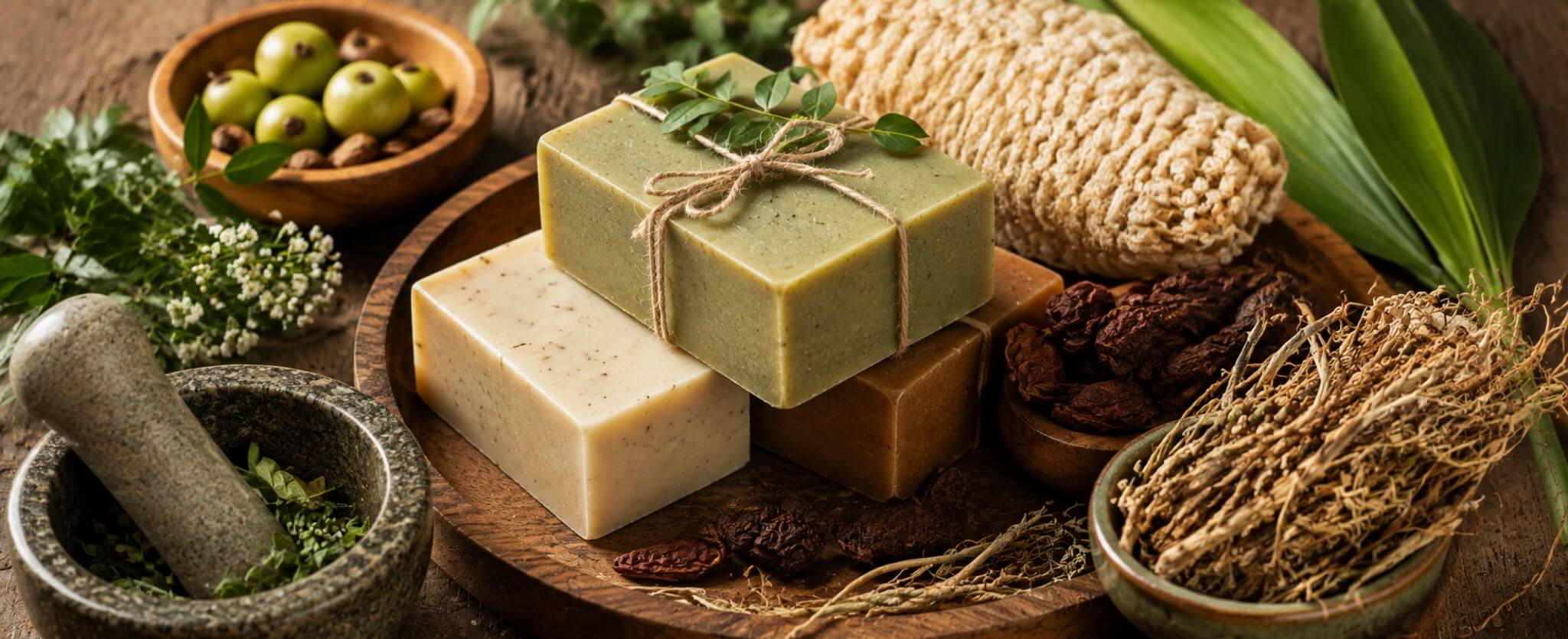
Not every bar labelled herbal deserves the word. A true handmade herbal soap uses plant-based oils as its base, is cold-processed or hand-poured rather than mass-extruded, and gets its cleansing, fragrance, and therapeutic properties from actual herbs, roots, and botanical extracts rather than synthetic substitutes dressed up with a green leaf on the wrapper.
The difference matters because commercial detergent bars are formulated to strip oil quickly and cheaply. Herbal soaps are formulated to clean while respecting the skin’s natural barrier. That single design choice changes how your skin feels within days of switching.
Vetti Veru: The Root Indian Summers Are Built Around
Vetti veru, known as khus in the north and ushira in Ayurveda, is a grass root that Tamil households have used for centuries in water coolers, floor mats, and bathing routines, especially through the hot months. The name itself comes from the Tamil word for a root that is cut and drawn out of the earth, which tells you how deeply local this ingredient is.
In soap, vetiver root brings three things that are hard to replicate synthetically. First, a genuine cooling sensation on the skin that lingers well after rinsing off, useful in a climate where heat rash and prickly skin are common complaints. Second, a natural earthy fragrance that does not fade into a chemical aftersmell the way synthetic “woody” scents often do. Third, an anti-inflammatory action that calms redness, sunburn, and general skin irritation rather than masking it.
Vetiver’s high water-holding capacity also means it keeps skin hydrated without leaving a greasy residue, which is part of why it works so well folded into a soap base rather than just an oil. If you want to try this directly, the vetti veru soap uses the root in a form close to how it has traditionally been prepared, without synthetic cooling agents standing in for the real thing.
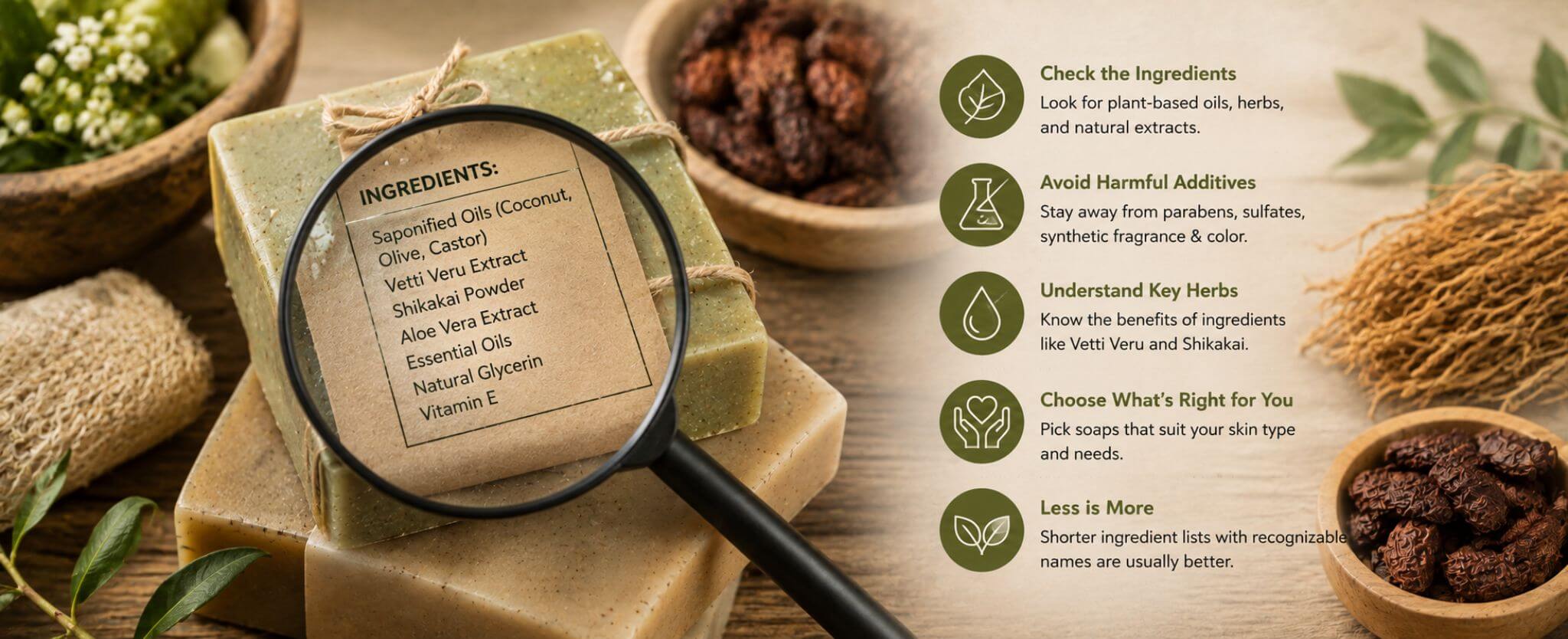

Shikakai: The Original Multi-Purpose Cleanser
Shikakai, botanically Acacia concinna, is best known as a hair cleanser, but its skin benefits are just as well documented and often overlooked. The pods of the shikakai plant contain natural saponins, which are plant compounds that form a gentle lather on their own, without needing added sulphates.
This matters more than it sounds. Sulphate-based lather is aggressive by design, meant to strip oil fast for a “squeaky clean” feeling that is actually a sign of an over-stripped skin barrier. Shikakai’s natural saponins clean effectively while leaving the skin’s protective lipid layer largely intact, which is why traditional users describe it as cleansing without dryness.
Shikakai also carries antibacterial and mild anti-inflammatory properties, which is part of why it has long been used on minor skin irritations, not just as a wash. A peer-reviewed dermatology review on Acacia concinna’s therapeutic role in skincare notes its cleansing, conditioning, and anti-inflammatory activity across both hair and skin applications, which lines up with generations of home use.
Why These Ingredients Get Diluted in Commercial “Herbal” Bars
A lot of mass-market soap brands add a trace amount of shikakai extract or vetiver fragrance oil just so the ingredient can appear on the label. The actual concentration is often too low to deliver any real benefit, and the soap base underneath is still built around detergents and synthetic fillers.
Here is a simple way to compare what you are actually buying.
| What to Check | Mass-Market “Herbal” Bar | Genuine Handmade Herbal Soap |
|---|---|---|
| Base | Detergent bar with trace herbal extract | Plant oil base, cold-processed |
| Lather source | Added sulphates | Natural saponins from herbs |
| Fragrance | Synthetic “herbal” scent | Actual root or herb fragrance |
| Shelf life claim | Long, via preservatives | Shorter, closer to natural product |
The shelf life difference is worth pausing on. A genuine handmade soap using real vetiver root or shikakai pods will not last as long on a shelf as a fully synthetic bar, because it has fewer preservative agents fighting natural degradation. That shorter shelf life is not a flaw, it is a sign the product was not built to survive indefinitely in a warehouse.
Reading a Herbal Soap Label the Right Way
Since packaging claims can be generous with the truth, a few checks help separate the real thing from the marketed version.
- Look at ingredient order. Ingredients are typically listed by concentration, so if shikakai or vetiver root appears near the end of a long list, it is likely there in a token amount.
- Check for a saponified oil base, such as coconut oil, sesame oil, or olive oil, rather than a base labelled simply as “soap noodles” or “detergent base.”
- Notice the scent. Real vetiver has an earthy, slightly smoky note. If a bar smells sharply floral or overly sweet while claiming vetiver as a key ingredient, the fragrance is doing the talking, not the root.
- A slightly uneven bar shape or colour is often a good sign with hand-poured soap, since it points to small-batch production rather than industrial uniformity.
Other Herbal Ingredients Worth Knowing
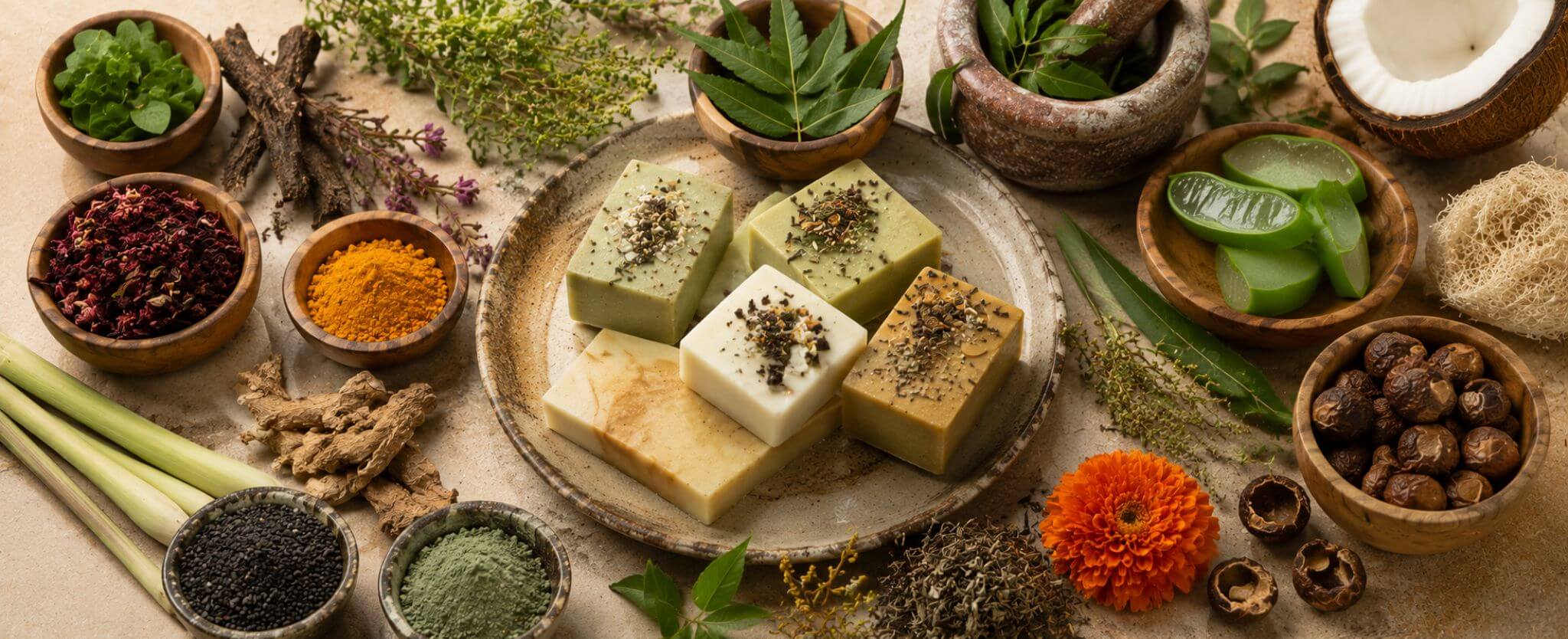
Vetti veru and shikakai are far from the only traditional ingredients doing real work in Indian herbal soaps. Multani mitti (fuller’s earth) is prized for oil control on acne-prone skin. Charcoal draws out surface impurities without the harshness of chemical exfoliants. Aloe vera and neem together handle both hydration and antibacterial action, a combination especially useful in humid climates where minor skin infections are common. Coffee and orange peel are gentler options for those who want mild exfoliation without the abrasiveness of synthetic scrub beads.
The common thread across all of these is that each ingredient is doing a specific, explainable job rather than being included for the label. That is really the test for any herbal soap: can you say what each named ingredient is actually there to do, or is it just there to sound good.

Making the Switch Without Overhauling Your Routine
You do not need to replace every product in your bathroom at once. Start with the soap, since it is the product your skin touches most consistently, every single day, often more than once. Give it two to three weeks before judging results, since herbal soaps work with your skin’s own oil balance rather than forcing an immediate dramatic change the way stripping detergents sometimes appear to.
If your skin tends to dry out in the summer heat, start with a vetiver-based bar for its cooling and hydrating properties. If you deal with occasional breakouts or oily patches, a shikakai or neem-based bar is the more logical starting point, given its natural cleansing action without over-drying the skin.
Traditional ingredients like vetti veru and shikakai were never trends to begin with. They were simply what was available, effective, and gentle enough for daily use across generations, long before “chemical-free” became a phrase anyone needed to print on a wrapper. Choosing a genuine handmade herbal soap today from well known brands like Ulamart is less about following a wellness fashion and more about returning to something that quietly worked all along.