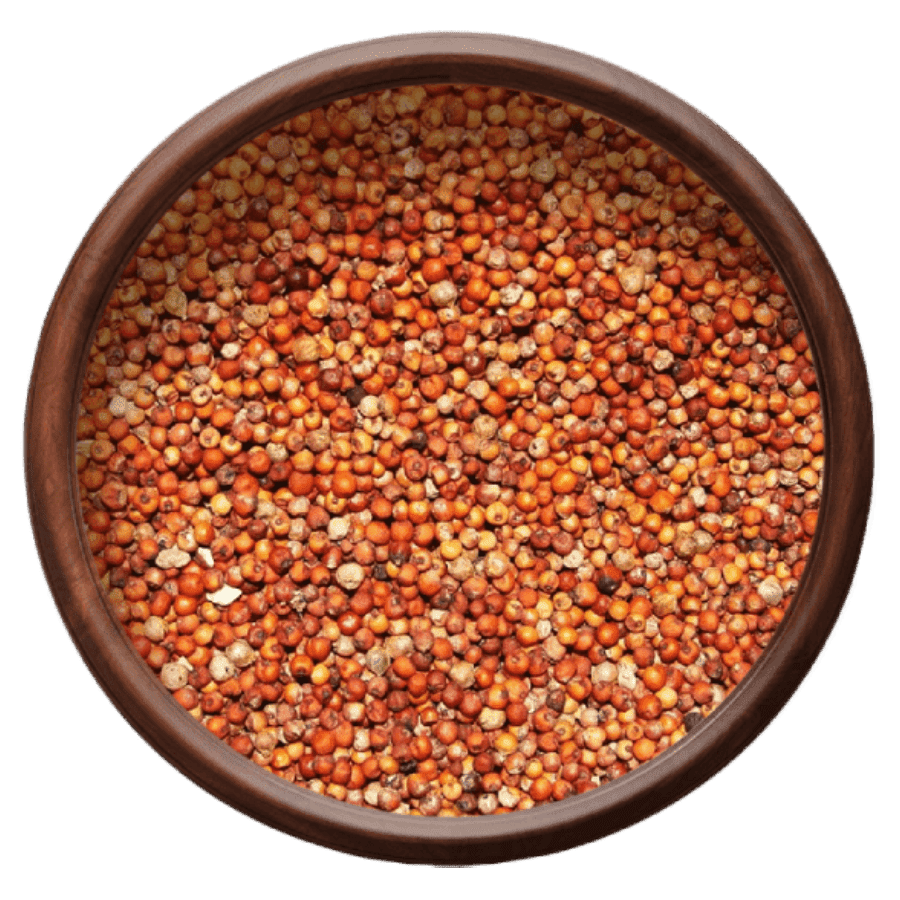
Most Indian kitchens have a grain that quietly works for every single person under one roof, the toddler taking first solid bites, the school-going kid who needs steady energy, the working adult skipping breakfast, and the grandparent watching bone density slip with age. That grain is ragi, also called finger millet or nachni, and it earns its place on the daily table for reasons that go well beyond a single nutrient.
A lot of articles stop at calcium, and yes, ragi genuinely earns that reputation. Per 100 grams, finger millet carries around 344 milligrams of calcium, a figure that comfortably outpaces rice, wheat, and most other commonly eaten grains. But calcium is only one piece of why ragi deserves a daily slot rather than an occasional one. The real story is how differently it serves each member of the family, from the youngest to the oldest.
- Ragi for Babies: A Gentle First Food
- Ragi for Growing Children: Calcium When It Matters Most
- Ragi Malt for Adults: A Practical Daily Habit
- Ragi for Pregnant and Lactating Women
- Ragi for Older Adults: Protecting Bone Density
- Ragi Across the Family at a Glance
- Getting the Most Nutrition Out of Every Batch
- Ragi Compared to Common Calcium Sources
- Building Ragi Into a Daily Routine
Ragi for Babies: A Gentle First Food
Pediatric nutrition guidance across India consistently points to ragi as one of the easiest grains to introduce once a baby starts solids, usually from around six months. It is naturally gluten-free, which keeps the digestive system from working overtime, and its bland, slightly sweet flavor makes it easy for infants to accept without much fuss.
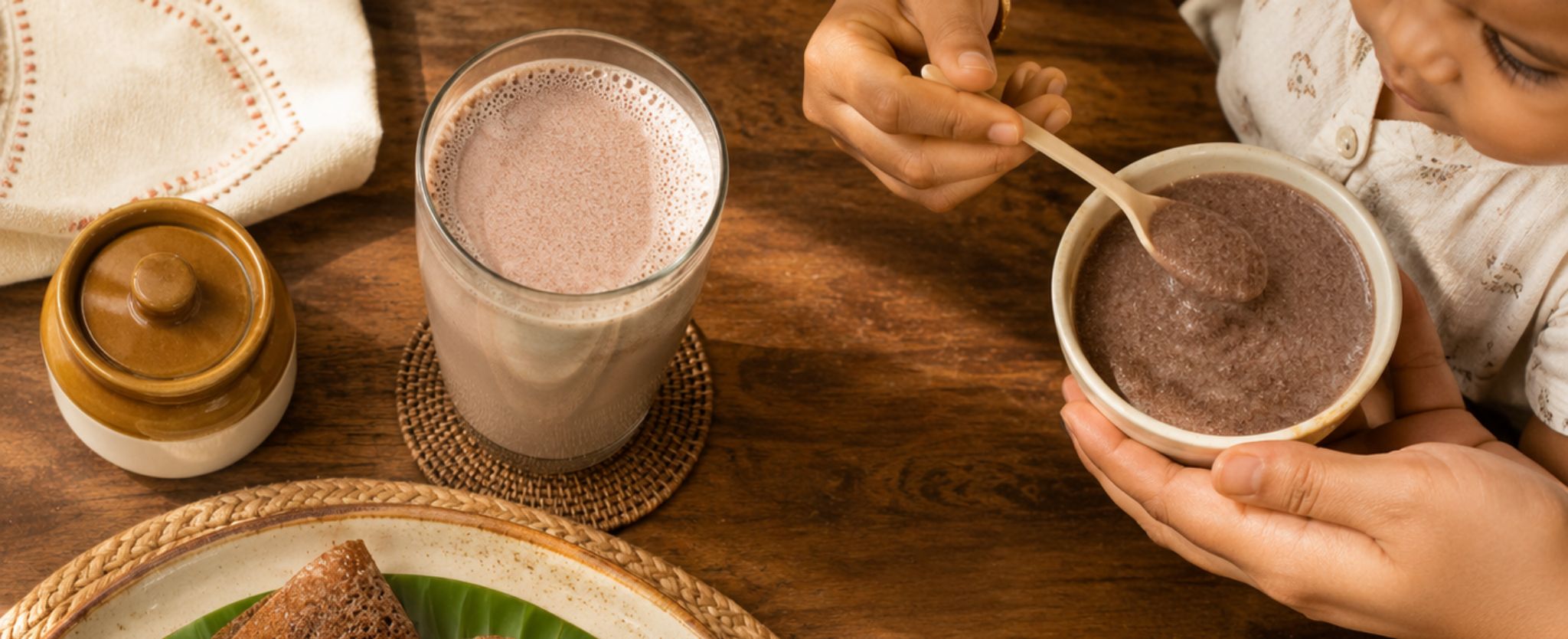
A simple ragi porridge, made by cooking finger millet flour with water or milk until smooth, gives babies a calcium and iron boost at a stage when bone and brain development are both moving fast. Many mothers also lean on ragi as a gentle option during the weaning phase precisely because it rarely causes the bloating that some other first foods can trigger.
Ragi for Growing Children: Calcium When It Matters Most
Childhood and the early teenage years are when bone density is actively being built, not just maintained. A regular ragi dosa, idli, or even ragi-based cookies in the school snack box give children a calcium source that does not depend entirely on dairy, which matters for families managing lactose sensitivity or simply trying to diversify a child’s diet beyond milk and cheese.
Ragi also brings iron and a reasonable protein load to the table, both of which support the kind of steady concentration that parents want during school hours. A bowl of ragi upma before school tends to hold a child through till lunch far better than a sugary cereal would.
Ragi Malt for Adults: A Practical Daily Habit
For adults juggling long work hours, ragi malt has become one of the simplest ways to fit this grain into a busy schedule. It is essentially a thin, cooked porridge made from ragi flour, often flavored with a little jaggery or a pinch of cardamom, and consumed warm or chilled depending on the season.
This single habit covers a surprising amount of nutritional ground. The fiber in ragi slows down digestion, which helps with longer-lasting fullness and steadier blood sugar through the morning. Several studies have also pointed to ragi’s role in supporting healthy cholesterol levels and weight management, largely thanks to the amino acid tryptophan, which has a natural appetite-moderating effect. For adults trying to cut back on processed breakfast options without spending much time cooking, a glass of ragi malt takes barely ten minutes to prepare.
Ragi for Pregnant and Lactating Women
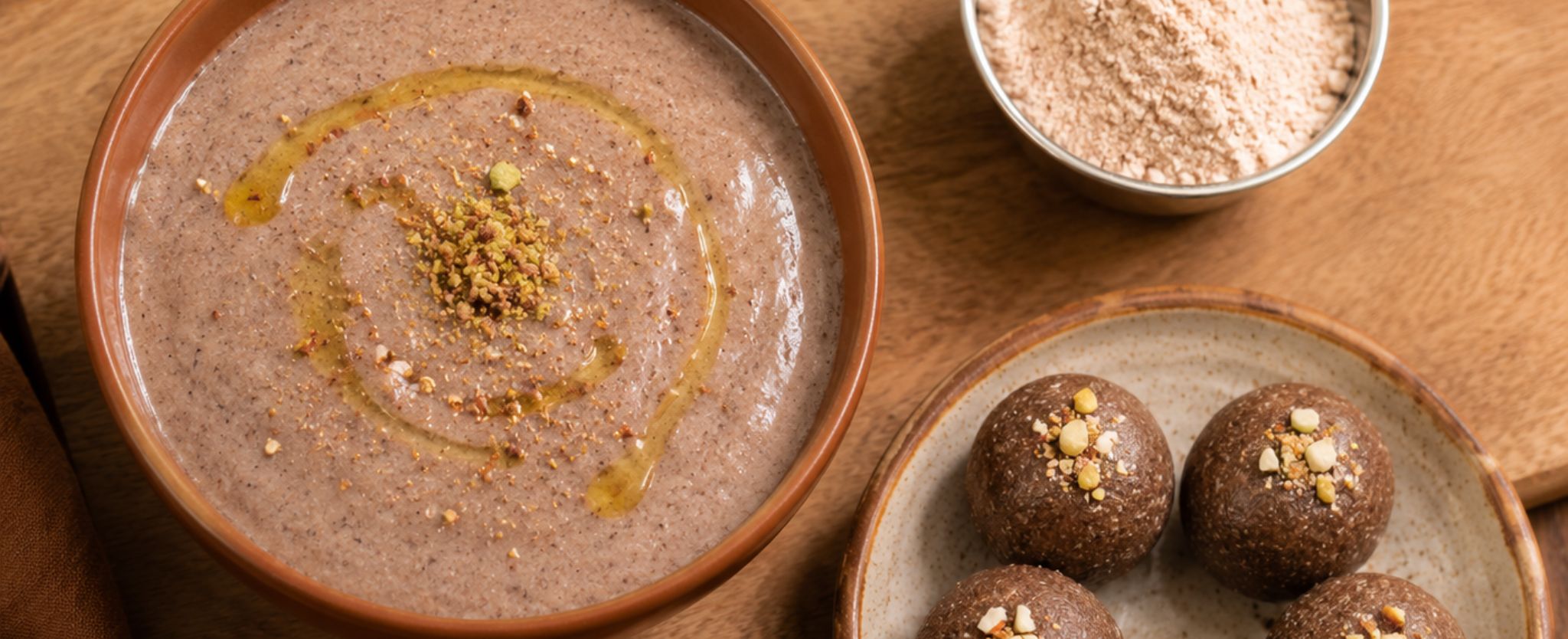
Pregnancy and breastfeeding place extra demands on calcium and iron stores, and ragi has long been part of traditional postpartum diets across South India for exactly this reason. Expecting and new mothers are often encouraged to include ragi porridge or ragi laddoo as a way to support both their own bone health and the baby’s development without relying solely on supplements.
Some traditional practice also credits ragi with supporting milk supply during breastfeeding, though this benefit is anecdotal rather than clinically proven, and women should always check with their doctor before making major dietary changes during this period.
Ragi for Older Adults: Protecting Bone Density
As the body ages, bone density naturally declines, and the risk of fractures from minor falls increases, particularly for women past menopause. A grain that delivers meaningful calcium without the lactose that some older adults struggle to digest fills a genuine gap here. A daily ragi roti or a small bowl of ragi kanji alongside the evening meal is a low-effort way for older family members to support bone strength without overhauling their entire diet.
Ragi Across the Family at a Glance
| Family Member | Best Form | Why It Helps |
|---|---|---|
| Babies (6 months+) | Ragi porridge | Gentle, gluten-free first food |
| Children | Ragi dosa, idli, upma | Calcium and iron for growth |
| Adults | Ragi malt | Steady energy, weight management |
| Elderly | Ragi roti, kanji | Bone density support |
Getting the Most Nutrition Out of Every Batch
Ragi is rich in calcium and iron, but the grain also carries natural compounds called phytates that can reduce how much of those minerals the body actually absorbs. Traditional preparation methods already work around this, often without anyone realizing the science behind it. Fermenting ragi batter overnight before making dosa, or soaking whole ragi grain for several hours before cooking it into kanji, breaks down a good portion of these phytates and makes the calcium and iron more available to the body.
Pairing ragi dishes with a source of vitamin C is another small habit that makes a real difference, particularly for the iron content. A side of tomato chutney with ragi dosa, or a squeeze of lemon over a ragi flakes bowl, helps the body absorb non-heme iron more efficiently than eating the grain on its own. None of this requires extra cooking time or ingredients most kitchens do not already have, which is part of why these habits survived for generations without anyone needing to read a nutrition label.
Ragi Compared to Common Calcium Sources
Many families assume dairy is the only practical daily calcium source, which often means trouble for anyone managing lactose intolerance or simply trying to diversify a child’s diet. Ragi offers a useful plant-based alternative that fits comfortably alongside dairy rather than needing to replace it entirely.
Building Ragi Into a Daily Routine
The easiest way to make ragi a habit rather than an occasional dish is to anchor it to one meal slot rather than trying to fit it everywhere at once. Most families find breakfast the simplest entry point, since a ragi dosa or malt replaces an existing breakfast item rather than adding an extra dish to an already busy morning.
From there, ragi flakes offer a quick alternative for days when even a dosa batter feels like too much effort. A short soak and a light tempering with mustard seeds and curry leaves turns flakes into a five minute breakfast bowl that still delivers the same calcium and fiber benefits as the more involved preparations.
| Format | Prep Effort | Good For |
|---|---|---|
| Ragi Flour | Moderate, needs batter or porridge prep | Dosa, malt, roti |
| Ragi Flakes | Low, quick soak only | Fast breakfast bowls |
| Whole Ragi Grain | Higher, needs longer cooking | Kanji, traditional porridge |
A small but useful tip for households new to ragi is to start with smaller portions and a milder preparation, since the grain has a distinct earthy taste that some palates take a little time to warm up to. Mixing ragi flour with a more familiar grain like rice flour in a 1:1 ratio for the first few attempts at dosa or roti can ease that transition without losing the nutritional benefit.
What makes ragi genuinely worth keeping in daily rotation is not any single dramatic health claim, but the fact that it quietly supports four very different life stages within the same household using the same simple ingredient. Few grains in an Indian kitchen can claim that kind of range, which is exactly why so many families never really stopped using it, even as more processed alternatives crowded the pantry shelf.