Walk past the honey shelf in any store today and you will see at least five or six jars, each claiming to be the purest, the most natural, or the most beneficial. Raw, organic, forest, infused, pasteurized, the labels pile up fast, and most shoppers end up picking based on the prettiest jar rather than what the honey actually does for them. Honey is not one single product. It changes character based on how it is harvested, how it is processed, and what it is infused with, and knowing these differences makes the shelf far less confusing.
- What Actually Makes Honey “Raw”
- Raw Versus Processed Honey at a Glance
- Raw Forest Honey: Honey in Its Wildest Form
- How to Tell If a Jar Is Genuinely Raw
- Why Honey Flavor Changes With the Season
- Infused Honey: When Honey Carries Extra Benefits
- Simple Ways to Work Honey Into Daily Life
- Matching the Honey to the Purpose
- A Few Buying and Storage Notes
What Actually Makes Honey “Raw”
The word raw gets used loosely, but it has a specific meaning. Raw honey is honey that comes straight from the comb with minimal interference, typically just a light straining to remove wax and debris. It is never heated to high temperatures and never pasteurized. According to a Healthline review of raw honey research, this lack of processing means raw honey holds onto a wider range of antioxidant plant compounds, some types containing levels comparable to fruits and vegetables.
Processed honey, the kind found in most uniform, crystal clear squeeze bottles, goes through heating and filtering. This step improves shelf stability and gives a consistent look, but it also reduces the natural enzymes and antioxidant compounds that raw honey carries. Both versions still taste sweet and work as a sugar substitute, the real difference shows up in the additional benefits raw honey brings beyond sweetness.
Raw Versus Processed Honey at a Glance
| Aspect | Raw Honey | Processed Honey |
|---|---|---|
| Processing | Minimally strained, unheated | Heated and filtered |
| Texture | May crystallize over time | Stays smooth and clear |
| Nutrient Retention | Higher enzyme and antioxidant content | Reduced due to heat treatment |
Raw Forest Honey: Honey in Its Wildest Form
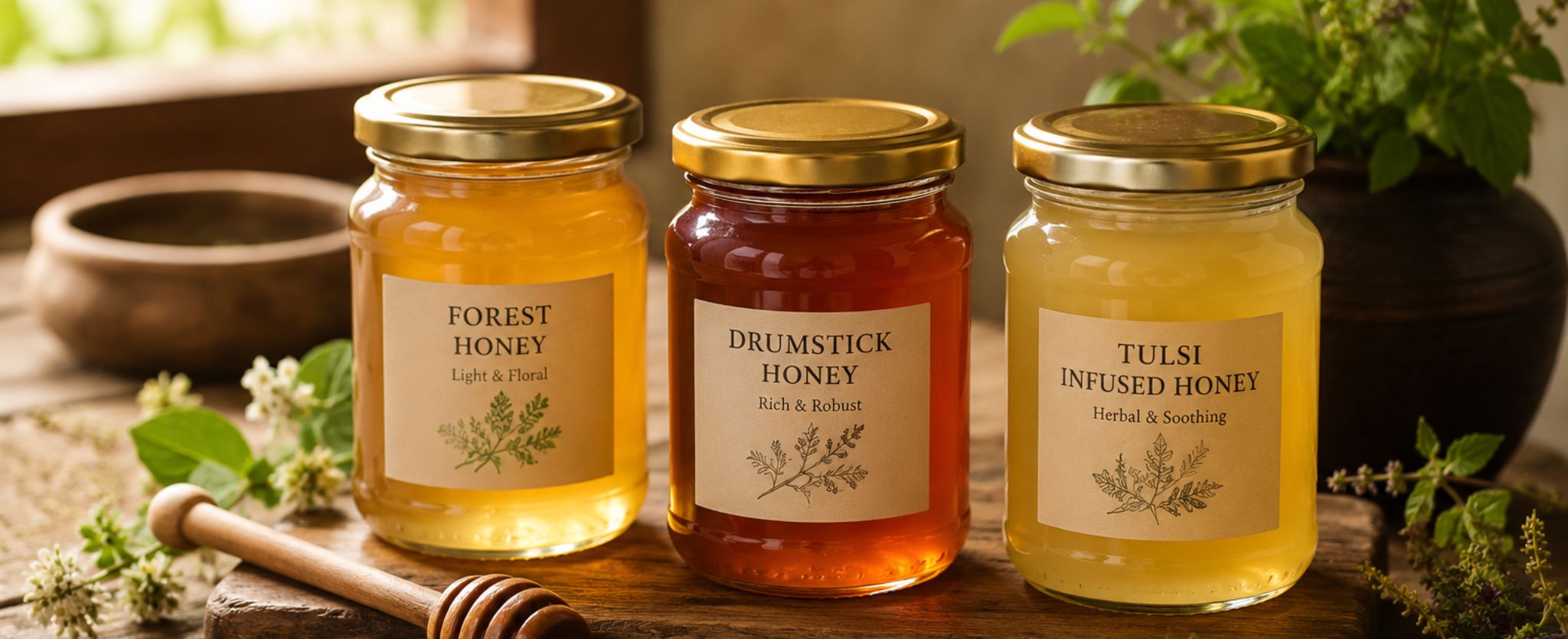
Forest honey, sometimes labeled hill honey, comes from bees foraging across wild, untouched forest terrain rather than a single cultivated crop field. Because the bees draw nectar from dozens of different wild flowering plants and trees, the resulting honey carries a more complex flavor and a broader mix of plant compounds than honey sourced from a single farmed flower.
This kind of honey is usually harvested by tribal or forest-dependent communities using traditional methods, with little to no mechanical processing involved. The flavor tends to be darker and more intense, sometimes with a slightly bitter or smoky note depending on the season and region it was collected from. For someone looking for the most unprocessed, traditional form of honey available, forest or hill honey is typically the closest you can get to honey exactly as the bees made it.
How to Tell If a Jar Is Genuinely Raw
Reading the label carefully helps more than most people realize. Genuine raw honey will usually list nothing beyond honey itself, no added sugar, no corn syrup, and no mention of pasteurization on the packaging. A jar that pours instantly and stays perfectly clear through every season is more likely to have been heat treated, since natural raw honey tends to thicken and sometimes crystallize as temperatures drop.
Taste is another clue. Raw forest honey often carries a more layered, sometimes earthy or slightly bitter undertone depending on the flowers and trees the bees foraged from that season. A honey that tastes uniformly sweet in exactly the same way every single time is more likely to be a blended, processed product designed for consistency rather than character.
Why Honey Flavor Changes With the Season
One detail that surprises first time raw honey buyers is that the same brand’s forest honey can taste noticeably different from one batch to the next. This is not a quality issue, it is simply a reflection of which flowers and trees were blooming in that particular forest region during the harvest window. A batch collected during a season heavy with wildflower bloom will taste lighter and more floral, while one gathered during a season dominated by stronger flowering trees can taste deeper and more robust.
This kind of natural variation is actually a marker of authenticity rather than inconsistency. Large commercial honey brands deliberately blend batches from multiple sources specifically to erase this variation and deliver the same flavor in every bottle year round. Genuine forest honey will never offer that exact same uniformity, and that is part of what makes it worth seeking out.

Infused Honey: When Honey Carries Extra Benefits
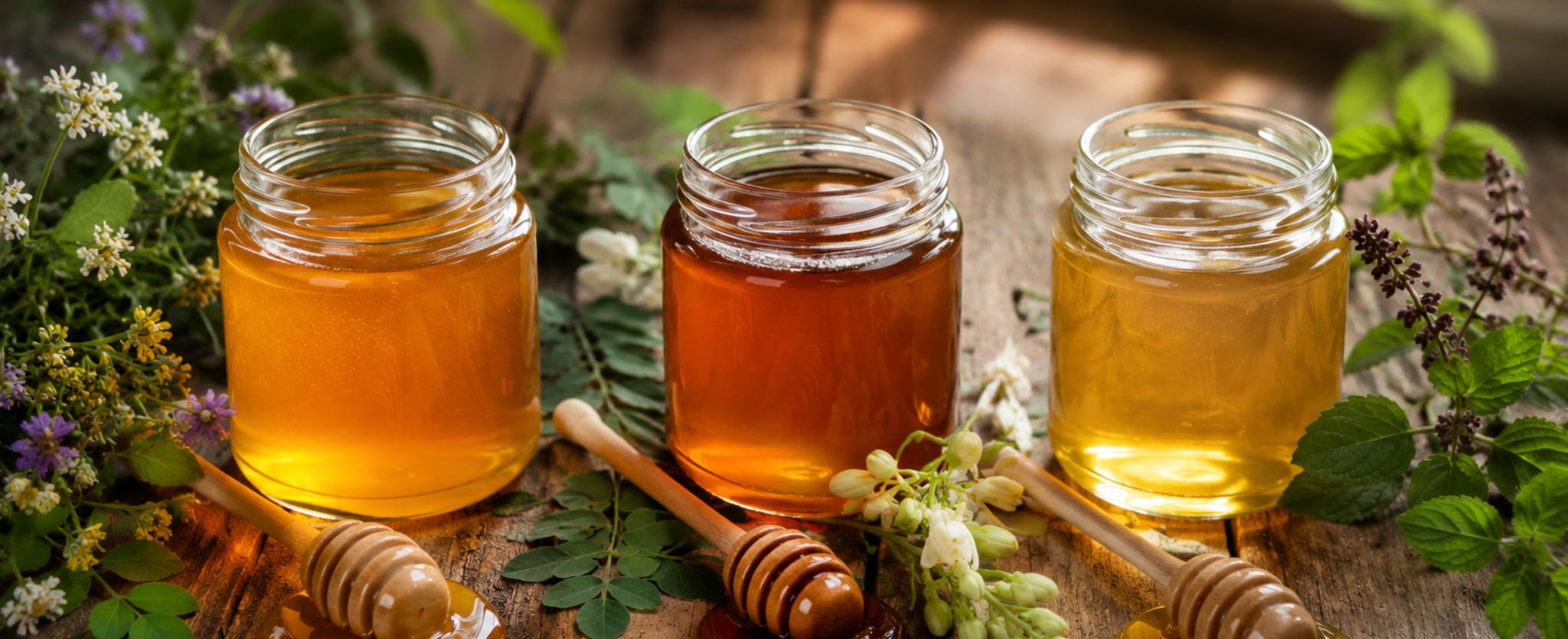
Infused honey takes raw honey a step further by blending it with the extract or essence of a specific herb, leaf, or fruit, creating a product that carries the original sweetness along with a targeted functional benefit. Two varieties worth knowing are drumstick honey and tulsi honey.
Drumstick honey is infused with moringa, a leaf long valued in traditional diets for its iron and vitamin content. Pairing it with honey creates an easy way to work moringa’s nutritional profile into a daily routine without needing to cook with the leaves directly, a spoonful in warm water or over breakfast does the job.
Tulsi honey blends honey with holy basil, a herb commonly used in Ayurvedic practice for respiratory comfort and as a mild stress-relieving tonic. This combination is popular during the monsoon and winter months, often stirred into warm water or herbal tea as a soothing daily ritual.
Simple Ways to Work Honey Into Daily Life
None of these varieties need elaborate preparation to be useful. A spoon of forest honey stirred into warm, not boiling, water first thing in the morning is one of the simplest ways to start the day, since high heat can break down some of the delicate enzymes that make raw honey worth choosing over a processed jar. The same applies to tulsi or drumstick honey, both work best mixed into liquids that are warm to the touch rather than steaming hot.
For those who enjoy a bit of texture, drizzling forest honey over fruit, curd, or a bowl of millet porridge adds natural sweetness along with whatever trace minerals that particular batch carries. Tulsi honey on its own, taken by the spoon in the evening, is a common practice in many South Indian households during the colder months, while drumstick honey fits more naturally into a morning routine alongside other iron rich foods.
Matching the Honey to the Purpose
Not every honey variety needs to serve the same purpose. Forest or hill honey works well as an everyday table honey, used in tea, on toast, or simply eaten by the spoon for its broad-spectrum benefits. Infused varieties like drumstick and tulsi honey are better suited to a specific daily ritual, taken with intention rather than used casually across every meal.
| Honey Type | Best Used For |
|---|---|
| Forest or Hill Honey | Everyday sweetener, general wellness |
| Drumstick (Moringa) Honey | Daily iron and nutrient support |
| Tulsi Honey | Respiratory comfort, calming evening ritual |
A Few Buying and Storage Notes
Crystallization is one of the most misunderstood things about raw honey. Many people assume a jar that has turned cloudy or grainy has gone bad, when in fact this is a natural sign of minimal processing, not spoilage. Warming the jar gently in a bowl of warm water, never in a microwave, brings it back to a liquid state without damaging its nutrient content.
Storage is simple. Honey does not need refrigeration and keeps well at room temperature in a dry, sealed jar away from direct sunlight. Using a dry spoon every time prevents moisture from getting in, which is the main thing that can cause honey to ferment or spoil over time. If you are buying honey for the first time, starting with a smaller jar of forest honey is a sensible way to get familiar with its texture and flavor before exploring the infused varieties for more specific daily routines.
Choosing the right honey ultimately comes down to matching the jar to what you actually want it to do, whether that is a simple daily sweetener with broad benefits or a more targeted addition like moringa or tulsi for a specific wellness goal.