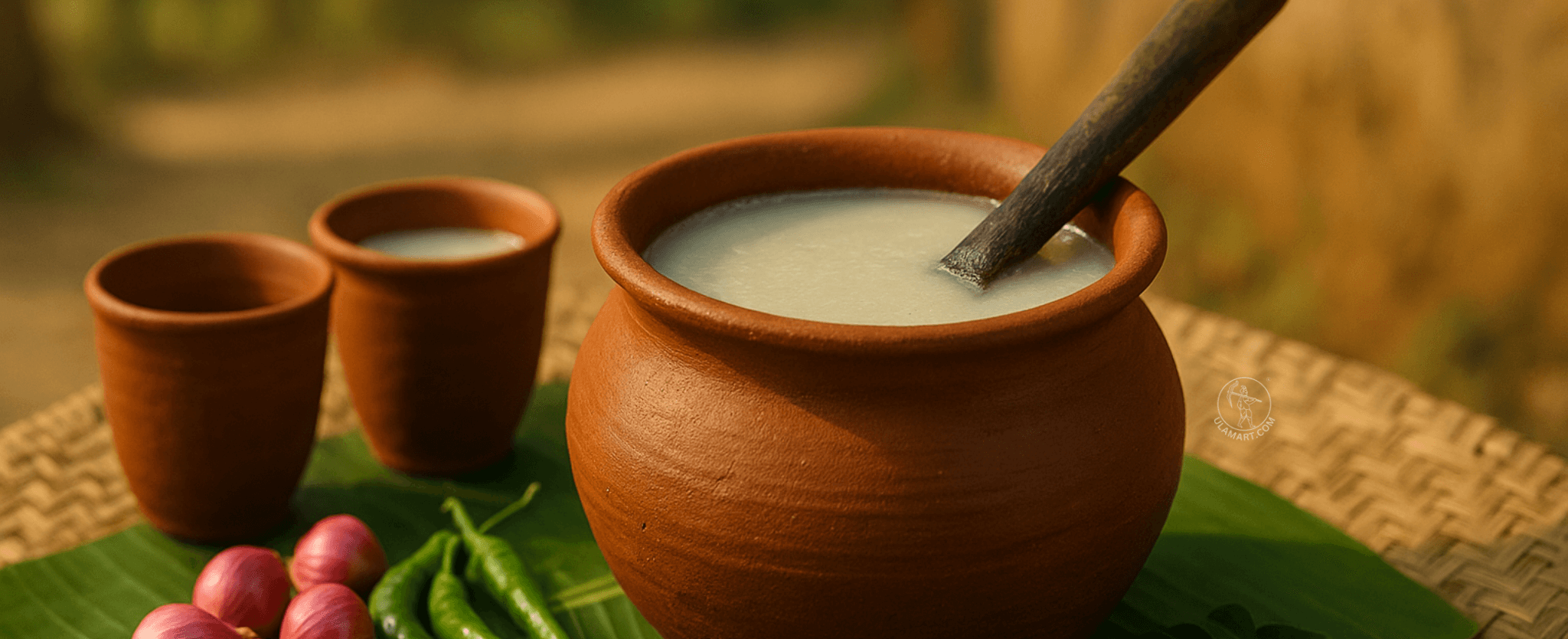
There’s something deeply comforting about cooking with curd the traditional way, slowly, patiently, and in a clay pot. Long before modern cookware became common, clay pots were trusted for preparing curd-based dishes because they naturally enhanced flavour, kept food cool, and supported gentle cooking.
When curd meets a clay pot, the result is food that tastes fresher, feels lighter, and carries a subtle earthy aroma that modern vessels simply can’t replicate.
Making curd at home is a timeless tradition, and using curd setter clay pots takes it to a whole new level. The natural porous texture of clay helps to regulate temperature evenly, creating the perfect micro-environment for probiotics to flourish. As a result, you get curd that is thicker, creamier, and more flavorful compared to steel or plastic containers. Clay pots also enhance the taste with a subtle earthy note, while preserving nutrients and promoting better digestion.
Here’s a super clear step-by-step for preparing thick curd at home using the Ulamart curd setter clay pot:
Step 1: Rinse the clay pot with plain water (soak 30–60 minutes for first use; no soap).
Step 2: Boil milk until it rises, then simmer on low for 5 minutes.
Step 3: Let the milk cool until warm.
Step 4: Mix 1–2 teaspoons curd with warm milk and gently stir it into the milk.
Step 5: Pour the milk into the clay pot and cover loosely.
Step 6: Keep the pot undisturbed in a warm place for 6–8 hours (8–12 hours in cold weather).
Step 7: Check if set by tilting slightly, curd should look firm, not flow.
Step 8: Refrigerate for 2–3 hours for extra thickness.
Tips to get EXTRA thick curd
- Use full cream milk if possible
- Simmer milk 5–8 minutes
- Use only 1–2 tsp starter (too much makes it sour)
- Don’t disturb while setting
- Refrigerate soon after it sets
Common issues (quick fix)
- Watery curd? Milk was not reduced enough / moved while setting / milk too cold
- Sour curd? Too much starter or kept outside too long after setting
- Not set? Milk was too hot when starter added or room was too cold
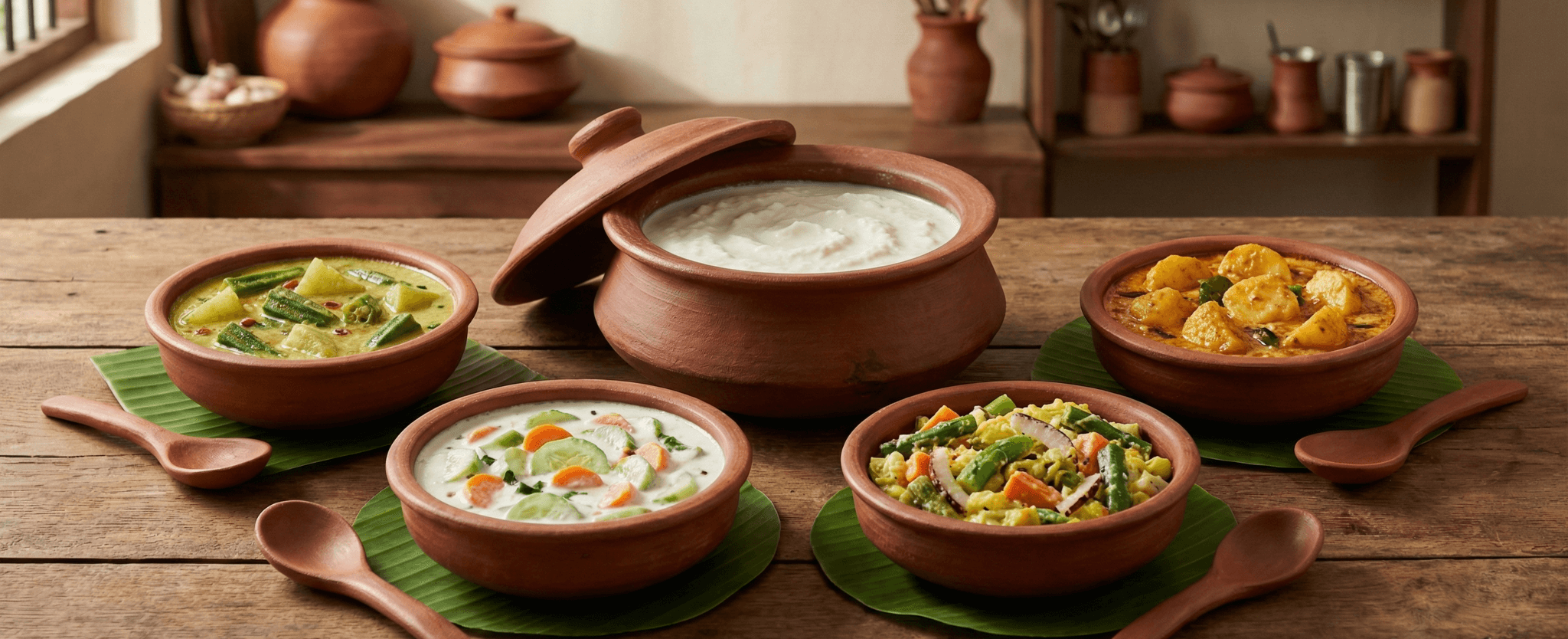
With fresh curd ready, here are some quick and easy recipes to try at home!
1. Mor Kuzhambu (Spiced Curd Gravy)
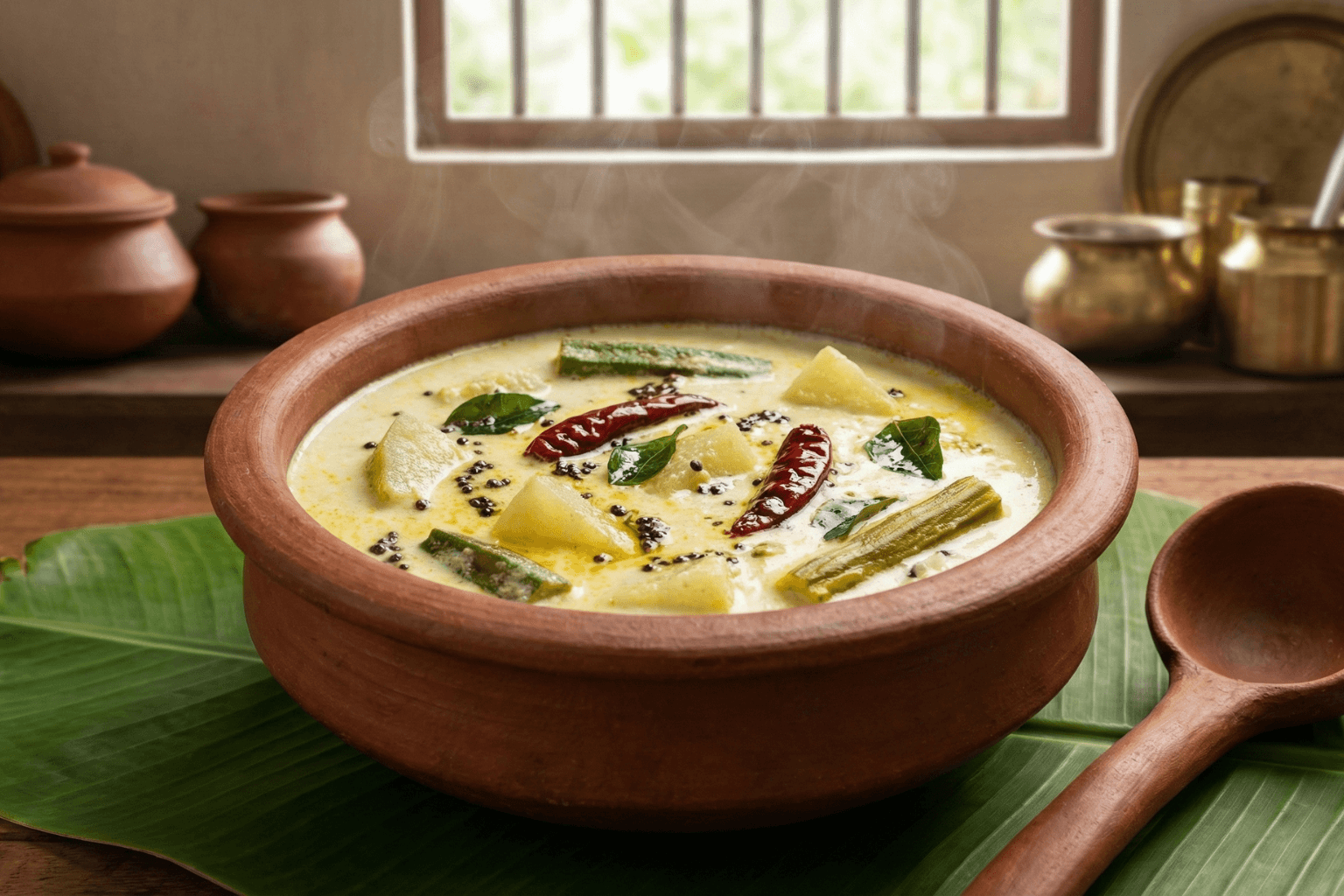
Mor kuzhambu is a mildly spiced curry made with sour curd and vegetables, known for its digestive benefits.
Ingredients
Sour curd – 1½ cups, Coconut – ¼ cup, Green chilli – 2, Cumin seeds – 1 tsp, Turmeric – a pinch, Vegetables (ash gourd / okra / drumstick) – 1 cup, Salt – to taste, Oil – 1 tbsp, Mustard seeds – 1 tsp, Dried red chilli – 1, Curry leaves – few
Method
- Grind coconut, green chilli, and cumin into a smooth paste.
- Whisk curd with turmeric and salt.
- Cook vegetables in water until soft.
- Add ground paste and simmer briefly.
- Add curd, mix gently, and switch off the flame.
- Temper and pour over. Rest in a curd pot before serving.
2. Thayir Pachadi (Curd Vegetable Mix)
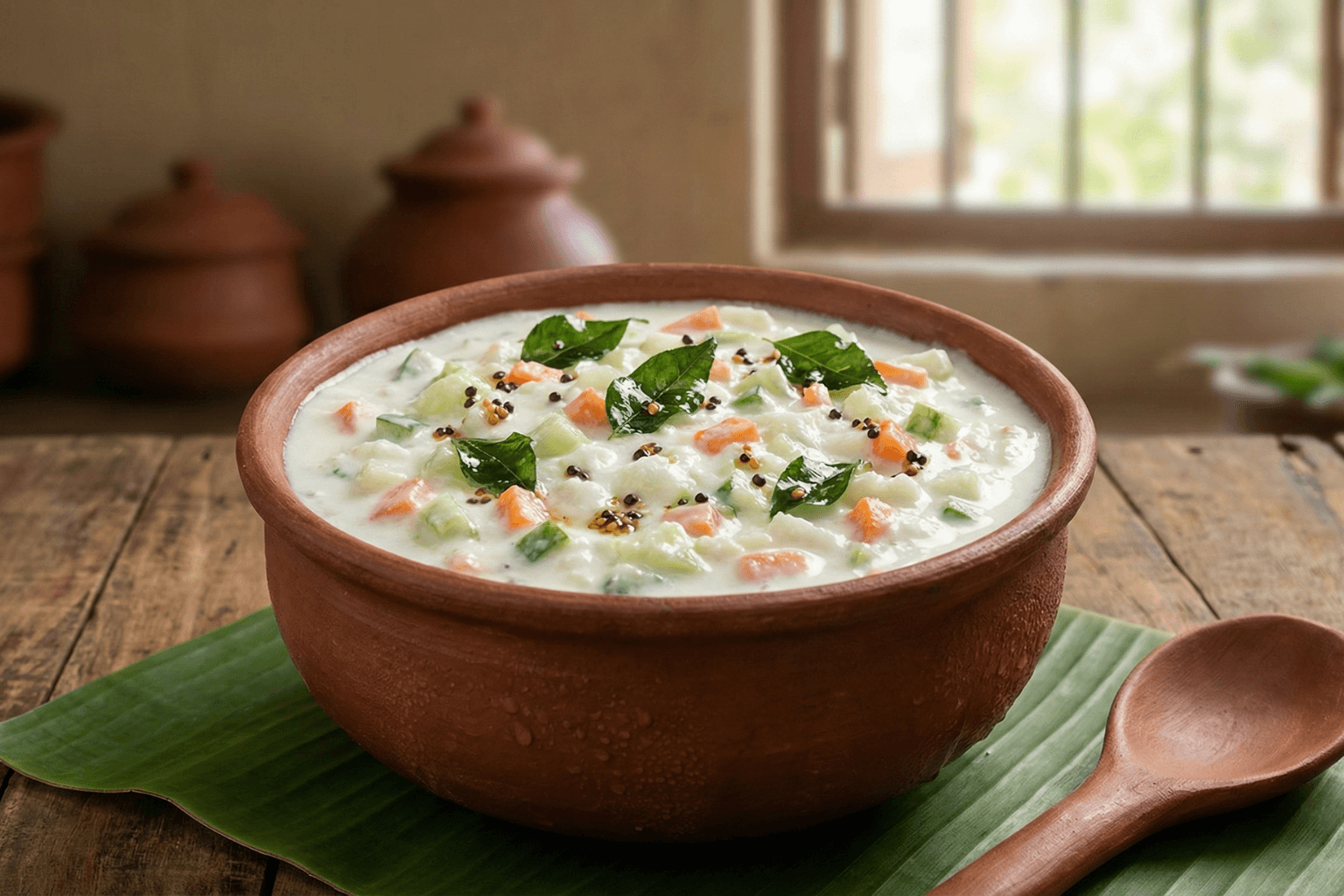
A cooling side dish where cooked or raw vegetables are mixed with lightly seasoned curd.
Ingredients
Thick curd – 1 cup, Cucumber / carrot / ash gourd – ½ cup (chopped), Salt – to taste, Oil – 1 tsp, Mustard seeds – ½ tsp, Curry leaves – few
Method
- Lightly cook the vegetables (or use raw cucumber). Cool completely.
- Mix with curd and salt.
- Add simple mustard tempering.
- Rest in a clay pot for enhanced taste.
3. Thayir Avial (Yogurt-Based Vegetable Curry)
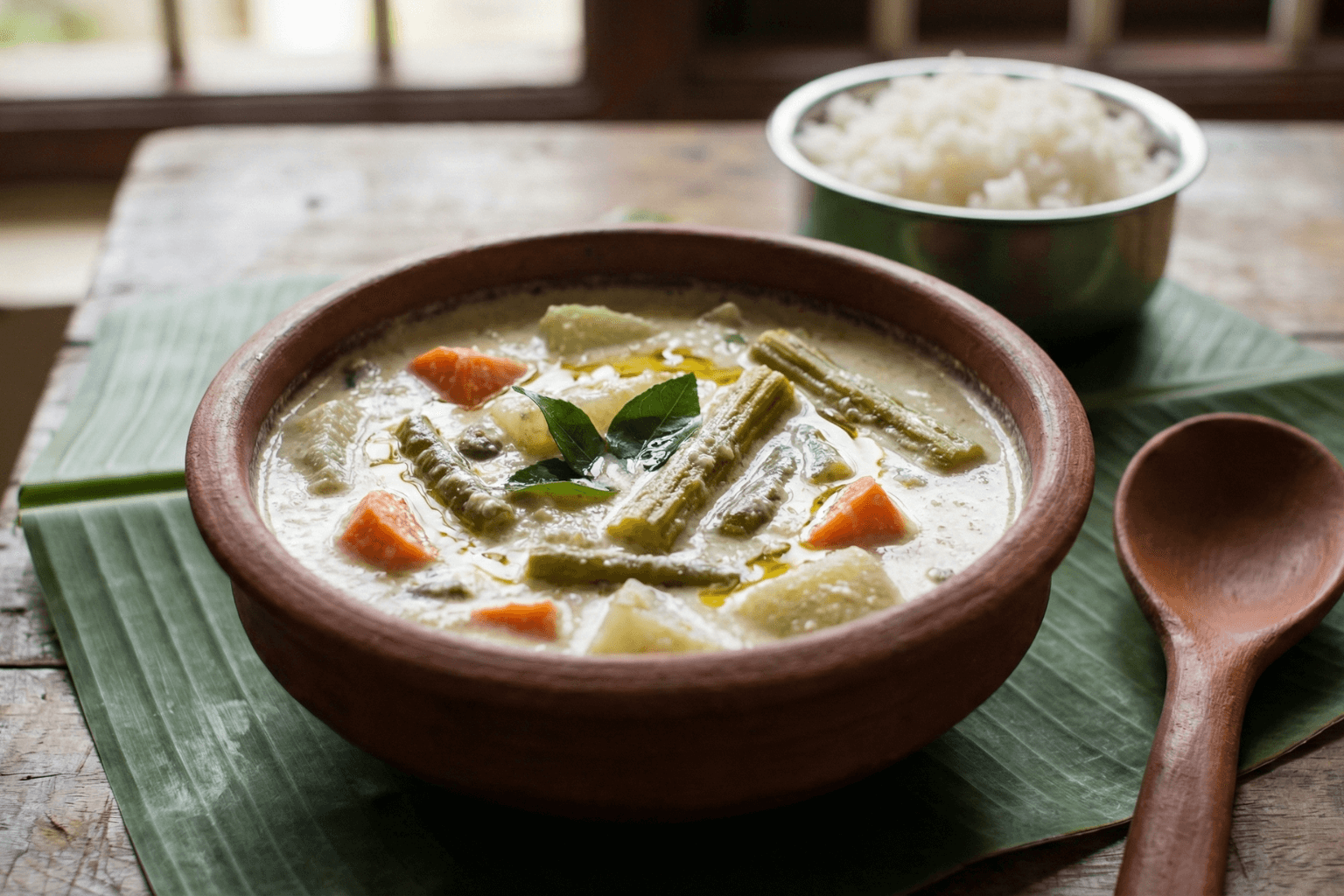
Thayir Avial is a lighter variation of the classic avial, where curd replaces heavy coconut paste. This dish is mild, cooling, and pairs beautifully with steamed rice, especially during summer.
Ingredients
Mixed vegetables (carrot, beans, drumstick, ash gourd) – 2 cups, Thick curd – 1 cup, Coconut (grated) – 2 tbsp (optional, very minimal), Green chillies – 1 to 2, Cumin seeds – ½ tsp, Turmeric powder – a pinch, Curry leaves – few, Coconut oil – 1 tbsp, Salt.
Preparation Method
- Cut vegetables into long pieces and cook them with turmeric and salt until soft.
- Grind green chillies and cumin seeds into a coarse paste (add coconut only if using).
- Add this paste to the cooked vegetables and simmer for 2 – 3 minutes.
- Lower the flame and add whisked curd. Mix gently without boiling.
- Switch off the flame. Add curry leaves and drizzle coconut oil on top.
Let it rest for a few minutes before serving.
Why Thayir Avial Works Well with Rice
- Light and cooling
- Easier to digest than regular avial
- Mild flavours balance spicy curries
4. Dahi Aloo (Potato in Curd Gravy)

A comforting curd-based potato dish where soft potatoes are gently cooked in a mildly spiced, tangy yogurt gravy, making it both soothing and flavourful.
Ingredients
Baby potatoes (cooked about 80%) – 300 g , Asafoetida – 2 pinches, Salt – to taste, Black pepper powder – ½ tsp, Oil – 3 tbsp, Cumin seeds – ½ tsp, Chopped onion – 1 cup, Ginger-garlic paste – 1 tbsp, Green chillies – 4 to 5, Turmeric powder – a pinch, Garam masala – ½ tsp, Coriander powder – 1 tsp, Roasted cumin powder – ½ tsp, Tomato paste – ½ cup, Whisked curd – 300 g (about 1 cup), Fresh coriander – 2 tbsp (for garnish)
Preparation Method
- Heat oil in a pan and add the partially cooked baby potatoes.
- Fry until they turn light golden and slightly crisp.
- While frying, add asafoetida, salt, and pepper powder. Remove and keep aside.
- In the same pan, add more oil if needed and heat it.
- Add cumin seeds and black cumin (kalonji) and allow them to crackle.
- Add chopped onions and sauté until translucent or lightly golden.
- Add ginger-garlic paste and cook until the raw smell disappears.
- Add turmeric powder, garam masala, coriander powder, roasted cumin powder, and green chillies.
- Mix well and cook briefly until the spices release aroma.
- Add tomato paste and cook until oil starts separating.
- Add the fried potatoes back into the pan and mix gently.
- Switch off the flame and add whisked curd slowly, mixing gently to avoid curdling.
- Turn the flame back to low heat and cook until the curry thickens and oil rises.
- Garnish with fresh coriander and remove from heat.
Serving Suggestions
Dahi Aloo is a delicious curd-based curry that pairs well with both steamed rice, chapathis, offering a tangy, creamy flavour profile that’s unique and comforting.
Final thoughts
Traditional curd-based dishes are at their best when they are prepared slowly and thoughtfully, just the way they were meant to be. Cooking and resting these recipes in a clay pot enhances their natural flavours, keeps the curd fresh for longer, and adds a gentle earthy touch that makes each dish more comforting and balanced. From cooling gravies to mild vegetable mixes and soothing curries, clay pot cooking brings out the true essence of curd-based food while keeping it light and easy to digest.
If you are looking to recreate these flavours the traditional way, choosing the right cookware makes all the difference. Ulamart offers authentic curd setter clay pots that are ideal for preparing and serving curd-based dishes, helping you experience taste, texture, and freshness just as it was enjoyed in traditional kitchens. With simple recipes and the right clay cookware, curd-based meals can remain timeless, nourishing, and deeply satisfying.