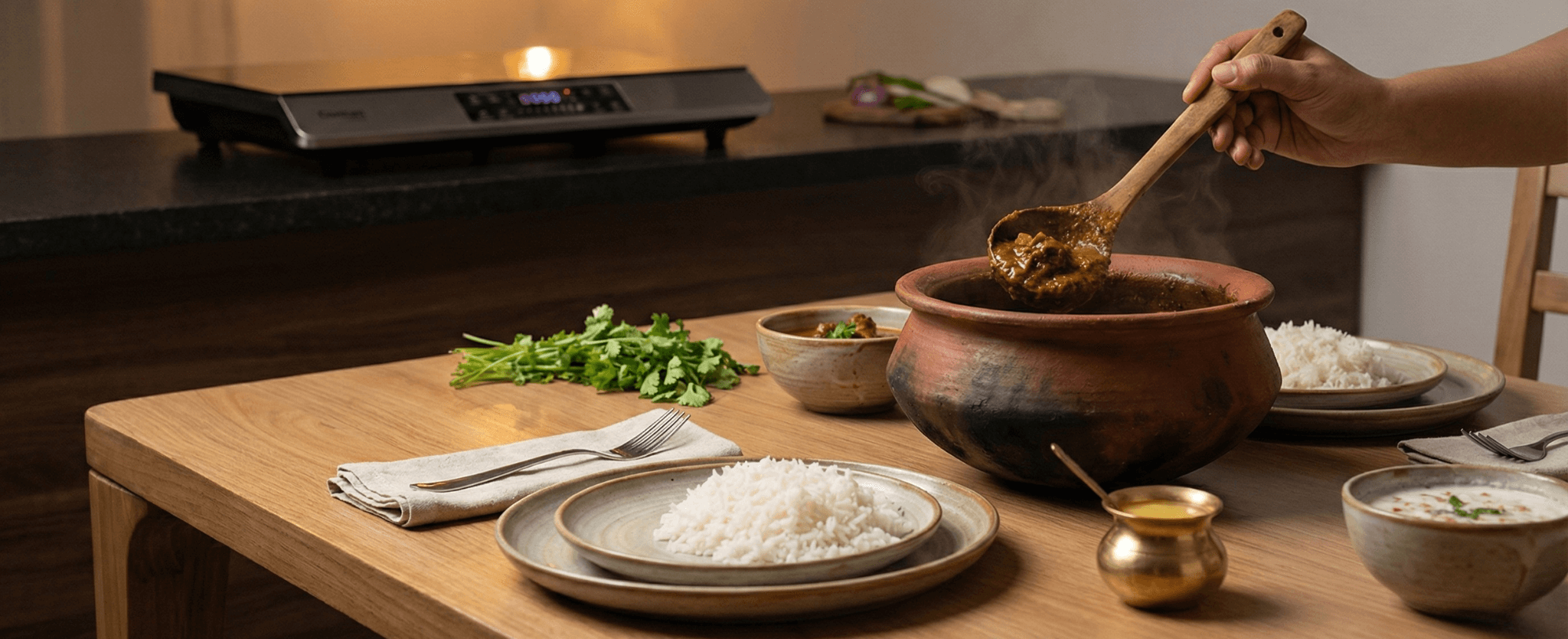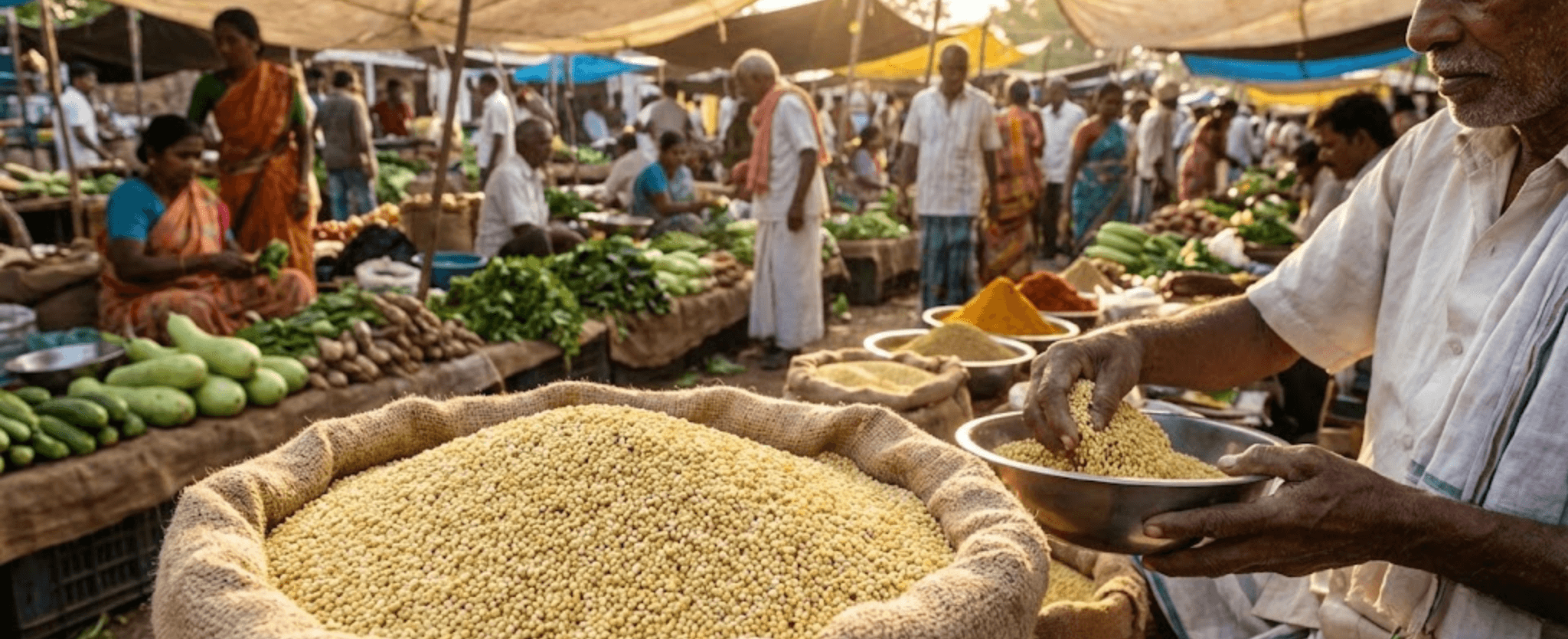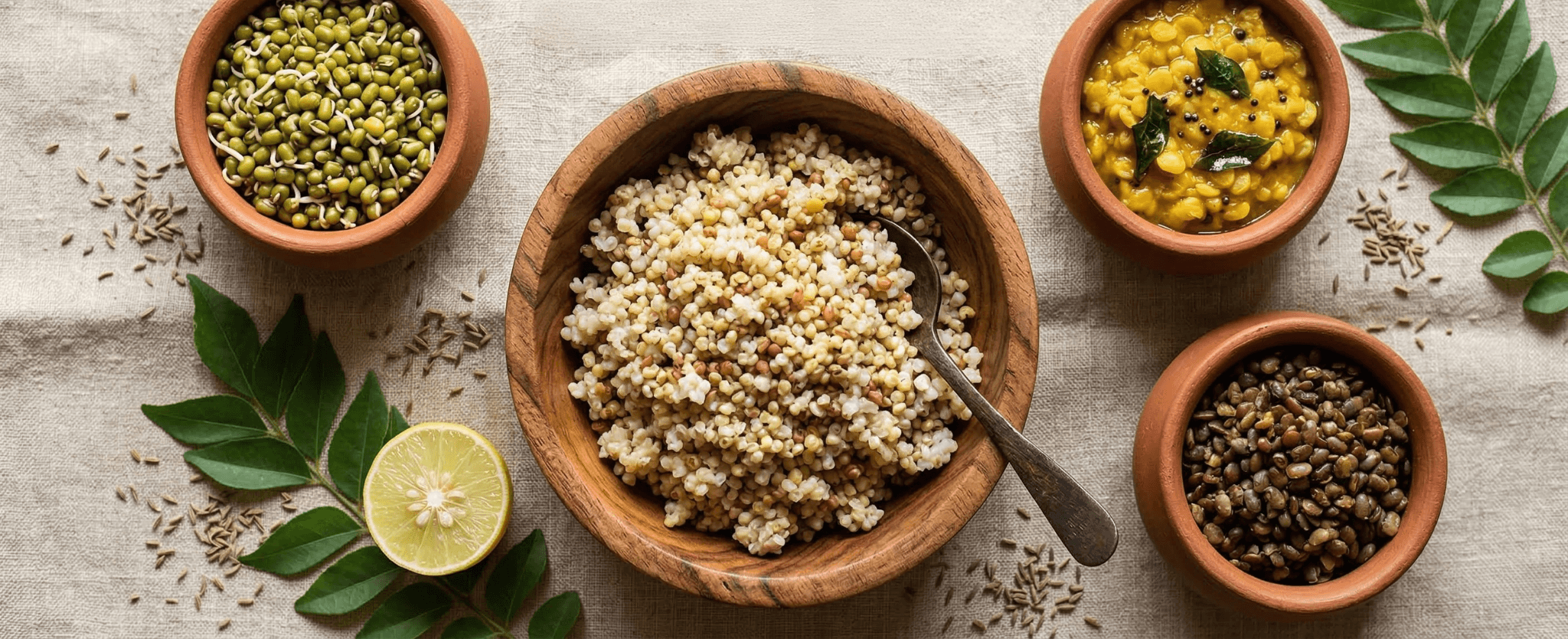
Somewhere in the last few generations, a quiet trade happened in Indian kitchens. Out went the unpolished varagu (kodo millet) khichdi and the stone-ground toor dal. In came polished white rice, refined flour, and packaged snacks. The trade seemed like progress. But the gut, that remarkably complex ecosystem inside each of us, quietly disagreed.
Digestive complaints have multiplied. Bloating, irregular bowels, low energy, unexplained skin flares, and poor immunity have all quietly risen alongside the shift away from traditional grains and pulses. Nutritional researchers are now confirming what generations of South Indian grandmothers already practiced: the secret to a well-functioning gut lies in the diversity and quality of fiber your food delivers, and few food traditions on earth matched what Indian homes once served every day.
This guide walks through how your gut microbiome actually works, why traditional grains and pulses are among the finest prebiotic foods available anywhere, and how you can rebuild microbiome diversity using ingredients that are already deeply woven into Indian culinary culture. From foxtail millet to barnyard millet, from toor dal to horse gram, each food has a specific role to play inside your digestive tract.
What Your Gut Microbiome Actually Does
The human gut is home to approximately 38 trillion microbial cells, a number that roughly matches the total cell count in the rest of the human body. These microorganisms, predominantly bacteria, collectively referred to as the gut microbiome, perform functions that go far beyond digestion.
The Core Functions of a Healthy Microbiome
- Ferments dietary fiber into short-chain fatty acids (SCFAs) like butyrate, propionate, and acetate that nourish the gut lining
- Trains and regulates the immune system, with around 70 percent of immune cells residing in gut-associated lymphoid tissue
- Synthesizes vitamins B12, K2, and several B-group vitamins
- Regulates serotonin production (approximately 90 percent of the body’s serotonin is made in the gut)
- Controls appetite signals through gut-brain axis communication
- Protects against pathogenic organisms through competitive exclusion and antimicrobial compound production
The most critical input for a thriving microbiome is dietary fiber, specifically prebiotic fiber that human enzymes cannot break down but beneficial bacteria can. This is precisely where traditional Indian grains and pulses hold an extraordinary advantage over modern refined foods.
Why Traditional Grains Are Nature’s Finest Prebiotic Package
White polished rice contains roughly 0.4 grams of fiber per 100 grams. Compare that to the traditional grains that once formed the backbone of South Indian and Deccan diets, and the contrast is striking. Millets and unpolished rice varieties carry between 6 and 13 grams of fiber per 100 grams, alongside resistant starch structures that modern nutrition science identifies as among the most potent prebiotic substrates available.
Foxtail Millet (Thinai): Prebiotic Fiber and Gut Microbiota Diversity
Foxtail millet, known as thinai in Tamil, contains 8 grams of fiber per 100 grams and has a low glycemic index of 50 to 55. Its insoluble fiber fraction accelerates intestinal transit and reduces exposure time of the gut lining to potentially harmful compounds. The soluble fiber component acts as a substrate for Bifidobacterium and Lactobacillus species, two of the most clinically studied beneficial bacteria families. You can shop organic foxtail millet at Ulamart, sourced directly from farms that use traditional, chemical-free growing practices.
Kodo Millet (Varagu): Slow-Digesting Resistant Starch
Kodo millet (varagu arisi) possesses a distinctive starch structure that resists rapid breakdown in the small intestine. This resistant starch reaches the colon largely intact, where it becomes a critical fermentation substrate for butyrate-producing bacteria. Butyrate is the primary energy source for colonocytes (colon lining cells) and plays a central role in maintaining gut barrier integrity. A healthy gut barrier prevents the translocation of bacterial fragments and toxins into the bloodstream, a phenomenon increasingly linked to systemic inflammation. Ulamart’s organic kodo millet is grown organically without synthetic pesticides, preserving the grain’s natural fiber and resistant starch composition.
Barnyard Millet (Kuthiraivali): Iron-Rich Gut Support
Barnyard millet stands apart for its remarkably high iron content of 15.2 mg per 100 grams, a nutrient often discussed in the context of blood health but also essential for the growth and activity of beneficial gut bacteria. Iron-dependent enzymes in beneficial Lactobacillus species use mineral iron for oxidative reactions that support their colonization. Barnyard millet also contains beta-glucan type polysaccharides that show prebiotic activity in fermentation studies. Ulamart carries certified organic barnyard millet (kuthiraivali) that retains its bran layer and full prebiotic fiber profile.
Little Millet (Samai): The Gut-Serotonin Connection
Little millet (samai) is particularly interesting from a gut-brain axis perspective. It acts as a prebiotic that supports beneficial bacteria populations, and these bacteria in turn influence serotonin production in the gut. Magnesium at 133 mg per 100 grams supports the enzymatic conversion of tryptophan to serotonin, making little millet one of the few plant foods that addresses the nutritional prerequisites for gut-derived serotonin synthesis. Explore organic little millet (samai) on Ulamart for this exceptional grain.
Pearl Millet (Kambu): Winter Warmth and Digestive Motility
Pearl millet or kambu is classified in Ayurveda as thermogenic (ushna virya), meaning it generates metabolic heat during digestion. From a microbiome standpoint, its high insoluble fiber content at 1.2 grams per 100 grams dry weight effectively increases gut motility, reducing constipation and the associated risk of dysbiosis that comes from slow transit. It also contains zinc at 3.1 mg per 100 grams, which plays a regulatory role in tight junction proteins that keep the gut barrier sealed. Browse organic pearl millet (kambu) and other millets at Ulamart to build a diverse grain rotation.
Millet Fiber and Gut Benefit at a Glance
| Millet | Fiber (per 100g) | Primary Gut Benefit |
| Foxtail Millet (Thinai) | 8.0 g | Feeds Bifidobacterium, accelerates transit |
| Kodo Millet (Varagu) | 9.0 g | Produces butyrate, protects gut lining |
| Barnyard Millet (Kuthiraivali) | 10.1 g | Beta-glucan prebiotic, supports colonocytes |
| Little Millet (Samai) | 7.6 g | Gut-brain serotonin pathway support |
| Pearl Millet (Kambu) | 11.5 g | Improves motility, seals gut barrier (zinc) |
Pulses as Probiotic-Supporting Powerhouses
Pulses, the dried seeds of legumes, are among the most under-appreciated gut health foods in modern diets. They contain multiple fiber fractions, resistant starch, oligosaccharides (specifically galacto-oligosaccharides and fructo-oligosaccharides), and polyphenols that collectively support microbiome diversity in ways no single supplement can replicate.
Toor Dal (Thuvaram Paruppu): The Everyday Gut Protector
Toor dal, known in Tamil as thuvaram paruppu and cooked daily in most South Indian homes as sambar, is genuinely excellent for gut health. Its oligosaccharide fraction, specifically raffinose and stachyose, selectively feeds Bifidobacterium species without feeding pathogenic bacteria. A daily serving of sambar made from unpolished toor dal effectively acts as a natural prebiotic supplement. Ulamart’s unpolished toor dal is processed using the traditional mankattiya method, which retains the outer bran layer and all associated prebiotic fiber.
Whole Green Gram (Pachai Payaru): Resistant Starch Champion
Whole green gram (moong), when cooked without excessive processing, retains a resistant starch fraction that is fermented slowly in the colon over many hours, providing sustained prebiotic substrate throughout the night when gut bacteria are most metabolically active. Sprouting green gram amplifies this benefit by partially breaking down phytates that would otherwise reduce mineral bioavailability, while simultaneously increasing the diversity of fermentable compounds. Ulamart stocks whole green gram that is organically grown and minimally processed.
Horse Gram (Kollu): The Gut Health Powerhouse Hiding in Plain Sight
Horse gram (kollu in Tamil) deserves particular mention because it contains an exceptionally high concentration of polyphenols alongside its fiber, making it one of the most potent plant-based prebiotic foods. The polyphenol-fiber synergy in horse gram has been shown in recent research to enhance the growth of Akkermansia muciniphila, a keystone gut bacterium associated with metabolic health, reduced intestinal permeability, and lower systemic inflammation. Kollu rasam remains one of the most gut-protective traditional South Indian preparations imaginable. Find organic horse gram (kollu) at Ulamart to add this traditional powerhouse back to your routine.
Split Black Urad Dal: The Fermentation Foundation
Urad dal occupies a unique position in gut health nutrition because it is the foundation grain for South Indian fermented foods including idli and dosa. When urad dal is soaked, ground, and allowed to ferment overnight, the batter develops live cultures of naturally occurring Leuconostoc mesenteroides and Lactobacillus bacteria. These live cultures, consumed fresh in the morning as idli or dosa, provide a direct probiotic input alongside the prebiotic fiber already present in the dal. The combination makes traditional idli one of the most complete gut health foods in existence. Browse organic split black urad dal for your daily fermented breakfast needs.
Pulses and Their Specific Gut Health Actions
| Pulse | Key Prebiotic Component | Gut Bacteria Supported |
| Toor Dal (Thuvaram) | Raffinose, stachyose | Bifidobacterium species |
| Whole Green Gram | Resistant starch, galacto-oligosaccharides | Lactobacillus species |
| Horse Gram (Kollu) | Polyphenols + dietary fiber | Akkermansia muciniphila |
| Urad Dal (fermented) | Live Leuconostoc, Lactobacillus cultures | Probiotic colonization support |
The Role of Fermentation in Traditional Indian Gut Health
Long before the words ‘probiotic’ and ‘microbiome’ entered scientific vocabulary, Indian food culture had developed a sophisticated understanding of fermentation as a daily practice. This knowledge was embedded into meal rituals, not as a conscious health strategy, but as accumulated wisdom passed down through generations of observation about what made people feel well.
Kanji: The Original Probiotic Drink
Kanji, the fermented rice gruel consumed throughout Tamil Nadu and Kerala, is produced by cooking rice (traditionally using varieties like Mappillai Samba or Navara) and allowing it to ferment overnight in the cooking water. The resulting porridge contains naturally occurring lactic acid bacteria alongside resistant starch formed when the cooked rice cools. Morning consumption of kanji was standard practice in agricultural communities, and its ability to settle digestive discomfort, support hydration, and provide sustained energy reflects its microbiome-supporting properties.
Idli and Dosa Batter: Nature’s Probiotic Food System
The idli-dosa fermentation process is a masterpiece of spontaneous fermentation. When rice (or millets) and urad dal are soaked, ground, and left to ferment for 8 to 12 hours, the batter develops a complex microbial community. Leuconostoc mesenteroides initiates the fermentation, reducing pH and creating an acidic environment. Lactobacillus species then take over, producing B vitamins and organic acids. The result is a food that is simultaneously more digestible than its raw ingredients, more nutrient-available due to phytate reduction, and actively probiotic when consumed fresh.
Using Millet-Based Batters for Enhanced Gut Diversity
Substituting a portion of the rice in idli-dosa batter with barnyard millet, foxtail millet, or kodo millet creates a fermented food with an even richer prebiotic profile than rice-only batter. The additional fiber fractions in millets feed a wider range of bacterial species during fermentation, producing a more complex culture by the time the batter is cooked. This simple substitution meaningfully increases the microbiome diversity impact of a daily breakfast.
Traditional Rice Varieties and Resistant Starch
Among the most overlooked gut health strategies in modern Indian diets is the practice of consuming cooked-and-cooled traditional rice. When cooked rice is allowed to cool for several hours (or refrigerated overnight), the starch molecules retrograde, forming a type of resistant starch called RS3 that strongly resists small intestinal digestion.
Mappillai Samba: Resistant Starch and Prebiotic Anthocyanins
Mappillai Samba is a deep red traditional rice variety from Tamil Nadu, notable for its anthocyanin content alongside its resistant starch fraction. Anthocyanins function as prebiotics in the colon, selectively stimulating beneficial bacteria and simultaneously acting as antioxidants that protect the gut lining from oxidative stress. The combination makes Mappillai Samba one of the most gut-protective traditional rice varieties available. See Mappillai Samba rice and its full health profile on the Ulamart blog.
Navara Rice: The Ayurvedic Gut Healer
Navara rice from Kerala is used in panchakarma therapies specifically because of its documented effects on the gut lining. Rich in ferulic acid, a phenolic compound with proven prebiotic and anti-inflammatory properties, Navara rice when consumed as a porridge (karkidaka kanji) has been used for centuries during monsoon season to strengthen gut immunity and restore digestive balance after the heat and humidity of summer.
Practical Strategies to Rebuild Your Gut Microbiome
Rebuilding microbiome diversity does not require expensive supplements or elaborate protocols. The most powerful and sustainable approach is dietary diversity using real, minimally processed foods. The following strategies are grounded in both modern microbiome research and traditional Indian food wisdom.
The Grain Rotation Method
One of the most effective ways to increase microbiome diversity is rotating your grain base rather than eating the same grain every meal. Each millet and pulse variety carries a distinct fiber profile that feeds different bacterial species. A simple weekly rotation covering three to four grains ensures your gut bacteria receive varied prebiotic inputs.
- Monday and Thursday: Foxtail millet (thinai) rice or pongal
- Tuesday and Friday: Kodo millet (varagu) khichdi or upma
- Wednesday and Saturday: Barnyard millet (kuthiraivali) idli or pongal
- One meal weekly: Little millet (samai) porridge or biryani
- Dal rotation: Alternate toor dal, green gram, and horse gram across the week
Prioritize Cooking and Cooling
The resistant starch content of any grain increases dramatically when cooked and then cooled. Traditional South Indian practices of cooking rice and grain porridge the previous evening, allowing it to ferment slightly in the remaining warm water, and consuming it the next morning as pazhaiya sadam (fermented rice with a small amount of water) or kanji, were instinctively optimizing for resistant starch and live culture input simultaneously.
The Sprouting Advantage
Sprouting pulses for 12 to 24 hours before cooking dramatically increases their prebiotic quality. The sprouting process reduces phytate content, increases soluble fiber, and produces compounds like gamma-aminobutyric acid (GABA) that directly support gut lining health. Sprouted moong dal consumed as a light salad with lemon and cumin is one of the simplest, highest-impact gut health foods you can prepare.
Pair Fermented Foods with Prebiotic Foods
The most effective gut health meals combine both prebiotic foods (fiber-rich grains and pulses that feed bacteria) and probiotic foods (fermented foods containing live cultures) in the same meal. Traditional South Indian meals already accomplish this naturally: idli (fermented, probiotic) with sambar made from toor dal (prebiotic) and homemade curd rice (probiotic) with a side of mixed millet kootu (prebiotic) is a textbook example of synbiotic eating.
Traditional Diet vs Modern Diet: Gut Health Impact
| Factor | Traditional Indian Diet | Modern Processed Diet |
| Daily fiber intake | 35 to 50 g from grains, pulses, greens | Under 15 g from refined sources |
| Grain diversity per week | 5 to 8 grain types (millets, rice varieties) | 1 to 2 types (polished rice, refined wheat) |
| Fermented food daily | Yes (idli, dosa, curd, kanji) | Rare or absent |
| Resistant starch intake | High (cooked-cooled grains) | Very low |
| Microbiome diversity | Higher (400+ species common) | Lower (declining trend) |
Foods That Harm Your Gut Microbiome
Understanding which foods actively damage microbiome health is as important as knowing which foods build it. The following categories consistently show negative effects on gut bacterial diversity in clinical research.
- Highly refined grains (polished white rice eaten exclusively, maida-based products) that provide calories without fiber substrate for bacteria
- Ultra-processed foods high in emulsifiers (carboxymethylcellulose, polysorbate 80) that disrupt the mucus layer protecting gut bacteria
- Artificial sweeteners including sucralose and saccharin, which negatively alter Clostridiales and Lactobacillus populations
- Excessive dietary fat from refined vegetable oils, which shifts the microbiome toward pro-inflammatory bacterial profiles
- Chronic antibiotic use without prebiotic and probiotic recovery protocols
The most effective counter-strategy against all of these gut disruptors is consistently high dietary fiber intake from diverse whole food sources, which is exactly what a traditional Indian grain and pulse-centered diet provides.
A 7-Day Gut Reset Meal Plan Using Traditional Indian Foods
The following meal framework uses foods available on Ulamart to provide a practical starting point for microbiome rebuilding. Adjust portions and preparations to your preference, but maintain the grain and pulse diversity outlined.
| Day | Breakfast | Lunch/Dinner |
| Day 1 | Foxtail millet pongal with sambar | Toor dal sambar with cooked-cooled rice |
| Day 2 | Urad dal idli (freshly fermented batter) | Horse gram rasam with barnyard millet rice |
| Day 3 | Ragi kanji with jaggery | Green gram dal with kodo millet rice |
| Day 4 | Kodo millet upma with coconut chutney | Toor dal kuzhambu with Mappillai Samba rice |
| Day 5 | Sprouted green gram salad with lemon | Pearl millet porridge (kambu koozh) |
| Day 6 | Little millet dosa (overnight fermented batter) | Horse gram kootu with toor dal rice |
| Day 7 | Barnyard millet idli with groundnut chutney | Curd rice with green gram sprouts |
Signs Your Gut Microbiome Is Improving
When dietary fiber intake increases and microbiome diversity begins to improve, the body typically shows several positive changes over the course of two to eight weeks. These are general signs that your microbiome is responding positively to dietary changes and should not be interpreted as medical diagnoses. If you have ongoing digestive health concerns, please consult a qualified healthcare professional.
- More regular bowel movements with better consistency and less straining
- Reduced bloating and gas after meals, particularly after the initial 1 to 2 week adaptation period
- Improved energy levels in the morning, particularly after traditional grain-based breakfasts
- Reduced frequency of sugar or refined carbohydrate cravings, as gut bacteria stabilize appetite hormones
- Clearer skin, as reduced gut permeability lowers systemic inflammation that often manifests in skin
- Better mood and reduced afternoon mental fatigue, reflecting improved serotonin production
Note: When significantly increasing dietary fiber intake after a period of low-fiber eating, it is completely normal to experience increased gas and bloating during the first one to two weeks. This is a sign that your gut bacteria are actively fermenting the new fiber substrate. The discomfort passes as your microbiome adapts and diversifies. Increasing intake gradually and staying well hydrated minimizes this transition period.
Rediscovering What Was Never Actually Lost
The most remarkable thing about gut health and traditional Indian food is that the knowledge was never hidden. It was cooked into every morning’s idli batter, every afternoon’s sambar, every grandmother’s insistence on varagu payasam over packaged sweets. The science that modern nutrition is now assembling, on microbiome diversity, prebiotic fiber, resistant starch, and fermented foods, is the scientific vocabulary for what traditional South Indian kitchens were doing instinctively for generations.
The shift back toward millets, unpolished pulses, and fermented grain preparations is not a trend. It is a return to a deeply intelligent food system that understood the gut centuries before the word ‘microbiome’ was ever coined. Every meal built around foxtail millet, toor dal sambar, and a fresh bowl of curd is an investment in the microbial ecosystem that governs far more of your health than modern medicine once gave it credit for.
All the millets, pulses, and traditional rice varieties mentioned in this guide are available through Ulamart, sourced directly from organic farmers across South India and certified by FSSAI and organic certification bodies.
Medical Disclaimer: The information in this article is for general educational purposes only. It is not intended as medical advice and should not replace consultation with a qualified healthcare professional for diagnosis, treatment, or management of any medical condition. If you have pre-existing digestive health conditions, please consult your doctor before making significant dietary changes.