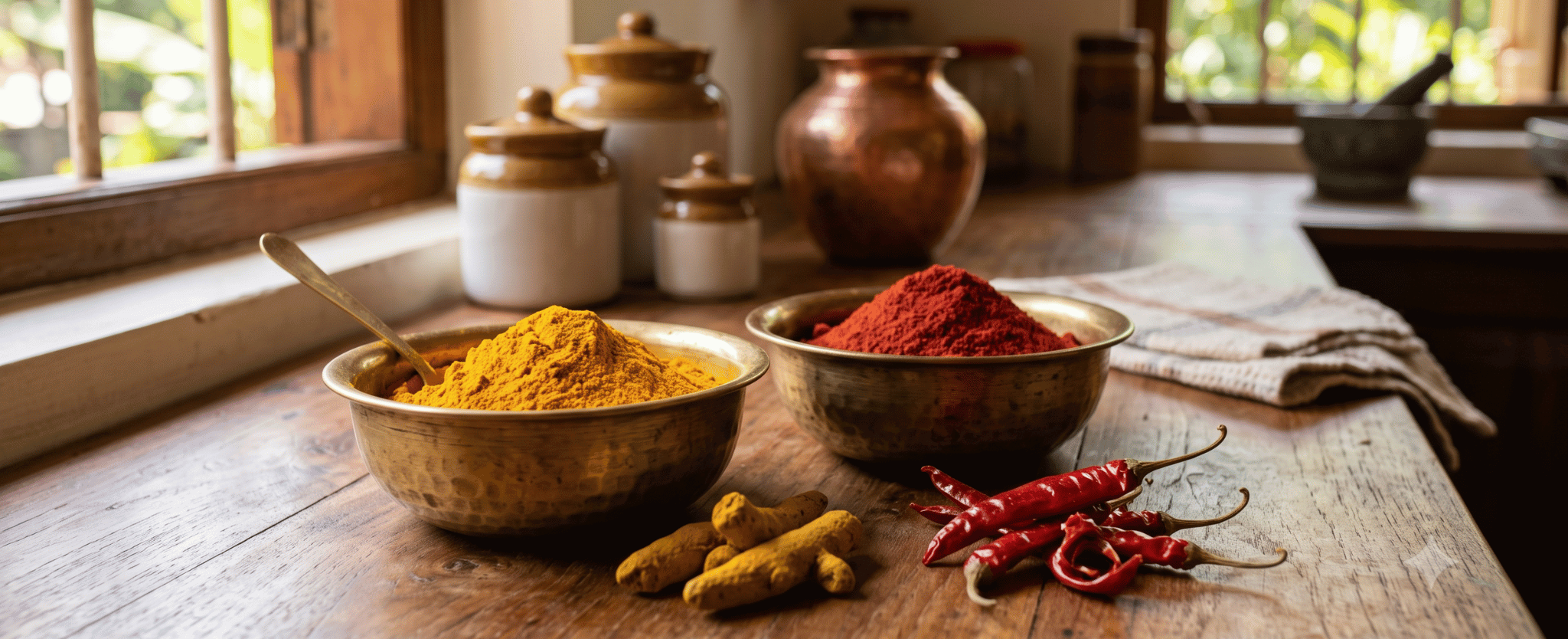
Turmeric and chilli powder are two of the most commonly adulterated spices sold loose in Indian markets, largely because their vivid colour makes it easy to mask cheap fillers or synthetic dyes. The concerning part is that most adulteration is invisible to the eye at the point of purchase, and only shows up once you know what simple test to run at home. This guide walks through what typically gets added to these two spices and how to check for it before it becomes part of your regular cooking.
What Actually Gets Added to Turmeric Powder
The most common adulterants found in loose turmeric powder are metanil yellow, a synthetic dye banned for food use, and chalk powder or starch used as a cheap bulking agent. According to the Food Safety and Standards Authority of India, metanil yellow is one of the substances regularly flagged in food safety surveys of loose spice powders sold in unregulated markets, and it carries real health risk with repeated consumption, unlike the natural curcumin colour in genuine turmeric.
The Water Glass Test for Turmeric
This is the simplest test and needs nothing more than a glass of water. Add a teaspoon of turmeric powder to a glass of water without stirring, and watch how it settles. Pure turmeric sinks slowly and leaves the water only lightly tinted yellow. Adulterated turmeric, especially with metanil yellow added, tends to release an intense, almost neon yellow colour into the water immediately, far more vivid than natural curcumin would produce on its own.
- Pure turmeric settles slowly, leaving a mild, natural yellow tint
- An intense, immediate neon-yellow colour in the water suggests a synthetic dye
- A gritty residue at the bottom of the glass can indicate chalk or starch filler
- Genuine turmeric has a mild earthy smell, not a sharp or chemical odour
What Gets Added to Chilli Powder
Chilli powder adulteration usually falls into two categories, brick powder or red sand added purely for bulk, and Sudan dyes or other synthetic red colourants added to make a duller batch of chillies look more vibrant. Brick powder adulteration is unfortunately common in loose chilli powder sold by weight in open markets, since it is cheap, red toned, and difficult to detect by colour alone.
Simple Checks for Chilli Powder
Sprinkle a small amount of chilli powder onto the surface of a glass of water without stirring. Pure chilli powder floats briefly on the surface before slowly settling and colouring the water a warm red. Brick powder or sand, being denser, sinks quickly and settles at the bottom as a gritty layer rather than dispersing into the water. A second check is texture, pure chilli powder feels relatively fine and slightly oily between the fingers due to natural oil content, while adulterated batches often feel unusually dry, gritty, or chalky.
| Test | Pure Spice Behaviour | Adulterated Spice Behaviour |
| Water settle test | Slow settling, mild natural colour | Quick sinking or overly vivid colour release |
| Texture check | Slightly oily, fine texture | Dry, gritty, or chalky feel |
| Smell check | Mild, natural spice aroma | Sharp, chemical, or flat odour |
Why Buying Whole and Grinding Small Batches Helps
The most reliable way to avoid adulteration entirely is to buy whole turmeric or dried chillies and grind them in small batches at home, since whole spices are far harder to adulterate convincingly than powder. This is more effort than buying ready ground powder, so a reasonable middle ground for most households is sourcing turmeric powder from a source that states its sourcing and processing clearly, rather than loose powder from an unlabelled bulk bin.
If you are also stocking up on other spices for the kitchen, applying the same settle and texture tests to pepper, cumin, and coriander powder is a quick habit that catches most common adulteration before it reaches your cooking, and it costs nothing beyond a spare glass of water and a few minutes.