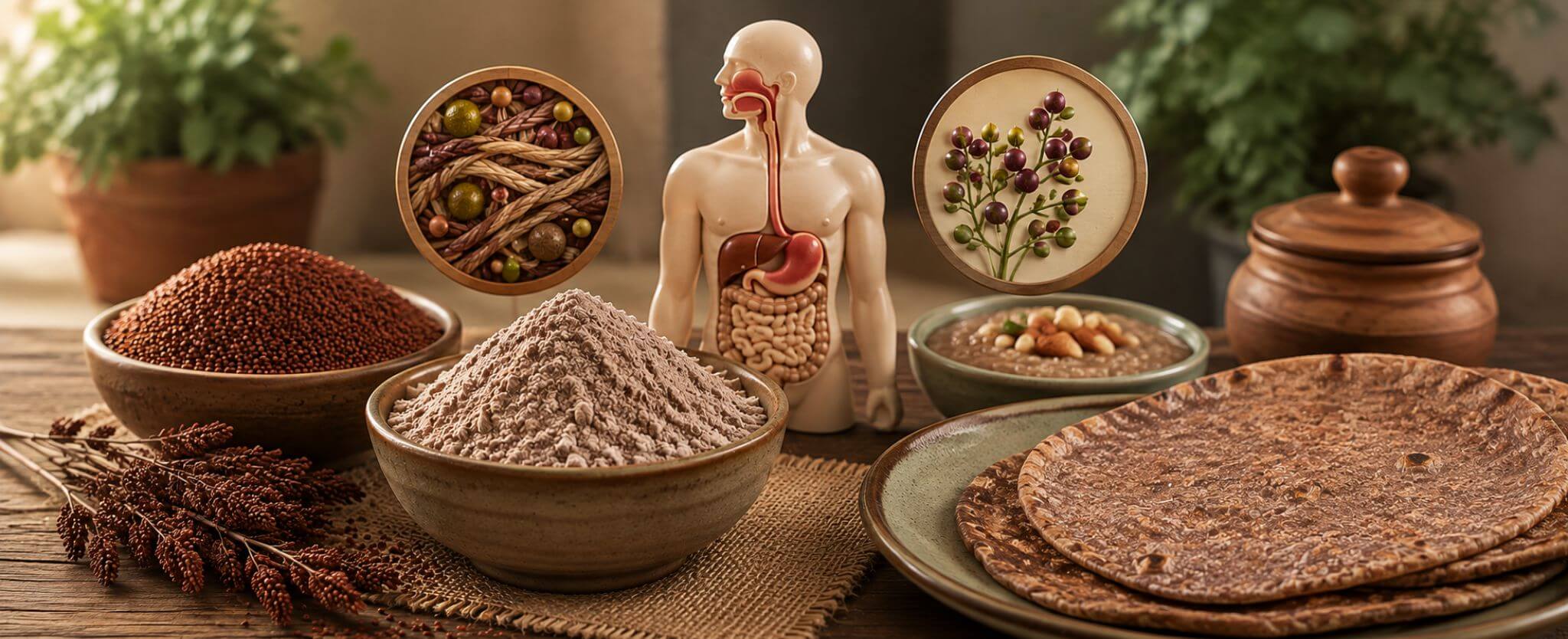
If you’ve spent any time on a South Indian kitchen WhatsApp group, you’ve heard it: “switch to ragi, it’s good for sugar.” It’s repeated so often it starts to sound like folklore rather than fact. So is it actually true, or is ragi just riding the millet-marketing wave along with everything else?
The short answer: mostly true, but with real nuance that most quick answers skip.
The Glycemic Index Isn’t as Low as You’ve Been Told
Ragi is often labeled a “low GI” food, but that’s an oversimplification. Ragi’s glycemic index actually falls in the medium range — roughly in the 50s to high-60s depending on whether it’s eaten as a whole grain or ground into flour, and how it’s cooked. The cooking method matters more than people assume: a well-cooked ragi porridge or roti tends to sit lower on the GI scale than raw or lightly processed forms.
That doesn’t disqualify it. Medium-GI, in the context of a diabetic diet, still compares favorably to refined wheat flour (maida) and polished white rice, both of which spike blood sugar faster and harder. The right comparison isn’t “ragi vs. nothing” — it’s “ragi vs. what you’d otherwise be eating.”
Why Ragi Behaves Better in the Body Than Its GI Number Suggests
Two things do the heavy lifting here, and they’re the part the “just switch to ragi” advice usually leaves out:
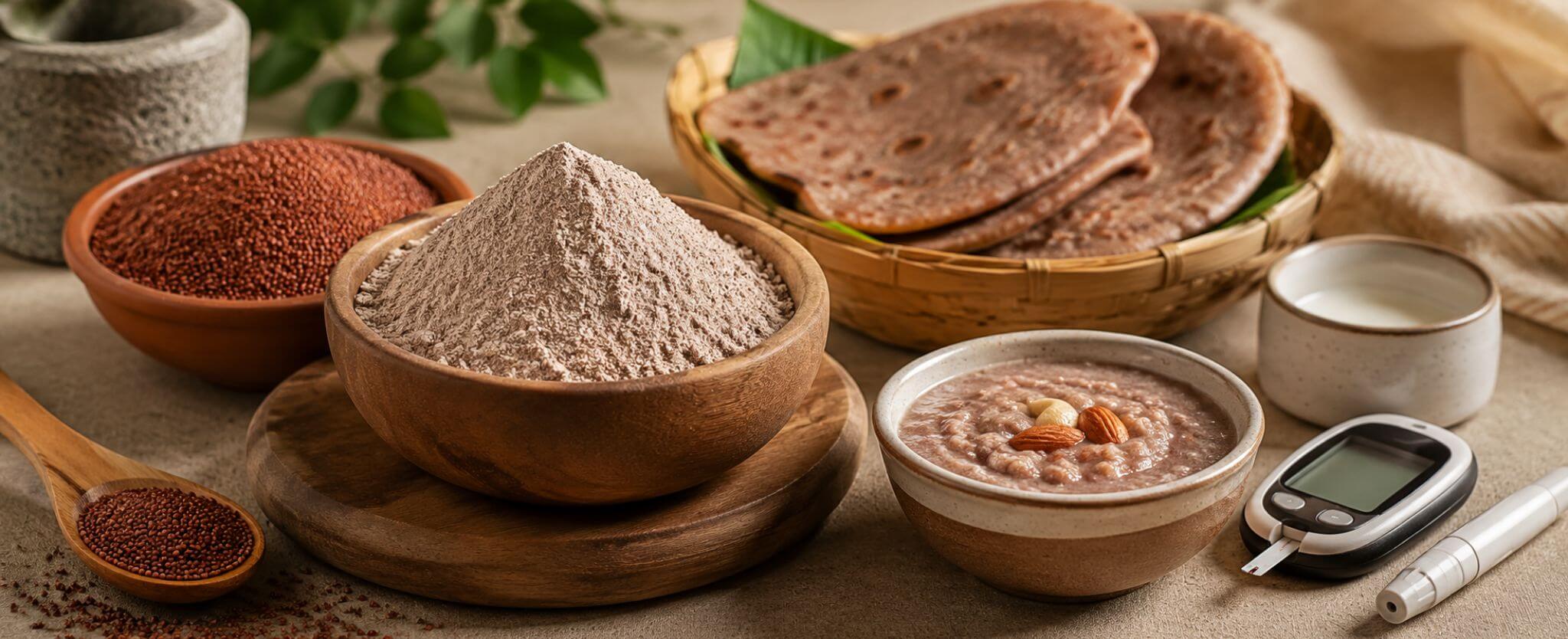
- Fibre content. Ragi is considerably higher in dietary fibre than wheat or rice flour. Fibre slows down how quickly carbohydrates are broken down and absorbed, which blunts the blood sugar spike even when the raw GI number looks moderate.
- Polyphenols. Ragi contains plant compounds that some research links to better insulin sensitivity and reduced sugar spikes after meals. This is part of why ragi often performs better in real-world diabetic diets than its GI score alone would predict.
Together, these are why doctors and dietitians frequently recommend ragi as part of a diabetes-friendly diet — not because it’s a “miracle grain,” but because it behaves more gently in the body than refined alternatives.
The Part Nobody Mentions: Portion Size Still Matters
Here’s where the hype needs a reality check. Ragi is still a carbohydrate-dense grain. Eating large bowls of ragi porridge or several rotis in one sitting can raise blood sugar just like any other high-carb food — low GI doesn’t mean “unlimited.” For most people managing diabetes, dietitians suggest ragi make up a meaningful but moderate share of daily carbohydrate intake, alongside vegetables and protein, not the entire plate.
People with thyroid conditions should also be mindful — ragi contains goitrogenic compounds, so it’s worth a quick conversation with a doctor if that applies to you.
So – Good for Diabetics, or Just Hype?
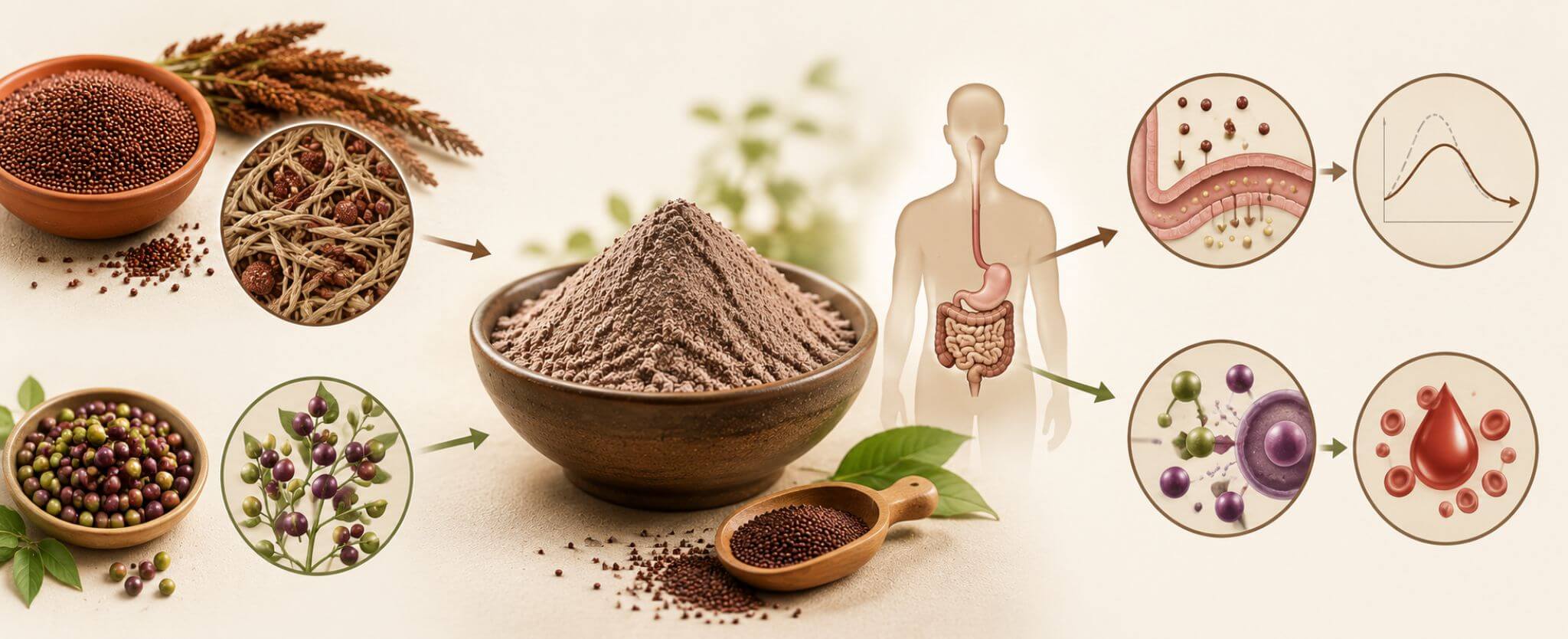
Genuinely good, with real science behind it – but not a free pass to eat it without limits. Ragi’s combination of fibre and polyphenols makes it a smarter carbohydrate choice than wheat or white rice for blood sugar management, which is exactly why it’s held its place in South Indian diets for generations, long before “low GI” was a marketing term.
If you’re looking for an easy entry point, a good quality Ragi Millet Murukku Flour is one of the simplest ways to work ragi into your week — a crunchy, savory snack that swaps out refined-flour murukku without requiring you to overhaul your whole diet.
FAQ
Is ragi flour safe for daily consumption if I have diabetes? For most people, yes – ragi flour in moderate portions as part of a balanced meal, alongside vegetables and protein rather than as the sole carbohydrate source.
Does ragi flour raise blood sugar less than wheat flour? Generally yes. Its higher fibre and polyphenol content slow glucose absorption more than refined wheat flour does, even though ragi’s raw glycemic index isn’t as low as often claimed.
Can ragi flour replace medication or a doctor’s advice? No. It’s a supportive dietary choice, not a treatment. Anyone managing diabetes should keep following their doctor’s guidance and treat diet changes like this as one part of the picture.