Every parent wants breakfast to be quick on busy mornings and still count for something nutritionally. That is exactly why ready-made health mix porridge has become such a common pantry item in Indian kitchens with young children. But not every packet labelled “health mix” delivers the same value. Some are built around a genuine blend of grains, pulses, and millets. Others lean heavily on refined flour and sugar with just a trace of the good stuff for marketing purposes.
If you are choosing a porridge mix for a toddler or a school-going child, knowing what to check before you buy makes a real difference. This guide walks through the label details, ingredient quality markers, and practical buying decisions that matter most.
- Why the Base Ingredient List Comes First
- Checking for Added Sugar and Sweeteners
- Millets, Pulses, and Why the Combination Matters
- Roasting, Processing, and Digestibility
- Reading the Nutrition Panel the Right Way
- Texture, Cooking Time, and Practical Fit
- Shelf Life and Storage Signs of Quality
- Making the Final Choice
Why the Base Ingredient List Comes First
The first thing to look at is not the front of the pack but the ingredient list on the back. A genuine health mix porridge should list whole grains, millets, and pulses as the first few ingredients, not sugar or maltodextrin. Traditional South Indian health mixes are typically built on a combination of ragi (finger millet), roasted grams, and a pulse like black urad, sometimes with small quantities of nuts for texture and healthy fats.
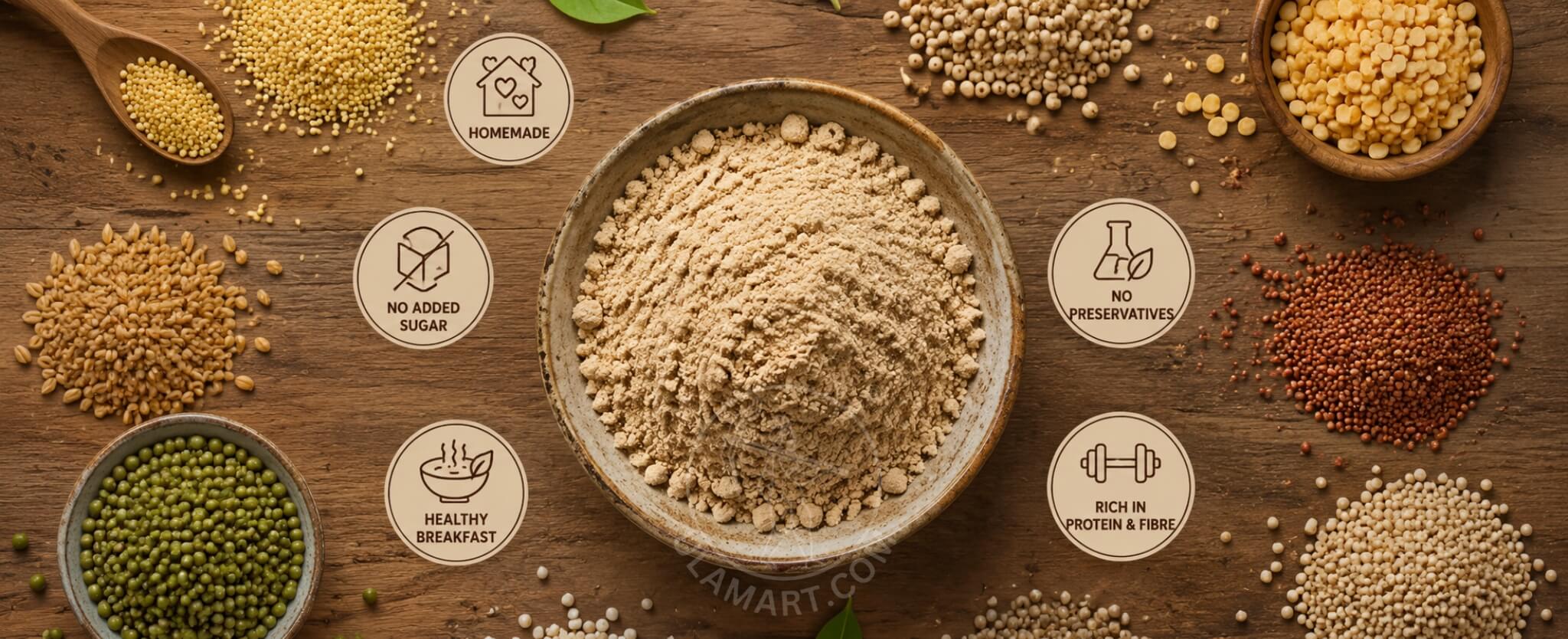

A useful mental checklist while reading the pack:
- Are millets or whole grains named specifically, or is it just “cereals”?
- Is sugar listed near the top, suggesting a high proportion?
- Are pulses included for protein, or is the mix mostly starch?
- Does the pack mention roasting, which affects both digestibility and shelf stability?
Products built around ingredients like black urad dal deserve attention here, since urad is a strong source of plant protein and iron, both of which growing children need consistently. A good example of this kind of composition is Ulamart’s black urad porridge health mix, which keeps the pulse content front and centre rather than as an afterthought.
Checking for Added Sugar and Sweeteners
Many commercial porridge mixes marketed to children carry more added sugar than parents expect. This matters because early sugar habits shape a child’s taste preferences for years. When comparing packets, look specifically at the sugar quantity per serving rather than per 100 grams, since serving sizes vary between brands and can make sugar content look lower than it actually is.
A mix that lets you control sweetness by adding jaggery or a ripe banana at home, rather than one that is pre-sweetened, generally gives you more flexibility. This is also useful if your child has any sensitivity to refined sugar or if you are trying to reduce it gradually across meals.
Millets, Pulses, and Why the Combination Matters
Cereals alone provide energy but fall short on protein and micronutrients. This is why the more effective health mixes combine millets with pulses. Millets bring fibre, iron, and slow-release carbohydrates, while pulses fill in the protein gap that a cereal-only porridge cannot cover on its own.
Here is a simple way to compare what different porridge mix types typically offer, based on their dominant ingredients.
| Mix Type | Main Strength | Watch Out For |
|---|---|---|
| Millet-only mix | Fibre, iron, low glycemic load | Lower protein unless fortified |
| Pulse-heavy mix (urad, moong) | Higher plant protein | Needs proper roasting for digestibility |
| Multi-grain plus pulse blend | Balanced macros | Check ratio, not just ingredient count |
| Mass-market instant mix | Convenience, longer shelf life | Often higher in sugar or maltodextrin |
If you are unsure which category a product falls into, the ingredient list combined with the protein value on the nutrition panel usually answers the question quickly. A mix with a genuine multi-grain and pulse base, such as Ulamart’s health mix porridge, typically shows this balance clearly on the pack.
This is a good point to picture what a genuinely good health mix looks like once it comes together, since most parents are scanning labels quickly and benefit from a quick visual reference rather than reading every line.
Roasting, Processing, and Digestibility
Raw millet and pulse flours can be harder for a young child’s digestive system to break down. Proper roasting before grinding improves both taste and digestibility, and it is one of the reasons traditional health mixes were always prepared with a roasting step rather than using raw flour directly.
When buying a ready-made mix, check whether the product description or label mentions roasting or dry-roasting as part of the process. Mixes that skip this step may cook faster but can leave a raw, starchy aftertaste and are more likely to cause mild bloating in sensitive children.
Reading the Nutrition Panel the Right Way
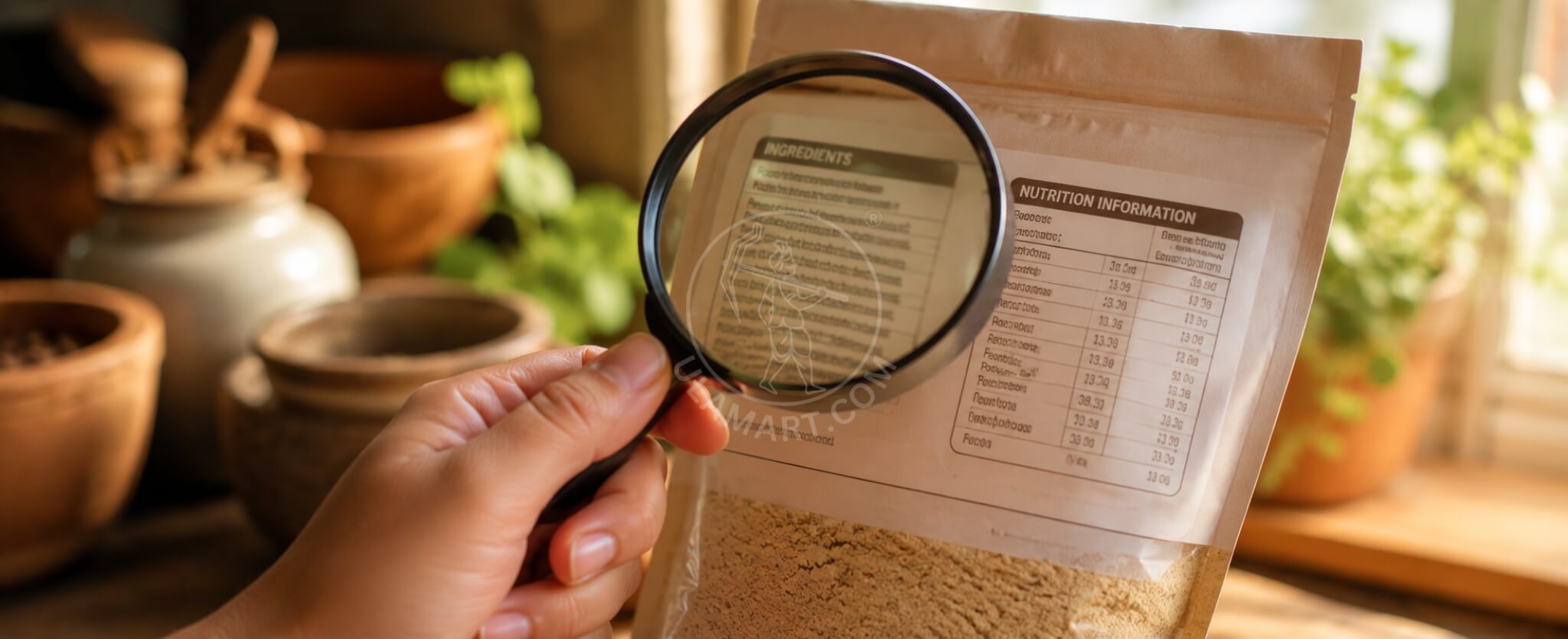
Front-of-pack claims like “high protein” or “immunity booster” are not regulated as strictly as parents assume, so the nutrition panel on the back is the more reliable source. For a children’s porridge mix, pay attention to four values per serving: protein, total sugar, fibre, and iron, if listed. According to global feeding guidance from the World Health Organization, complementary foods for young children should be nutrient-dense rather than simply calorie-dense, which is a useful lens to apply here too. You can review the full recommendations on the WHO guideline for complementary feeding if you want the underlying evidence behind this advice.
A quick comparison of what to prioritise versus what to treat as secondary when reading these panels:
| Panel Value | Priority Level | Why |
|---|---|---|
| Protein per serving | High | Supports growth, often the weakest point in cereal-only mixes |
| Added sugar | High | Directly shapes early taste habits |
| Fibre | Medium | Aids digestion, varies by grain source |
| Fortified vitamins | Medium | Useful but not a substitute for whole-food ingredients |
Texture, Cooking Time, and Practical Fit
Beyond nutrition, a health mix has to actually work for your morning routine. Some mixes need ten minutes of slow cooking to thicken properly, while others are designed to cook in under five minutes. Neither is wrong, but it helps to know which one you are buying, especially on school mornings when time is tight.
Texture also matters for younger toddlers who are still adjusting to semi-solid foods. A finely ground mix produces a smoother porridge, while a coarser grind gives more bite, which some parents prefer once a child is a little older and used to chewing.
This is worth checking on the pack description before buying, particularly for parents introducing solids for the first time and trying to understand how grind size affects cooking time and consistency.
Shelf Life and Storage Signs of Quality
A well-made health mix, especially one with roasted grains and pulses, should have a reasonably stable shelf life without relying on artificial preservatives. If a product needs a long list of preservatives to stay fresh for months, that is often a sign of lower-quality processing rather than better technology. Look for packaging that mentions natural shelf stability through roasting and proper drying, and store the product in an airtight container once opened to prevent moisture and pest issues, which affect ready-made grain-based mixes more than people expect.
Making the Final Choice
When you put all of this together, the buying decision comes down to a short set of practical checks: whole grains and pulses named clearly, sugar content that is reasonable per serving, evidence of proper roasting, and a nutrition panel that backs up the protein claim rather than just the packaging. A mix that ticks these boxes will generally serve your child better than one chosen purely on flavour variants or attractive packaging.
Parents who prefer to see the full range before deciding can compare active porridge mix options directly, since ingredient composition and pack sizes do vary even within a single brand’s range.
If you’re looking for a wholesome homemade alternative, Ulamart also offers carefully crafted health mix powders made with traditional millets, pulses, and whole grains—without unnecessary additives.