- What Makes Ragi Flour Different
- Nutrition Side by Side
- Texture, Taste, and the Rolling Test
- Who Should Lean Towards Which Flour
- Cooking Tips That Make a Real Difference
Every kitchen in India has had the same debate at some point. Should tonight’s rotis be made from the usual wheat atta, or is it time to bring out the ragi flour sitting in the pantry since the last health resolution? The question comes up often enough that it deserves a straight answer, not a vague “both are good” response.
Ragi, also called finger millet, has been part of South Indian diets for generations, long before it became a trending superfood. Wheat, on the other hand, is the grain most Indian households grew up rolling into soft, pliable rotis every single day. Comparing the two is not about crowning a winner. It is about understanding what each grain brings to the table so you can decide what belongs in your daily meals, and how often.
What Makes Ragi Flour Different
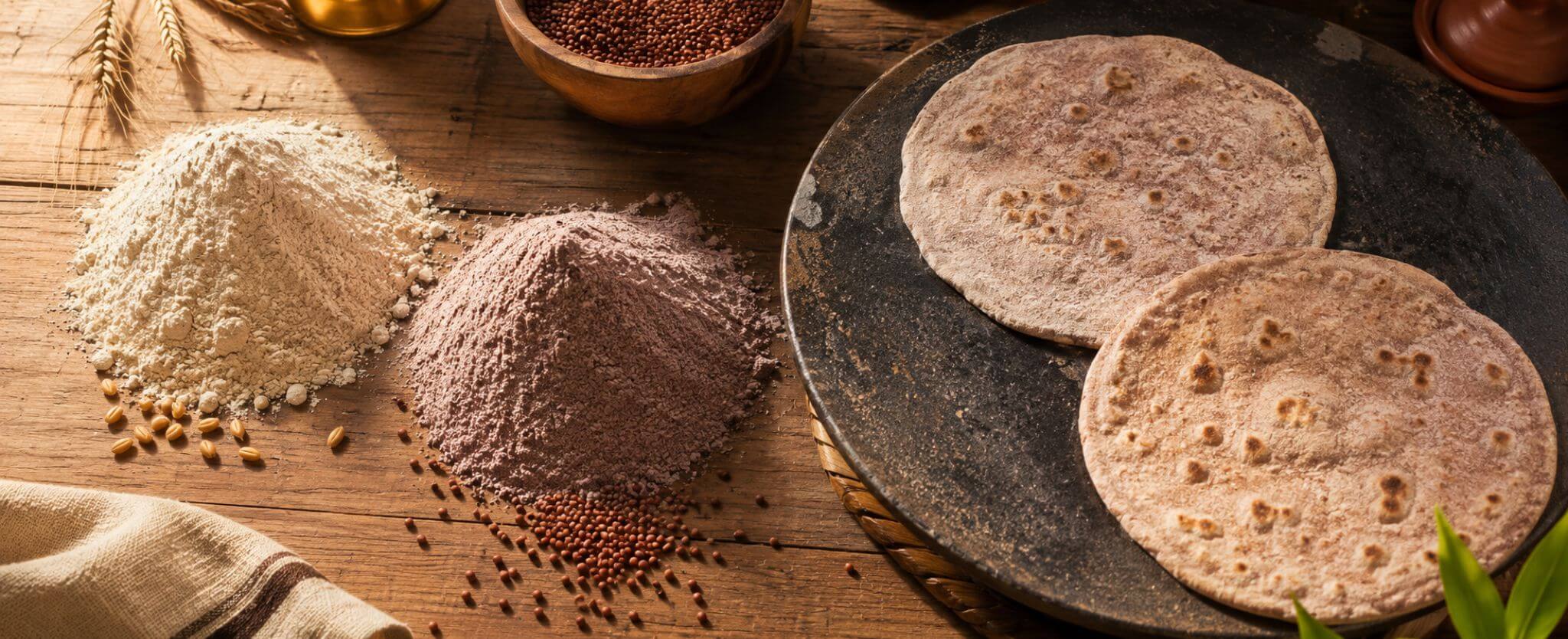
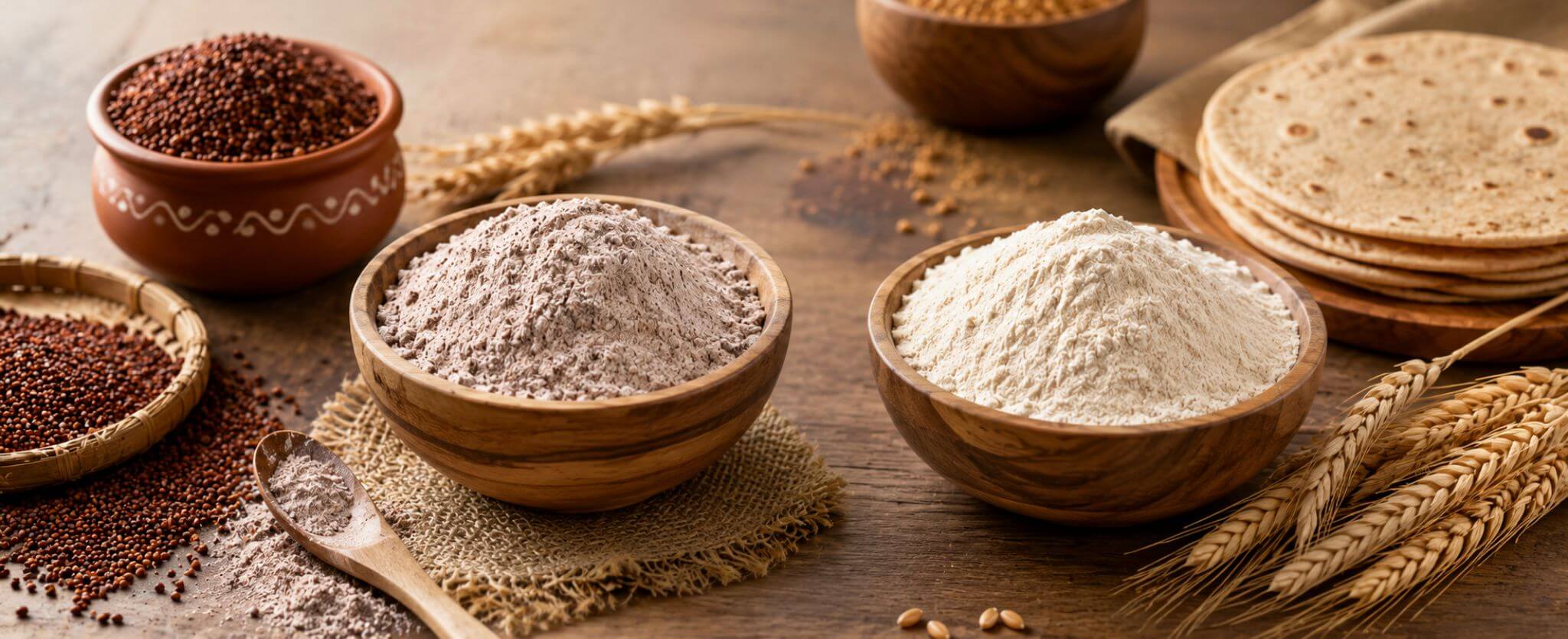
Ragi flour, or finger millet flour, is milled from a small, round grain that ranges from reddish brown to a deep purple depending on the variety. It has been grown across Tamil Nadu, Karnataka, and other parts of South India for centuries, often as a staple grain rather than an occasional addition. The flour itself carries a faint earthy, slightly nutty flavour that is quite different from the neutral taste of wheat atta.
What sets ragi apart nutritionally is its calcium content. A nutritional review of finger millet notes that among all cereals and millets, it carries the highest calcium and potassium levels, along with richer fibre and mineral content than staples like white rice. That single point explains why so many households, especially those with growing children or older family members, keep coming back to it.
Wheat flour, in comparison, has been the everyday grain of choice mainly because of its gluten content. Gluten is what gives wheat dough its stretch, allowing rotis to puff up and stay soft even after they cool. It is also fairly high in B vitamins and minerals like iron and magnesium, particularly when the flour is whole wheat rather than refined.
Nutrition Side by Side
Here is how the two compare per 100 grams of raw flour, based on Indian food composition data.
| Nutrient | Ragi (Finger Millet) Flour | Wheat Flour |
|---|---|---|
| Calories | Around 328 to 336 kcal | Around 340 kcal |
| Protein | About 7.3 g | About 11 to 12 g |
| Dietary Fibre | 11.2 g | 1.9 to 2 g (refined), higher in whole wheat |
| Calcium | 344 mg | 23 to 33 mg |
| Glycemic Index | Roughly 54 (low to medium) | Roughly 70 (higher) |
The numbers make the trade-off clear. Wheat flour wins on protein, which matters if your rotis are a major protein source in the meal. Ragi flour wins decisively on calcium and fibre, and its lower glycemic index means it releases glucose into the bloodstream more slowly, which is a meaningful factor for anyone watching blood sugar levels.
This is worth pairing with a visual breakdown of the two, since numbers on a table are easy to skim past without registering. An infographic comparing calcium, fibre, and glycemic index side by side works well right at this point in the article, giving readers a quick visual anchor before they move into the practical, hands-on differences.

Texture, Taste, and the Rolling Test
Nutrition aside, the real test for most home cooks happens at the rolling board. Wheat dough is elastic because of gluten, so it stretches easily under the rolling pin and holds together without cracking at the edges. Ragi dough behaves nothing like this. Since finger millet has no gluten, the dough tends to crumble if you try to roll it the same way as wheat.
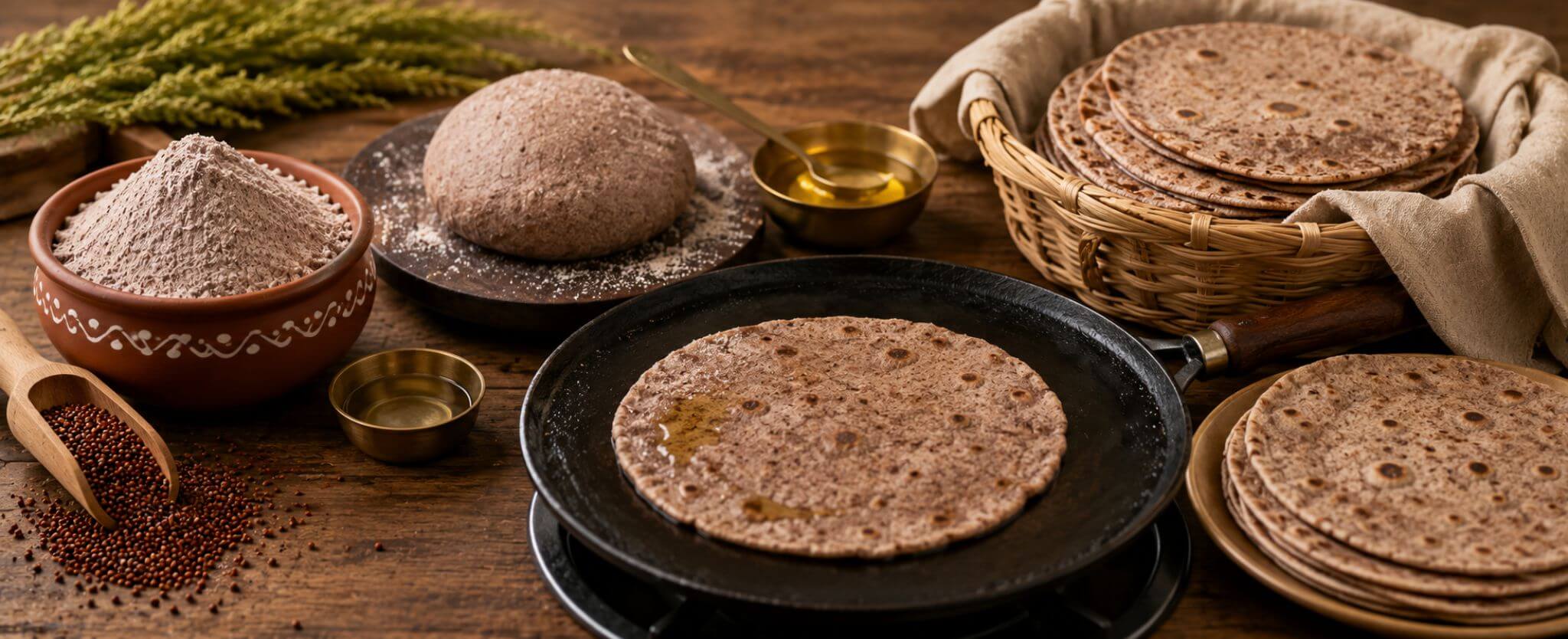
The workaround that most South Indian households use is patting rather than rolling. Ragi roti dough is usually made with hot water, rested briefly, and then patted flat directly on a banana leaf, a damp cloth, or a sheet of parchment, before being transferred to the tawa. Rolling it between a chapati board and rolling pin like wheat dough often ends in frustration and torn edges.
Taste-wise, wheat rotis carry a mild, familiar flavour that pairs with almost anything, from a simple dal to a rich curry. Ragi rotis have a more pronounced, slightly bitter-earthy note that some people love from the first bite and others need a few tries to warm up to. Pairing ragi rotis with jaggery, ghee, or a tangy chutney tends to balance that flavour nicely.
| Aspect | Ragi Flour Roti | Wheat Flour Roti |
|---|---|---|
| Dough handling | Needs hot water, patted not rolled | Kneaded with regular water, rolls easily |
| Shelf softness | Turns firm faster once cooled | Stays soft longer |
| Flavour | Earthy, slightly bitter | Mild, neutral |
| Best paired with | Ghee, jaggery, spicy curries | Almost any curry or dal |
Who Should Lean Towards Which Flour
For families with growing children, ragi flour earns its place because of the calcium and iron it brings, especially in households that consume dairy in moderation. It is also a sensible choice for anyone managing blood sugar, given its lower glycemic index, and for those exploring gluten-free options due to sensitivity or intolerance.
Wheat flour still makes sense for households that need soft, easily digestible rotis every day, particularly for young children transitioning to solid foods or elderly family members who find ragi’s denser texture harder to chew. Athletes or anyone with higher protein requirements will also find wheat’s protein content more useful on its own, though neither flour should be treated as a complete protein source by itself.
A practical middle path that many South Indian kitchens already follow is rotation rather than replacement. Wheat rotis a few days a week, ragi rotis on others, lets a family get the fibre and calcium benefits of finger millet without giving up the softness and convenience of wheat altogether. Some cooks also blend the two flours in a single dough, using a smaller proportion of ragi to ease into the taste and texture while still gaining some of its nutritional edge.
Cooking Tips That Make a Real Difference
A few adjustments go a long way when working with ragi flour. Using hot, almost boiling water while kneading softens the flour enough to hold the dough together, since cold water tends to leave it too crumbly to shape. Letting the dough rest for ten to fifteen minutes under a damp cloth also helps it become more pliable before patting it out.
Cooking ragi rotis on a well-heated tawa with a light coating of ghee prevents them from drying out and cracking. Since there is no gluten to trap steam and puff the roti the way wheat does, keeping the flame slightly lower and giving each side a bit more time on the tawa produces a better result than trying to rush it on high heat.
Storage is another point worth an infographic of its own, since ragi flour and wheat flour do not behave the same way once opened. Ragi flour, being richer in natural oils from the bran, tends to turn rancid faster if left in a warm, humid kitchen. Keeping it in an airtight container in a cool, dry spot, or refrigerating it during humid months, preserves its freshness far longer than leaving the packet open on a shelf. A short infographic contrasting shelf life, storage conditions, and signs of spoilage for both flours fits naturally here, right where the article discusses keeping either flour fresh.
If you are picking up organic finger millet flour for the first time, starting with a small pack and trying it in a single meal a few times a week is a more realistic way to build the habit than switching your entire kitchen over in one go. The taste and dough-handling learning curve is real, but it flattens out quickly once the hot water and patting technique become second nature.
Ultimately, the choice between ragi and wheat for your daily roti is not about picking a permanent winner. It is about knowing what each grain does well, matching that to what your family actually needs on a given day, and letting both flours earn a regular spot in the kitchen instead of treating one as outdated and the other as a passing trend.