Walk into any South Indian household a generation or two ago and you would rarely find a bar of soap sitting by the bathing area. Instead, there would be a small tin or cloth pouch filled with a fine, earthy powder made from dried herbs, roots, and grains. This is kuliyal podi, and it has quietly made a comeback as more people look for a natural bathing powder that cleans without loading the skin with synthetic additives.
The renewed interest in this herbal kuliyal podi is not just nostalgia. It comes from a growing awareness of what is actually inside the soap bars sold on supermarket shelves, and a simple question that follows: does skin really need all of that to get clean.
What Exactly Is Kuliyal Podi
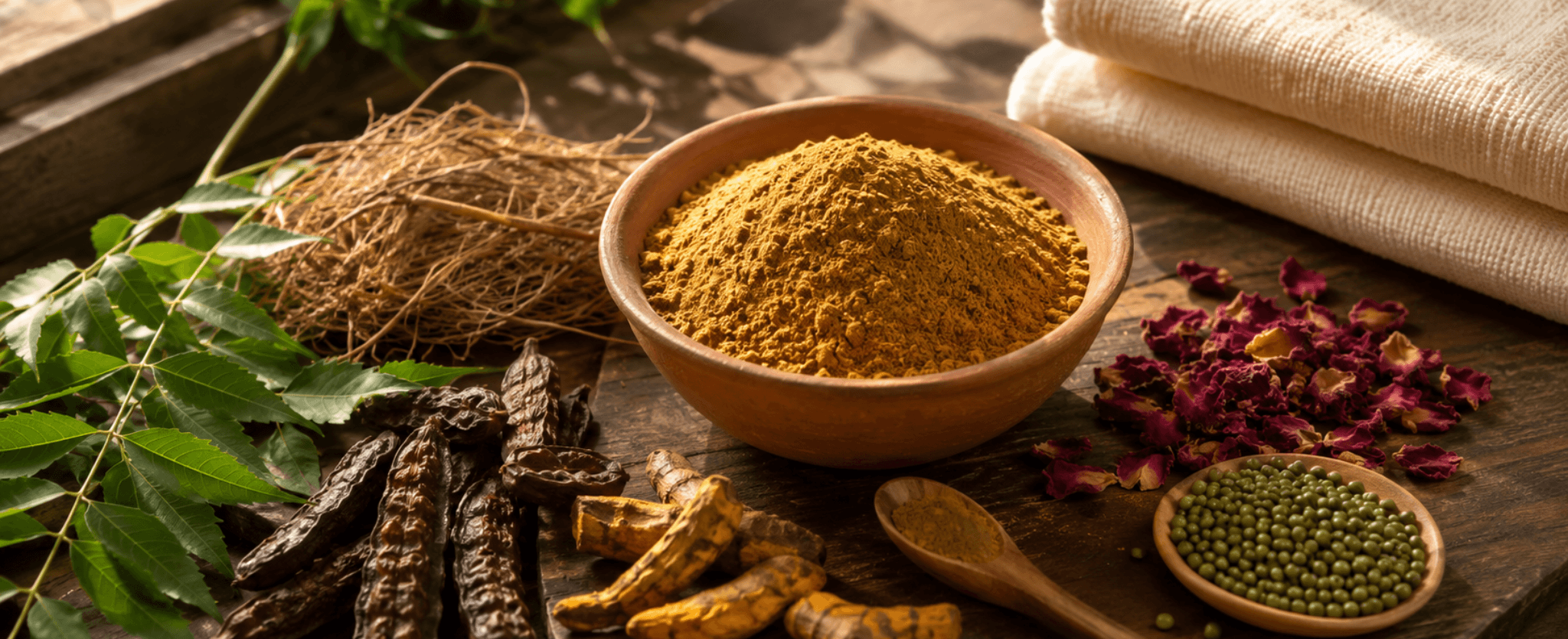
Kuliyal podi is a dry herbal bathing powder made by grinding a combination of natural ingredients such as shikakai, vetti veru (vetiver root), kasturi manjal, green gram flour, and a few other botanicals depending on the region and family recipe. Instead of lathering it directly like a soap bar, the powder is mixed with a little water or milk to form a light paste, which is then applied to damp skin and rinsed off.
Because it does not go through the industrial saponification process that regular soap does, kuliyal podi retains the raw properties of each herb it contains. There is no added fragrance, no synthetic foaming agent, and nothing designed purely to extend shelf life.
Why Regular Soap Isn’t as Simple as It Looks
Most commercial soaps and body washes rely on surfactants like sodium lauryl sulfate to create that thick, foamy lather people associate with a good clean. The problem is that these surfactants are quite aggressive. According to a detailed breakdown by Healthline, sodium lauryl sulfate can cause mild to moderate skin irritation with continuous exposure, and while regulatory bodies consider it safe at typical cosmetic concentrations, people with sensitive or dry skin often notice tightness, flaking, or redness after regular use.
Parabens, another common ingredient added as a preservative, bring their own set of concerns, particularly around prolonged skin contact. None of this makes soap dangerous for occasional use, but it does explain why so many people with sensitive skin, eczema, or general dryness go looking for gentler alternatives.
This is exactly the gap that herbal kuliyal podi fills. It skips synthetic surfactants and preservatives altogether, relying instead on the natural saponins and astringent compounds already present in herbs like shikakai and soap nut.
The Ingredients That Make It Work
A good herbal bathing powder is only as good as what goes into it. Here is what typically shows up in a well-made kuliyal podi and why each one matters.
Shikakai is the backbone of most traditional bathing powders. It contains natural saponins that create a gentle, low foam lather while cleansing without stripping the skin’s natural oil layer. A detailed overview from PharmEasy notes that shikakai has been used for generations in Ayurvedic skin and hair care, valued for its mild cleansing action and its role in reducing irritation compared to harsher surfactants.
Vetti veru (vetiver root) brings a cooling, mildly astringent quality that is especially useful during warmer months. It is commonly included in traditional bathing blends and is also sold on its own as a herbal root powder for those who want to make a custom mix at home.
Kasturi manjal, a wild variety of turmeric, is added for its brightening and anti-inflammatory reputation. It does not stain the skin the way regular turmeric does, which is why it is preferred in bathing powders meant for daily or frequent use.
Vasambu (calamus root) is sometimes included in small quantities for its antimicrobial properties, particularly in blends meant for infants and young children, though adult formulations use it sparingly as well.
Green gram flour or besan acts as a mild exfoliant and helps bind the powder into a paste when mixed with water, giving the mixture enough texture to work into the skin properly.
Herbal Bathing Powder vs Commercial Soap
| Aspect | Herbal Kuliyal Podi | Commercial Soap |
|---|---|---|
| Core cleansing agent | Natural saponins from herbs | Synthetic surfactants (SLS, SLES) |
| Preservatives | None required | Parabens or similar additives |
| Effect on skin barrier | Gentle, preserves natural oils | Can strip oils with regular use |
How to Use Kuliyal Podi the Right Way
Getting the best out of a herbal bathing powder comes down to how it is prepared and applied, not just the ingredients inside it.
Start by taking about two tablespoons of the powder in a small bowl. Add water or, for extra nourishment, a little milk or curd, and mix until it forms a smooth, spreadable paste. It should not be watery, and it should not be so thick that it clumps.
Apply the paste evenly across damp skin, focusing on areas prone to oiliness or tanning. Let it sit for a minute or two so the herbs have a moment to work, then gently massage in circular motions before rinsing thoroughly with water. Unlike soap, kuliyal podi does not produce a heavy, sudsy lather, so do not expect the same visual cue of clean that a soap bar gives. The skin should feel soft and clean, not tight or squeaky, which is actually a sign that the natural oil layer has been left intact.
For best results, it helps to apply a light layer of sesame or coconut oil about fifteen minutes before bathing, a step traditionally paired with herbal bathing powders. Those who prefer a ready oil pairing can look at options like drumstick honey as a post-bath skin nourishing addition, or explore the wider range of herbal products for other traditional skincare staples.
Who Benefits Most From Switching
Herbal bathing powder is not a one-size-fits-all fix, but a few groups tend to notice the biggest difference when they switch from soap.
People with sensitive or reactive skin often find that kuliyal podi causes far less irritation than soap bars containing sulfates, since there is no aggressive detergent action involved. Those managing mild acne or excess oiliness may appreciate the gentle exfoliation from ingredients like besan, which helps without over-drying the skin the way some medicated soaps can.
Parents looking for a milder option for children’s skin also tend to prefer herbal powders, given the absence of synthetic fragrance and preservative chemicals. And for anyone simply trying to reduce the number of synthetic ingredients in their daily routine, kuliyal podi is one of the easier swaps to make since it requires no change in bathing habits beyond mixing the powder before use.
A Quick Comparison of Common Bathing Powder Ingredients
| Ingredient | Key Property | Best For |
|---|---|---|
| Shikakai | Natural saponin cleanser | Everyday gentle cleansing |
| Vetti Veru | Cooling, astringent | Summer use, oily skin |
| Kasturi Manjal | Anti-inflammatory | Skin brightening, sensitive skin |
Why the Switch Matters Beyond Skin Health
There is also a sustainability angle to herbal bathing powder that often gets overlooked. Soap production, especially at commercial scale, involves synthetic fragrance compounds, chemical preservatives, and packaging that is not always biodegradable. Herbal bathing powders, on the other hand, are made from dried plant material that breaks down naturally and typically comes in simple, minimal packaging.
For households that are already leaning toward plant-based cleaning and personal care, kuliyal podi fits naturally alongside other everyday swaps such as a loofah scrubber instead of a plastic pouf, or a bamboo toothbrush instead of a plastic one. None of these changes require a dramatic lifestyle overhaul. They simply replace one ingredient-heavy product with something closer to what was used a generation ago, minus the guesswork of reading a long list of unfamiliar chemical names on a label.
There is also a cost angle worth mentioning. A single pack of kuliyal podi typically lasts longer than a bar of soap when used correctly, since only a small amount is needed per use. Over a few months, the difference in usage adds up, making it a practical choice and not just a skin-friendly one.
How Often Should You Use It
Unlike some Ayurvedic treatments that are meant for occasional use, kuliyal podi is gentle enough for daily bathing for most skin types. That said, if your skin leans very dry, alternating it with a mild soap-free cleanser on some days and reserving the herbal powder for two or three uses a week can help you find the right balance. Those with oily or acne-prone skin generally do well using it daily, since the mild exfoliation from ingredients like besan helps keep pores clearer without the harsh stripping effect of sulfate-based soaps.
Children and elderly family members, whose skin tends to be thinner and more reactive, are usually the ones who benefit most from a switch away from synthetic soap. In these cases, herbal bathing powder tends to be better tolerated over long-term daily use compared to fragranced commercial soap bars.
A Few Things to Keep in Mind
Herbal bathing powder does behave differently from soap, and it is worth setting expectations before making the switch. It will not produce the same thick foam, and it may take a few uses to get the water-to-powder ratio right for your skin type. Store the powder in a dry, airtight container since it has no preservatives to protect it from moisture, and use it within a few months of opening for the best results.
If your skin tends to be very dry, pairing the powder with a light oil massage beforehand makes a noticeable difference. Those who want to try a curated blend without measuring out individual herbs can start with a ready-made herbal kuliyal podi mix, or explore handmade herbal soap options like shikakai soap or vettiveru soap as a gentler middle ground for anyone not quite ready to give up a soap bar entirely.
Switching a daily habit takes a little patience, but for anyone who has been dealing with dry, irritated, or reactive skin after regular soap use, a chemical-free herbal bathing powder is a change that is genuinely worth trying.