Most bathrooms still default to a synthetic sponge or plastic pouf without much thought, mainly because that is what has always been available at the local store. A natural loofah, grown from a dried gourd rather than manufactured from plastic fibres, does the same exfoliating job but comes with a genuinely different set of trade-offs worth knowing before your next bathroom restock.
What a Natural Loofah Actually Is
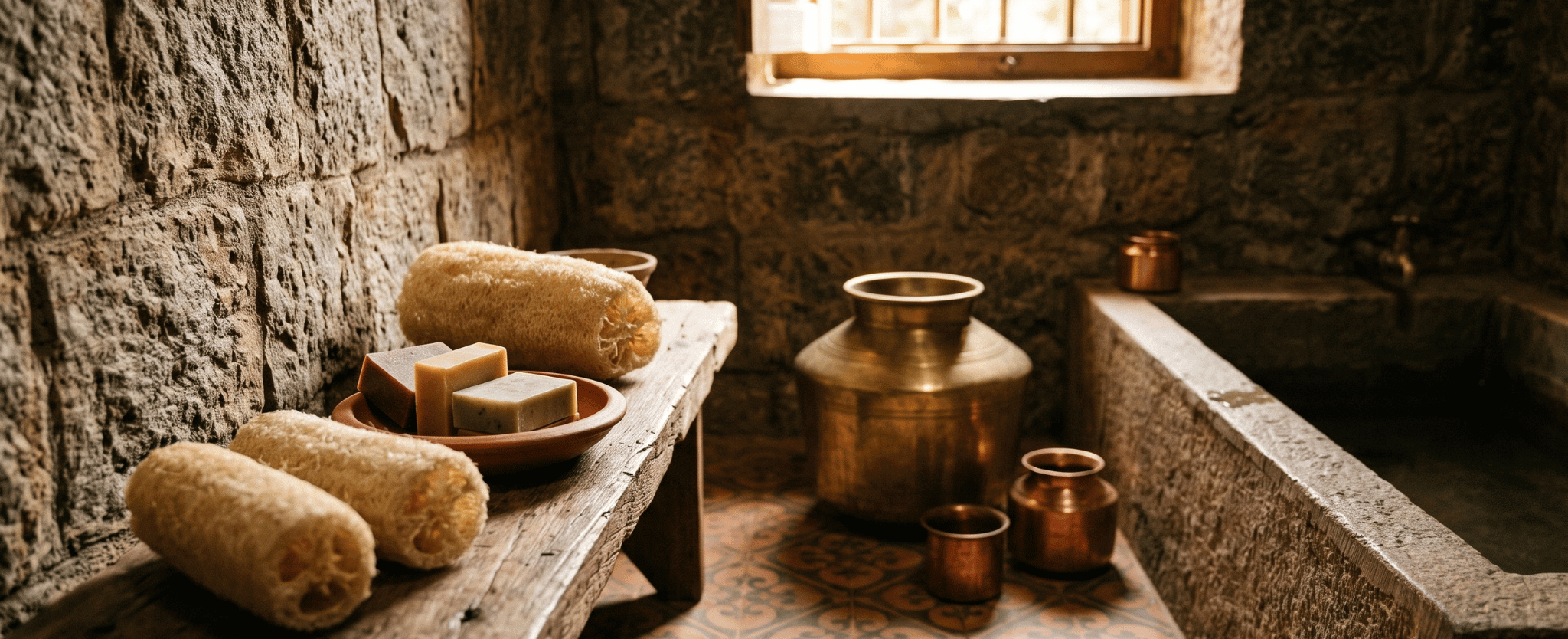
A loofah is the fibrous skeleton of a mature luffa gourd, dried and hollowed out until only the coarse, netted fibre structure remains. It is not a synthetic product styled to look natural, it is genuinely a plant. This is why texture and firmness vary slightly between individual loofahs, unlike a synthetic sponge, which is manufactured to identical specifications every time.
Natural Loofah vs Synthetic Sponge
| Aspect | Natural Loofah | Synthetic Sponge |
|---|---|---|
| Material origin | Dried plant fibre | Plastic-based polymer, usually polyester or nylon |
| Biodegradability | Fully compostable at end of life | Does not break down, persists in landfill |
| Exfoliation level | Firmer, more textured scrub | Softer, more uniform lather |
| Typical lifespan | 4 to 6 weeks with proper drying | Several months, but sheds microplastic fibres over time |
Why Exfoliation Actually Matters
The coarser texture of a natural loofah does a more thorough job of lifting dead skin cells and improving circulation during a shower than a soft synthetic pouf, which mostly just creates lather. For people dealing with rough patches on elbows, knees, or heels, that firmer texture makes a noticeable difference over a few weeks of regular use. It is worth noting that this same firmness means a natural loofah is not the best choice for sensitive or broken skin, where a gentler synthetic option is more appropriate.
The Environmental Case
Synthetic sponges are made from plastic, and like most plastic products, they shed microscopic fibres during use that eventually wash down the drain and into waterways. A natural loofah, being plant fibre, composts fully at the end of its life and does not contribute microplastic pollution while in use. For households already making an effort to reduce plastic waste in the bathroom, alongside items like a bamboo charcoal toothbrush or bamboo ear swabs, swapping a synthetic sponge for a natural loofah scrubber is one more small, genuinely meaningful change.
Getting the Most Out of a Natural Loofah
- Dry it fully between uses by hanging it somewhere with airflow, since trapped moisture is what causes both synthetic and natural sponges to develop bacteria and odour.
- Replace it every 4 to 6 weeks, sooner if it starts to smell musty or feel slimy, since natural fibre breaks down faster than plastic.
- Avoid leaving it sitting in a wet shower caddy with no drainage, which is the single biggest reason loofahs go bad early.
- Trim or compost the old one once replaced, rather than throwing it in general waste, since it breaks down naturally within weeks in a compost bin.
Pairing a Loofah With a Natural Skincare Routine
A natural loofah works particularly well paired with a handmade soap bar rather than a liquid body wash, since bar soaps tend to lather more effectively against the coarser texture. Options like charcoal soap or aloe vera and neem herbal soap complement the exfoliating action well, giving both a physical scrub and the additional benefits of the soap’s own ingredients in the same routine.
Who Should Be Cautious
Natural loofahs are not the right choice for everyone. People with eczema, psoriasis, or generally sensitive skin may find the texture too abrasive, and dermatologists often recommend a softer synthetic or silicone option in those cases. It is also worth using a gentler touch on the face specifically, since facial skin is thinner than body skin regardless of which sponge type you use. For readers interested in the horticultural side of how loofahs are actually grown and processed from gourd to bath sponge, the Wikipedia entry on luffa covers the plant’s cultivation in more detail.
For most people without sensitive skin concerns, the switch from synthetic to natural is a low-effort change that improves both the shower experience and reduces one more source of household plastic waste, without requiring any change to the rest of a daily routine.