Most Indian kitchens already hold a personal care cabinet, it just does not look like one. Neem leaves dry quietly in a steel box, a jar of shikakai pods sits next to the rice tin, and turmeric waits for both cooking and a quick face pack. Long before serums and sulphate free labels became common, South Indian households relied on these everyday ingredients for skin and hair care. This guide looks at how to bring that approach back into a modern routine, using herbal personal care products that are simple to source and even simpler to use, without turning the whole bathroom shelf into a science project.
Why Herbal Often Works Better for Indian Skin and Hair
Most commercial skin and hair products are formulated for cooler, drier climates, then sold as is across very different conditions. Indian weather adds its own set of challenges, high humidity for most of the year, harder water in several regions, and long sun exposure that strips moisture faster than people expect. Sulphate heavy shampoos and synthetic body washes can worsen this by stripping natural oils completely, which often pushes the scalp and skin to overproduce oil in response. Herbal powders work differently, they clean without fully stripping the skin’s natural barrier, which is part of why hair and skin that switch to a herbal routine often need a short adjustment period before they settle into a healthier balance.
The Logic Behind Ayurvedic Kitchen Beauty
Ayurveda treats skin and hair as a reflection of internal balance rather than a separate problem to fix with chemicals. The National Center for Complementary and Integrative Health notes that Ayurvedic medicine relies on a natural and holistic approach to physical health, and remains one of India’s oldest traditional health systems, combining plant based products with diet and daily habits rather than isolated treatments. That same philosophy shows up in grandmother’s remedies: a paste of neem and turmeric for breakouts, a wash of shikakai and hibiscus for hair fall, a handful of herbal powder before a festival bath. None of this is new science, it is old knowledge that modern skin care is slowly catching up with.
Neem Powder: The Skin Cleanser Hiding in Your Spice Box
Neem leaf powder is one of the most studied herbal ingredients for problem skin. Healthline points out that neem has historically been used to treat acne and improve skin texture, and that research suggests its antibacterial compounds help fight the bacteria linked to breakouts. That makes it a practical pick for Indian weather, where heat and humidity keep oil and sweat production high through most of the year.
A simple way to use it: mix a teaspoon of herbal neem powder with rose water or plain curd into a thin paste, apply for ten minutes, and rinse with lukewarm water twice a week. Anyone with very dry skin should reduce the frequency or blend it with a few drops of sesame oil before applying. Neem powder can also be added in small amounts to a regular face wash base for daily use, which is a gentler way to introduce it for first time users who are not used to a stronger weekly pack. The smell is distinct and slightly bitter, that is normal and fades once the paste is rinsed off.
Herbal Hair Powders That Replace a Cabinet Full of Bottles
A herbal hair routine usually leans on three categories of ingredients, a cleanser, a conditioner, and a scalp tonic, and Tamil households have followed roughly the same pattern for generations.
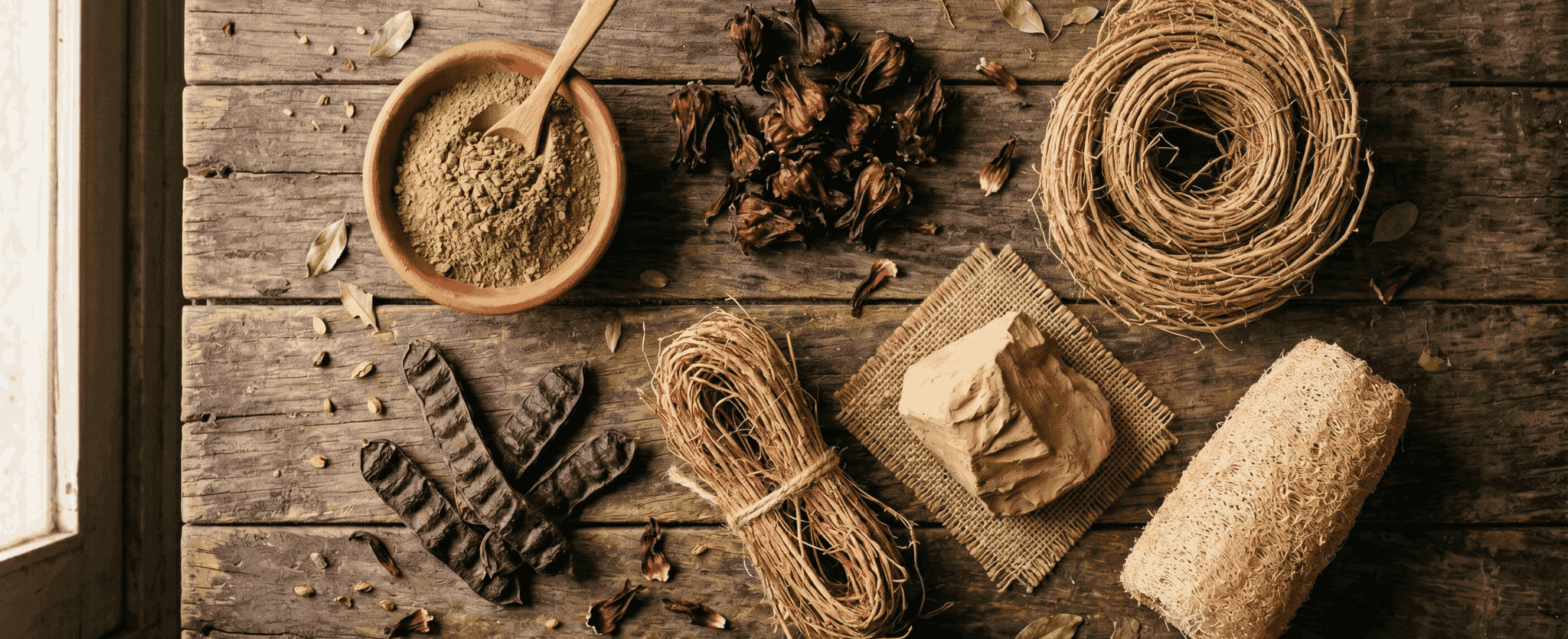
Shikakai powder cleans the scalp gently without stripping its natural oil, which is why it remains a common alternative to sulphate based shampoo for colour treated or frequently washed hair. A basic wash paste is made by soaking two to three tablespoons of shikakai powder in warm water for a few hours, then massaging it through wet hair before rinsing thoroughly. Dried hibiscus flowers, locally called sembaruthi, are ground along with the leaves and used as a conditioning rinse believed to support hair strength and shine. Vetiver root, known as vetti veru, is soaked overnight and the resulting water becomes a cooling final rinse, especially useful during the hotter months when the scalp tends to sweat more. Kasturi manjal, a wild turmeric variant, is milder on the skin than regular turmeric and works well in both face and hair packs without leaving the yellow stain that regular turmeric is known for.
One common mistake when switching to herbal hair powders is expecting the same amount of lather as a commercial shampoo, herbal cleansers foam very little or not at all, and that has nothing to do with how well they clean. Hair may also feel slightly rough right after the first few washes before the scalp’s oil production adjusts, a light hair oil applied the night before a wash usually smooths this out.
| Herb | Best Used For | Ulamart Product |
| Shikakai | Scalp cleansing, oil control | Shikakai Powder |
| Hibiscus (Sembaruthi) | Conditioning, shine | Dried Hibiscus Flowers |
| Vetiver (Vetti Veru) | Cooling rinse, dandruff care | Vetti Veru Root |
| Kasturi Manjal | Brightening, stain free use | Kasturi Manjal Powder |
Bath Powders and Natural Clay for Whole Body Care
Before liquid body wash became the default, most South Indian homes used a herbal bath powder, or kuliyal podi, mixed into a paste with water or milk. It typically blends gram flour, turmeric, and a handful of drying herbs that lift away dead skin and excess oil without synthetic foaming agents. It is traditionally used before a head bath rather than a regular shower, since the paste needs a few minutes on the skin to work before rinsing off.
Multani mitti, also called Fuller’s earth, plays a similar role for the face. It draws out oil from the skin and is usually layered with rose water or honey to balance its drying nature, since used on its own too often it can leave skin feeling tight. For a slower, soap based version of the same idea, a bar built around neem and aloe vera covers cleansing and light moisture in a single step, and works well as a daily replacement for synthetic body wash for anyone who does not want to mix a fresh paste every time.
| Soap Type | Best For | Key Ingredient |
| Neem and Aloe Vera Soap | Acne prone, oily skin | Neem leaf extract |
| Shikakai Soap | Sensitive scalp, light cleansing | Shikakai extract |
| Multani Mitti Soap | Oil control, tan removal | Fuller’s earth |
Putting Together a Simple Weekly Routine
A herbal routine does not need ten steps to work, it needs consistency. A practical weekly plan looks like this: a neem face pack twice a week, a shikakai and hibiscus hair wash once or twice a week, and a kuliyal podi body scrub two to three times a week, ideally before a head bath. A natural loofah scrubber pairs well with the bath powder for gentle exfoliation, and a wide tooth detangling comb helps prevent breakage while the hair is still damp from a herbal wash, which is when strands are most fragile and prone to snapping under a regular brush.
Mornings and evenings call for slightly different care. A quick rinse with plain water and a mild herbal soap in the morning is usually enough, saving the heavier powder packs for evening baths when there is more time to let the paste sit and work. During the monsoon months, when humidity is at its highest, cutting back on oil based products and leaning more on neem and multani mitti for oil control tends to help. In drier winter weather, the same routine benefits from a light oil massage before the bath powder step, since herbal cleansers can feel slightly more drying once the air itself loses moisture.
It is worth doing a small patch test on the inner arm before trying any new powder on the face, especially for anyone with sensitive or broken skin. Most of these ingredients are gentle, but everybody’s skin reacts a little differently, and a basic test takes less effort than dealing with an unexpected reaction later. Anyone currently using prescription skin treatments should also check with a dermatologist before layering herbal packs on top, since combining actives can sometimes cause more irritation than either product alone.
Once the routine settles in, many of these powders end up doing double duty, the same neem powder that clears a breakout can go into a hair pack, and leftover kuliyal podi works just as well as a quick foot scrub before bed. That kind of overlap is exactly why these ingredients stayed in Indian bathrooms for generations before modern packaging ever arrived, and why a small shelf of shikakai, neem and multani mitti is often enough to cover skin and hair care without needing a separate bottle for every single step.