The bathroom is the one room in most Indian homes where single-use plastic never takes a break. From toothbrushes to scrubbers, the daily personal care routine generates more plastic waste than people often realise. A single person using a conventional plastic toothbrush tosses out four pieces of plastic per year, and that number multiplies quickly across a family.
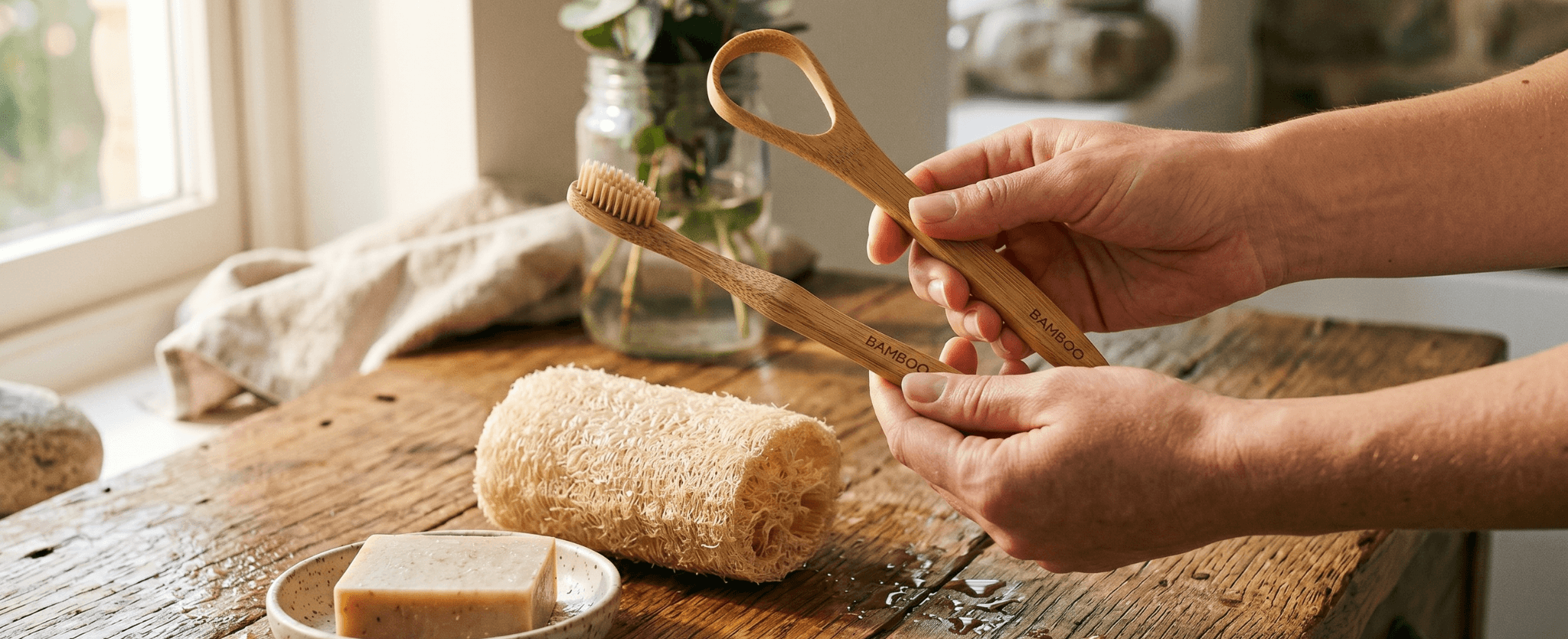
The shift to plastic-free personal care does not require a dramatic overhaul. It starts with three products that are easy to use, effective, and have been around far longer than their plastic alternatives: the loofah, the bamboo toothbrush, and the bamboo tongue cleaner.
Ulamart carries these natural personal care essentials in its personal care range, sourced to work alongside the traditional lifestyle choices many South Indian households already practise.
Why Plastic-Free Personal Care Is Worth Switching To
Plastic personal care items are not just an environmental issue. They carry practical problems too. Plastic toothbrushes harbour bacteria in the bristle base because the material does not breathe. Synthetic bath scrubbers degrade and shed microplastics that wash down the drain and eventually enter the water supply.
Natural alternatives sidestep these problems because they are made from materials that are biodegradable, do not shed synthetic fibres, and have a long history of use in traditional wellness systems across India. The bigger reason to switch is simple: the natural options perform just as well, sometimes better, and they do not carry the environmental cost forward.
Loofah: The Scrubber That Comes from a Garden
Most people assume loofah is a sea sponge. It is actually a vegetable. The loofah (Luffa aegyptiaca) is a gourd in the cucumber family, and the dried fibrous interior of the mature fruit becomes the scrubbing pad. It has been used in Indian households for generations, and it works precisely because plant fibres are firm enough to exfoliate but flexible enough not to damage skin.
What loofah does well:
- Exfoliates dead skin cells without synthetic abrasives
- Promotes circulation when used in gentle circular motions
- Dries faster than synthetic sponges when hung in a ventilated area
- Biodegrades completely at the end of its life
- Works on the body, kitchen scrubbing, and even foot care
Loofah care tips:
- Rinse thoroughly after each use and hang to dry
- Soak in a diluted vinegar solution once a week to prevent mildew
- Replace every 3 to 4 weeks with regular daily use
- Do not use on the face as the texture is too coarse for facial skin
If you also use natural kitchen cleaning products, the loofah pairs well with the herbal and plant-based items in Ulamart’s herbal products section.
Bamboo Toothbrush: The Easiest Plastic Swap You Will Make
The bamboo toothbrush is structurally identical to a conventional plastic toothbrush. The handle is made from Moso bamboo, one of the fastest-growing plants on the planet, which means the raw material regenerates quickly without requiring pesticides or intensive cultivation. The bristles in most bamboo toothbrushes are nylon because fully biodegradable bristle technology is still developing, though the handle itself accounts for the majority of the plastic in a conventional brush.
Switching to bamboo removes the most visible and durable component from the waste stream. A plastic handle takes 400 years to break down. A bamboo handle composts within months when snapped off and added to a compost pile.
| Feature | Plastic Toothbrush | Bamboo Toothbrush |
| Handle material | Petroleum-based plastic | Moso bamboo |
| Decomposition time | 400+ years | Months to a year |
| Bacterial resistance | Low (plastic is porous) | Higher (bamboo has natural antimicrobial properties) |
From a purely practical standpoint, bamboo toothbrushes clean teeth with the same effectiveness as plastic ones when bristle quality is comparable. The switch requires no adjustment in technique and no change in your existing toothpaste or routine.
Bamboo Tongue Cleaner: A Traditional Practice with Modern Relevance
Tongue cleaning is not a modern wellness trend. It appears in Ayurvedic texts as part of the daily dinacharya (morning routine) and has been practised across India for centuries. Metal and bamboo tongue cleaners predate any plastic version by generations.
The bamboo tongue cleaner removes the white coating that forms on the tongue overnight, which is a combination of bacteria, food residue, and dead cells. This coating is the primary source of morning breath, and no amount of brushing removes it as effectively as a tongue cleaner does.
Benefits of using a bamboo tongue cleaner:
- Reduces morning breath at the source rather than masking it
- Stimulates digestion according to Ayurvedic practice (the tongue has zones connected to digestive organs)
- Removes bacteria that would otherwise recolonise the mouth after brushing
- Bamboo handle is naturally grippy even when wet
- Biodegrades fully at end of use
The technique is straightforward. Extend the tongue, place the cleaner at the back, and draw it forward with light pressure. Rinse and repeat two or three times. The entire process takes under thirty seconds and is most effective when done before drinking or eating anything in the morning.
Building the Plastic-Free Morning Routine
The three products above replace three daily plastic-use moments without requiring any lifestyle change. The routine remains the same. Only the tools change. A practical starting point for switching the bathroom over to natural alternatives looks like this:
| Plastic Item Being Replaced | Natural Alternative |
| Synthetic bath scrubber | Natural loofah |
| Plastic toothbrush | Bamboo toothbrush |
| Plastic tongue cleaner | Bamboo tongue cleaner |
For households already using traditional products like shikakai for hair care or clay cookware in the kitchen, this is a natural extension of the same thinking. The materials are biodegradable, the sourcing is straightforward, and the daily experience is identical to what plastic alternatives offer.
You can explore shikakai powder and other natural bath care options alongside these in Ulamart’s personal care collection.
Research published by the BBC on microplastic pollution in bathrooms notes that conventional synthetic scrubbers are a significant source of microplastic particles entering wastewater treatment systems, most of which are not filtered out before water is returned to the environment. Natural loofah removes this problem entirely since plant fibres break down into organic matter rather than persistent particles.
The plastic-free daily routine is not about perfection. It is about making the easy swaps first and building from there. Loofah, bamboo toothbrush, and bamboo tongue cleaner are exactly that: the easy first step that sticks because the experience is just as good and the conscience cost drops significantly.