Walk into any health food store or pharmacy today and you will find shelves lined with supplements promising everything from better energy to stronger immunity. Most of them are synthesised in a lab, packaged expensively, and deliver nutrients in a form the body absorbs poorly. Moringa, on the other hand, has been growing in Indian backyards for centuries. People called it the drumstick tree, fed it to children, boiled it into sambar, and pressed its leaves into powders long before anyone used the word superfood.
What modern nutritional science has confirmed is that the people who relied on moringa knew something important. Gram for gram, dried moringa leaf powder is one of the most nutrient-dense plant foods on the planet. It contains more calcium than milk, more iron than spinach, more vitamin C than oranges, and a protein profile that is unusually complete for a leafy green. Understanding exactly what moringa powder delivers, and how to use it practically, is what this guide is about.
What Moringa Leaf Powder Contains
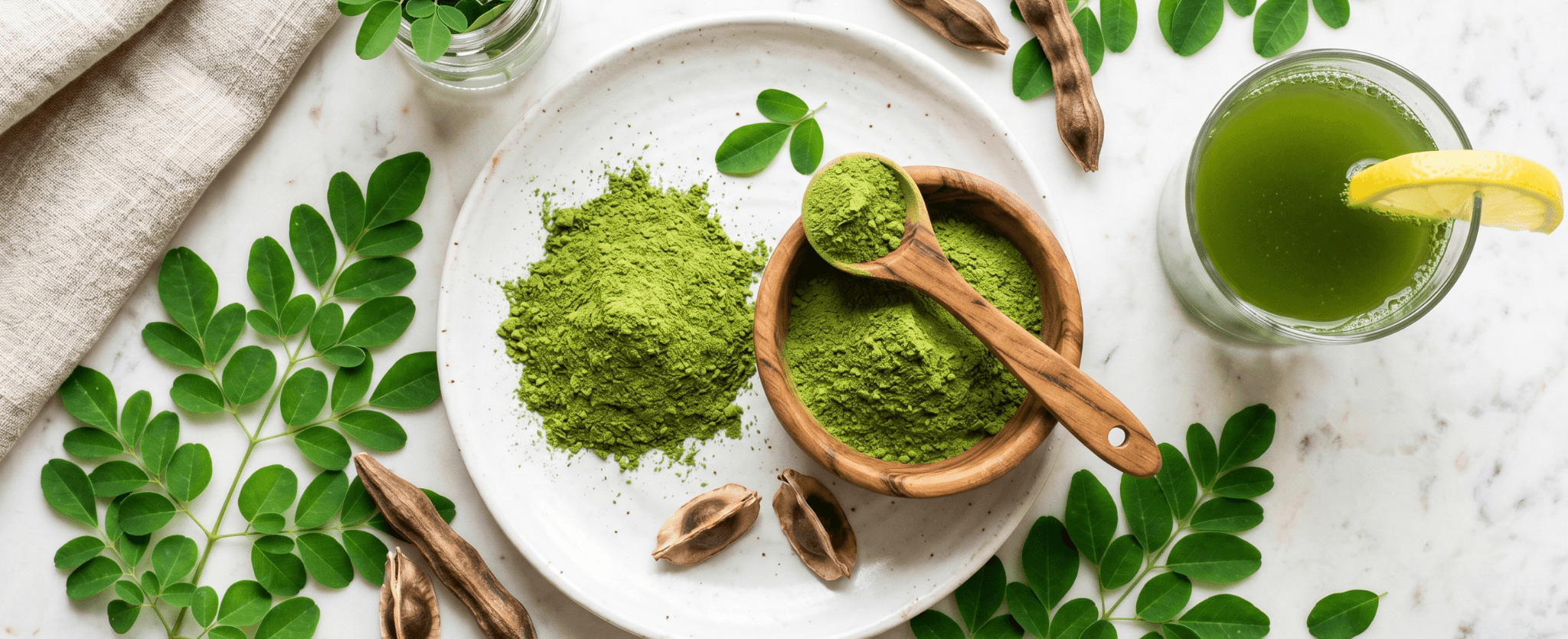
Moringa oleifera is native to the Himalayan foothills and grows abundantly across Tamil Nadu, Andhra Pradesh, and Karnataka. The leaves are harvested, shade-dried to preserve their nutrients, and ground into a fine green powder. This drying process concentrates the nutritional profile significantly compared to fresh leaves.
Here is how dried moringa leaf powder compares to commonly cited whole food benchmarks, per 100 grams:
| Nutrient | Moringa Leaf Powder | Common Benchmark |
| Calcium | 2,003 mg | Milk: 125 mg per 100 ml |
| Iron | 28 mg | Spinach: 2.7 mg per 100 g |
| Vitamin C | 220 mg | Orange: 53 mg per 100 g |
| Protein | 27 g | Eggs: 13 g per 100 g |
| Vitamin A | 16,300 mcg | Carrot: 835 mcg per 100 g |
| Potassium | 1,324 mg | Banana: 358 mg per 100 g |
| Magnesium | 368 mg | Almond: 270 mg per 100 g |
These numbers are for dried powder, where water has been removed and the nutrients are concentrated. A typical serving is one teaspoon, roughly 2 to 3 grams, stirred into food or water. Even at that small serving size, moringa delivers a meaningful nutritional contribution across multiple deficiency-prone categories simultaneously, which is something that individual targeted supplements struggle to replicate.
Moringa Leaf Idly Powder from Ulamart is formulated specifically as a food-grade additive for idly batter and similar preparations, making it one of the most practical ways to incorporate moringa into a traditional South Indian daily meal rather than taking it as a separate supplement.
Health Benefits of Moringa Leaf Powder
Addresses Multiple Nutritional Deficiencies at Once
India carries one of the highest burdens of micronutrient deficiency in the world. Iron deficiency anaemia affects close to 50 percent of women of reproductive age. Vitamin A deficiency causes preventable blindness in children. Calcium deficiency accelerates bone loss in women after 35. Moringa powder addresses all three of these simultaneously, alongside potassium, magnesium, and protein, in a single tablespoon-sized dose that can be added to food already being cooked.
This is the core practical advantage of moringa over targeted supplementation. Instead of buying separate iron tablets, a calcium supplement, a vitamin A capsule, and a protein powder, a consistent daily addition of moringa powder to the diet works across all these fronts in a bioavailable, whole-food form that the digestive system handles far more efficiently than isolated synthetic compounds.
Sustains Energy Without Stimulants
Many people who start taking moringa powder report a noticeable improvement in sustained energy levels within two to three weeks of consistent use. This is not the short spike-and-crash effect of caffeine or sugar but a steadier, more baseline improvement in how the body feels throughout the day. The mechanism is not one single compound but a combination of factors working together.
Moringa’s high iron content improves oxygen transport in the blood, which directly affects physical and mental energy. Its B vitamins, particularly B1, B2, and B3, support cellular energy production through the Krebs cycle. Its protein delivers amino acids that the body uses for neurotransmitter synthesis, including dopamine and serotonin, which influence mood and motivation. Together, these create an energy effect that is nutritional rather than stimulant-based, and sustainable rather than transient.
Reduces Inflammation Through Plant Compounds
Moringa leaves contain a significant concentration of isothiocyanates, flavonoids, and phenolic acids, particularly quercetin and chlorogenic acid. These compounds have well-documented anti-inflammatory and antioxidant properties in published research. Quercetin, one of the most studied flavonoids, inhibits the release of histamine and reduces the activity of inflammatory enzymes including COX-2, the same pathway targeted by common anti-inflammatory drugs.
For people dealing with chronic joint pain, inflammatory skin conditions, recurring digestive inflammation, or simply the oxidative stress accumulation that comes with an urban lifestyle and environmental pollution exposure, consistent moringa consumption provides an anti-inflammatory dietary foundation that works over weeks and months rather than providing immediate symptom relief.
Supports Blood Sugar Regulation
Chlorogenic acid, one of moringa’s prominent antioxidants, slows the rate at which the small intestine absorbs sugar from digested food. This is the same mechanism associated with the blood sugar-stabilising effect of green coffee extract, which has been widely studied for its glycaemic impact. Moringa also contains compounds that appear to improve insulin sensitivity at the cellular level, based on animal and early human studies.
For people managing blood sugar, adding moringa powder to meals can form part of a dietary strategy that moderates postprandial glucose spikes. It works best as one component of a broader low-GI meal pattern, for example stirring moringa powder into an idly or dosa batter made with millets from Ulamart, which already carry a lower glycaemic index than refined rice flour preparations.
Supports Bone Health and Prevents Calcium Deficiency
At 2,003 mg of calcium per 100 grams, dried moringa leaf powder is one of the most calcium-dense plant foods available anywhere. A single teaspoon stirred into food daily provides roughly 60 mg of calcium, which may seem modest, but accumulated over months of consistent use it contributes meaningfully to the baseline calcium intake that determines bone density over decades.
This is particularly relevant for women in India, where calcium intake through the diet is consistently below recommended levels and where dairy intolerance, affordability, or dietary preference reduces daily dairy consumption. Moringa provides a plant-based calcium source in a form that is accessible, affordable, and requires no recipe change when used as a food additive rather than a standalone supplement.
Improves Skin and Hair from the Inside
Moringa’s combination of vitamin A, vitamin C, zinc, and sulphur-containing amino acids addresses the nutritional foundations of skin and hair health at the cellular level. Vitamin A regulates skin cell turnover and is essential for the maintenance of healthy epithelial tissue. Vitamin C is required for collagen synthesis, the protein that gives skin its elasticity and hair its structural strength. Zinc supports wound healing and reduces the skin inflammation associated with acne.
Rather than applying moringa topically, which some skincare brands promote, the food-based route delivers these compounds through the bloodstream to every cell in the body simultaneously, including hair follicles, which are among the most nutrient-dependent structures in the body. Consistent internal nutrition produces more durable improvements in skin and hair quality than topical application alone, which cannot replicate the systemic effect of dietary support.
Lactation Support for Nursing Mothers
Moringa has been used as a galactagogue, a substance that promotes breast milk production, in traditional medicine across South Asia and the Philippines for generations. A randomised controlled study published in the Journal of Human Lactation found that mothers who received moringa supplementation showed significantly greater milk volume in the first four days postpartum compared to placebo recipients.
Beyond stimulating milk production, moringa’s dense nutritional profile directly enriches breast milk quality. A nursing infant receives whatever the mother eats through breast milk, which means a moringa-supplemented diet improves the infant’s intake of calcium, iron, vitamin A, and protein without requiring any supplement to be given to the infant directly. This is particularly relevant in the Indian context, where postpartum nutrition is often prioritised for the infant but not systematically managed for the mother.
How to Use Moringa Powder Practically Every Day
The most common reason people stop using moringa powder is that it feels like an effort or the taste is off-putting on its own. The solution is to add it to foods that already carry strong flavour, so moringa functions as a nutritional addition rather than a standalone drink:
| Method | How and Why It Works |
| Idly / dosa batter | Add 1 tsp per cup of batter; virtually undetectable in taste, added to every idly or dosa served |
| Dal or sambar | Stir in 1 tsp while cooking; green colour blends naturally, no change in flavour |
| Ragi porridge | Mix with ragi flour before cooking; combines moringa and ragi’s calcium for a double benefit |
| Warm water with lemon | 1 tsp in warm (not hot) water with a squeeze of lemon; vitamin C boosts iron absorption |
| Rice flour preparations | Mix into kozhukattai or idiyappam dough for an invisible nutritional upgrade |
| Chutney powder blend | Blend with homemade chutney powder and serve with breakfast; consumed daily without extra effort |
The key principle across all these uses is consistency over quantity. Half a teaspoon used daily for three months delivers far more benefit than a tablespoon taken irregularly. Moringa’s effects on energy, skin, and nutrient levels are cumulative and take two to four weeks to become noticeable.
Ulamart’s Moringa Leaf Idly Powder is formulated to integrate directly into idly batter, the most common daily breakfast preparation across South India, removing the need for a separate supplement routine entirely. Paired with a health mix porridge that already includes multiple grain and legume bases, moringa powder creates a morning nutrition profile that few supplements can match for comprehensive coverage.
Precautions Worth Knowing
Moringa is safe for most people when used in food quantities. However, a few groups should exercise awareness:
- Pregnant women should avoid moringa root, bark, and flower extracts, which have been associated with uterine contractions in animal studies. Leaf powder in culinary quantities is generally considered safe, but supplemental doses above two teaspoons daily during pregnancy should be discussed with a healthcare provider.
- People on blood pressure medication or blood thinners should be aware that moringa has mild hypotensive and anticoagulant properties that could interact with these medications at supplemental doses.
- Individuals with hypothyroidism should use moringa moderately, as it belongs to the Brassica family and contains compounds that may mildly affect thyroid hormone synthesis in large quantities.
- Start with half a teaspoon daily if new to moringa and increase gradually. Some people experience mild digestive adjustment in the first week, particularly if they add too much too quickly.
Moringa Powder vs Standard Nutritional Supplements
| Factor | Moringa Powder | Standard Supplements |
| Source | Whole food, minimal processing | Synthesised or isolated compounds |
| Bioavailability | High, food-matrix absorption | Variable, often lower for synthetic forms |
| Nutrient range | 20+ nutrients in one product | Typically 1 to 3 targeted nutrients |
| Cost | Very affordable per daily dose | Expensive for equivalent coverage |
| Daily use ease | Stirs into any food invisibly | Requires remembering separate capsules/drinks |
| Side effects | Minimal at culinary doses | Overdose risk with fat-soluble vitamins |
The comparison is not framed to dismiss medical supplementation when it is genuinely needed. Iron deficiency anaemia diagnosed through a blood test, for example, may require iron supplementation at doses higher than food sources can deliver quickly. But for the large majority of people who take supplements as a general wellness measure without a specific diagnosed deficiency, moringa powder is a more nutritionally comprehensive, more bioavailable, and far more affordable alternative.
Alongside moringa, Ulamart’s herbal products range includes a selection of traditionally derived health products that complement a whole-food supplement approach, and the spices collection carries turmeric and other anti-inflammatory spices that pair well with moringa’s antioxidant profile for a comprehensive daily dietary defence.
Moringa has been within reach of most Indian households for centuries, growing in gardens and used in cooking without anyone needing a health claim on a label to tell them it was good. The current global rediscovery of moringa as a superfood is simply science catching up with something that South Asian food tradition already understood. The most practical version of that rediscovery is not a premium capsule imported from abroad but moringa leaf powder sourced and prepared locally, added quietly to the idly batter every morning, doing its work without ceremony.