Anaemia is one of the most common and most quietly lived-with conditions in India. Almost half of all women between the ages of 15 and 49 are anaemic according to the National Family Health Survey. The majority of cases are caused by iron deficiency, a gap between how much iron the body needs and how much it is actually getting through the diet. It is not usually a dramatic condition. It announces itself as tiredness that does not go away after sleep, as a lack of concentration that feels like it should not be there, as a feeling of heaviness that has no obvious cause.
The solution for most people is not a prescription but a plate adjustment. The foods that are richest in iron are not exotic imports or expensive supplements. They are already in the Indian kitchen: in the spice drawer, in the dal container, in the grain storage that most households maintain as a matter of course. The gap is not in availability but in knowledge of which foods carry iron, how much, and how to eat them in ways that maximise what the body absorbs.
This guide is a practical reference for anyone who wants to use their existing kitchen to close that gap.
Understanding Iron Absorption Before the Food List
Two types of iron exist in food. Haem iron comes from animal sources including meat, fish, and poultry, and is absorbed by the body at 15 to 35 percent efficiency. Non-haem iron comes from plant sources including grains, pulses, vegetables, and spices, and is absorbed at 2 to 20 percent efficiency. Most of the Indian diet is built on plant-based iron sources, which is why understanding what improves and what blocks non-haem iron absorption is more important here than anywhere else.
Vitamin C is the most powerful enhancer of non-haem iron absorption available through diet. Consuming a vitamin C source in the same meal as an iron-rich plant food increases absorption by up to three times. A squeeze of lemon juice over dal, a raw tomato alongside a millet preparation, or fresh coriander chutney with an iron-rich grain dish are simple combinations that significantly improve how much iron the body actually extracts from the meal.
On the inhibitor side, tea and coffee consumed within an hour of an iron-rich meal reduce absorption significantly because of the tannins they contain. Calcium, in large amounts from dairy in the same meal, also competes with iron for absorption. Phytic acid in unfermented grains and legumes binds to iron and reduces bioavailability, which is why soaking, sprouting, and fermenting these foods before cooking improves their effective iron content considerably.
Iron-Rich Millets to Make Your Daily Grain
Millets are among the most iron-dense grains available in the Indian diet, and they are dramatically underused by most households that have shifted to polished white rice as their primary grain. Replacing even one meal per day with a millet preparation creates a meaningful and sustained increase in dietary iron intake across a week, a month, and ultimately across the years when cumulative iron status determines energy, fertility, and cognitive function.
Pearl Millet (Kambu / Bajra)
Pearl millet contains approximately 8 mg of iron per 100 grams, making it one of the highest iron sources available in the Indian grain pantry. It is also rich in zinc and magnesium, which support the immune function and hormonal balance that iron deficiency also disrupts. Pearl millet from Ulamart is available in its whole grain form, ideal for making kambu koozh, roti, or porridge that delivers iron in a fiber-rich, low-GI package.
Fermented kambu koozh, left overnight with a small amount of yoghurt, reduces the phytic acid content of pearl millet significantly, improving the bioavailability of its iron further. This is one of the most practical everyday strategies for maximising iron intake from plant-based grains without any additional cost or effort beyond what traditional preparation already calls for.
Finger Millet (Ragi)
Ragi is most celebrated for its calcium content, but its iron contribution is also meaningful at around 3.9 mg per 100 grams. More importantly, ragi is typically consumed in larger quantities than spices, and its combination of iron, calcium, and B vitamins creates a nutritional profile that addresses multiple deficiencies simultaneously. Finger millet from Ulamart is available as a whole grain and can be sourced as flour through the flours section for porridge, roti, and ladoo preparations.
Foxtail Millet (Thinai)
Foxtail millet contains around 2.8 mg of iron per 100 grams along with a low glycaemic index and meaningful fiber content. It is lighter than pearl millet and easier to incorporate into preparations like rice substitutes and pongal, making it a practical daily grain rotation choice. Foxtail millet from Ulamart pairs well with a lemon-based seasoning that adds vitamin C at the same meal, a combination that improves iron absorption without requiring any additional preparation steps.
Little Millet (Samai)
Little millet provides approximately 9.3 mg of iron per 100 grams, making it one of the highest iron-containing millets available. It is also the most digestively gentle of the millets, which makes it suitable for daily consumption even by people with sensitive digestion. Little millet from Ulamart is available as a whole grain for porridges, idli, and upma preparations that bring its iron content into the daily meal with minimal recipe adjustment.
| Millet | Iron per 100g | Best Preparation for Iron |
| Little Millet (Samai) | 9.3 mg | Porridge with lemon, samai idli |
| Pearl Millet (Kambu) | 8 mg | Fermented koozh, kambu roti |
| Finger Millet (Ragi) | 3.9 mg | Ragi kanji, ragi ladoo, ragi roti |
| Foxtail Millet (Thinai) | 2.8 mg | Thinai pongal, saute with lemon |
Iron-Rich Pulses That Belong in Every Weekly Meal Plan
Pulses are the backbone of protein and iron intake in vegetarian Indian diets. Every major dal variety carries a substantial iron load, and the combination of protein plus iron in the same food source makes pulses particularly effective for overall nutritional health, not just anaemia prevention.
Horse Gram (Kollu)
Horse gram is one of the most iron-dense pulses available anywhere in the world at approximately 6.77 mg of iron per 100 grams of raw grain. It is also rich in protein, calcium, and complex carbohydrates that digest slowly and sustain energy. Horse gram rasam, kollu sundal, and sprouted horse gram salad are traditional South Indian preparations that bring this iron load into the diet in flavourful, well-established forms. Look for it in Ulamart’s pulses range, which carries traditionally sourced kollu free from chemical additives.
Lentils (Masoor Dal)
Red and brown lentils contain approximately 3.3 mg of iron per 100 grams cooked, making them one of the most convenient everyday iron sources because of their short cooking time and versatility across Indian cooking traditions. A bowl of masoor dal cooked with turmeric and tempered with cumin and mustard seeds, eaten with a squeeze of lemon, is one of the most iron-bioavailable simple meals possible within the Indian kitchen’s everyday repertoire.
Chickpeas (Channa) and Black Chickpeas (Kala Channa)
Kala channa in particular provides around 4.31 mg of iron per 100 grams and is significantly higher in iron than the white chickpea variety. Sprouting kala channa before cooking reduces its phytic acid content and meaningfully improves its iron bioavailability. Sprouted kala channa sundal served with a squeeze of lemon is a nutritionally dense, iron-optimised snack that fits naturally into South Indian cooking traditions.
Green Moong and Whole Moong
Whole moong beans carry around 2.5 to 3 mg of iron per 100 grams, higher than split moong dal because the outer green husk, which contains most of the iron and fiber, is retained. Sprouted whole moong is one of the most absorption-friendly forms because sprouting reduces antinutrients, and the vitamin C that develops during sprouting further enhances iron uptake. Pulses from Ulamart are sourced with minimal processing, which preserves the husk and its nutritional contribution on varieties where it matters.
Spices That Contribute Iron to Every Meal
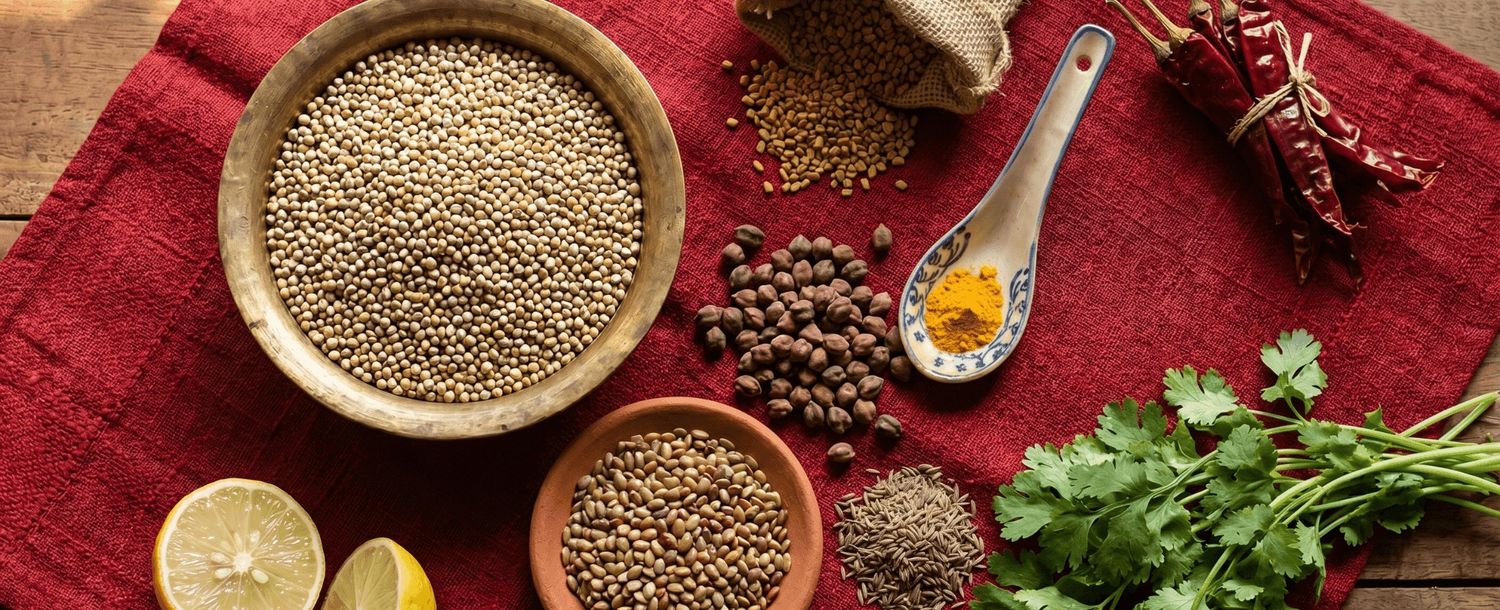
Spices are used in small quantities but eaten every single day, and several of them are among the most iron-dense foods that exist. Their daily cumulative contribution to iron intake is more significant than most people realise, particularly in a diet where whole spices are used generously in tempering and cooking rather than just as finishing agents.
Cumin Seeds (Jeera)
Cumin seeds contain approximately 66 mg of iron per 100 grams, which is an extraordinary figure. A single teaspoon of cumin seeds used in daily tempering provides around 1.4 mg of iron, which is about 17 percent of the daily requirement for adult men and roughly 8 percent for women of reproductive age. Across a week of daily cooking with cumin, this adds up to a meaningful and entirely effortless iron contribution. Spices from Ulamart include naturally sourced whole cumin that retains the full mineral and volatile oil profile.
Coriander Seeds and Powder
Coriander seeds contain around 16.32 mg of iron per 100 grams. Used as a ground powder in curries, sambar, and rasam every day, coriander contributes quiet but consistent iron to the diet. The combination of coriander and cumin in tempering, which is standard in South Indian cooking, delivers iron from two high-density sources in a single preparation step that requires no additional thought or effort.
Dried Fenugreek Seeds (Methi)
Fenugreek seeds contain approximately 33 mg of iron per 100 grams. They are used in smaller quantities than cumin and coriander, but even a quarter teaspoon of fenugreek seeds in a dal preparation adds a meaningful iron dose. The slightly bitter flavour of methi seeds mellows significantly with cooking, particularly when combined with tamarind or tomato, which also happen to be vitamin C sources that improve absorption of the methi’s iron simultaneously.
Turmeric Powder
Turmeric contributes around 41 mg of iron per 100 grams, and it is added to virtually every cooked dish in the South Indian kitchen. A half teaspoon used daily adds approximately 0.2 mg of iron with every meal that contains it. This is small per use but consistent across every meal, and turmeric’s anti-inflammatory effects simultaneously reduce the inflammatory load that impairs iron absorption efficiency in the gut. Turmeric powder from Ulamart is available in a minimally processed form that retains the full curcumin and mineral profile.
Iron Content Reference: Kitchen Foods at a Glance
| Food | Iron per 100g | Category |
| Cumin seeds | 66 mg | Spice |
| Turmeric powder | 41 mg | Spice |
| Fenugreek seeds | 33 mg | Spice |
| Coriander seeds | 16.32 mg | Spice |
| Little millet (samai) | 9.3 mg | Millet |
| Pearl millet (kambu) | 8 mg | Millet |
| Horse gram (kollu) | 6.77 mg | Pulse |
| Kala channa | 4.31 mg | Pulse |
| Finger millet (ragi) | 3.9 mg | Millet |
| Masoor dal (lentils) | 3.3 mg (cooked) | Pulse |
| Whole moong | 2.5 to 3 mg | Pulse |
| Foxtail millet | 2.8 mg | Millet |
These numbers reflect the total iron content per 100 grams. Actual absorbed iron depends on the preparation method, what the food is eaten with, and individual gut health factors. Spices have the highest numbers but are used in small quantities. Millets and pulses, eaten as full servings, deliver the highest absolute iron per meal.
Heritage Rice Varieties That Also Contribute Iron
While millets outperform rice on iron content, certain heritage rice varieties still carry meaningfully more iron than commercially polished white rice, which loses the majority of its mineral content during milling. Incorporating these varieties into the grain rotation adds iron from the rice meal as well, rather than relying entirely on the side dishes.
- Karun Kuruvai rice contains 3.5 to 4.5 mg of iron per 100 grams, nearly four times that of polished white rice.
- Kullakar rice provides 3 to 4 mg of iron per 100 grams alongside its well-documented low glycaemic index.
- Red rice carries approximately 2 to 3 mg of iron per 100 grams in its unpolished form, with the iron concentrated in the red bran layer.
- Kattuyanam rice and other unpolished heritage varieties from Ulamart’s rice range consistently outperform commercial parboiled rice on iron because the bran, where iron is concentrated, remains intact.
Practical Strategies to Improve How Much Iron Your Body Actually Absorbs
Always Add a Vitamin C Source to Iron-Rich Meals
This single habit has the greatest impact on effective iron intake of anything in this guide. Lemon juice squeezed over dal, a tomato in the curry, raw coriander leaves as a garnish, a small piece of raw mango as an accompaniment, a tamarind-based rasam alongside the main course. All of these are already standard in South Indian cooking. The difference is recognising that they are not just flavour additions but active absorption enhancers for the iron in everything else on the plate.
Soak and Sprout Pulses Before Cooking
Soaking pulses for 8 to 12 hours before cooking reduces phytic acid content by 20 to 50 percent depending on the legume. Sprouting for an additional 24 to 48 hours reduces it further and generates vitamin C within the sprout itself, creating a food that is simultaneously releasing bound iron and providing the vitamin C needed to absorb it. Sprouted kala channa, sprouted moong, and sprouted horse gram are all practical, zero-cost, high-impact strategies for maximising iron absorption from pulses.
Ferment Millets Before Use
Fermented millet preparations, whether kambu koozh left overnight, fermented ragi porridge, or dosa batter made with a high millet proportion and allowed to ferment for 12 hours, significantly reduce the antinutrient content that blocks mineral absorption. The lactic acid bacteria active during fermentation produce organic acids that break down phytic acid and make the iron and other minerals in the millet far more available to the digestive system.
Avoid Tea and Coffee Around Mealtimes
The tannins in tea and coffee bind to iron in the digestive tract and prevent its absorption. Drinking chai with or immediately after an iron-rich meal is one of the most common and most impactful ways in which iron intake is effectively cancelled out in the Indian diet. Shifting chai to 90 minutes before or after eating, rather than during the meal, preserves the iron absorption that the food would otherwise provide.
Cook in Iron Vessels When Possible
Cooking acidic foods such as tamarind-based rasam, tomato curry, or lemon rice in cast iron cookware leaches small but meaningful amounts of iron into the food during cooking. This is a traditional practice that modern kitchen transitions to non-stick cookware have largely eliminated, along with its incidental iron contribution. Using Ulamart’s earthen clay cookware for slow-cooked preparations and cast iron pans where available restores this passive dietary iron source alongside the cooking benefits these vessels provide.
A Practical Daily Meal Pattern for Iron Intake
Building a day of eating around iron, without making it the only consideration, looks roughly like this for a South Indian household:
- Morning: Fermented ragi kanji or kambu koozh with a squeeze of lemon. No chai within 90 minutes of this meal.
- Breakfast: Samai idli or foxtail millet pongal with sambar made from kollu or masoor dal. A side of coriander-tomato chutney provides both vitamin C and additional spice-based iron.
- Lunch: Heritage rice such as Karun Kuruvai or Kullakar rice with kala channa or horse gram curry. Tamarind-based rasam with turmeric and cumin provides both vitamin C and additional iron.
- Snack: Sprouted moong or kala channa sundal with raw onion and a squeeze of lemon.
- Dinner: Pearl millet roti or little millet khichdi with a thin lentil dal and a fresh tomato-based side that adds vitamin C to the meal.
None of these suggestions require buying anything new or cooking in an unfamiliar way. They are adjustments within an already existing South Indian meal pattern, guided by the principle of maximising the iron that is already present in the kitchen. The millets collection and pulses range at Ulamart cover all the grains and legumes described here, sourced from traditional farmers with minimal processing that keeps the nutritional profile of each grain intact.
According to the World Health Organization’s guidance on iron deficiency anaemia, dietary diversification combined with improved iron absorption through food pairing is one of the most effective long-term strategies for reducing anaemia prevalence in populations where plant-based diets predominate. The kitchen already has what it takes. What it takes is using what is there more consistently and more intelligently.