Rice is the most consumed grain in India. It appears on the plate at least once a day in most households, and for many, twice. So when someone says switch to brown rice, the question that follows almost immediately is: is it actually that much better, or is this just another wellness trend?
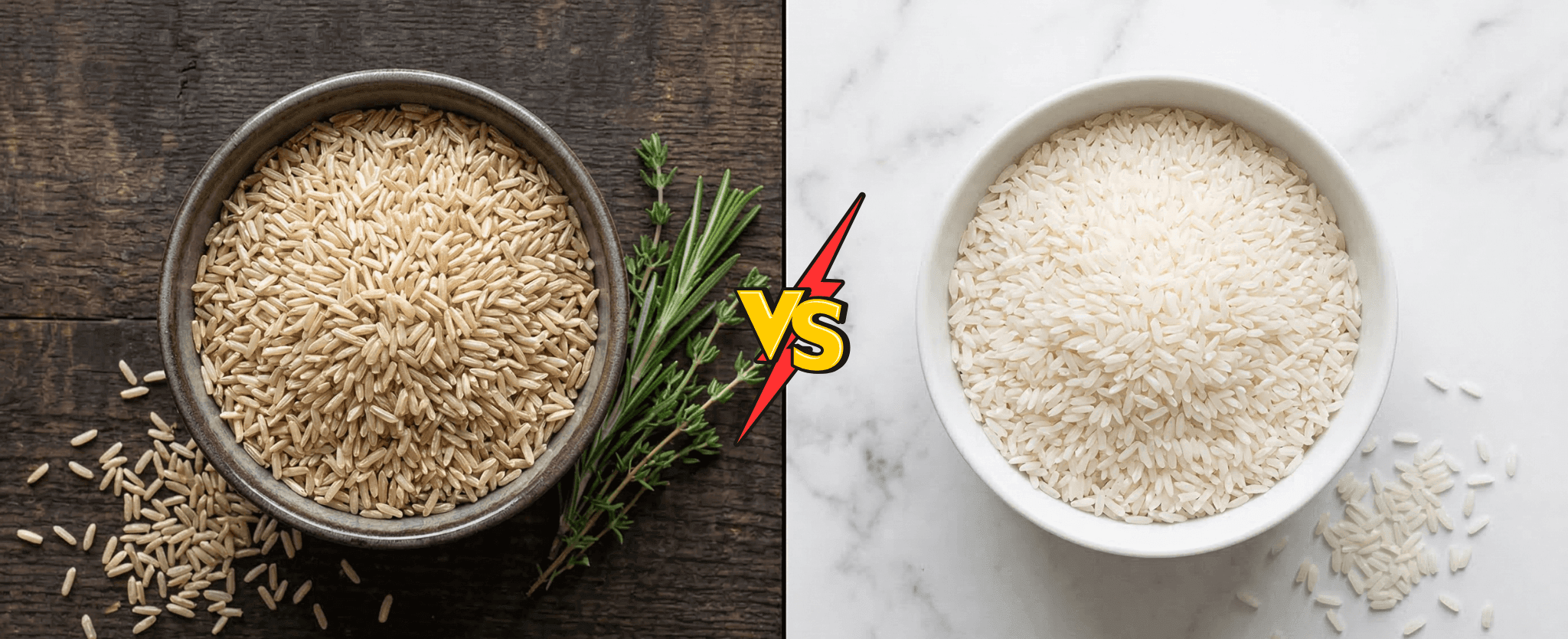
The honest answer sits somewhere in between. Brown rice and white rice come from the same grain. The difference is what happens to that grain after harvest. That processing step changes the nutritional profile, the texture, the taste, and the way your body responds to each. This guide breaks down both sides without bias, so you can make a choice that fits your health goals and your kitchen.
How Brown Rice and White Rice Are Made
Every rice grain starts as a paddy, which has an outer hull, a bran layer, a germ, and the starchy endosperm at the center. After the inedible hull is removed, what remains is brown rice. It still has the bran and germ intact, which is where most of the fiber, vitamins, and minerals are concentrated.
White rice is brown rice that has been milled further. The bran and germ are removed, leaving only the starchy endosperm. This process extends shelf life, improves texture, and produces the familiar soft, fluffy rice that most Indian households grew up eating. However, it also removes a significant portion of the grain’s nutrition.
Some white rice is then enriched, meaning select nutrients are added back artificially after milling. This is more common in commercially packaged rice sold globally but less consistent in traditional Indian rice varieties.
Nutritional Comparison: Brown Rice vs White Rice
The numbers tell a clear story about what changes during milling. Here is a comparison per 100 grams of cooked rice:
| Nutrient | Brown Rice (cooked) | White Rice (cooked) |
| Calories | 216 kcal | 206 kcal |
| Carbohydrates | 45 g | 45 g |
| Dietary Fiber | 3.5 g | 0.6 g |
| Protein | 5 g | 4.2 g |
| Fat | 1.8 g | 0.4 g |
| Magnesium | 84 mg | 19 mg |
| Phosphorus | 162 mg | 68 mg |
| Vitamin B1 (Thiamine) | 0.2 mg | 0.07 mg |
| Glycemic Index | 50 to 55 | 64 to 72 |
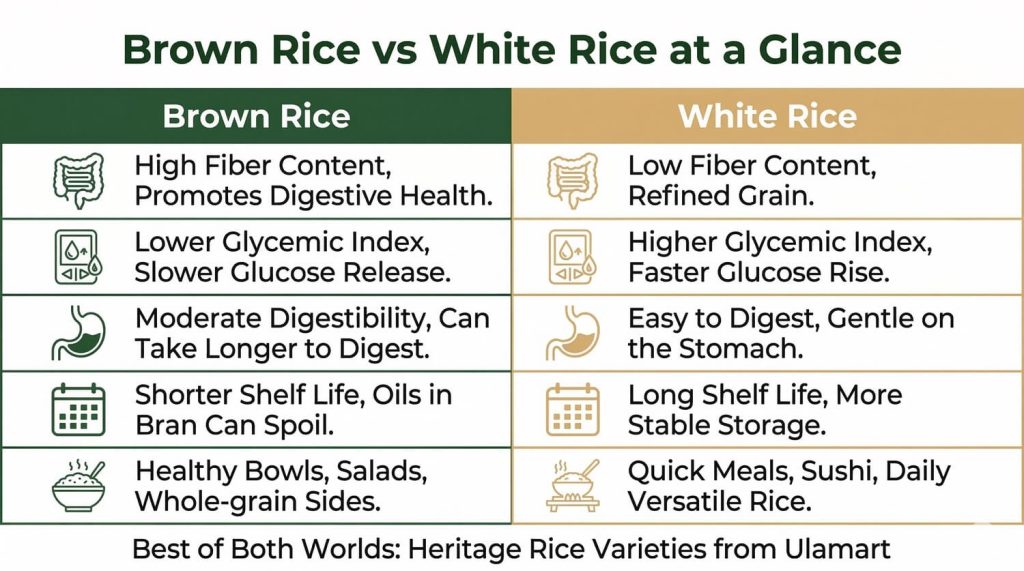
The calorie count is nearly identical, which surprises most people. The real difference lies in fiber, magnesium, phosphorus, and glycemic index. These are not minor gaps. The fiber difference alone has significant implications for digestion, blood sugar, and satiety.
Where Brown Rice Wins
Higher Fiber for Better Digestion
The bran layer in brown rice is made up largely of insoluble fiber, which adds bulk to stools, supports regular bowel movement, and feeds beneficial gut bacteria. For people dealing with constipation, sluggish digestion, or irregular gut function, switching to brown rice can make a noticeable difference within a few weeks.
Fiber also slows the absorption of carbohydrates from the meal, which keeps you feeling full longer and prevents the energy crash that often follows a high-carb meal of polished white rice.
Lower Glycemic Index
The glycemic index (GI) measures how quickly a food raises blood sugar levels after eating. Brown rice has a GI of around 50 to 55. White rice, depending on variety and preparation, typically ranges from 64 to 72. This difference is meaningful for anyone managing diabetes, insulin resistance, or metabolic syndrome.
A lower GI does not mean you can eat unlimited quantities, but it does mean your blood sugar rises more gradually and stays stable longer after the meal. For people who experience afternoon energy dips or sugar cravings after meals, the GI difference between these two rices is often part of the explanation.
Richer in Micronutrients
Brown rice delivers significantly more magnesium, which plays a role in over 300 enzymatic reactions in the body including muscle function, blood pressure regulation, and bone density. It also contains more phosphorus, which supports kidney function and cell repair, and nearly three times the thiamine (vitamin B1) that white rice provides.
These are not dramatic differences when you look at a single serving, but when rice is a daily staple eaten twice a day for decades, the cumulative effect on micronutrient intake is substantial.
Antioxidants in the Bran
The bran layer of brown rice contains phenolic acids and flavonoids that act as antioxidants. These compounds help reduce oxidative stress at the cellular level and have been studied for their role in reducing the risk of chronic disease. White rice, having lost its bran, retains very little of these compounds.
Where White Rice Wins
Easier to Digest
The very fiber that makes brown rice nutritionally superior also makes it harder to digest for some people. Individuals with irritable bowel syndrome, inflammatory bowel disease, or a sensitive gut often find brown rice aggravating. The bran can irritate the gut lining and cause bloating, gas, or discomfort.
White rice, being lower in fiber and easier to break down, is often the recommended choice during recovery from illness, diarrhea, or any digestive flare-up. It is also the standard recommendation for infants and toddlers being introduced to grains because of how gently it sits in young digestive systems.
Better Suited for Certain Traditional Recipes
Many traditional Indian preparations, from idli and dosa to biryani and kheer, are built around the specific texture and starch behavior of white rice. The soft, sticky quality of polished rice is what allows idli batter to ferment correctly and biryani to achieve its characteristic fluffiness.
Trying to replicate these dishes with brown rice usually results in a different texture and sometimes a nuttier, slightly bitter flavor that does not suit the recipe. For cultural cooking traditions, white rice varieties like Seeraga Samba, Thooyamalli Rice, and Organic Idli Rice remain the most appropriate choice.
Longer Shelf Life
The oils present in the bran and germ of brown rice make it prone to going rancid. Brown rice typically has a shelf life of three to six months at room temperature, compared to white rice which can last one to two years when stored correctly. For households that buy in bulk or live in humid climates, this is a real practical consideration.
Lower Arsenic Concentration in Some Varieties
Arsenic, a naturally occurring heavy metal, is absorbed by rice plants from soil and water. Research has shown that arsenic concentrates more heavily in the outer bran layer of the grain. This means brown rice tends to have a higher arsenic content than white rice of the same variety. Washing rice thoroughly before cooking and using excess water that is then drained reduces arsenic levels significantly for both types.
The Indian Context: What Our Traditional Diets Tell Us
Before the rise of polished white rice as the default, Indian agriculture produced hundreds of varieties of unpolished, hand-pounded, or lightly milled rice. These traditional grains were closer to what we now call brown rice in terms of their processing level, even if they were not identical.
Varieties like Navara Rice, Kattuyanam Rice, Kullakar Rice, and Karun Kuruvai Rice are heritage varieties that were traditionally consumed in minimally processed or parboiled forms. They offer a middle path: less heavily milled than commercial white rice but easier to cook and digest than standard commercial brown rice.
Parboiling, a traditional technique of partially boiling the paddy before milling, pushes some of the nutrients from the bran into the starchy endosperm before the bran is removed. This means parboiled white rice retains more nutrition than regular polished white rice while still being relatively easy to digest. This is why parboiled rice remains the everyday staple across Tamil Nadu, Andhra Pradesh, and Karnataka.
Heritage and Traditional Rice: The Third Option
The brown vs white debate often ignores a more important conversation: the variety of rice itself matters enormously. A traditional, minimally processed heritage rice grown in rich soil without synthetic inputs may deliver significantly more nutritional value than either commercial brown rice or commercially polished white rice.
| Rice Variety | Key Benefit |
| Navara Rice | Medicinal, used in Ayurveda, high in antioxidants |
| Kattuyanam Rice | Unpolished, low glycemic, traditionally grown |
| Kullakar Rice | Rich in iron, cooling properties, good for summer |
| Mappillai Samba Rice | High fiber, traditionally linked to strength and stamina |
| Bamboo Rice | Rare, high protein, good for joint health |
You can explore and shop these traditional rice varieties directly through Ulamart’s rice collection. Each variety is sourced from traditional farmers and prepared with minimal processing to preserve the grain’s natural nutritional profile.
Who Should Choose Brown Rice?
- People managing type 2 diabetes or pre-diabetes who need to keep blood sugar stable.
- Those trying to lose or maintain weight, because the higher fiber content increases satiety.
- Individuals with constipation or sluggish digestion who need more dietary fiber.
- Anyone looking to increase daily intake of magnesium, phosphorus, and B vitamins through food rather than supplements.
Who Should Stick with White Rice?
- People with IBS, IBD, or a history of digestive sensitivity who find high-fiber grains aggravating.
- Infants and young children being introduced to grains for the first time.
- Anyone recovering from illness, diarrhea, or a digestive upset where easily digestible food is needed.
- Households cooking traditional South Indian recipes where the texture of white rice is integral to the dish.
Practical Tips If You Want to Switch to Brown Rice
Switching directly from white to brown rice can feel like a significant adjustment for people who have eaten polished rice their whole lives. The texture is chewier, the cooking time is longer, and the flavor is nuttier. Here are some approaches that make the transition smoother:
- Start by mixing brown rice with your regular white rice at a 1:3 ratio. Gradually increase the proportion of brown rice over a few weeks.
- Soak brown rice for at least 30 minutes before cooking. This reduces cooking time and improves digestibility by softening the bran layer.
- Use a pressure cooker or Instant Pot. Brown rice benefits significantly from pressure cooking, which achieves the softness that stovetop cooking often cannot.
- Consider switching to parboiled heritage varieties as an intermediate step. They offer more nutrition than polished white rice but are easier to digest and cook than standard commercial brown rice.
For a deeper understanding of whole grain nutrition and how processing affects the nutritional value of rice and other grains, the Harvard T.H. Chan School of Public Health’s Whole Grains resource provides well-researched guidance backed by nutritional science.
Cooking Tips for Each Type
| Rice Type | Soaking | Water Ratio |
| Brown Rice | 30 to 60 minutes | 1:2.5 (rice to water) |
| White Rice | 10 to 15 minutes | 1:1.75 (rice to water) |
| Parboiled Heritage Rice | 20 to 30 minutes | 1:2 (rice to water) |
Heritage varieties like 60am Kuruvai Rice and Kichili Samba Rice are unpolished and benefit from soaking. Cooking them in an earthen pot enhances the flavor and preserves more of the grain’s nutrients. Ulamart’s earthen clay cookware range pairs well with traditional rice cooking methods.
The choice between brown and white rice is not a question with a single right answer. It depends on your digestive health, your cooking traditions, your family’s preferences, and your specific wellness goals. What matters most is the quality of the rice you choose within either category, and whether you are pairing it with a nutritionally diverse meal overall.
If you want to start exploring beyond commercial white rice without jumping straight to brown rice, Ulamart’s range of traditional unpolished rice varieties offers a more culturally relevant and often more nutritious path forward.