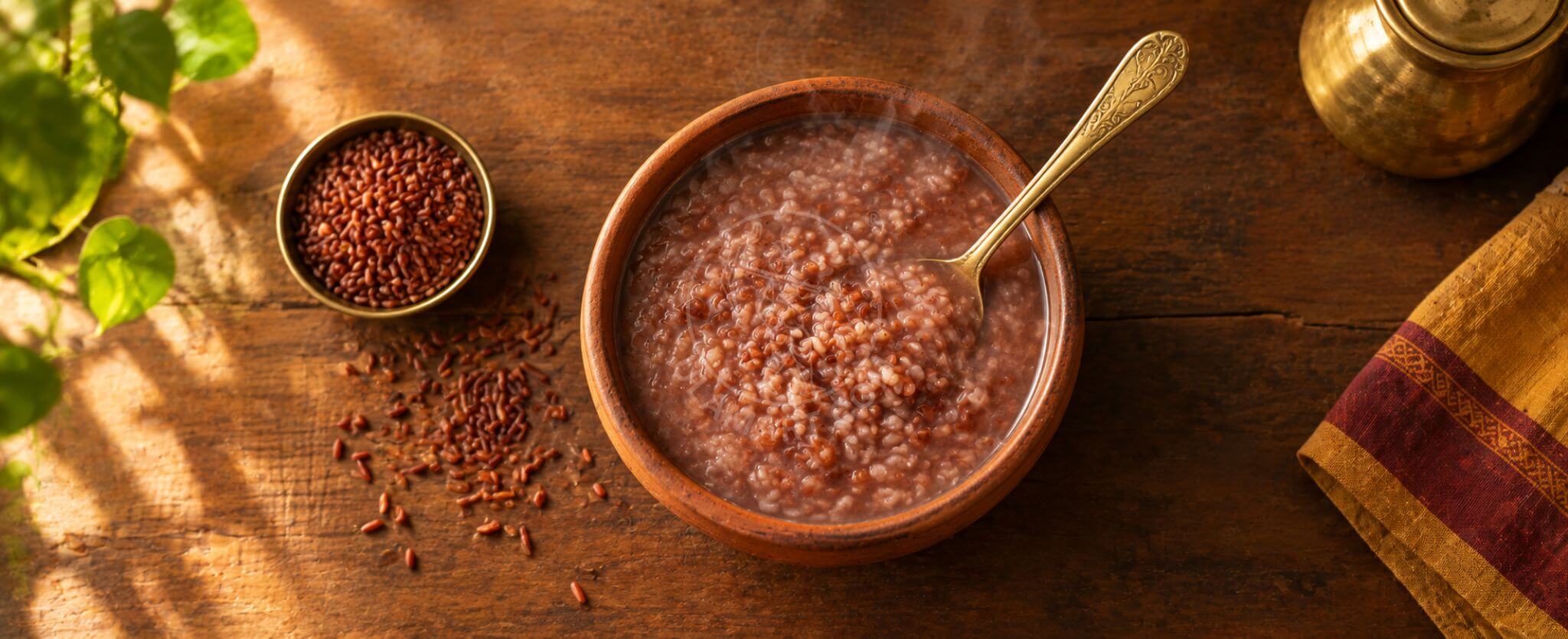
If you have spent any time around traditional Tamil or Kerala households, you have probably heard an elder recommend rakthashali kanji to someone recovering from illness, childbirth, or general weakness. The name itself gives a clue. Raktha means blood in Sanskrit, and shali refers to rice. This is not a marketing invention. It is a name that has followed this rice variety through centuries of Ayurvedic texts, long before anyone measured iron content in a lab.
So is the “haemoglobin booster” tag just folklore dressed up for modern shoppers, or is there something real behind it? Let us look at both the traditional reasoning and what current nutrition science says about Rakthashali rice kanji.
What Exactly Is Rakthashali Rice?
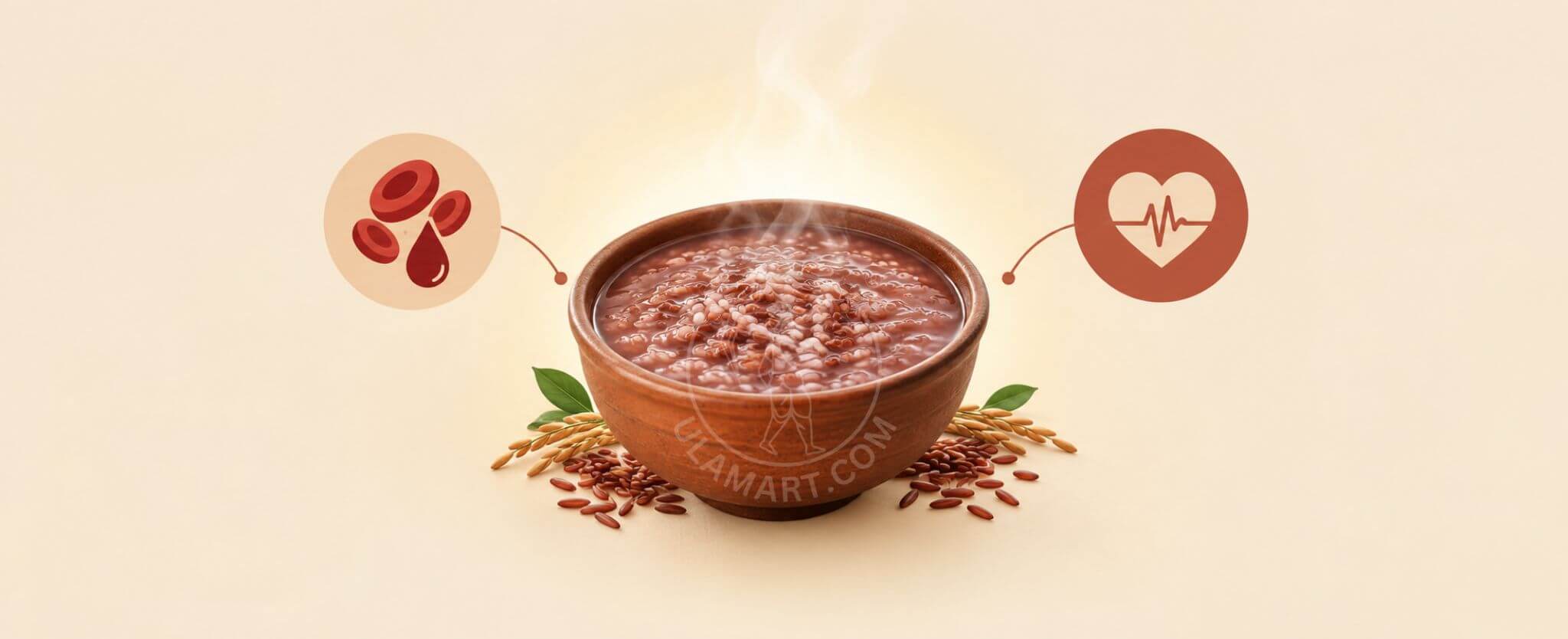
Rakthashali, sometimes spelled Rathasaali or Raktashali, is one of India’s oldest heirloom red rice varieties. It gets its reddish brown husk from anthocyanin pigments concentrated in the bran layer, the same class of compounds responsible for the colour in black rice and red grapes. Unlike polished white rice, rakthashali is typically consumed with its bran intact, which is exactly where most of its nutrients live.
Ancient Ayurvedic texts including the Charaka Samhita, Sushruta Samhita, Ashtanga Hridaya, and Bhavaprakasha Nighantu describe rakthashali as balancing the three doshas and recommend it for fever, inflammation, ulcers, and general physical weakness. It was also considered a food fit for daily consumption because of how well it supported tissue nourishment and digestion. Rakthashali kanji, a thin, easily digestible rice porridge, became the preferred way to deliver these benefits to people who needed gentle, high-nutrition food, particularly new mothers, convalescing patients, and elderly family members.
The Iron Connection Explained
The “haemoglobin booster” reputation comes down to one straightforward biological fact. Haemoglobin, the protein in red blood cells that carries oxygen through your body, is built around an iron core. Without adequate dietary iron, your body cannot produce enough functional haemoglobin, and you end up with iron deficiency anaemia, a condition that affects a striking number of people in India.
Rakthashali’s bran layer is naturally richer in iron and zinc than the starchy white rice most households eat daily. Modern nutritional analysis has confirmed that rakthashali contains meaningfully higher levels of antioxidants, flavonoids, iron, and zinc, along with a low glycemic index, when the bran is retained and consumed along with the kernel. That last part matters. The moment rice is heavily polished, most of this bran, and the iron stored in it, is stripped away. This is precisely why regular white rice offers almost nothing in terms of iron, while unpolished heirloom varieties like rakthashali retain a genuine nutritional edge.
Cooking it as kanji rather than eating it as dry rice adds another layer of benefit. The slow-simmered porridge form breaks down some of the phytic acid naturally present in whole grains, phytic acid being a compound known to bind minerals like iron and reduce how much your body actually absorbs. A well-cooked, slightly fermented or long-simmered kanji is gentler on this front than a quick-cooked rice dish, which is part of why traditional recipes lean toward slow cooking and, in many households, an overnight soak or light fermentation before boiling.
Is There Actual Science Behind Iron-Rich Rice and Haemoglobin
This is where things get interesting, because the connection between rice iron content and rising haemoglobin levels is not just Ayurvedic theory. It has been studied directly, though mostly in the context of engineered iron-fortified rice rather than heirloom varieties specifically.
Research from the Indian Institute of Rice Research looked at what happens when anaemic subjects were fed iron-enhanced rice over a period of weeks. In one such study, haemoglobin levels in severely anaemic subjects rose from about 6.77 g/dl at the start to 10.36 g/dl after sixty days, and moderately anaemic subjects saw levels climb from 9.25 g/dl to 10.83 g/dl over the same period, both statistically significant increases. A broader meta-analysis of controlled trials on iron-fortified rice reached a similar conclusion, noting that fortifying rice with iron is a workable strategy for improving haemoglobin levels in populations where rice is the dietary staple.
These studies were not testing rakthashali specifically, since they used engineered fortification rather than a naturally iron-dense heirloom grain. But the underlying mechanism is the same one Ayurveda identified without a lab in sight: more bioavailable iron in the rice a population eats every day translates into measurable improvements in blood iron status over time. Rakthashali simply arrives at that iron density naturally, through its bran, rather than through industrial fortification.
How Rakthashali Kanji Compares to Other Iron Sources
To put things in perspective, here is a rough comparison of common iron sources many Indian households already use.
| Food | Iron Profile | Ease of Daily Use |
|---|---|---|
| Rakthashali rice kanji | Naturally iron-rich bran, low glycemic index | High, gentle on digestion, suitable for all ages |
| Polished white rice | Minimal iron after milling | High, but offers little nutritional benefit |
| Red meat | Highly bioavailable heme iron | Moderate, not suitable for vegetarian diets |
| Iron supplements | Concentrated dose, clinically prescribed | Low, often causes constipation and nausea |
The advantage of a food-based source like rakthashali kanji is that it works alongside a normal meal pattern rather than requiring a separate pill or a dietary overhaul. It will not replace medical treatment for diagnosed anaemia, but as a daily dietary habit it adds a consistent, gentle source of iron that most families can sustain long term.
Who Traditionally Ate Rakthashali Kanji, and Why
Traditional practice around rakthashali kanji was rarely random. It shows up consistently in a few specific situations across South Indian households.
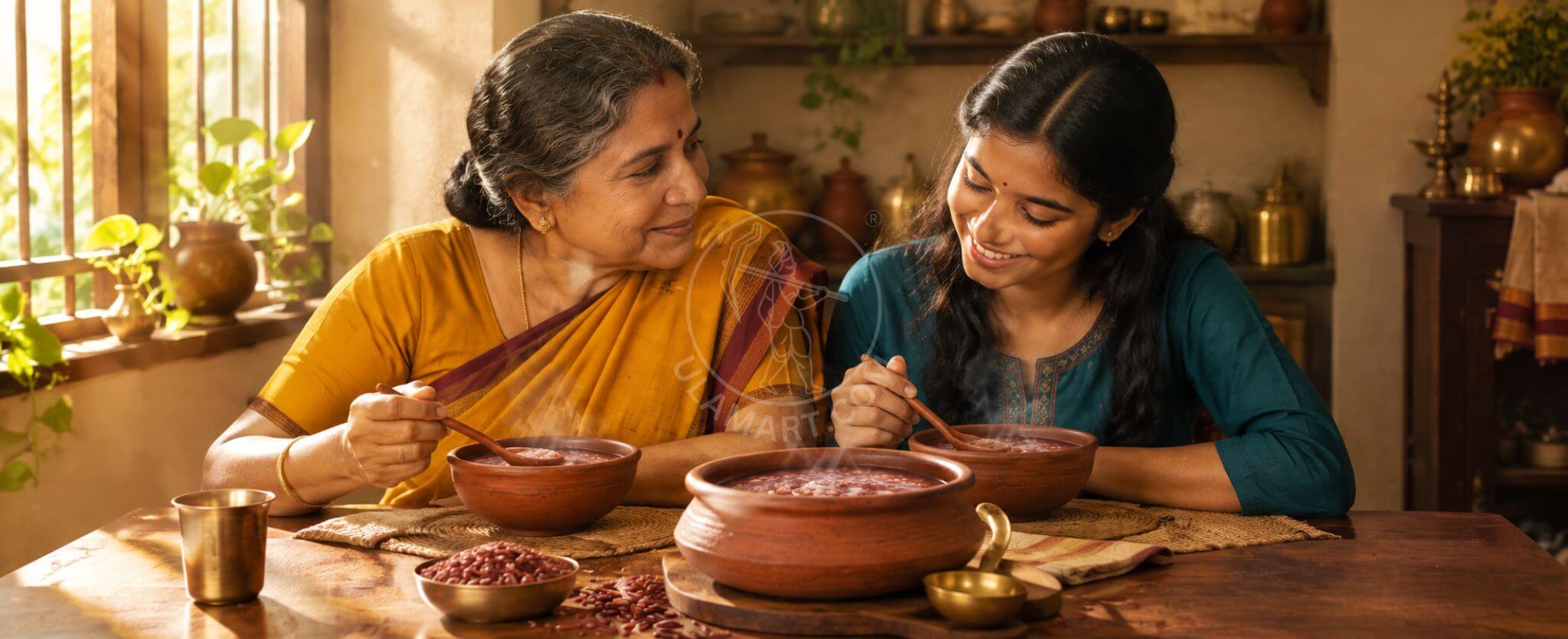
New mothers were routinely given rakthashali kanji in the weeks following childbirth, a period when blood loss makes iron replenishment especially important. Elderly family members recovering from illness were another common group, since the porridge form is easy to digest even when appetite is low. Ayurveda also recommended it during Samsarjana Krama, the graduated dietary regimen that follows Panchakarma therapies, and during the monsoon season to support digestive strength.
What ties these use cases together is a shared need for food that is both nutrient-dense and easy on a weakened digestive system, exactly the profile a soft, iron-retaining rice porridge provides.
Should You Add It to Your Routine
If you are dealing with fatigue that has not been formally diagnosed, rakthashali kanji is a reasonable addition to a balanced diet, not a substitute for a blood test or a doctor’s advice. Iron deficiency anaemia has several causes, and a food alone will not correct a serious clinical deficiency the way targeted supplementation or treatment might.
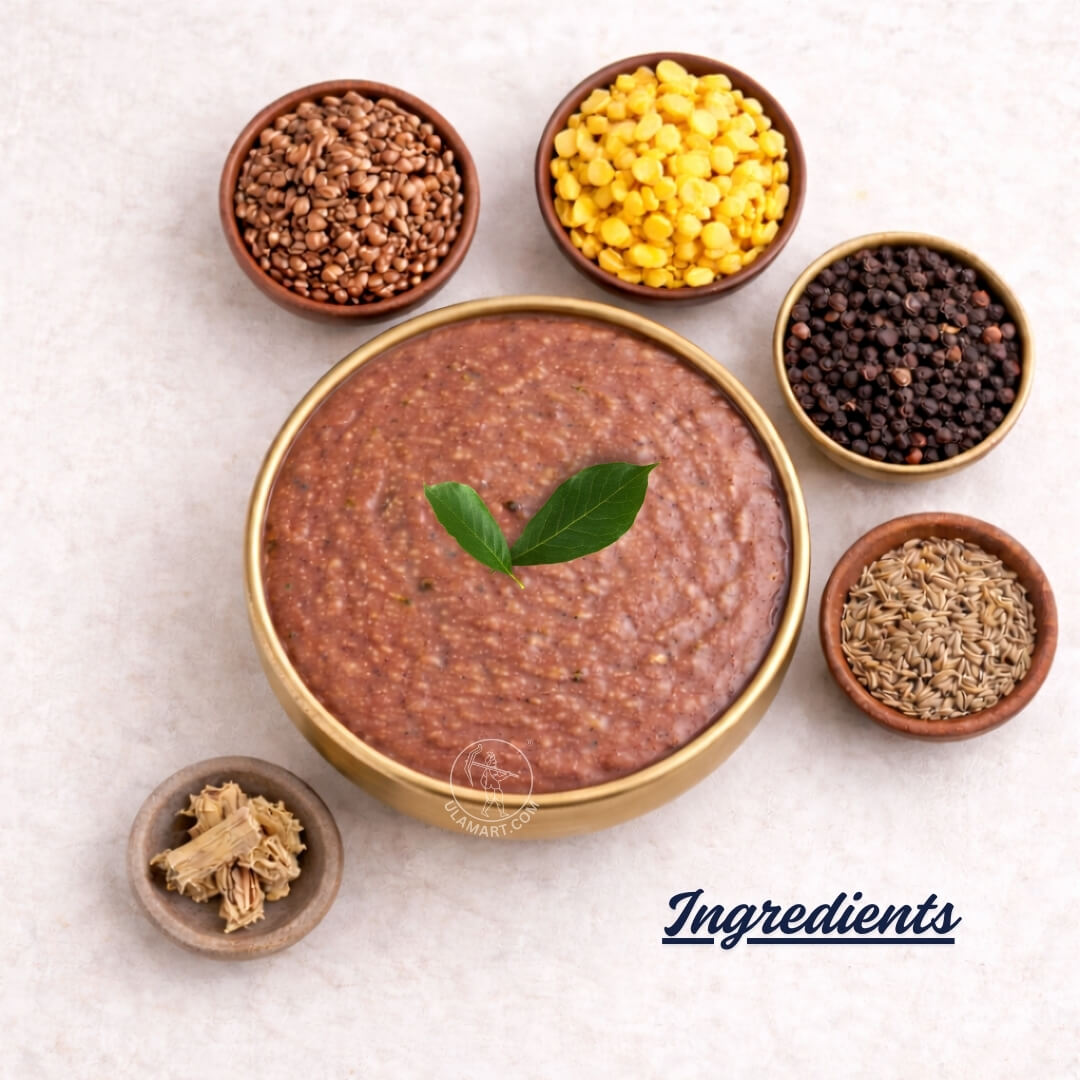
That said, as a preventive, everyday habit, it makes a lot of sense. It is naturally gluten free, has a lower glycemic index than polished rice, and fits easily into a morning routine as a warm, mildly spiced porridge with a pinch of salt, cumin, or a few curry leaves. For anyone eating mostly polished white rice through the week, swapping in a bowl of rakthashali kanji even two or three times is a simple way to reintroduce iron that milling would otherwise strip out. You can find this heirloom folk rice variety, whose reddish bran carries its signature iron and antioxidant content, through Ulamart’s Rakthashali Rice collection, sourced from traditional farming rather than commercial polished-rice production.
The name rakthashali was never just poetic. It described, in the language available at the time, exactly what modern iron and haemoglobin research is now able to measure directly. Whether you approach it through Ayurveda or through a lab report, the grain earns its reputation the same way, by keeping its bran, and its iron, intact.