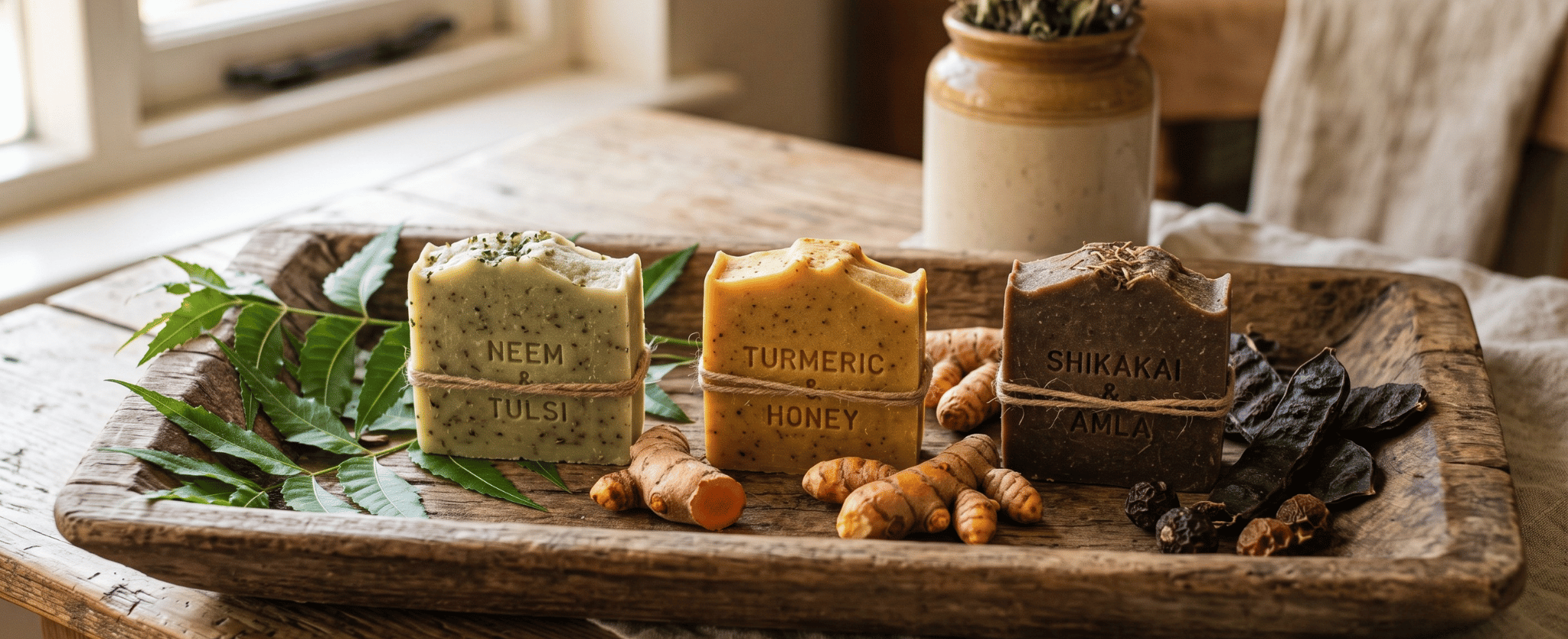
Long before shelves filled up with chemical-laden bars promising instant results, Indian households relied on a small set of trusted ingredients for skin and hair care: neem, turmeric, and shikakai. These three continue to anchor most traditional herbal soap formulations today, and understanding what each one actually does helps separate genuine herbal soap from products that use the word loosely on their packaging.
Neem: The Traditional Skin Cleanser
Neem has been used in Indian households for generations, primarily for its cleansing properties and traditional association with skin clarity. Soaps built around neem extract or neem oil are commonly reached for by people dealing with occasional breakouts or oily skin, since neem is traditionally regarded as balancing for excess oil production. The leaves carry a distinctive bitter scent that is often blended with milder ingredients to make the final bar more pleasant for daily use.
Turmeric: Brightening and Traditional Skin Care
Turmeric’s role in Indian skincare goes back centuries, most visibly in pre-wedding rituals where turmeric paste is applied for its traditional association with glowing skin. In soap form, turmeric is included primarily for this same traditional brightening association, along with its natural yellow-orange pigment, which gives turmeric soaps their recognizable golden hue. It pairs particularly well with sandalwood or besan-based formulations in traditional recipes.
Shikakai: The Original Hair and Skin Cleanser
Shikakai, literally translating to “fruit for hair” in Tamil, has a long history as a gentle, naturally low-lather cleanser used for both skin and hair before commercial shampoo became common. Shikakai soap is milder than neem-based bars and is often chosen by people with sensitive skin who find stronger herbal or chemical soaps drying.
Comparing the Three Ingredients
| Ingredient | Best Suited For | Typical Skin Feel |
| Neem | Oily or blemish-prone skin | Slightly stronger cleansing |
| Turmeric | Dull or uneven-toned skin | Mild, often blended with other oils |
| Shikakai | Sensitive or dry skin | Gentle, low-lather cleansing |
Reading Ingredient Labels Correctly
The biggest gap between a genuinely herbal soap and one using herbal branding loosely comes down to where the named ingredient sits on the label. If neem, turmeric, or shikakai appear near the end of a long ingredient list dominated by synthetic fragrance and detergents, the herbal claim is mostly marketing. A soap built around these ingredients should list them prominently, often as the base oil or a leading active ingredient, rather than as a trace addition.
Combining Ingredients for Specific Skin Needs
- Oily or acne-prone skin: neem-forward soaps, used once daily to avoid over-drying
- Dull or tired-looking skin: turmeric-based bars, ideally paired with a moisturizer afterward
- Sensitive or dry skin: shikakai soap, which cleanses without stripping natural oils as aggressively
Many traditional formulations blend two or all three ingredients together specifically to balance out their individual strengths. Ulamart’s shikakai soap and aloe vera neem soap are both built around a single dominant active ingredient rather than a long synthetic list, which makes it easier to match the right bar to your specific skin type.
For a broader comparison of what separates herbal soap from standard commercial bars, the National Center for Complementary and Integrative Health’s overview of traditional herbal remedies is a useful independent reference for understanding how traditional botanical ingredients are studied and used in skin care more broadly.