Summer in Tamil Nadu has its own food rules. Heavy, oily meals get pushed aside for lighter fare, and grandmothers everywhere start reaching for buttermilk, curd rice, and one particular grain that shows up again and again during the hottest months: kambu, or pearl millet.
Here is the part that confuses a lot of people. In Ayurveda, pearl millet is technically classified as a warming grain, the kind traditionally eaten in winter for its heat-generating properties. So how does the same grain end up being celebrated as a summer cooler in Tamil households? The answer lies not in the grain itself but in how it is prepared. A roundup of summer-friendly millets from Tata 1mg points out that pearl millet works best in hot weather when made into thinner rotis or light khichdis and paired with curd or buttermilk, rather than eaten as a dense, dry preparation. This is exactly what kambu koozh, the fermented pearl millet drink found across rural Tamil Nadu, has been doing for generations.
- Why Kambu Koozh Is the Real Summer Hero
- What Pearl Millet Brings to the Table Nutritionally
- Simple Ways to Bring Kambu Into Your Summer Kitchen
- Pearl Millet Across the Day
- How Kambu Koozh Is Traditionally Made
- A Few Buying and Storage Tips for the Summer Season
- Choosing the Right Pearl Millet Product for Your Needs
Why Kambu Koozh Is the Real Summer Hero
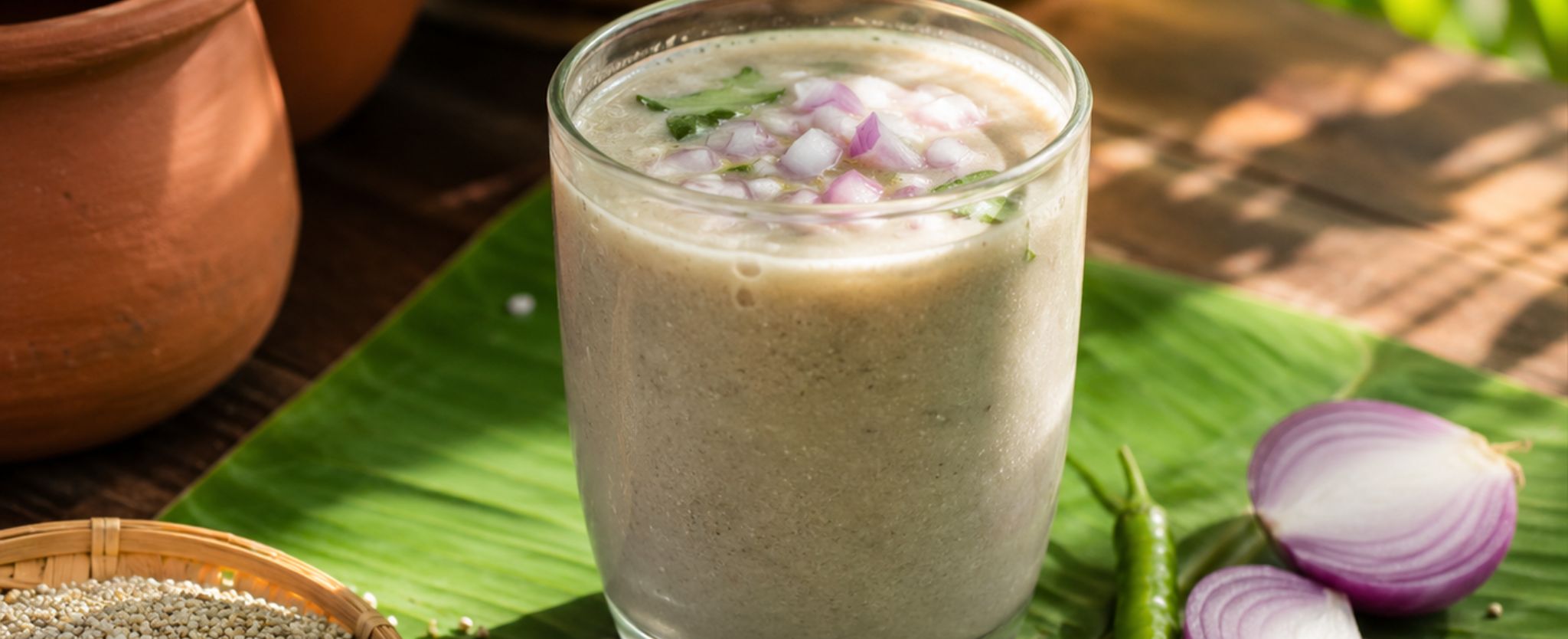
Kambu koozh is not just porridge. It is fermented pearl millet, cooked down and left to develop a mild tang, then mixed with buttermilk, a pinch of salt, and sometimes raw onion or green chili on the side. Farm workers across Tamil Nadu have relied on this drink for centuries to get through long, hot days in the fields, and the science behind it lines up with the tradition.
Fermentation changes the nature of the grain. It introduces beneficial bacteria, lowers the load that the body has to digest in the heat, and the buttermilk that goes into the final mix brings its own cooling and probiotic properties to the table. The result is a drink that hydrates, replenishes electrolytes lost to sweat, and keeps energy levels steady without sitting heavy in the stomach the way a hot meal would.
This is the detail that often gets missed when people talk about pearl millet and summer in the same sentence. It is not the raw grain working against its own warming nature. It is the preparation, fermentation plus buttermilk plus a lighter cooking style, that transforms kambu into something your body actually wants in May and June.
What Pearl Millet Brings to the Table Nutritionally
Beyond the cooling angle, pearl millet is genuinely one of the more nutrient-dense grains available. It carries one of the highest iron contents among commonly eaten grains, which matters during summer when heavier sweating can quietly deplete mineral levels over weeks. It is also naturally gluten-free, rich in magnesium and phosphorus, and brings a fair amount of protein and fiber to a meal that would otherwise be light on both.
For families managing diabetes, pearl millet has another point in its favor. Some research has linked regular bajra consumption to a measurably lower likelihood of developing type 2 diabetes over time, and its slower glucose release compared to refined rice makes it a sensible swap for anyone watching their blood sugar through a long, hot summer when appetite and activity levels often shift.
Simple Ways to Bring Kambu Into Your Summer Kitchen
You do not need to wait for a special occasion to start using pearl millet. A few small changes to your weekly menu can make a real difference.
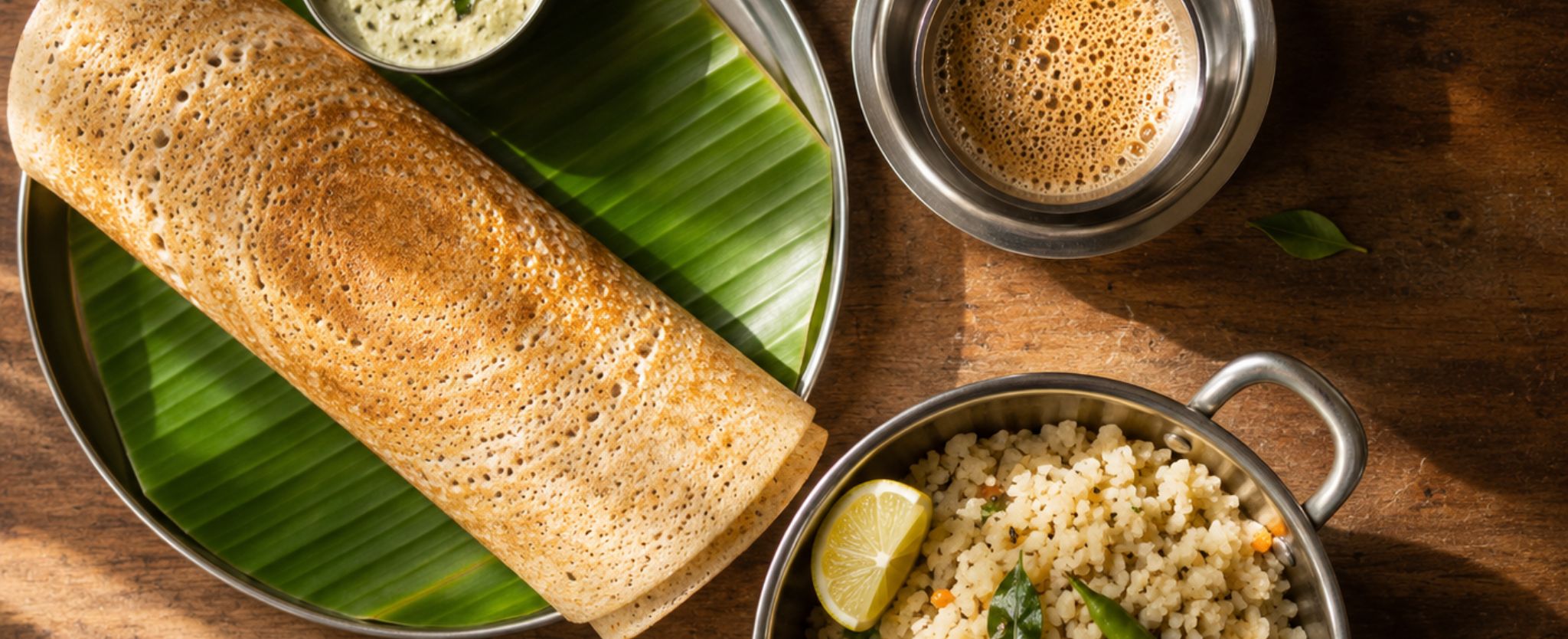
A thin kambu dosa, made with the grain ground into pearl millet flour, works well as a light breakfast that does not weigh you down before a hot day ahead. For something even faster, pearl millet flakes can be soaked briefly and turned into a quick poha-style breakfast with curry leaves, mustard seeds, and a squeeze of lemon, ready in under ten minutes.
For lunch, a kambu khichdi made thinner than usual, with extra vegetables and a side of curd, captures the same balance that traditional Tamil cooking has relied on for ages. And for the evening, nothing beats the classic kambu koozh itself, served chilled with a side of raw onion and a green chili for those who like a bit of bite.

Pearl Millet Across the Day
| Time of Day | Preparation | Why It Works |
|---|---|---|
| Morning | Thin kambu dosa or flakes poha | Light, quick energy without heaviness |
| Afternoon | Thinner kambu khichdi with curd | Balances warmth with cooling dairy |
| Evening | Chilled kambu koozh with buttermilk | Rehydrates and replenishes lost minerals |
How Kambu Koozh Is Traditionally Made
The process behind kambu koozh is simple enough for any home kitchen, even if it takes a little planning ahead. Whole pearl millet is first cooked down in water until it breaks into a thick, porridge-like consistency, usually over 30 to 40 minutes on a low flame. This cooked mixture is then left to cool and ferment slightly, often overnight or for a few hours in a warm kitchen, which is what gives the final drink its mild tang and the probiotic benefit that makes it easier on the digestive system during peak summer heat.
Once fermented, the koozh is thinned out with water or buttermilk to a drinkable consistency, seasoned with a little salt, and served cold straight from the refrigerator. Some households add a tempering of curry leaves and mustard seeds for extra flavor, while others keep it plain and let the natural fermented taste come through. Either way, the drink is meant to be sipped slowly, not gulped, since the slight sourness can take a sip or two to get used to for first-time drinkers.
A common shortcut for busier households is to prepare a slightly larger batch of plain cooked pearl millet over the weekend, refrigerate it, and ferment smaller portions through the week as needed rather than starting from scratch daily. This keeps the tradition alive without demanding a long prep routine every single evening.
A Few Buying and Storage Tips for the Summer Season
Heat and humidity are not kind to stored grains, and pearl millet is no exception. During the warmer months, it helps to buy in smaller, more frequent quantities rather than stocking up on a large bag that sits half used for weeks. Whole pearl millet should be stored in an airtight container, ideally in a cool, dry corner of the kitchen rather than near the stove or a sunlit window, since both heat and moisture speed up rancidity in the natural oils within the grain.
If you are using the flour form, buying smaller packs more often is even more important, since ground flour oxidizes faster than the whole grain and can develop a slightly bitter edge if it sits too long in a warm kitchen. A quick smell test before cooking is usually enough to tell if a batch of flour has turned. Fresh pearl millet flour should smell mild and slightly nutty, never sharp or sour.
Choosing the Right Pearl Millet Product for Your Needs
Not every household cooks the same way, and pearl millet comes in a few different forms to match that. Whole grain kambu takes the longest to prepare but gives the most traditional koozh texture. The flour version saves time for daily dosas and rotis, while the flaked form is the fastest option for busy mornings when there is no time for soaking grain overnight.
| Form | Best For | Prep Time |
|---|---|---|
| Whole Pearl Millet | Traditional koozh, khichdi | 30 to 40 minutes |
| Pearl Millet Flour | Dosa, roti, malt | 10 to 15 minutes |
| Pearl Millet Flakes | Quick breakfast bowls | Under 10 minutes |
A quick note on portions matters here too. Even with the cooling preparations, pearl millet is still a dense grain, so a moderate bowl of koozh or one or two thin dosas tends to be enough for most people, especially on the hottest afternoons when appetite naturally dips. Pairing it with hydrating sides like cucumber, watermelon, or a simple onion raita rounds out the meal without adding unnecessary heaviness.
If you are introducing kambu to children or older family members for the first time, starting with the flour or flakes form tends to go down easier than the whole grain koozh, which has a distinct fermented tang that takes some getting used to. Once the family is comfortable with the flavor, working up to the traditional koozh during the peak summer weeks brings back a piece of food wisdom that rural Tamil Nadu never really let go of, even as urban kitchens drifted toward more processed convenience foods.
Pearl millet was never really about fighting the heat with force. The real lesson buried in generations of kambu koozh is patience, letting fermentation and buttermilk do the cooling work that the raw grain alone cannot, and built around that, a genuinely sustainable way to stay nourished through the hardest months of the year.