Walk into any modern Indian kitchen today, and you’ll likely see stainless steel pots, non-stick pans, and maybe some fancy copper-bottomed cookware. Sleek, shiny, and supposedly superior to everything that came before.
But here’s what’s interesting: a growing number of home cooks, chefs, and health-conscious families are quietly bringing back something their great-grandmothers used every single day – clay cookware. Not as a nostalgic decoration piece, but as their primary cooking vessel.
This isn’t just a trend among hardcore traditionalists. It’s doctors recommending clay pots to patients with digestive issues. It’s young parents choosing earthenware for their babies’ first foods. It’s wellness enthusiasts realizing that the oldest cookware might actually be the healthiest.
After decades of being dismissed as outdated and inconvenient, clay cookware is experiencing a remarkable renaissance. And once you understand why, you might find yourself reaching for a clay pot the next time you cook.
The Fall and Rise of Clay Cookware
How We Moved Away from Clay
For thousands of years, clay pots were the default cooking vessels across India. Every household had them. Every meal was cooked in them. It was so normal that nobody questioned it.
Then came modernization. Stainless steel promised durability without breaking. Aluminum offered lightweight convenience. Non-stick claimed easy cooking and cleaning. These modern materials were marketed as progress, while clay was labeled as primitive, fragile, and too much trouble.
By the 1980s and 1990s, clay cookware had nearly disappeared from urban Indian kitchens. It survived mainly in rural areas and in the hands of a few traditional cooks who refused to give it up.
Why People Are Returning to Clay
The comeback isn’t driven by nostalgia alone. It’s driven by three powerful realizations:
Health Concerns: Studies showing that non-stick coatings can release toxic fumes when overheated. Reports of aluminum leaching into acidic foods. Growing awareness that modern cookware might be convenient, but it’s not necessarily safe.
Nutritional Benefits: Research confirming that clay cookware actually improves the nutritional value of food by adding essential minerals during cooking.
Taste Difference: Chefs and home cooks rediscovering that food cooked in clay simply tastes better. There’s a depth of flavor that metal cookware can’t replicate.
Add to this the environmental consciousness of avoiding toxic manufacturing processes and non-recyclable materials, and you have a perfect storm bringing clay cookware back to modern kitchens.
What Makes Clay Cookware Special?
Clay isn’t just another material. It has unique properties that make it fundamentally different from metal cookware.
The Science of Clay Cooking
Porous Nature: Clay is naturally porous, allowing moisture and heat to circulate gently through the pot. This creates a unique steaming effect where food is cooked by gentle, moist heat rather than direct, harsh heat.
Even Heat Distribution: Clay heats slowly and evenly, eliminating hot spots that burn food. Once heated, it retains heat exceptionally well, keeping food warm long after you remove it from the stove.
Alkaline Properties: Pure, unglazed clay is naturally alkaline. When acidic foods (like tomatoes or tamarind) are cooked in clay, the alkalinity neutralizes some of the acidity, making the food gentler on your digestive system.
Mineral Enrichment: Clay contains minerals like calcium, magnesium, iron, and phosphorus. During cooking, trace amounts of these minerals leach into the food, slightly increasing its nutritional value.
No Chemical Leaching: Unlike non-stick or aluminum cookware, pure clay pots don’t leach harmful chemicals into your food, no matter how high the temperature or how acidic the ingredients.
Health Benefits of Cooking in Clay
1. Zero Toxic Chemicals
This is perhaps the most compelling reason to switch to clay.
Non-stick concerns: Most non-stick coatings contain PTFE (polytetrafluoroethylene) or similar chemicals. When overheated (above 260°C), these coatings can release toxic fumes that cause flu-like symptoms in humans and can be fatal to pet birds.
Aluminum worries: While still debated, some research suggests a potential link between aluminum exposure and health issues. Aluminum can leach into food, especially when cooking acidic dishes.
Stainless steel limitations: Generally safe, but lower-quality stainless steel can leach nickel and chromium, problematic for people with sensitivities.
Clay solution: Pure, unglazed clay cookware contains no synthetic chemicals, no heavy metals (if properly sourced), and no coatings that can break down. What you’re cooking in is literally just earth.
At Ulamart, our clay cookware collection is made from 100% natural clay with no artificial colors or harmful chemicals, ensuring completely safe cooking.
2. Adds Beneficial Minerals to Food
Clay naturally contains minerals that transfer to your food during cooking.
Calcium: Important for bone health, muscle function, and nerve transmission.
Iron: Essential for blood production and oxygen transport. Particularly beneficial for people with anemia or iron deficiency.
Magnesium: Supports hundreds of biochemical reactions in the body, including energy production and muscle function.
Phosphorus: Works with calcium for bone health and is involved in energy metabolism.
While the amounts transferred are small, cooking regularly in clay cookware provides a gentle, natural mineral supplementation. This is especially beneficial for vegetarians and people at risk of mineral deficiencies.
3. Naturally Alkaline (Reduces Acidity)
Modern diets tend to be acidic. Processed foods, excess meat, sugar, and refined grains all create acidity in the body. Clay cookware naturally helps counterbalance this.
When you cook acidic foods like tomato curry, tamarind rasam, or citrus-based dishes in clay, the alkaline nature of the clay neutralizes some of that acidity.
Benefits of this alkalinity:
- Easier on sensitive stomachs
- Reduces acid reflux symptoms
- Creates better pH balance in food
- Gentler on digestive system
Many people with chronic acidity or GERD (gastroesophageal reflux disease) report improvement when they switch to clay cookware for daily cooking.
4. Preserves Nutrients Better
The gentle, even cooking method of clay pots preserves more nutrients than high-heat metal cooking.
Low-temperature cooking: Clay heats gradually and cooks food at lower temperatures than metal pots. This preserves heat-sensitive vitamins like vitamin C and some B vitamins that are destroyed at high temperatures.
Moisture retention: The porous nature of clay allows some moisture to escape while retaining enough to keep food from drying out. This moist cooking environment preserves water-soluble vitamins.
No aggressive stirring needed: Clay cooking is gentle enough that you don’t need to stir constantly, keeping food structure intact and minimizing nutrient loss.
5. Better Digestion
Many people report that food cooked in clay is easier to digest.
Gentle cooking process: The slow, moist cooking breaks down food fibers gently, making them easier for your digestive system to process.
Alkalinity: The alkaline cooking environment may pre-neutralize some compounds that cause digestive upset.
No chemical interference: The absence of chemicals from cookware means your digestive system deals only with food, not with leached substances.
Traditional wisdom: Ayurveda has long recommended clay cookware for people with weak digestion (mandagni), particularly for cooking rice, dal, and khichdi.
Culinary Benefits: Why Food Tastes Better
Health aside, chefs are rediscovering clay cookware for purely culinary reasons.
Enhanced Flavor
Food cooked in clay has a distinct, earthy depth that’s impossible to achieve with metal cookware.
Subtle earthiness: Clay imparts a very subtle earthy note that enhances rather than masks food flavors.
Moisture balance: The porous nature allows excess moisture to escape while retaining enough to keep food succulent. This concentrates flavors beautifully.
Gentle cooking: Slow, even cooking allows flavors to develop and meld in ways that quick, high-heat cooking doesn’t achieve.
Perfect for Slow Cooking
Clay cookware excels at dishes that benefit from slow, gentle cooking:
Biryani and Pulao: The steam circulation in clay creates perfectly cooked rice with each grain separate yet tender.
Curries and Gravies: Slow simmering in clay allows spices to bloom and flavors to deepen without burning.
Dal and Legumes: Clay cooking makes dal incredibly creamy without becoming mushy.
Stews and Braises: The moist heat tenderizes meat and vegetables perfectly.
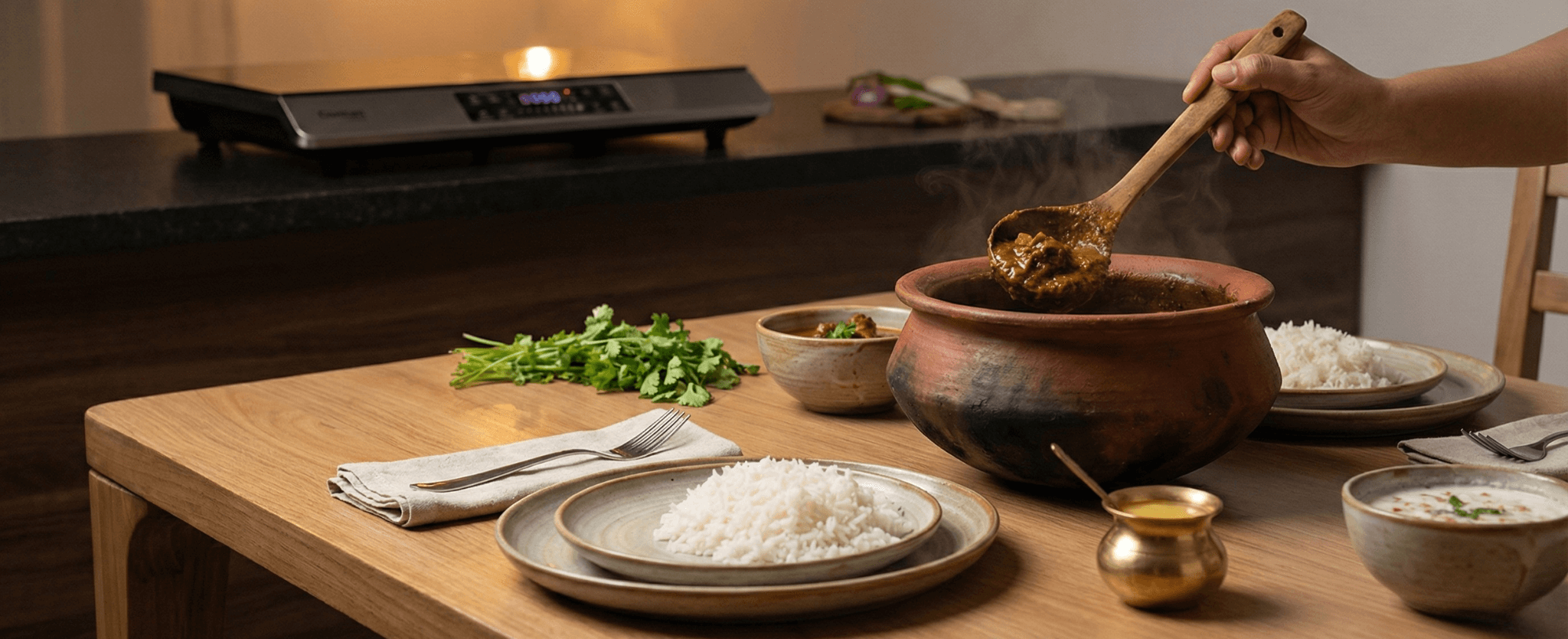
Try our clay serving pot which works beautifully for both cooking and serving traditional dishes.
Keeps Food Warmer Longer
Once clay heats up, it retains heat remarkably well.
Practical benefit: Food stays warm at the table for 30-45 minutes without additional heating.
No reheating: Reduces the need to reheat food multiple times, which can degrade nutritional value and flavor.
Traditional serving: In many Indian homes, food was traditionally served directly from the clay pot to retain warmth throughout the meal.
Our clay roti box with lid keeps rotis and parathas warm and soft throughout your meal.
Types of Clay Cookware Available
Not all clay cookware is the same. Here’s what’s available:
Unglazed Terracotta
Description: Pure, natural clay with no coating. Porous and breathable.
Best for: Traditional Indian cooking, slow cooking, biryani, dal
Benefits: Maximum health benefits, natural mineral transfer, authentic taste
Care needed: Requires seasoning and proper cleaning (no soap)
This is the most traditional and healthiest option. Our earthen clay cookware range includes various unglazed terracotta pieces.
Glazed Clay
Description: Clay with a glazed coating (usually lead-free ceramic glaze)
Best for: Easier maintenance, baking, roasting
Benefits: Easier to clean, less porous, still chemical-free
Note: Ensure glazes are food-safe and lead-free
Clay Curry Pots
Description: Small to medium pots specifically designed for curries and gravies
Best for: Rasam, sambhar, curries, gravy dishes
Benefits: Perfect size for daily cooking, excellent heat distribution
Care: Season before first use, gentle cleaning
Clay Serving Bowls
Description: Shallow bowls for serving rice, salads, snacks
Best for: Serving food at the table, keeping food warm
Benefits: Beautiful presentation, keeps food warm, alkaline properties
Check out our clay serving bowl sets perfect for traditional dining.
Miniature Clay Sets
Description: Small clay cookware sets for children or small-batch cooking
Best for: Kids’ play, teaching cooking, small portions
Benefits: Safe for children, eco-friendly toys, functional
Our medium kitchen set for kids introduces children to traditional cooking in a fun, safe way.
How to Use Clay Cookware: Complete Guide
Clay cookware requires different handling than metal pots. Here’s everything you need to know.
Before First Use: Seasoning Your Clay Pot
New clay pots must be seasoned before cooking. This crucial step:
- Seals minor pores
- Removes any dust or debris
- Strengthens the pot
- Improves cooking performance
Seasoning Steps:
- Soak completely: Submerge the entire pot (including lid) in water for 24 hours. Use rice water for enhanced seasoning.
- Dry thoroughly: Air dry completely in sunlight for 6-8 hours.
- Oil coating (optional): Rub the inside with sesame or groundnut oil. Some traditions skip this step.
- Heat gradually: Place on low heat for 10 minutes, gradually increase to medium. Let it cool naturally.
- Ready to use: Your pot is now seasoned and ready for cooking.
Cooking with Clay: Best Practices
Start with low heat: Always begin on low flame. Clay can crack if heated too quickly.
Gradual temperature increase: Increase heat slowly over 5-10 minutes.
Use a heat diffuser: For gas stoves, a heat diffuser prevents direct flame contact and distributes heat evenly.
Add liquid first: When cooking, add water or gravy before solid ingredients to prevent sticking.
Stir gently: Use wooden or silicone utensils. Metal can scratch the surface.
Low to medium heat only: Clay cooks efficiently at lower temperatures. High heat is unnecessary and can damage the pot.
Never put cold clay on hot stove: Let pots come to room temperature before heating.
Never put hot clay in cold water: Thermal shock will crack the pot. Let it cool naturally.
Cleaning Clay Cookware
Proper cleaning maintains your clay pots and keeps them safe.
Daily cleaning:
- Let pot cool completely
- Soak in warm water for 15-30 minutes
- Scrub with a soft brush or loofah
- Rinse thoroughly with clean water
- Air dry completely before storing
Important cleaning rules:
- No soap or detergent: Clay is porous and absorbs soap, which will flavor your next meal
- No dishwasher: The harsh detergent and high heat will damage clay
- No metal scrubbers: Will scratch the surface
- Complete drying essential: Moisture trapped in clay can cause mold
For stubborn stains or odors:
- Soak in baking soda solution (2 tablespoons per liter of water)
- Scrub with coarse salt
- Boil water with lemon juice inside the pot
- Sun dry after cleaning
Storage Tips
Completely dry: Ensure pots are bone-dry before storing to prevent mold.
Air circulation: Store in well-ventilated area, not in sealed cabinets.
Separate stacking: Place cloth or paper between stacked pots to prevent scratching.
Periodic airing: If not used regularly, take pots out monthly for sunning.
What to Cook in Clay Cookware
Almost anything can be cooked in clay, but some dishes are particularly well-suited.
Perfect Clay Pot Dishes
Biryani: The steam circulation creates perfectly cooked rice with authentic dum biryani texture. Food cooked in clay has a distinct flavor.
Dal and Lentils: Slow cooking makes dal incredibly creamy. Try cooking unpolished toor dal or green gram moong in clay pots.
Rice: Any rice variety cooked in clay tastes better. Try black rice, red rice, or traditional varieties in clay pots.
Rasam and Sambhar: The gentle simmering brings out authentic South Indian flavors.
Khichdi: Traditional comfort food tastes even better in clay.
Curries: Both vegetable and meat curries develop deeper flavors.
Payasam and Sweet Dishes: Clay enhances the taste of milk-based sweets.
Millets: Cook foxtail millet, barnyard millet, or little millet in clay for best results.
What to Avoid in Clay Pots
Deep frying: Clay isn’t suitable for deep frying at high temperatures.
Very acidic foods for extended periods: While some acidity is fine, very sour dishes stored long-term can erode clay.
Quick stir-fries: Clay’s slow heating makes it unsuitable for quick, high-heat stir-frying.
Common Concerns About Clay Cookware (Addressed)
“Clay pots break easily”
Reality: Quality clay pots are quite durable with proper care. The key is avoiding thermal shock (sudden temperature changes). Treat them gently, and they’ll last for years. Many families have clay pots passed down through generations.
“They’re too much work”
Reality: After seasoning, clay pots require no more work than other cookware. No soap cleaning is actually easier. The slower cooking is hands-off time where food cooks itself. Modern cooks find clay cookware simpler, not harder.
“Food will stick to the bottom”
Reality: Properly seasoned clay pots are naturally non-stick. Start with enough liquid, use low heat, and food won’t stick. The natural non-stick develops over time with use.
“They’re fragile and inconvenient”
Reality: Clay pots are stronger than you think. They can’t be dropped or banged around, but with normal careful handling, they’re perfectly practical for daily use.
“Can’t use them on modern stoves”
Reality: Clay works on gas, electric coil stoves, and even induction (with a diffuser plate). They’re compatible with modern kitchens.
“Food takes longer to cook”
Reality: Yes, clay cooking is slower, but it’s mostly hands-off time. You’re not standing over the pot stirring. The superior taste and health benefits make the extra time worthwhile.
Clay Cookware for Different Needs
For Health-Conscious Families
If you’re focused on eliminating toxins and maximizing nutrition, clay cookware is your best choice.
Priorities: Zero chemical leaching, mineral enrichment, alkaline cooking
Start with: One or two clay pots for daily dal and rice cooking
Pair with: Organic rice varieties, organic millets, and cold-pressed oils
For Digestive Issues
People with chronic acidity, GERD, IBS, or sensitive stomachs often benefit from clay cooking.
Why it helps: Alkaline cooking, gentle heat, no chemical irritants
Best dishes: Khichdi, plain dal, mild curries, boiled rice
Avoid: Very spicy or acidic foods until digestion improves
For Traditional Cooking Enthusiasts
If you want authentic taste and traditional methods, clay is essential.
Benefits: Authentic flavor, traditional cooking experience, connects you to culinary heritage
Start with: Traditional recipes like biryani, rasam, payasam
For Parents
Introducing children to healthy eating? Clay cookware helps.
Benefits: Safe for baby food, no chemicals, adds minerals
For kids: Miniature clay kitchen sets teach cooking in a fun, safe way
For Environmental Conscious
Clay cookware is the most eco-friendly option available.
Why it’s green:
- Made from natural, renewable clay
- No toxic manufacturing processes
- Biodegradable at end of life
- Supports traditional artisans
- Zero plastic or chemical components
Making the Transition to Clay
You don’t need to replace all your cookware overnight. Here’s a practical transition plan:
Month 1: Start with One Pot
Buy one medium-sized clay pot for daily dal or rice. Get comfortable with clay cooking.
What to learn:
- Seasoning process
- Heat management
- Cleaning routine
- Storage practices
Month 2-3: Expand Gradually
Add another pot or two for different purposes. Maybe a curry pot and a serving bowl.
What to cook:
- Experiment with different dishes
- Note which recipes work best
- Share meals with family to get feedback
Month 4-6: Primary Cookware
Make clay your go-to cookware for traditional Indian dishes. Keep metal pots only for specific uses (quick boiling, deep frying).
By now you’ve:
- Developed clay cooking skills
- Experienced health and taste benefits
- Established a cleaning routine
- Built confidence with clay
Long-term: Full Clay Kitchen
Some families eventually cook almost everything in clay. Others use a mix. Find what works for your lifestyle.
Where to Buy Quality Clay Cookware
Quality matters enormously with clay cookware. Here’s what to look for:
Quality Indicators
Pure clay: Should be 100% natural clay, no added chemicals or artificial colors
Unglazed or food-safe glaze: If glazed, ensure it’s lead-free and food-safe
Handmade: Traditionally crafted pots are often higher quality than mass-produced
Proper thickness: Not too thin (weak) or too thick (takes forever to heat)
Smooth interior: No rough spots or major pores that will cause sticking
Reputable source: Buy from established sellers who verify their clay source
At Ulamart, our clay cookware collection is made from 100% natural, pure clay with no harmful chemicals. Each piece is handcrafted by traditional artisans who’ve been making clay pots for generations.
What to Avoid
Very cheap clay: Often poor quality or chemically treated
Unknown source: Can’t verify if clay is food-safe
Glazed with unknown glaze: Some glazes contain lead or other toxins
Mass-produced imports: Quality control issues common
Decorative pottery sold as cookware: Not all clay items are food-safe
Final Thoughts: The Wisdom of Returning to Clay
There’s something profound about cooking in the same material humans have used for 10,000 years. Clay connects us to every generation of cooks who came before us.
But this isn’t just sentimental nostalgia. Clay cookware is making a comeback because it genuinely works better for health, taste, and sustainability. Modern materials promised progress, but they delivered hidden costs: chemicals in our food, depleted nutrition, and environmental damage.
Clay asks more of us. It requires care, patience, and a gentler approach to cooking. But in return, it gives us safer food, better flavor, improved nutrition, and connection to tradition.
Your great-grandmother didn’t need scientific studies to know clay pots were good. She had generations of healthy families as proof. Now we have both the traditional wisdom and the modern research confirming what she knew all along.
The oldest cookware turns out to be the best cookware. Sometimes progress means returning to what worked perfectly in the first place.
Ready to bring clay cookware into your kitchen? Explore our complete earthen clay cookware collection, handcrafted from 100% natural clay:
- Clay Serving Pots for traditional dining
- Clay Roti Box with Lid keeps bread warm
- Clay Kitchen Sets for Kids teach tradition
Pair your clay cookware with our traditional foods:
- Organic rice varieties for authentic taste
- Organic millets for health
- Cold-pressed oils for pure cooking
- Organic pulses for protein
Cook the way your ancestors did. Your body will thank you for it.
Care Tip: Remember to season your new clay pot before first use by soaking it in water for 24 hours, drying completely, and heating gradually. This ensures longevity and optimal cooking performance.