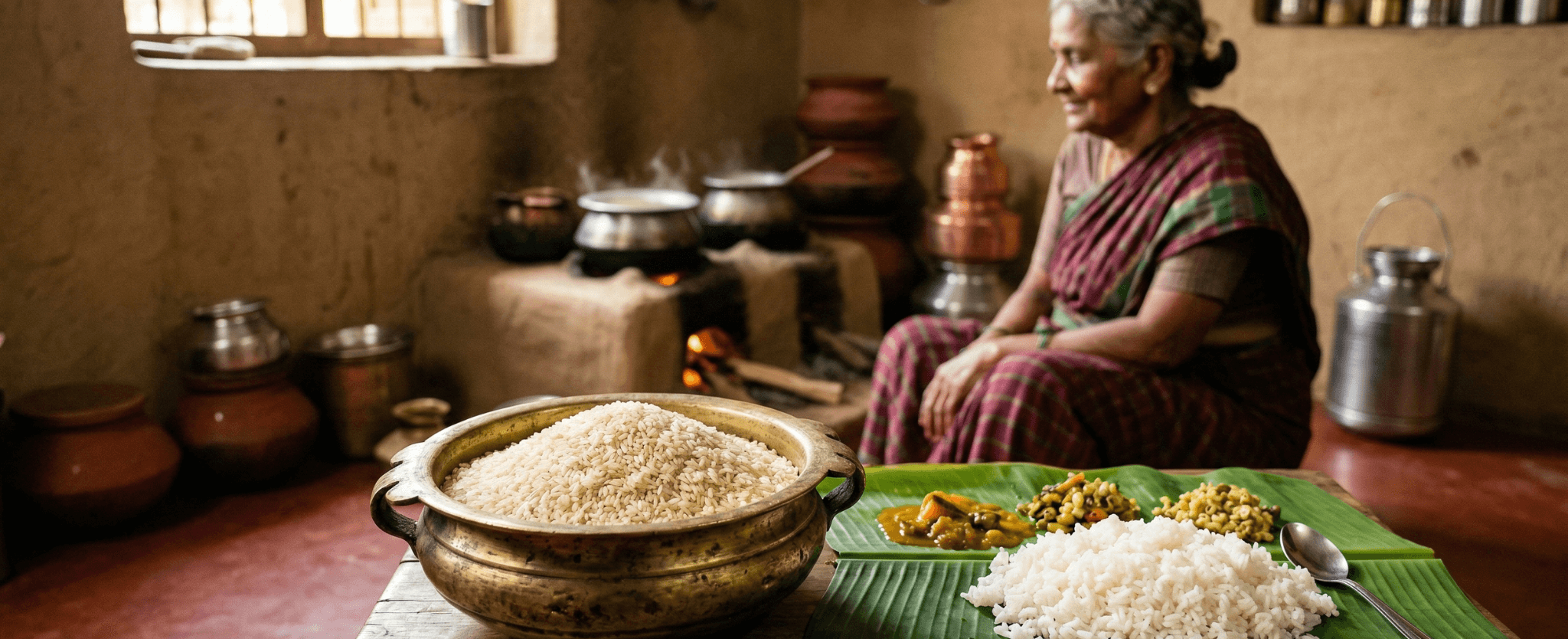
Before the beauty industry had bottles of serum and salon-grade hair masks, Indian women had rice water. The practice of saving the water from washed or cooked rice, sometimes letting it ferment for a day, and using it on hair and skin was not an exception in traditional households. It was simply what was done. In South India, the starchy water from cooked rice was a staple beauty ritual passed from grandmothers to daughters. In Japan’s Yao province, women attributed their famously long, strong hair to centuries of rice water washing. In Korea, court ladies used fermented rice water as a skin toner. Across East Asia and South Asia, rice water occupied the same quiet, essential place in the beauty routine that generations of women trusted without needing clinical trials to validate.
Today, rice water has moved from kitchen practice to global wellness trend, and dermatologists and trichologists are now looking closely at what makes it effective. The findings confirm what generations of women already knew through lived experience. Rice water contains a meaningful concentration of compounds that genuinely benefit both skin and hair, and the fermented form delivers those benefits in a more bioavailable and potent form.
This guide covers the science behind rice water’s effectiveness, the specific benefits for hair and skin, how the type of rice used matters, how to prepare both regular and fermented versions correctly, and why traditional Indian rice varieties produce rice water with an exceptionally rich nutritional profile.
What Is Rice Water and What Does It Actually Contain
Rice water is the starchy liquid that results from washing, soaking, or cooking rice. It appears milky white or slightly cloudy due to the starch, vitamins, minerals, and amino acids that leach from the outer bran layer and endosperm of the rice grain into the water during preparation.
The specific compounds present in rice water and their concentrations depend on the type of rice used, the preparation method, and whether fermentation is allowed. The key bioactive components identified in scientific analysis of rice water include:
Inositol
Inositol is a carbohydrate-like compound found in high concentrations in rice, particularly in the bran layer. It is the compound most directly linked to rice water’s hair benefits. Research has shown that inositol can penetrate damaged hair shafts, where it helps repair structural damage from the inside. Uniquely, inositol is retained in the hair even after rinsing, providing ongoing protection between applications. It reduces surface friction on the hair shaft, which translates to less breakage during detangling and brushing.
Amino Acids
Rice water contains free amino acids including cysteine, methionine, and tyrosine, which are the building blocks of keratin, the structural protein that makes up hair and the outer layers of skin. These amino acids support the repair of keratin structures in damaged hair and contribute to the skin’s natural moisturising factor (NMF), which maintains hydration in the stratum corneum.
Ferulic Acid
Ferulic acid is a phenolic antioxidant present in rice bran. It protects both the rice grain and, when applied topically, the skin from oxidative damage caused by UV radiation. Ferulic acid is a recognised ingredient in premium commercial antioxidant serums, where it is often combined with vitamins C and E. In rice water, it is present naturally alongside other rice-derived compounds that work synergistically with it.
Vitamins B1, B2, B3 and Vitamin E
The B-vitamins in rice water, particularly thiamine (B1), riboflavin (B2), and niacin (B3), support scalp circulation, cell turnover in the skin, and the metabolic processes that fuel hair follicle activity. Vitamin E functions as a fat-soluble antioxidant that protects hair follicle membranes and skin cells from free radical damage.
Starch and Pitera (in Fermented Rice Water)
The starch in rice water forms a light protective film on both hair and skin that helps retain moisture. When rice water is fermented, the fermentation process produces pitera, a compound rich in vitamins, minerals, amino acids, and organic acids including lactic acid and acetic acid. Pitera was famously identified by SK-II, a Japanese beauty brand, as the secret ingredient behind exceptional skin quality in sake brewery workers, whose hands aged far more slowly than the rest of their bodies. The fermented rice water used in traditional Indian and East Asian beauty practices is essentially a home-produced version of the same compound.
| Compound | Found In | Primary Benefit |
| Inositol | All rice water; higher in bran-rich rice | Hair shaft repair, reduced breakage |
| Ferulic acid | Rice bran; unpolished rice water | UV protection, antioxidant skin care |
| Amino acids (cysteine, methionine) | All rice water | Keratin repair, scalp and skin hydration |
| B-vitamins (B1, B2, B3) | All rice water | Scalp circulation, cell turnover |
| Pitera / lactic acid | Fermented rice water only | Skin brightening, mild exfoliation, hydration |
| Gamma-oryzanol | Unpolished rice water | Anti-inflammatory, scalp health |
Rice Water Benefits for Hair
Strengthening and Reducing Breakage
The most extensively researched and documented benefit of rice water for hair is its ability to reduce breakage. A study published in the International Journal of Cosmetic Science found that rice water treatment on damaged hair significantly improved its surface elasticity, the ability of the hair shaft to stretch under tension without snapping, which directly reduces breakage during combing and styling.
The mechanism involves inositol coating the damaged sections of the hair shaft where the cuticle has lifted or fractured. This external coating smooths the cuticle surface, reduces the friction between hair strands that causes mechanical damage, and provides a temporary structural repair that strengthens the hair against further breakage.
Promoting Hair Growth
Rice water’s B-vitamins, particularly niacin (B3), support healthy scalp circulation, ensuring that hair follicles receive adequate blood flow and the nutrients carried within it. Vitamin E reduces oxidative stress at the scalp level, which is linked to premature miniaturisation of follicles and hair thinning. The amino acids in rice water, particularly cysteine and methionine, support the synthesis of keratin, the protein that makes up 90 percent of the hair shaft, providing the raw material for healthy hair growth.
Traditional Indian practice of massaging fermented rice water into the scalp before washing, leaving it for 15 to 30 minutes, delivers all of these compounds directly to the scalp where they are needed. The lactic acid in fermented rice water also mildly exfoliates the scalp, removing product buildup and dead skin that can clog follicles and impede growth.
Detangling and Reducing Frizz
Rice water rinses have a notable detangling effect that many people experience as an immediate result. This arises from two mechanisms: inositol smoothing the hair cuticle to reduce surface roughness and friction, and the starch in rice water coating individual hair strands with a light film that helps them slide past each other rather than catching and matting. The effect is most pronounced on thick, coarse, or chemically treated hair where cuticle damage is most significant.
Shine and Lustre
A smooth, closed cuticle reflects light evenly, producing the appearance of shiny, healthy hair. A roughened, lifted cuticle scatters light in multiple directions, producing dull, frizzy-looking hair. By smoothing the cuticle surface, rice water rinses produce measurably improved hair lustre. This is why traditionally rice water rinses were applied as a final step after washing, leaving the hair with visibly improved shine without the heaviness of oil application.
Scalp Health
Fermented rice water has mild antifungal properties that can help manage dandruff caused by Malassezia yeast overgrowth on the scalp. The lactic acid’s mild exfoliating action removes the flaky skin buildup associated with dandruff, while the anti-inflammatory gamma-oryzanol from unpolished rice water reduces scalp redness and irritation. For people with dry, sensitive, or dandruff-prone scalps, regular fermented rice water treatment can meaningfully improve scalp condition over four to eight weeks of consistent use.
Rice Water Benefits for Skin
Brightening and Even Skin Tone
Ferulic acid in rice water is a melanin synthesis inhibitor, meaning it can reduce the overproduction of melanin that causes hyperpigmentation, dark spots, and uneven skin tone. This mechanism explains the traditional use of rice water as a skin brightener across Asia and South India. The effect is subtle and cumulative rather than dramatic and immediate, requiring consistent use over several weeks.
Fermented rice water additionally contains kojic acid, a byproduct of rice fermentation that is a well-established depigmenting agent used in commercial skin-brightening products. The combination of ferulic acid, kojic acid from fermentation, and vitamin E creates a multi-mechanism brightening action that traditional rice water possesses naturally.
Anti-Ageing and Antioxidant Protection
The antioxidant combination in rice water, ferulic acid, vitamin E, and gamma-oryzanol, provides meaningful protection against photoageing. UV radiation generates reactive oxygen species that damage collagen fibres, cross-link proteins, and accelerate the visible signs of ageing. Ferulic acid neutralises these free radicals at the skin surface and in the deeper epidermis. Used consistently as a toner or serum replacement, fermented rice water can help reduce fine lines, maintain skin elasticity, and protect against cumulative UV damage.
Soothing Inflamed and Irritated Skin
Rice water has been used topically for eczema, sunburn, and general skin irritation in traditional medicine across South Asia and East Asia for centuries. The anti-inflammatory properties of gamma-oryzanol and the skin barrier-supporting effect of the amino acids and starch fraction provide a gentle soothing action that reduces redness and calms reactive skin. Research on rice starch baths for atopic dermatitis (eczema) has shown statistically significant improvements in skin barrier function, itch, and redness compared to plain water baths in paediatric patients.
Hydration and Skin Barrier Support
The starch and amino acid content of rice water supports the skin’s natural moisturising factor (NMF), the mixture of compounds in the outermost skin layer that maintains hydration. The starch forms a light humectant film that draws moisture from the air and holds it against the skin. The amino acids contribute directly to NMF components. Used as a daily toner on clean skin before moisturiser, rice water helps the skin retain moisture throughout the day, a benefit particularly notable in dry or dehydrated skin types.
Minimising Pore Appearance
Rice water has mild astringent properties from its tannin content. Tannins temporarily tighten the skin surface, reducing the appearance of enlarged pores. This effect is more pronounced with fermented rice water, where the organic acids from fermentation contribute additional mild astringency. The pore-minimising effect is temporary rather than permanent, lasting several hours after application, but consistent use supports overall skin texture improvement that can make pores appear smaller over time.
| Skin Benefit | Active Compound | Best Application |
| Brightening / even tone | Ferulic acid, kojic acid (fermented) | Daily toner on clean face |
| Anti-ageing | Ferulic acid, vitamin E, gamma-oryzanol | Toner or serum before moisturiser |
| Soothing irritation | Gamma-oryzanol, starch, amino acids | Cool compress or bath soak |
| Hydration | Starch, amino acids, B-vitamins | Mist spray or toner |
| Pore minimising | Tannins, organic acids (fermented) | Toner, particularly fermented version |
Why the Type of Rice Matters for Rice Water Quality
Not all rice produces the same quality of rice water. The nutritional content of rice water is directly determined by the nutritional profile of the rice grain itself, which varies considerably between varieties, processing levels, and growing methods.
Unpolished vs Polished Rice
The single most important variable in rice water quality is whether the rice is unpolished (whole grain, with bran intact) or polished (white rice, with bran removed). The bran layer of rice contains the majority of the grain’s vitamins, minerals, antioxidants, and bioactive compounds including ferulic acid, gamma-oryzanol, and a significant portion of the B-vitamins. When rice is polished to white, most of these compounds are removed along with the bran.
Rice water made from unpolished traditional rice varieties therefore contains substantially higher concentrations of ferulic acid, gamma-oryzanol, vitamin E, and B-vitamins than rice water made from polished white rice. For beauty applications, particularly skin care, unpolished traditional rice varieties produce measurably superior rice water.
Mappillai Samba Rice: The Anthocyanin Advantage
Mappillai Samba, the deep red traditional rice variety from Tamil Nadu known as the Bridegroom’s Rice, produces rice water with an exceptional nutritional profile. Its red-purple colour comes from anthocyanins, the same class of antioxidants found in blueberries and red grapes. When Mappillai Samba is washed or soaked, these anthocyanins leach into the water alongside ferulic acid, gamma-oryzanol, iron, and zinc. The resulting rice water has a noticeably stronger antioxidant activity than water from white rice, making it particularly effective for anti-ageing skin care and scalp antioxidant protection. Shop organic Mappillai Samba rice at Ulamart, grown organically and free from synthetic inputs. Read more about the full health benefits of Mappillai Samba rice on the Ulamart blog.
Karuppu Kavuni (Black Rice): Maximum Antioxidant Rice Water
Karuppu Kavuni, the black rice traditionally grown in Tamil Nadu and historically called Forbidden Rice or Emperor’s Rice, contains the highest anthocyanin concentration of any commonly available rice variety. Its rice water is distinctly dark purple and carries a correspondingly high antioxidant load. For skin care applications, particularly targeting hyperpigmentation and photoageing, Karuppu Kavuni rice water represents the most antioxidant-rich form of traditional rice water available. Ulamart carries organic Karuppu Kavuni (black rice) sourced from traditional Tamil Nadu farms.
Poongar Rice: The Women’s Rice and Its Skin Benefits
Poongar rice, traditionally called the Women’s Rice in Tamil Nadu for its benefits in supporting female hormonal health, produces rice water rich in vitamin B1 and iron. Poongar rice water has traditionally been used in postpartum care routines for skin recovery and scalp strengthening, where the iron content supports healthy follicle function. Read more about the traditional varieties including Poongar in Ulamart’s complete guide to Tamil Nadu rice varieties.
| Rice Variety | Rice Water Strength | Best Beauty Use |
| Mappillai Samba (red) | Anthocyanins, ferulic acid, iron, zinc | Anti-ageing skin, hair strengthening |
| Karuppu Kavuni (black) | Highest anthocyanin of any rice variety | Dark spot reduction, antioxidant toner |
| Poongar (golden red) | Vitamin B1, iron, hormonal compounds | Scalp health, postpartum hair care |
| Navara (golden, Kerala) | Ferulic acid, Ayurvedic skin compounds | Sensitive skin soothing, anti-inflammatory |
| Common white rice (polished) | Inositol, starch, basic amino acids | Basic hair detangling, light skin hydration |
How to Prepare Rice Water: Three Methods
Method 1: Soaking (Quick Method, 30 Minutes to 2 Hours)
Soaking produces the mildest rice water with good inositol and amino acid content. It is the simplest preparation and sufficient for basic hair rinsing and light skin toning.
- Measure half a cup of unpolished traditional rice (Mappillai Samba, Poongar, or any unpolished variety)
- Rinse once briefly with clean water to remove surface dust
- Place in a clean bowl and add two to three cups of clean water
- Stir for one to two minutes and allow to soak for 30 minutes to 2 hours
- Strain the water into a clean glass jar or bottle, discarding the rice or saving it for cooking
- Use immediately or refrigerate for up to 3 days
Method 2: Boiling (Concentrated Method)
Boiling extracts a higher concentration of compounds from the rice grain but destroys some of the heat-sensitive vitamins. It produces a more concentrated and starchy water suitable for hair masking and body skin applications.
- Cook half a cup of unpolished rice in two to three cups of water (more water than you would normally use for cooking)
- Strain the cooked rice from the water once the rice is soft
- Allow the water to cool completely before use
- Dilute with an equal volume of clean water before applying to skin or hair, as the concentrated form can be too starchy for fine hair or oily skin
- Use within 3 days, stored refrigerated
Method 3: Fermentation (Most Potent for Skin Care)
Fermented rice water is the form with the longest traditional use in East Asian beauty culture and the most documented skin benefits. The fermentation process produces pitera, lactic acid, kojic acid, and other organic acids that provide brightening, exfoliating, and antioxidant benefits beyond what soaked or boiled rice water contains.
- Prepare soaked rice water using Method 1
- Leave the strained rice water at room temperature in a loosely covered glass jar for 24 to 48 hours. In warmer climates (above 28 degrees Celsius), 12 to 24 hours is sufficient. In cooler conditions, up to 48 hours may be needed
- The water is ready when it smells slightly sour, similar to buttermilk or mild yoghurt. A pleasant mild sourness indicates successful lactic acid fermentation. A strongly unpleasant smell indicates the water has gone off and should be discarded
- Before use, dilute one part fermented rice water with one to two parts clean water. Fermented rice water is acidic and should always be diluted for facial use to avoid irritation
- Apply as a facial toner, leave on for five to ten minutes, and rinse or allow to absorb. For hair, apply to scalp and lengths, leave for 15 to 30 minutes, then rinse
- Store diluted preparations in the refrigerator for up to one week. Fresh batches are preferable for skin applications
How to Use Rice Water: Application Guides
For Hair: The Traditional Rinse Method
- Shampoo hair as usual and rinse out the shampoo completely
- Pour rice water (soaked or fermented, diluted) slowly over the scalp and hair lengths
- Gently massage the scalp for two to three minutes to ensure contact with the follicles
- Leave on for 15 to 30 minutes. For a deeper treatment, cover with a warm towel
- Rinse out thoroughly with cool or lukewarm water. Cool water helps close the hair cuticle, maximising the shine benefit
- Follow with a light conditioner on the mid-lengths and ends if hair tends to feel dry after rinsing
- Frequency: Two to three times per week for visible results. Once weekly for maintenance after initial improvement is achieved
For Scalp: The Pre-Wash Scalp Treatment
- Apply undiluted soaked rice water (or diluted fermented version) directly to the scalp using a dropper bottle or cotton pad
- Section hair into four parts and apply systematically across the entire scalp
- Massage gently for five minutes to stimulate circulation
- Leave for 20 to 30 minutes then proceed to shampooing
- Use consistently twice weekly for scalp health and hair growth support
For Face: Daily Toner
- After cleansing, soak a cotton pad with diluted fermented or soaked rice water
- Sweep across the face and neck, avoiding the eye area
- Allow to absorb for three to five minutes before applying serum or moisturiser
- Use morning and evening as a step in your skincare routine
- For hyperpigmentation: apply a slightly more concentrated version (1 part fermented rice water to 1 part water) to dark spots as a targeted treatment after the toner step
For Body: Bath Soak
Adding two to three cups of rice water to a lukewarm bath provides the skin-soothing, hydrating, and mildly exfoliating benefits of rice water to the entire body at once. This is the application recommended in Japanese and Korean skin care traditions for overall skin softness and tone. It is particularly useful for people with body eczema, dry skin conditions, or sun-damaged skin.
Fermented Rice Kanji: The Drink That Doubles as Beauty Treatment
In South Indian tradition, the line between food and beauty was deliberately blurred. Pazhaiya sadam, the fermented leftover rice in its soaking water (called pazhaya kanji or neeragaram), was consumed as a morning meal for centuries. The same fermented rice water that sustained agricultural communities through hard summer mornings was also applied to hair and skin by women who understood intuitively that what nourished the body from within also protected and repaired from without.
Fermented rice kanji prepared from traditional rice varieties like Mappillai Samba or Poongar delivers B-vitamins, probiotics from lactic acid bacteria, resistant starch, and the same ferulic acid and anthocyanin compounds that benefit skin and hair when applied topically, but through the more efficient route of systemic circulation when consumed. The traditional practice of daily fermented rice kanji consumption is one of the oldest inside-out beauty strategies in Indian food culture.
Explore Ulamart’s full range of traditional rice varieties including Mappillai Samba and other heirloom varieties that produce the richest rice water for both consumption and topical use. For a comprehensive overview of the health and beauty properties of different traditional rice types, see Ulamart’s complete guide to traditional rice varieties.
Who Benefits Most from Rice Water
Hair Types That Respond Best
- Thick, coarse, or high-porosity hair: Benefits most dramatically from rice water’s cuticle-smoothing and moisture-sealing inositol action
- Chemically treated or heat-damaged hair: The keratin-supporting amino acids and inositol provide structural repair to hair compromised by chemical relaxers, colouring, or repeated heat styling
- Hair prone to breakage and shedding: The elasticity improvement from regular rice water treatment directly reduces mechanical breakage
- Dandruff-prone scalps: Fermented rice water’s antifungal and mild exfoliating action addresses the Malassezia overgrowth and flaky buildup associated with dandruff
Skin Types and Conditions That Respond Well
- Dull, uneven skin tone: Regular use of fermented rice water as a toner produces gradual brightening and improvement in skin tone evenness over four to eight weeks
- Oily and combination skin: Rice water’s mild astringency and non-comedogenic nature make it suitable for oily skin without triggering breakouts
- Sensitive and reactive skin: The soothing gamma-oryzanol and amino acid content makes rice water one of the gentler options for calming inflamed or reactive skin
- Ageing or sun-damaged skin: Ferulic acid and vitamin E provide antioxidant protection and support for collagen-maintaining skin processes
Precautions
- Protein-sensitive hair: Some people with fine hair or hair that is already over-protein-treated may find that rice water makes hair feel stiff or brittle. Start with once weekly application and dilute well to assess tolerance
- Fermented rice water and sensitive skin: Always dilute fermented rice water before applying to the face. A patch test on the inner arm before first facial use is advisable
- Duration of soaking and fermentation: Water left to ferment too long (beyond 48 hours in warm weather) can develop unfriendly bacterial populations. If the smell is unpleasant rather than mildly sour, discard and start fresh
What Research Confirms
A study published in the International Journal of Cosmetic Science by P. Putri and colleagues examined the effect of rice water on hair surface properties and found statistically significant improvements in hair elasticity, surface smoothness, and friction coefficient in rice water treated samples compared to untreated controls. The study identified inositol as the primary active compound responsible for these improvements and confirmed that inositol remains on the hair shaft even after rinsing, suggesting an ongoing rather than temporary benefit.
The traditional Yao women of Huangluo village in China, who maintain hair lengths of up to two metres that remains predominantly black well into their sixties and seventies, have been studied by researchers from the China National Silk Museum and cultural anthropologists interested in their rice water hair care practices. Analyses of their practice confirmed that the fermented rice water used has a pH between 4 and 5, which is close to the natural pH of hair, and contains measurable concentrations of amino acids, B-vitamins, and inositol consistent with the compounds identified in cosmetic research.
The Secret That Was Never Really Hidden
Rice water works. Not as a trend, not as a social media discovery, but as a practice that has been maintained across generations in cultures that had no incentive to continue it except that it genuinely produced results. The women of Huangluo, the sake brewery workers in Japan, the South Indian grandmothers who saved the kanji water, the Korean court ladies who used it as a skin toner: they were all observing the same underlying biochemistry without the vocabulary for it.
The vocabulary is now available. Inositol repairs damaged hair cuticles. Ferulic acid protects against UV oxidative damage. Fermentation produces lactic acid and kojic acid that brighten and exfoliate. Anthocyanins in traditional red and black rice varieties elevate the antioxidant profile of the water dramatically above what white rice produces.
The practice is simpler than any commercial product routine. Soak your rice, let the water sit, apply it. The only meaningful upgrade you can make to this ancient practice is to choose the rice well, because the quality of the rice water is determined entirely by the quality and variety of rice you start with.
Ulamart’s range of traditionally grown, organically produced rice varieties including Mappillai Samba and
organic Karuppu Kavuni (black rice) gives you the raw material for rice water that goes significantly beyond what any commercial white rice can produce. Every time you cook these traditional varieties, the water you save is not kitchen waste. It is one of the oldest functional beauty preparations in Indian history.
Note: The information in this article is for general educational purposes. Individual skin and hair responses vary. If you have a diagnosed skin condition such as eczema or psoriasis, consult a dermatologist before introducing new topical preparations. Fermented preparations should always be patch-tested before widespread facial use.