The weeks following childbirth are unlike any other phase in a woman’s life. The body has just completed one of its most demanding physical events, and what a new mother eats in the days and months that follow directly shapes how well she recovers, how much milk she produces, and how quickly her strength returns. Indian families have always understood this. That is precisely why the postpartum period in traditional homes comes with its own cuisine, its own schedule of foods, and its own wisdom passed down through generations of mothers and grandmothers.
Modern medicine increasingly validates what Ayurveda and regional Indian food traditions have said for centuries: the postpartum body needs warmth, easy digestibility, high nutrition density, and specific foods that support lactation. This guide brings together that traditional knowledge with a clear, practical understanding of the nutritional science behind each food, so new mothers and their families can make informed, grounded choices during this critical phase.
Why Postpartum Nutrition Is Different from Regular Eating
After delivery, the body is in a state of recovery on multiple fronts simultaneously. Blood loss during delivery depletes iron stores. The hormonal shift from pregnancy to lactation creates high demands for calcium, iodine, and B vitamins. The digestive system, which has been compressed and displaced throughout pregnancy, needs time and appropriate food choices to return to full function. And milk production, if a mother is breastfeeding, adds a sustained caloric and nutrient demand that can reach an additional 400 to 500 calories per day.
Traditional Indian postpartum diets address all of these requirements with a dietary approach that is warming, easily digestible, nutrient-dense, and lactation-supportive. The emphasis on specific grains, warming spices, fats from ghee, and iron-rich traditional sweeteners reflects a deeply practical understanding of what the recovering body needs, even if those preparing the food never described it in those terms.
Traditional postpartum diets across Tamil Nadu, Kerala, Karnataka, and Andhra Pradesh share a common nutritional logic regardless of regional variation: warm, well-spiced, fat-inclusive, and built around whole grains. The differences are in ingredient and preparation, not in principle.
The Key Nutritional Priorities in the First 90 Days
Understanding what the postpartum body needs most makes it easier to see why traditional foods work. The first three months after delivery can be broadly organised around five nutritional priorities:
- Iron replenishment: Delivery, particularly if there was significant blood loss, depletes iron. Fatigue, poor concentration, and slow recovery are common symptoms of postpartum iron insufficiency. Foods rich in haem and non-haem iron are essential.
- Calcium and bone support: Lactation draws heavily on the mother’s calcium reserves. If dietary calcium is insufficient, the body draws it from bone tissue. This makes calcium-rich foods a non-negotiable priority for breastfeeding mothers.
- Galactagogue foods: These are foods that support or stimulate milk production. Several traditional postpartum foods are well-documented galactagogues, including fenugreek, garlic, and certain millets.
- Digestive ease: The postpartum digestive system is often sluggish and sensitive. Easily digestible, well-cooked, warm foods prevent gas, constipation, and discomfort during recovery.
- Energy for healing and milk production: Adequate calories, particularly from healthy fats and complex carbohydrates, are essential for tissue repair and sustained lactation.
Traditional Grains That Support Postpartum Recovery
Poongar Rice: The Rice Grown for New Mothers
Poongar is a traditional Tamil Nadu heritage rice variety that has been specifically associated with postpartum nutrition for generations. It is a deep red-brown rice with a naturally sweet, mildly nutty flavour and a nutritional profile that makes it particularly suited to the postpartum period. It is rich in anthocyanins (the same antioxidants found in red and purple fruits), contains higher levels of iron and fibre than standard white rice, and has a moderate glycaemic index that provides sustained energy without blood sugar spikes.
In traditional South Indian postpartum care, Poongar rice is cooked in ghee as a kanji (rice porridge) or as a soft-cooked rice and served warm with mild, easily digestible accompaniments. The combination of its iron content, caloric density, and ease of digestion makes it an ideal staple grain for the early postpartum weeks when the appetite may be low but nutritional needs are high. Poongar rice is available in Ulamart’s heritage rice collection.
Ragi (Finger Millet): Calcium in Every Grain
Ragi is one of the most calcium-rich plant foods available in the Indian diet, containing approximately 344 mg of calcium per 100 grams, which is significantly more than milk per gram. For a breastfeeding mother whose calcium reserves are being drawn upon daily for milk production, regular ragi consumption is one of the most effective dietary interventions possible. Beyond calcium, ragi provides iron, B vitamins, and a substantial amount of dietary fibre that supports the digestive regularity that new mothers often struggle with.
Traditional preparations include ragi kanji cooked with jaggery and milk, ragi mudde (steamed balls served with sambar), and ragi dosa. All of these are gentle on the digestive system while being nutritionally dense. Ulamart’s ragi finger millet is unprocessed and retains the full nutrient profile that makes it so valuable during this phase.
Foxtail Millet (Thinai): Gentle Energy and Iron
Foxtail millet is one of the most digestible of all millets, making it well suited to the early postpartum weeks when digestion is still recovering. It provides iron, B vitamins, and a sustained-release carbohydrate that supports energy levels without the heaviness that refined grains can cause. Thinai has long been used in Tamil Nadu postpartum cooking as a porridge base, often cooked with ghee and mild spices. It pairs particularly well with coconut milk for added fat and calories during the lactation period.
The full millets range at Ulamart includes foxtail millet, little millet, and other varieties that are appropriate for postpartum cooking.
Postpartum Grains at a Glance
| Grain | Key Postpartum Benefit | Best Preparation |
|---|---|---|
| Poongar Rice | Iron, anthocyanins, sustained energy | Soft kanji with ghee and palm jaggery |
| Ragi (Finger Millet) | Highest calcium content, iron, fibre | Ragi kanji with jaggery, ragi dosa |
| Foxtail Millet | Digestibility, iron, B vitamins | Millet porridge with coconut milk |
| Little Millet | Light, easy digestion, trace minerals | Pongal with ghee and pepper |
| Pearl Millet (Kambu) | High iron and zinc, warming energy | Kambu koozh, roti with ghee |
Traditional Postpartum Foods Beyond Grains
Dry Ginger (Sukku) and Warming Spices
Dry ginger, known as sukku in Tamil, is the cornerstone of South Indian postpartum cooking. It has a warming, digestive action that directly counteracts the Vata imbalance that Ayurveda identifies as the primary postpartum condition. After delivery, the body is considered cold and depleted, and warming foods are prescribed to restore internal heat, stimulate digestion, and improve circulation. Sukku milk (dry ginger boiled in milk with jaggery and a pinch of turmeric) is one of the most widely consumed traditional postpartum drinks and is genuinely effective at reducing postpartum gas and bloating while supporting milk flow.
Other warming spices that feature prominently in postpartum cooking include fenugreek seeds (a well-documented galactagogue), turmeric (anti-inflammatory and antimicrobial), black pepper (aids absorption of nutrients from other foods), and garlic (supports lactation and immunity). These are not used in isolation but woven into every meal through spiced dals, kanji, and warm drinks.
Ghee: The Non-Negotiable Postpartum Fat
Ghee is treated almost medicinally in traditional postpartum care. It is added to every grain dish, used to cook all vegetables and dals, and consumed in small amounts throughout the day. The reasoning in traditional practice is that ghee lubricates the body internally, reduces Vata, and supports tissue healing. The nutritional reasoning supports this: ghee is a rich source of fat-soluble vitamins A, D, E, and K, which are essential for tissue repair and immune function. It also contains butyric acid, a short-chain fatty acid that has documented gut-healing properties and supports the intestinal lining.
For a new mother whose digestive system is recovering and whose fat-soluble vitamin needs are elevated, ghee in food is one of the most efficient nutritional additions possible. The traditional instruction to eat generously cooked with ghee in the first 40 days is not excess but an intuitively accurate prescription.
Palm Jaggery and Dates: Iron Without the Side Effects
Iron supplementation is often prescribed postpartum, but many women experience constipation and digestive discomfort from pharmaceutical iron tablets. Palm jaggery (karupatti) and dates are traditional sources of dietary iron that the gut tolerates well and absorbs reliably. Palm jaggery in particular has a significantly higher mineral content than cane jaggery, including iron, calcium, potassium, and magnesium. It is used to sweeten porridges, lactation ladoos, and warm milk drinks throughout the postpartum period.
Dates are dense in iron, natural sugars for quick energy, and fibre for digestive regularity. A small handful of dates with a glass of warm milk is a traditional mid-morning postpartum snack that addresses iron, calcium, energy, and digestive needs simultaneously.
Sesame Seeds (Ellu): Calcium in a Tiny Package
Black sesame seeds are one of the richest plant-based sources of calcium available in any Indian kitchen. They are higher in calcium than ragi when compared gram for gram, and they also provide iron, magnesium, zinc, and healthy fats. In South Indian postpartum tradition, black sesame ladoos made with palm jaggery and dry ginger are a standard postpartum sweet, eaten daily to support bone health, provide warming energy, and promote lactation. The fat content of sesame also supports the fat-soluble vitamin absorption that is critical during recovery.
Dry Fruits and Nuts
Almonds, cashews, and dry coconut are standard inclusions in South Indian postpartum cooking, added to porridges, ground into halwa, or eaten as snacks. Almonds are particularly valued for their calcium, vitamin E, and healthy fat content. Cashews provide zinc and magnesium. Dry coconut contributes medium-chain fatty acids that support energy metabolism and are present in breast milk. These foods also support satiety, which matters for a new mother who may find it difficult to eat large meals but needs high caloric density in smaller portions.
Key Postpartum Foods and Their Nutritional Role
| Food | Primary Benefit | Traditional Form |
|---|---|---|
| Palm Jaggery (Karupatti) | Iron, calcium, mineral-rich sweetener | In porridge, warm milk, ladoos |
| Black Sesame (Ellu) | Calcium, iron, healthy fats | Sesame ladoo, ellu sadham |
| Dry Ginger (Sukku) | Digestion, warming, gas relief | Sukku milk, spiced kanji |
| Fenugreek Seeds | Galactagogue, iron, blood sugar balance | In dal, fenugreek milk, laddoo |
| Dates | Iron, quick energy, digestive fibre | Raw snack, added to porridge |
| Ghee | Fat-soluble vitamins, gut healing, energy | Cooked into every grain dish |
| Garlic | Lactation support, immunity, anti-microbial | Garlic-infused ghee, dal tadka |
The Role of Poongar Rice in Lactation
Among all traditional postpartum grains, Poongar rice holds a special place in Tamil Nadu’s maternal care tradition. It is commonly referred to as the rice of new mothers, and families who still follow traditional postpartum practices specifically source Poongar for the first 40 days after delivery. Its practical benefits align closely with the nutritional demands of this period:
- The anthocyanins in Poongar rice are potent antioxidants that support tissue repair and reduce oxidative stress, both of which are elevated after delivery.
- Its iron content directly addresses postpartum iron loss without the digestive side effects of supplements.
- Being a medium glycaemic index grain, it sustains energy levels across the day rather than causing the spikes and crashes that refined white rice produces.
- It is easily cooked to a soft, digestible consistency that suits the postpartum digestive system, which typically functions better with soft, well-cooked foods in the early weeks.
- Its slightly sweet, nutty flavour is appetite-friendly for new mothers who often experience reduced appetite in the immediate postpartum period.
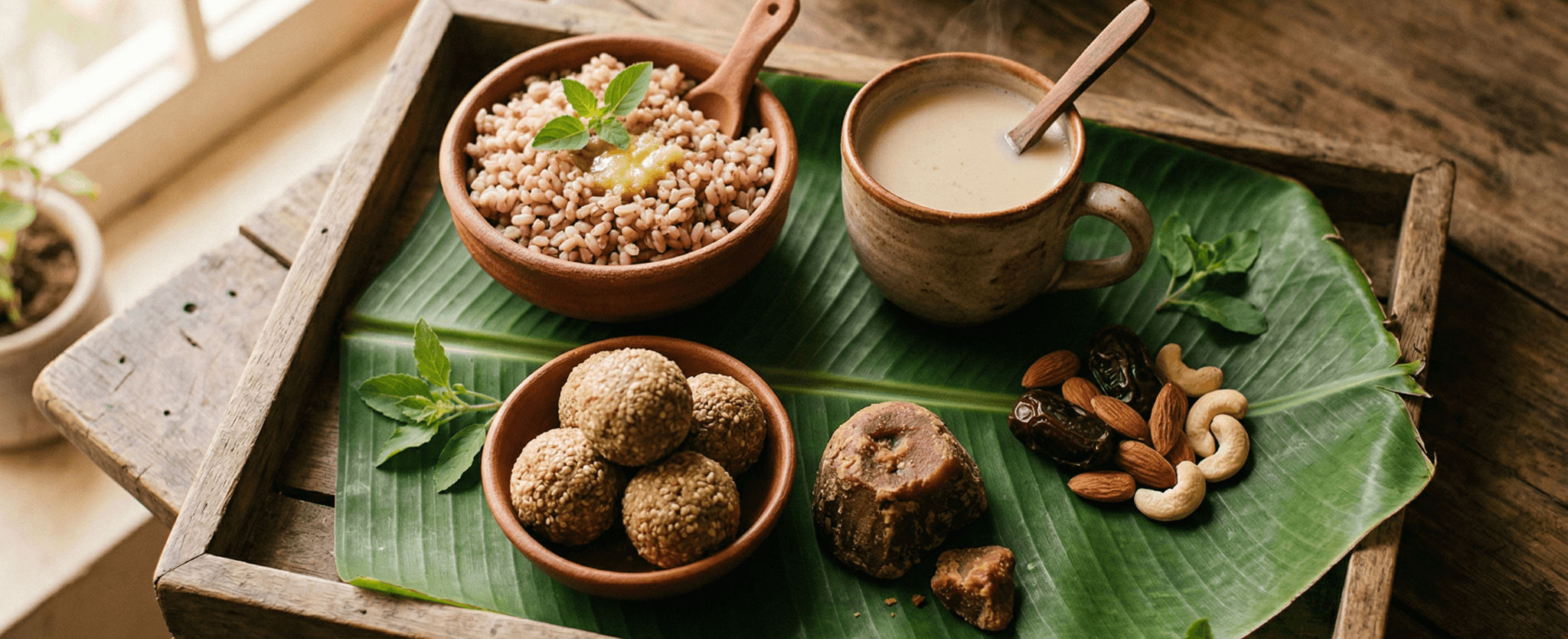
A simple Poongar rice kanji cooked with ghee, palm jaggery, dry ginger, and a handful of cashews covers iron, carbohydrate energy, warming digestive support, and caloric density in a single bowl, which is the kind of nutritional efficiency that makes traditional postpartum food so enduring.
The 40-day postpartum period recognised across South Indian traditions is not arbitrary. It broadly corresponds to the period during which uterine involution (the return of the uterus to its pre-pregnancy size), wound healing, and hormonal stabilisation are most active. The dietary prescriptions of this period are calibrated to support exactly these processes.
A Sample Week of Postpartum Meals
Applying traditional postpartum nutrition practically does not require complicated preparation. Here is a simple framework for a week of meals that covers the key nutritional priorities:
| Meal | Food | Nutritional Purpose |
|---|---|---|
| Early Morning | Warm sukku milk with palm jaggery | Warmth, digestion, iron, calcium |
| Breakfast | Ragi kanji with ghee and dates | Calcium, iron, easy digestion, energy |
| Mid-Morning | Small handful of almonds and 3 to 4 dates | Iron, calcium, healthy fats, satiety |
| Lunch | Poongar rice kanji with ghee, dal with fenugreek tadka | Iron, protein, lactation support, carbohydrate energy |
| Afternoon | Sesame ladoo or dry fruit halwa | Iron, calcium, energy, warming |
| Dinner | Foxtail millet pongal with ghee and black pepper | Digestible carbohydrate, minerals, warmth |
| Before Bed | Warm turmeric milk with ghee | Anti-inflammatory, calcium, sleep support |
What to Avoid in the Postpartum Diet
Traditional postpartum diets are as clear about what not to eat as about what to eat. The foods that are typically restricted or minimised in the first 40 to 90 days follow a consistent logic: avoid anything cold, raw, gas-producing, or digestively demanding.
- Cold foods and drinks: Cold water, refrigerated food, and chilled beverages are avoided in favour of warm or room-temperature options. Cold is considered to slow down the internal warmth needed for healing.
- Raw vegetables and salads: Raw food requires more digestive effort and can produce gas in a gut that is still recovering. Vegetables are cooked well and always spiced with digestive herbs.
- Gas-producing foods: Cabbage, cauliflower, and excessive amounts of certain legumes are reduced in the early weeks to prevent the bloating and colic that can pass through breast milk to the infant.
- Highly processed or packaged food: These lack the warmth, digestibility, and nutrient density that postpartum recovery demands, and often contain additives that are not appropriate during lactation.
- Excessive caffeine: Caffeine passes into breast milk and can cause irritability and disrupted sleep in newborns. Strong tea and coffee are reduced, replaced by warm herbal drinks such as cumin water, fennel tea, or sukku milk.
Nutrients That Breastfeeding Mothers Specifically Need
Lactation increases nutrient requirements beyond even those of pregnancy for certain key nutrients. Understanding these helps in choosing foods that address the specific demands of milk production:
| Nutrient | Why It Matters During Lactation | Best Traditional Sources |
|---|---|---|
| Calcium | Milk production draws on maternal bone reserves | Ragi, sesame, almonds, dry fish (if non-veg) |
| Iron | Delivery blood loss, energy, cognitive function | Poongar rice, dates, palm jaggery, fenugreek |
| Iodine | Essential for infant brain development via breast milk | Iodised salt, seafood, dairy |
| Vitamin D | Calcium absorption, immunity, infant bone health | Sunlight, fortified dairy, ghee |
| Omega-3 Fatty Acids | Infant brain development, maternal mood regulation | Walnuts, flaxseed, fatty fish |
| B12 | Nerve function, energy, infant neurological development | Dairy, eggs, meat (plant sources are minimal) |
For vegetarian and vegan mothers, the combination of Poongar rice with ragi, black sesame, dates, and palm jaggery covers iron, calcium, and energy comprehensively. B12 remains a gap in fully plant-based diets and may require supplementation in consultation with a physician.
Where to Source These Ingredients
The challenge with traditional postpartum nutrition today is that several of the key ingredients, particularly heritage rice varieties like Poongar, unprocessed millets, and authentic palm jaggery, are not reliably available in standard supermarkets. Chemical treatment, polishing, and long supply chains degrade the nutritional value of these ingredients before they reach the kitchen.
Ulamart sources traditional South Indian staples including Poongar rice, ragi finger millet, foxtail millet and other millets, and traditional spices without bleaching or artificial treatment, making them genuinely suitable for the nutritional demands of the postpartum period. For families looking to support a new mother through this phase with the right ingredients, these are the products worth choosing.
For broader guidance on traditional grain nutrition, the Harvard T.H. Chan School of Public Health’s Nutrition Source provides well-referenced information on postpartum dietary needs that aligns closely with what traditional Indian food practice has long recommended.