Diabetes management in India involves an almost daily negotiation with rice. For millions of people across South India, rice is not just food. It is culture, comfort, and meal structure. Asking someone to give it up entirely is asking them to reshape something far deeper than their plate. The better question has always been: is there a rice that works with a diabetic body rather than against it?
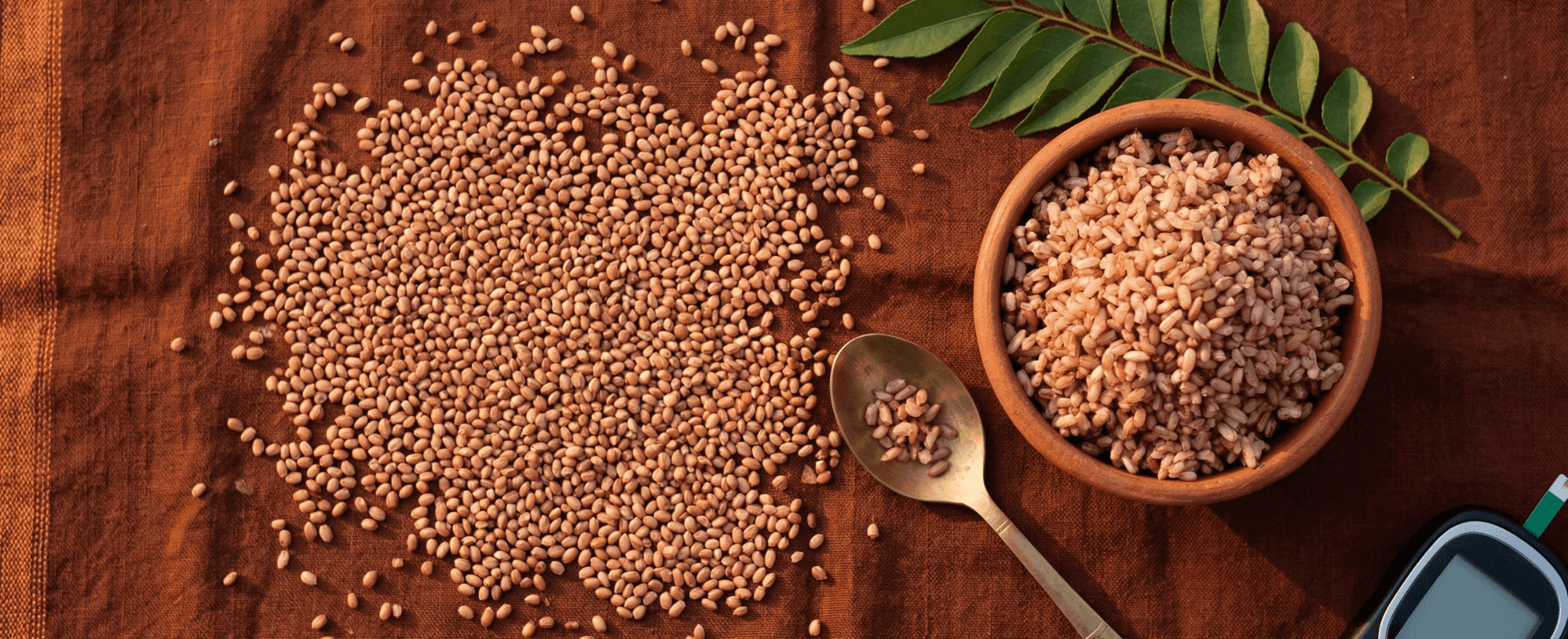
Kullakar rice is one of the most compelling answers to that question. This traditional Tamil Nadu heritage variety has been grown in the Cauvery delta and surrounding regions for centuries, largely by small-scale farmers maintaining seed traditions that commercial agriculture nearly erased. It is a small-grained, reddish-brown, unpolished variety with a distinctly lower glycemic index than both polished white rice and most commercially sold parboiled rice.
Beyond its blood sugar benefits, Kullakar is rich in iron, carries a notable cooling property in Ayurvedic classification, and is well suited to the summer months across South India. This guide covers everything you need to know about why Kullakar rice deserves a place at your table, particularly if you or someone in your household is managing blood sugar or looking for a smarter daily grain.
What Is Kullakar Rice?
Kullakar is a short-grain heritage variety of rice (Oryza sativa) cultivated primarily in Tamil Nadu, with historical records pointing to its presence in the Thanjavur and Pudukottai districts of the Cauvery delta region. The name translates loosely to ‘dwarf variety’ in Tamil, referencing the short stature of the plant relative to tall paddy varieties. Despite being short in stature, the grain packs a disproportionate nutritional punch.
The grain is naturally reddish-brown in colour because of the pigments in its bran layer, which is retained through minimal processing. Unlike commercial white rice, which is stripped of its bran and germ during polishing, Kullakar is typically sold in its semi-polished or unpolished form. This means the fiber, minerals, and antioxidant compounds that sit in the bran remain intact and active.
Kullakar is not as widely known as Seeraga Samba or Ponni, the varieties that dominate Tamil Nadu’s commercial rice market. But among those who know traditional rice, it is regarded as one of the most medically relevant varieties available. Traditional farmers who maintained Kullakar seed lines did so partly because of its known suitability for elderly people and those with digestive or metabolic conditions.
Nutritional Profile of Kullakar Rice
Kullakar’s nutritional advantage over commercially polished white rice is substantial. The following comparison is per 100 grams of raw grain:
| Nutrient | Kullakar Rice (unpolished) | Polished White Rice |
| Calories | 350 to 360 kcal | 365 kcal |
| Carbohydrates | 72 to 74 g | 80 g |
| Protein | 7 to 8 g | 6.8 g |
| Dietary Fiber | 3.5 to 5 g | 0.4 g |
| Iron | 3 to 4 mg | 0.8 mg |
| Magnesium | 80 to 100 mg | 25 mg |
| Phosphorus | 180 to 220 mg | 115 mg |
| Glycemic Index | 50 to 55 (Low to Medium) | 64 to 72 (High) |
| Glycemic Load (per serving) | Significantly lower | High |
| Antioxidants | Present (bran-bound phenolics) | Minimal (polished away) |
The iron figure is the first thing that stands out. At three to four times the iron content of polished white rice, Kullakar is a meaningful dietary source of iron in a country where iron deficiency anaemia is widespread. The fiber figure is similarly striking. With polished rice providing almost no fiber, switching to Kullakar adds a full three to five grams per serving, which has cascading effects on digestion, satiety, and blood sugar control.
The glycemic index of 50 to 55 places Kullakar firmly in the low-to-medium GI category. This is the range that nutritionists recommend for people managing diabetes, as it ensures blood glucose rises gradually after a meal rather than spiking sharply.
Health Benefits of Kullakar Rice
1. Manages Blood Sugar Without Eliminating Rice from the Diet
The core reason Kullakar has attracted renewed attention among nutritionists and diabetes educators in India is its glycemic index. GI is a measure of how rapidly a food raises blood sugar compared to pure glucose. A GI of 50 to 55 means Kullakar causes a significantly slower and more gradual rise in blood glucose than commercial white rice, which typically falls in the 64 to 72 range.
The mechanism behind this lower GI involves two factors working together. First, the fiber in the unpolished bran slows the rate at which the starchy endosperm is digested and absorbed. Second, Kullakar contains a higher proportion of amylose relative to amylopectin compared to polished varieties. Amylose is a more complex starch that resists rapid enzymatic breakdown, contributing to slower glucose release.
For someone with type 2 diabetes, prediabetes, or insulin resistance, this difference translates directly into better postprandial blood glucose control. It does not make Kullakar a free food that can be eaten in unlimited quantities, but it means that a moderate serving of Kullakar rice with a balanced meal causes a far less disruptive blood sugar response than the same quantity of polished white rice.
Pairing Kullakar rice with protein-rich pulses from Ulamart and non-starchy vegetables further reduces the glycemic load of the meal, creating a combination that supports stable blood sugar through most of the morning or afternoon.
2. Rich in Iron for Anaemia Prevention and Energy
Iron deficiency is one of the most common nutritional deficiencies in India, affecting women, children, and the elderly at particularly high rates. Kullakar rice, with three to four times the iron content of polished white rice, is one of the few daily staple grains that makes a meaningful contribution to iron intake rather than being nutritionally neutral on this front.
Iron is essential for the production of haemoglobin, the protein in red blood cells that carries oxygen to every tissue in the body. When iron is insufficient, the body produces fewer and smaller red blood cells, leading to the fatigue, brain fog, shortness of breath, and reduced immunity characteristic of anaemia. Eating iron-rich foods consistently, including whole grain varieties like Kullakar, is one of the most sustainable strategies for maintaining adequate iron levels through diet.
The iron in plant-based foods like rice is non-haem iron, which is absorbed less efficiently than the haem iron in meat. Absorption can be significantly improved by consuming Kullakar alongside a source of vitamin C, such as a small squeeze of lemon over the meal, a tomato-based side, or a fresh coriander chutney. This combination increases non-haem iron absorption by up to three times.
3. Supports Digestive Health Through Fiber
The dietary fiber in Kullakar rice works across the digestive system in several complementary ways. Insoluble fiber adds bulk to the stool and speeds intestinal transit, which prevents constipation and reduces the time that potentially harmful compounds spend in contact with the gut lining. Soluble fiber slows digestion and feeds the beneficial bacteria in the colon, contributing to a more diverse and resilient gut microbiome.
For people transitioning from polished white rice, the change in fiber intake from switching to Kullakar is substantial. Going from 0.4 grams per 100 grams to 3.5 to 5 grams per 100 grams is not a marginal change. Over the course of daily eating, this difference in fiber intake has measurable effects on bowel regularity, bloating, and gut health over weeks and months.
If you are also consuming millets like ragi or foxtail millet as part of your grain rotation, the combined fiber intake across the day supports a gut environment that is significantly more favourable than one built around polished grains and refined flours.
4. Cooling Properties Well Suited to Indian Summers
In Ayurvedic classification, Kullakar rice is considered a cooling food. This designation refers to its effect on the body’s internal temperature regulation and its relationship to Pitta dosha, the energy associated with heat, inflammation, and metabolism. Foods that cool Pitta are recommended during summer months, during fevers, and for individuals with constitutionally high Pitta who are prone to heat-related inflammation, acidity, and skin conditions.
South Indian cooking tradition has long used cooling rice varieties during the hot months of April through June, precisely because the body’s need for heat-generating, heavy foods decreases in warm weather. Kullakar, as a cooling grain, fits naturally into this seasonal pattern. Cooked as a soft kanji or porridge and eaten warm with a thin coconut milk or buttermilk accompaniment, it is a summer meal that soothes rather than strains.
This quality also makes Kullakar a good choice for people with inflammatory conditions, chronic acidity, or skin issues that worsen with heat. Incorporating it into a diet that already includes other Pitta-balancing foods, such as natural honey from Ulamart in warm (not hot) water, coconut-based preparations, and cooling spices, creates a dietary approach that supports internal thermal balance throughout the warmer months.
5. High Magnesium Content Supports Insulin Function
Magnesium is a mineral that plays a critical and often underappreciated role in metabolic health. It is involved in over 300 enzymatic reactions in the body, including those that regulate insulin secretion and the sensitivity of cells to insulin. Research consistently shows that lower magnesium levels are associated with higher rates of insulin resistance and type 2 diabetes, and that correcting magnesium deficiency can improve glycaemic control in diabetic individuals.
Kullakar rice provides 80 to 100 mg of magnesium per 100 grams, compared to just 25 mg in polished white rice. This is a four-fold difference. For a person eating rice daily as their primary carbohydrate source, this magnesium gap between polished and unpolished heritage varieties is nutritionally significant over the long term.
The combination of lower GI and higher magnesium in Kullakar creates a dual mechanism for supporting blood sugar: the lower GI reduces the glycaemic impact of the meal directly, while the higher magnesium supports the body’s underlying insulin sensitivity over time.
6. Antioxidants in the Bran Layer Reduce Chronic Inflammation
The reddish-brown colour of Kullakar rice comes from pigmented compounds in the bran layer, primarily phenolic acids and proanthocyanidins. These are antioxidant compounds that scavenge free radicals, reduce oxidative stress at the cellular level, and suppress the low-grade chronic inflammation that underlies most lifestyle diseases including type 2 diabetes, cardiovascular disease, and metabolic syndrome.
Oxidative stress and chronic inflammation are not incidental complications of diabetes but central drivers of its progression and its associated complications, including neuropathy, nephropathy, and retinopathy. Diets consistently rich in antioxidant foods have been associated with slower progression of diabetic complications in epidemiological research. Kullakar, eaten regularly as part of a whole-food diet, contributes to the body’s antioxidant defence in a form that is absorbed gradually alongside each meal.
This antioxidant profile is shared by other heritage rice varieties that retain their bran, including black rice and red rice from Ulamart. Rotating these varieties through the week creates a broader antioxidant spectrum than eating any single variety exclusively.
Kullakar Rice vs Other Low-GI Rice Options
| Rice Variety | Glycemic Index | Iron | Fiber | Best For |
| Kullakar Rice | 50 to 55 | Very High | High | Diabetes, anaemia, summer eating |
| Kattuyanam Rice | 52 to 56 | High | High | Diabetes, unpolished daily grain |
| Black Rice | 42 to 50 | High | Very High | Antioxidants, heart health |
| Red Rice | 55 to 60 | High | Moderate | Blood building, weight management |
| Navara Rice | Low | Moderate | Moderate | Ayurvedic, postpartum, medicinal |
| Polished White Rice | 64 to 72 | Low | Negligible | Easy digestion, cooking texture |
Kullakar performs strongly across almost every dimension relevant to diabetic and health-conscious eating. Its iron content is among the highest of any rice variety, its fiber is well above average for unpolished heritage grains, and its GI is firmly in the safe range for people managing blood sugar. The full range of heritage rice varieties, including Kattuyanam, black rice, and red rice, is available through Ulamart’s rice collection.
Kullakar Rice in Ayurvedic Tradition
Ayurvedic texts categorise rice varieties with considerable specificity, assigning each variety a set of properties related to its effect on the doshas, its digestive qualities, and its recommended uses for particular health conditions. Kullakar is classified as a Laghu (light) and Sheeta (cooling) rice, meaning it is easy to digest, non-heating, and suitable for daily consumption across most constitutional types.
Traditional Vaidyas (Ayurvedic practitioners) in Tamil Nadu have historically recommended Kullakar for individuals with Pitta aggravation, for those recovering from heat-related illnesses, and for elderly people who need easily digestible nutrition without the digestive heaviness of heavier grain preparations. It is also one of the varieties recommended for people with metabolic imbalances, a category that maps reasonably well onto what modern medicine classifies as insulin resistance and prediabetes.
The traditional preparation for Kullakar in a therapeutic context is as a thin rice gruel or kanji, cooked with extra water until soft and eaten warm with a side of thin dal or fresh coconut milk. This preparation is even gentler on blood sugar than eating the grain as standard cooked rice, because the increased water content and soft texture slightly lower the rate of starch digestion.
How to Cook Kullakar Rice
Kullakar rice is easy to cook but benefits from a slightly different approach than commercially polished rice. The bran layer requires a little more water and a little more time to soften properly.
| Step | Detail |
| Washing | Rinse 2 to 3 times in cold water until the water runs mostly clear |
| Soaking | Soak for 20 to 30 minutes before cooking to reduce cooking time and improve digestibility |
| Water ratio | 1 cup Kullakar rice to 2.25 cups water on the stovetop, or 1:1.75 in a pressure cooker |
| Stovetop time | 22 to 25 minutes on medium heat, covered, after bringing to a boil |
| Pressure cooker | 3 to 4 whistles on medium flame after soaking |
| Texture when done | Slightly firmer than polished white rice, with a gentle nuttiness and mild earthy tone |
Kullakar Rice Kanji for Blood Sugar Stability
Kanji is the most traditional and therapeutically effective way to eat Kullakar. The extra water in kanji preparation lowers the glycaemic impact further while making the grain easy to digest. To prepare:
- Soak 1 cup of Kullakar rice for 30 minutes, then drain.
- Add to a pot with 4 to 5 cups of water and bring to a boil.
- Reduce to a low simmer and cook for 35 to 40 minutes until the grains are soft and the water has thickened slightly.
- Season with a pinch of rock salt and serve warm. A small spoon of cold-pressed sesame or coconut oil from Ulamart’s oil range adds healthy fat that further reduces the rate of glucose absorption from the meal.
Kullakar Rice as a Daily Grain Substitute
For those transitioning from polished white rice, the simplest approach is a direct substitution. Cook Kullakar exactly as you would cook your regular rice but with slightly more water and a few extra minutes. Use it in the same preparations: rice and sambar, rice and rasam, rice with dal, or rice with a simple vegetable stir-fry. The flavour is more complex than polished white rice, with a subtle nuttiness, and the texture is slightly firmer, but neither difference is dramatic enough to require recipe adjustments.
Pairing Kullakar with the Right Foods
The glycaemic benefits of Kullakar rice are amplified when it is combined with foods that reduce the overall glycaemic load of the meal:
- Dal or pulses: The protein and additional fiber in Ulamart’s pulses range slow the digestion of the rice starches and significantly reduce the blood sugar impact of the combined meal.
- Ragi accompaniments: A small portion of ragi (finger millet) koozh or ragi roti alongside Kullakar rice creates a meal with a combined glycaemic load lower than either grain alone, while delivering calcium and iron from both sources simultaneously.
- Spices with metabolic benefits: Cooking Kullakar with whole spices from Ulamart’s spice collection, particularly fenugreek seeds, cumin, and turmeric, adds compounds that independently support blood sugar regulation and reduce inflammation.
- Avoid pairing with high-GI sides: Papadums made from refined flour, commercial potato chips, or sweet chutneys high in added sugar can offset Kullakar’s low-GI advantage. Simple, whole-food accompaniments work best.
Who Should Make Kullakar Rice Part of Their Regular Diet
Kullakar is relevant to a broad group of people, not only those with diagnosed diabetes:
- Type 2 diabetics and prediabetics who want to continue eating rice without compromising blood sugar management.
- People with a family history of diabetes who want to reduce their risk through dietary choices before the condition develops.
- Women at risk of gestational diabetes who need a low-GI grain option during pregnancy.
- Individuals with iron deficiency or anaemia, particularly women of reproductive age and children, who need a reliable dietary iron source.
- Anyone following a weight management diet who wants a more satiating grain that reduces hunger between meals through its fiber and protein content.
- Elderly individuals with reduced digestive capacity who need an easily digestible grain that still provides meaningful nutrition.
- Anyone living in or experiencing a South Indian summer who wants a cooling, light grain appropriate for the season.
Buying and Storing Kullakar Rice
Kullakar is available as a semi-polished or unpolished grain. The unpolished form retains the full bran layer and is nutritionally superior. However, first-time users who find the texture of fully unpolished grain too unfamiliar may prefer the semi-polished version, which sits between polished white rice and fully unpolished brown rice in both texture and nutritional content.
When buying, look for grains that are uniformly small and reddish-brown in colour with a slight sheen from the bran. Pale or bleached-looking grains suggest the outer layer has been partially removed. Grains should smell faintly earthy and nutty, not musty or stale. Kullakar Rice from Ulamart is sourced from small-scale traditional farmers who maintain heritage seed lines, with minimal processing that preserves the bran and its associated nutrients.
| Storage Factor | Recommendation |
| Container | Airtight glass or ceramic jar to prevent moisture and pest entry |
| Location | Cool, dry pantry away from direct sunlight and heat sources |
| Shelf life | 8 to 12 months when stored correctly in an airtight container |
| Refrigeration | Recommended in humid coastal or monsoon climates to prevent rancidity of bran oils |
| After opening | Transfer to a sealed container immediately; do not leave in the original packaging once opened |
Why Reviving Heritage Rice Matters Beyond Individual Health
India once grew thousands of rice varieties, each adapted to specific soils, climates, and seasons. The green revolution of the 1960s and 1970s replaced most of these with a handful of high-yield, fertiliser-dependent commercial varieties. The result was a dramatic increase in caloric output but an equally dramatic reduction in agricultural biodiversity and nutritional diversity in the food supply.
Varieties like Kullakar, Kattuyanam, Navara, and Karun Kuruvai survived because small-scale traditional farmers maintained them, often at economic cost to themselves, because they understood the cultural and medical value of these grains in ways that market incentives could not capture.
Choosing Kullakar rice is, in a small but real way, a vote for the continuation of these seed traditions. Every kilogram purchased from sources that work directly with heritage seed farmers creates economic incentive for those farmers to continue growing these varieties rather than switching to commercially dominant strains. This is the deeper context behind what might otherwise seem like simply a health food choice.
According to the Indian Council of Agricultural Research, the conservation of traditional rice germplasm is a priority for food security and nutritional diversity in India. Several traditional varieties including those grown in Tamil Nadu’s Cauvery delta are under active study for their nutritional properties and adaptability to changing climate conditions.
Managing blood sugar through food is not about deprivation. It is about making smarter choices within the foods you already eat and love. For South Indians, that means finding a rice that the body handles better, not abandoning rice altogether. Kullakar is that rice for a significant number of people. It is lower on the glycemic index, richer in iron, higher in fiber and magnesium, and cooler in its effect on the body’s internal temperature than almost any commercially available rice variety.
Explore the full selection of heritage and traditional rice varieties at Ulamart to build a grain rotation that works for both your health and your cooking tradition. Whether you start with Kullakar, Kattuyanam, or Navara rice, each of these grains offers something that no commercial polished rice can match.