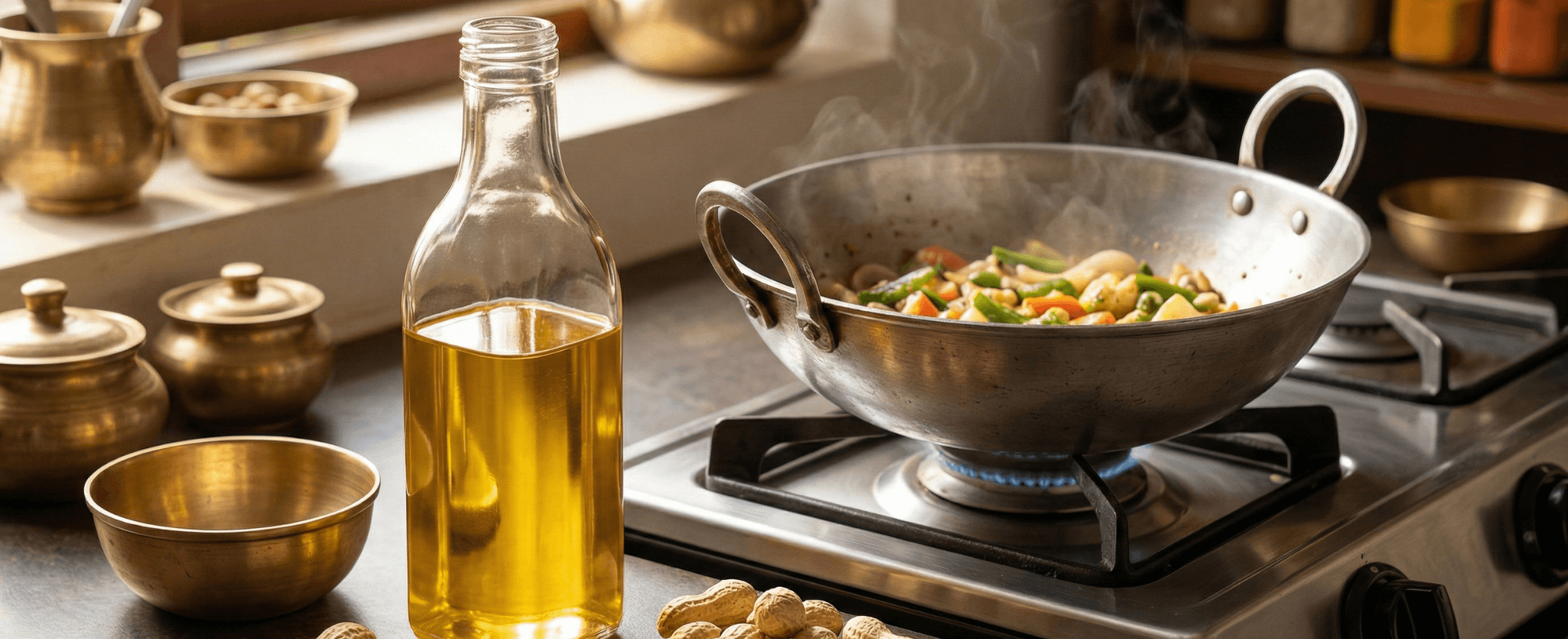
Walk into any traditional South Indian household, and you’ll likely find two oils in the kitchen: sesame oil for tempering and specific dishes, and groundnut oil for everything else. For decades, groundnut oil (also called peanut oil) was the workhorse of Indian cooking – affordable, versatile, neutral-tasting, and perfect for the wide range of cooking methods we use daily.
Then came the edible oil revolution. Refined sunflower oil, blended oils, and heavily marketed “heart-healthy” oils pushed groundnut oil aside. It became old-fashioned, something your grandmother used but you had “upgraded” from.
Here’s the irony: while chasing modern oils, we abandoned one of the healthiest, most balanced, and practical cooking oils available. Groundnut oil’s nutritional profile rivals or exceeds many trendy oils. Its high smoke point makes it safer for Indian cooking methods. Its neutral taste works with any cuisine. And when cold-pressed properly, it retains nutrients that refined oils destroy.
Groundnut oil isn’t glamorous. It doesn’t come from exotic locations or have fancy marketing. It’s just honest, reliable, nutritious oil that does exactly what cooking oil should do: provide healthy fats, withstand high heat, and let your food’s flavors shine through.
Today, let’s rediscover why groundnut oil deserves its place back in your kitchen as a daily cooking oil.


What is Groundnut Oil?
Groundnut oil is extracted from peanuts (groundnuts – Arachis hypogaea), which are actually legumes that grow underground, not nuts.
Common Names:
- Groundnut oil (India)
- Peanut oil (International)
- Verkadalai ennai (Tamil)
- Verusanaga nune (Telugu)
- Shenga enne (Kannada)
- Mungphali ka tel (Hindi)
Types Available:
Refined Groundnut Oil:
- Industrially processed with heat and chemicals
- Light color, no aroma
- Longer shelf life
- Most nutrients removed
- Avoid this – defeats the purpose of using groundnut oil
Cold-Pressed/Wood-Pressed Groundnut Oil:
- Extracted using traditional wooden presses
- No heat or chemicals
- Golden color, mild nutty aroma
- Retains all natural nutrients
- What you should buy
At Ulamart, our cold-pressed groundnut oil is extracted using traditional methods, preserving all the natural goodness that makes groundnut oil beneficial.
Nutritional Profile: What Makes Groundnut Oil Healthy
Let’s examine what’s actually in groundnut oil.
Groundnut Oil Nutrition (Per 100ml)
| Component | Amount | Benefit |
| Calories | 884 kcal | Energy-dense |
| Total Fat | 100g | Healthy fats |
| Saturated Fat | 17g | Moderate level |
| Monounsaturated Fat (MUFA) | 46g | Heart-healthy oleic acid |
| Polyunsaturated Fat (PUFA) | 32g | Essential fatty acids |
| Omega-6 | 32g | Essential (in moderation) |
| Omega-9 (Oleic Acid) | 46g | Anti-inflammatory |
| Vitamin E | 15.7mg | Powerful antioxidant |
| Phytosterols | 220mg | Cholesterol management |
| Resveratrol | Trace amounts | Antioxidant (in unrefined) |
Key Highlights:
- Nearly 50% monounsaturated fats (similar to olive oil’s healthy fat profile)
- Rich in vitamin E (protects cells from oxidative damage)
- High smoke point (225-230°C for cold-pressed, 230-240°C for refined)
- Balanced omega-6 to omega-9 ratio when used as part of varied diet
- Phytosterols help reduce cholesterol absorption
Top 10 Health Benefits of Groundnut Oil
1. Excellent Heart Health Profile
Groundnut oil’s fat composition makes it genuinely heart-healthy.
How it protects your heart:
High MUFA content (46%): Monounsaturated fats, particularly oleic acid, reduce LDL (bad) cholesterol while maintaining or increasing HDL (good) cholesterol. This improves your cholesterol ratio, reducing heart disease risk.
Lowers blood pressure: The potassium present in unrefined groundnut oil helps regulate blood pressure by counterbalancing sodium.
Reduces inflammation: Chronic inflammation damages blood vessels and contributes to heart disease. The oleic acid in groundnut oil has anti-inflammatory properties.
Prevents arterial plaque: Vitamin E and other antioxidants prevent oxidation of LDL cholesterol, a key step in plaque formation.
Clinical evidence: Studies show that replacing saturated fats with monounsaturated fats (like those in groundnut oil) significantly reduces cardiovascular disease risk.
2. Rich in Antioxidants
Antioxidants fight free radicals that cause cellular damage and aging.
Groundnut oil’s antioxidants:
Vitamin E (tocopherols): At 15.7mg per 100ml, groundnut oil is an excellent vitamin E source. This fat-soluble antioxidant protects cell membranes from oxidative damage, supports immune function, and may reduce cancer risk.
Resveratrol: The same compound found in red wine and grapes. While amounts are small, unrefined groundnut oil contains this powerful antioxidant with anti-aging and disease-prevention properties.
Polyphenols: Cold-pressed groundnut oil retains polyphenolic compounds from peanuts, adding to its antioxidant capacity.
Practical benefit: These antioxidants protect both the oil (preventing rancidity) and your body (preventing disease).
3. High Smoke Point Perfect for Indian Cooking
This is groundnut oil’s standout practical advantage.
Smoke point explained: The temperature at which oil starts smoking and breaking down, creating harmful compounds and losing nutritional value.
Groundnut oil smoke point:
- Cold-pressed: 225-230°C (437-446°F)
- Refined: 230-240°C (446-464°F)
Why this matters for Indian cooking:
Deep frying: Most Indian frying (pakoras, vadas, samosas) happens at 170-190°C. Groundnut oil handles this safely with a good margin.
High-heat sautéing: Tadka/tempering reaches 180-200°C. Groundnut oil remains stable.
Stir-frying: High heat, quick cooking – groundnut oil is perfect.
Comparison to other oils:
- Extra virgin olive oil: 160-190°C (too low for Indian cooking)
- Coconut oil: 177°C (borderline for frying)
- Sesame oil: 210°C (good, but lower than groundnut)
- Refined oils: Higher, but nutrition is destroyed
Bottom line: Groundnut oil lets you cook Indian food the way it’s meant to be cooked, without compromising health.
4. Diabetes-Friendly
For diabetics managing blood sugar and preventing complications, groundnut oil offers specific benefits.
How it helps:
Improves insulin sensitivity: The monounsaturated fats in groundnut oil help cells respond better to insulin, improving blood sugar control.
Reduces diabetes complications: Diabetes increases oxidative stress and inflammation. Groundnut oil’s vitamin E and antioxidants combat both, protecting against diabetic complications like neuropathy and retinopathy.
Stable energy: Unlike carbohydrates, fats don’t spike blood sugar. Using healthy fats like groundnut oil for cooking helps stabilize blood glucose.
Cholesterol management: Diabetics often have cholesterol problems. Groundnut oil’s MUFA content helps manage this common complication.
Important: Oil still has calories. Diabetics should practice portion control (2-3 tablespoons daily maximum) while benefiting from groundnut oil’s health properties.
5. Supports Brain Health and Cognitive Function
Your brain is 60% fat. The quality of fats you consume directly affects brain health.
Brain benefits of groundnut oil:
Monounsaturated fats: Essential for brain structure and function. The myelin sheath protecting nerve cells requires healthy fats.
Vitamin E: Protects brain cells from oxidative damage. Studies link adequate vitamin E intake to reduced Alzheimer’s risk and slower cognitive decline.
Resveratrol: May protect against neurodegenerative diseases by reducing brain inflammation and oxidative stress.
Supports neurotransmitters: Healthy fats are needed for optimal production and function of neurotransmitters (brain chemical messengers).
Practical impact: Better memory, improved focus, and potentially reduced risk of age-related cognitive decline.
6. Skin and Hair Health
What you eat affects how you look. Groundnut oil benefits skin and hair both when consumed and applied topically.
For skin (consumed):
- Vitamin E protects from UV damage and premature aging
- Healthy fats maintain skin barrier function
- Antioxidants reduce inflammation that causes acne and redness
- Promotes skin cell regeneration
For hair (consumed):
- Nourishes hair follicles from within
- Vitamin E promotes hair growth and strength
- Prevents premature graying (traditional belief, some support from nutrients)
Topical use: Groundnut oil has been traditionally used for hair and skin massage:
- Moisturizes without clogging pores
- Vitamin E content benefits hair and scalp
- Gentle enough for sensitive skin
- Traditional oil bath (ennai kuli) uses groundnut oil
7. Joint Health and Inflammation
Chronic inflammation contributes to arthritis and joint pain. Groundnut oil helps reduce inflammation.
How it works:
Oleic acid (omega-9): Has anti-inflammatory properties, reducing inflammatory markers in the body.
Balances omega-6 to omega-9: While groundnut oil contains omega-6 (which can be inflammatory in excess), it contains even more omega-9, which is anti-inflammatory. The net effect is neutral to beneficial when used as part of a balanced diet.
Vitamin E: Reduces joint inflammation and may slow arthritis progression.
Traditional use: In Ayurveda and Siddha medicine, groundnut oil massage is prescribed for joint pain and stiffness.
Modern application: Using groundnut oil as your primary cooking oil may help reduce systemic inflammation over time.
8. Immune System Support
A strong immune system requires proper nutrition, including healthy fats.
Immune benefits:
Vitamin E: Essential for immune cell function. Deficiency impairs immunity.
Healthy fats: Required for absorption of fat-soluble vitamins (A, D, E, K), all crucial for immunity.
Antioxidants: Reduce oxidative stress on immune system, allowing it to function optimally.
Anti-inflammatory properties: Chronic inflammation suppresses immunity. Groundnut oil’s anti-inflammatory effects support immune function.
Practical impact: May reduce frequency and severity of common infections when part of a nutrient-rich diet.
9. Weight Management Support
This might seem counterintuitive – oil for weight loss? But healthy fats actually support weight management.
How groundnut oil helps:
Satiety: Fat keeps you feeling full longer, reducing overall calorie intake. Meals cooked in groundnut oil are more satisfying than low-fat meals.
Metabolic support: Vitamin E and other nutrients support optimal metabolism.
Hormone production: Healthy fats are needed for hormone production, including those that regulate appetite and metabolism.
Energy without blood sugar spikes: Unlike carbs, fats provide stable energy without triggering insulin spikes that promote fat storage.
Reality check: Oil is calorie-dense (9 calories per gram). Weight management still requires overall calorie control. But within a balanced diet, groundnut oil is a better choice than refined oils or trans fats.
10. Versatile and Neutral Flavor
This isn’t a “health benefit” in the traditional sense, but it’s crucial for practical daily use.
Why neutral flavor matters:
Works with any cuisine: Indian, Chinese, Continental, Italian – groundnut oil doesn’t impose flavor Doesn’t overpower delicate dishes: Fish, vegetables, mild curries taste as they should Children accept it: No strong taste that kids might reject Family-friendly: Everyone can eat food cooked in groundnut oil
Compare to:
- Sesame oil: Strong nutty flavor, not suitable for all dishes
- Coconut oil: Distinct coconut taste, doesn’t work with every cuisine
- Mustard oil: Very strong, specific to certain regional cuisines
- Groundnut oil: Mild, barely noticeable, truly versatile
This versatility means: You can actually use it daily for everything, making it practical as your primary cooking oil.
Groundnut Oil in Indian Cooking
How to use groundnut oil across different cooking methods.
Perfect For Deep Frying
Why groundnut oil excels:
- High smoke point handles frying temperatures safely
- Doesn’t break down or create harmful compounds
- Neutral flavor lets food taste as it should
- Light texture (food doesn’t feel greasy)
- Can be filtered and reused 2-3 times (if not overheated)
Best fried foods in groundnut oil:
- Pakoras and bhajis
- Vadas (medhu vada, masala vada)
- Samosas and kachoris
- Papad and fryums
- Fried fish
- Chicken fry
- French fries
Important: Even healthy oil becomes unhealthy when overheated or reused excessively. Fry at correct temperature (170-180°C), don’t let oil smoke, filter after use, and don’t reuse more than 2-3 times.
Excellent for Sautéing and Stir-Frying
High-heat tolerance: Groundnut oil’s high smoke point makes it ideal for quick, high-heat cooking.
Best sautéed dishes:
- Vegetable stir-fries
- Fried rice
- Noodles (Schezwan, Hakka)
- Pepper chicken
- Chili paneer
- Quick vegetable sabzis
Technique tip: Heat oil first, then add ingredients. Groundnut oil heats evenly and maintains temperature well.
Good for Tempering (Tadka)
While sesame oil or ghee are traditional for South Indian tadka, groundnut oil works well too.
Advantages:
- Neutral flavor doesn’t compete with spices
- High smoke point prevents burning mustard seeds
- Light texture distributes evenly
When to use:
- North Indian curries and dals
- When you want spices to shine through
- For people who find sesame oil too strong
- As an everyday tempering oil
Suitable for Baking
Groundnut oil can replace butter or refined oils in baking.
Works well in:
- Cakes and muffins (especially chocolate – enhances flavor)
- Cookies
- Bread
- Pizza dough
Benefits:
- Adds moisture without heavy texture
- Neutral flavor doesn’t interfere
- Healthier than butter or margarine
- Creates tender baked goods
Not Ideal For
Salad dressings: Too neutral. Use olive oil or sesame oil for flavor.
Low-heat cooking: Wasted potential. Use groundnut oil where you need high heat tolerance.
Delicate dishes where oil flavor matters: Use specialty oils for those specific preparations.
Groundnut Oil vs Other Cooking Oils
How does groundnut oil compare to other popular options?
Groundnut Oil vs Olive Oil
Smoke point: Groundnut wins (225°C vs 160-190°C for extra virgin olive oil)
MUFA content: Similar (46% vs 73% in olive oil – both excellent)
Flavor: Groundnut neutral, olive oil strong (matter of preference)
Price: Groundnut more affordable
Best for: Groundnut for Indian cooking and high heat; olive oil for salads and low-heat
Verdict: Both healthy. Choose based on cooking method and cuisine.
Groundnut Oil vs Sesame Oil
Smoke point: Groundnut higher (225°C vs 210°C)
Flavor: Groundnut neutral, sesame nutty/distinct
MUFA: Groundnut higher (46% vs 40%)
Special compounds: Sesame has unique sesamol/sesamin antioxidants
Best for: Groundnut for versatility; sesame for specific South Indian dishes
Verdict: Keep both. Groundnut as daily workhorse, sesame for traditional preparations.
Groundnut Oil vs Coconut Oil
Smoke point: Groundnut much higher (225°C vs 177°C)
Fat type: Groundnut MUFA-rich, coconut saturated fat-rich
Flavor: Groundnut neutral, coconut distinctive
Health debate: Groundnut’s MUFA universally accepted as healthy; coconut oil’s saturated fat more controversial
Best for: Groundnut for general cooking; coconut for specific South Indian dishes
Verdict: Groundnut is safer, more versatile choice for daily use.
Groundnut Oil vs Refined Sunflower/Soybean
Processing: Cold-pressed groundnut minimally processed; refined oils heavily processed
Nutrients: Groundnut retains vitamin E and antioxidants; refined oils stripped
Omega-6 ratio: Groundnut balanced with omega-9; refined oils very high omega-6 (inflammatory)
Price: Refined oils cheaper
Best for: Groundnut for health; refined for budget (but false economy – health costs later)
Verdict: Groundnut oil is worth the extra cost.
How to Choose Quality Groundnut Oil
Not all groundnut oil is created equal. Here’s what to look for.
Cold-Pressed vs Refined
Cold-Pressed (Chekku/Wood-Pressed):
- Traditional wooden press extraction
- No heat above 45-50°C
- No chemicals or solvents
- Golden color, mild nutty aroma
- Retains all nutrients
- This is what you should buy
Refined Groundnut Oil:
- Industrial extraction with heat and chemicals
- Bleached, deodorized, degummed
- Light color, no aroma
- Nutrients destroyed
- Longer shelf life
- Avoid – defeats the purpose
At Ulamart, our cold-pressed groundnut oil is made using traditional wooden presses, ensuring you get all the natural benefits.
Quality Indicators
Look for:
- “Cold-pressed” or “wood-pressed” or “chekku” on label
- Golden yellow to amber color
- Mild nutty aroma
- Natural sediment at bottom (good sign – unfiltered goodness)
- Packaged in dark glass bottles or food-grade metal (protects from light)
- Recent manufacturing date
- FSSAI and organic certifications
Red flags:
- Very cheap price (quality oil costs more)
- Pale, colorless oil (over-refined)
- No smell (over-processed)
- Plastic packaging (oil absorbs plastic chemicals)
- No manufacturing date
- “Blended” oil (mixed with cheaper oils)
Packaging Matters
Best packaging:
- Dark glass bottles (blocks light, prevents oxidation)
- Food-grade tin/steel containers (traditional, protects from light)
Acceptable:
- Clear glass (if stored in dark place)
- Food-grade plastic (short-term, but not ideal)
Avoid:
- Cheap plastic bottles (oil absorbs chemicals)
- Opened/resealed containers
- Damaged or rusty metal containers
Storing Groundnut Oil Properly
Proper storage maintains freshness and prevents rancidity.
Storage Guidelines
Container: Transfer to dark glass or steel if purchased in plastic
Location: Cool, dark place away from stove and sunlight
Temperature: Room temperature fine; refrigeration extends life but oil may solidify (warm to room temp before use)
Duration:
- Unopened: 12-18 months
- Opened: 6-9 months for best quality
- After opening: Use within 12 months maximum
Daily use container: Keep small amount near stove for convenience, refill from main storage
Signs of Rancidity
Oil has gone bad if:
- Strong unpleasant smell (paint-like or sour)
- Bitter or off taste
- Cloudy appearance (beyond natural sediment)
- Foaming when heated
- Unusual color change
If rancid: Discard immediately. Consuming rancid oil is harmful.
Tips for Extended Freshness
Buy appropriately: Don’t buy huge quantities unless you use a lot. Fresh oil is best.
Minimize air exposure: Keep bottle tightly sealed
Avoid contamination: Don’t pour used oil back into bottle
Protect from light: Store in dark place or dark bottle
Check regularly: Monthly sniff test ensures quality
Cooking Tips for Best Results
Heating Groundnut Oil
Best practice:
- Heat on medium, not high flame initially
- Oil is ready when a small piece of food sizzles immediately
- Don’t let oil smoke (means it’s too hot, nutrients degrading)
Temperature guidelines:
- Tempering: 180-200°C
- Sautéing: 160-180°C
- Deep frying: 170-180°C
- Shallow frying: 160-170°C
Quantity Guidelines
Daily cooking for family of 4:
- Tempering: 1-2 teaspoons per dish
- Sautéing: 1-2 tablespoons per dish
- Deep frying: Enough to submerge food (can filter and reuse 2-3 times)
Individual daily limit:
- 2-3 tablespoons maximum (even healthy oil is calorie-dense)
- Less if you’re trying to lose weight
- Factor in other fat sources (nuts, dairy, etc.)
Combining with Other Oils
Smart rotation strategy:
- Groundnut oil for frying, high-heat cooking
- Sesame oil for tempering, traditional dishes
- Olive oil (if desired) for salads, low-heat
- Ghee for special occasions, flavor
Benefits of rotation:
- Diverse nutrient intake
- Different fatty acid profiles
- Prevents monotony
- Optimal for different cooking methods
Health Precautions and Considerations
Peanut Allergy
Critical warning: If you or family members have peanut allergy, absolutely avoid groundnut oil, even refined versions. Allergic reactions can be severe.
Symptoms of peanut allergy:
- Skin reactions (hives, redness, swelling)
- Digestive problems
- Breathing difficulty
- Anaphylaxis (severe, life-threatening)
If allergic: Use sesame oil, coconut oil, or other alternatives instead.
Omega-6 Considerations
Groundnut oil contains omega-6 fatty acids (32%). While essential, excessive omega-6 relative to omega-3 can be inflammatory.
Balanced approach:
- Don’t use groundnut oil as your ONLY fat source
- Include omega-3 rich foods (fish, flax seeds, walnuts)
- Rotate with other oils
- Keep total fat intake moderate
Reality check: In the context of a balanced diet with vegetables, fish, nuts, and seeds, groundnut oil’s omega-6 content is not a concern for most people.
Calorie Density
All oils are calorie-dense at 9 calories per gram.
Weight management:
- Measure oil, don’t pour freely
- Count oil calories in daily total
- Balance with whole foods
- Reduce if not losing weight despite healthy choices
Even healthy oil causes weight gain if consumed in excess.
Common Myths About Groundnut Oil
Myth 1: “Groundnut oil causes heart disease because it’s high in fat”
Reality: Not all fats are equal. Groundnut oil is high in heart-healthy monounsaturated fats (similar to olive oil). Studies show it improves cholesterol profiles.
Myth 2: “Only expensive imported oils are healthy”
Reality: Cold-pressed groundnut oil is as healthy as or healthier than many expensive imported oils, especially for high-heat cooking.
Myth 3: “Groundnut oil is just for frying snacks”
Reality: While excellent for frying, groundnut oil is versatile enough for daily cooking across all methods.
Myth 4: “Refined groundnut oil is better because it’s pure and clear”
Reality: Refining removes beneficial nutrients. Cold-pressed is better despite natural color and sediment.
Myth 5: “All groundnut oils are the same”
Reality: Cold-pressed and refined are completely different in nutritional value. Quality and sourcing also vary significantly.
Final Thoughts: The Reliable Daily Oil
Groundnut oil doesn’t have a glamorous story. It won’t be featured in glossy health magazines alongside acai berries and quinoa. It’s not exotic or expensive or trendy.
But here’s what groundnut oil is: reliable, healthy, affordable, versatile, and perfectly suited to Indian cooking. It’s the oil that quietly does its job day after day, providing healthy fats, withstanding high heat, and letting your food taste as it should.
Sometimes the best solutions are the simple, traditional ones we already had. Groundnut oil has been a staple of Indian cooking for generations because it works. It works for health. It works for taste. It works for practicality. It works for budget.
While everyone chases exotic oils from distant lands, groundnut oil – grown locally, processed traditionally, and nutritionally excellent – waits patiently to be rediscovered.
Your grandmother probably cooked in groundnut oil. She knew what she was doing. Maybe it’s time we listened.
Ready to switch to quality groundnut oil? Our cold-pressed groundnut oil is extracted using traditional wooden presses, preserving all natural nutrients for your daily cooking needs.
Build a complete healthy kitchen with our cooking essentials:
- Cold-Pressed Sesame Oil – For tempering and traditional preparations
- Browse All Cold-Pressed Oils
Pair your healthy oil with quality ingredients:
Cook healthy, cook smart, cook with groundnut oil!
Cooking Tip: For perfect deep frying, heat groundnut oil to the right temperature (test with a small piece of food – it should sizzle immediately and rise to surface). Maintain consistent heat and don’t overcrowd the pan. Your food will be crispy, not greasy!