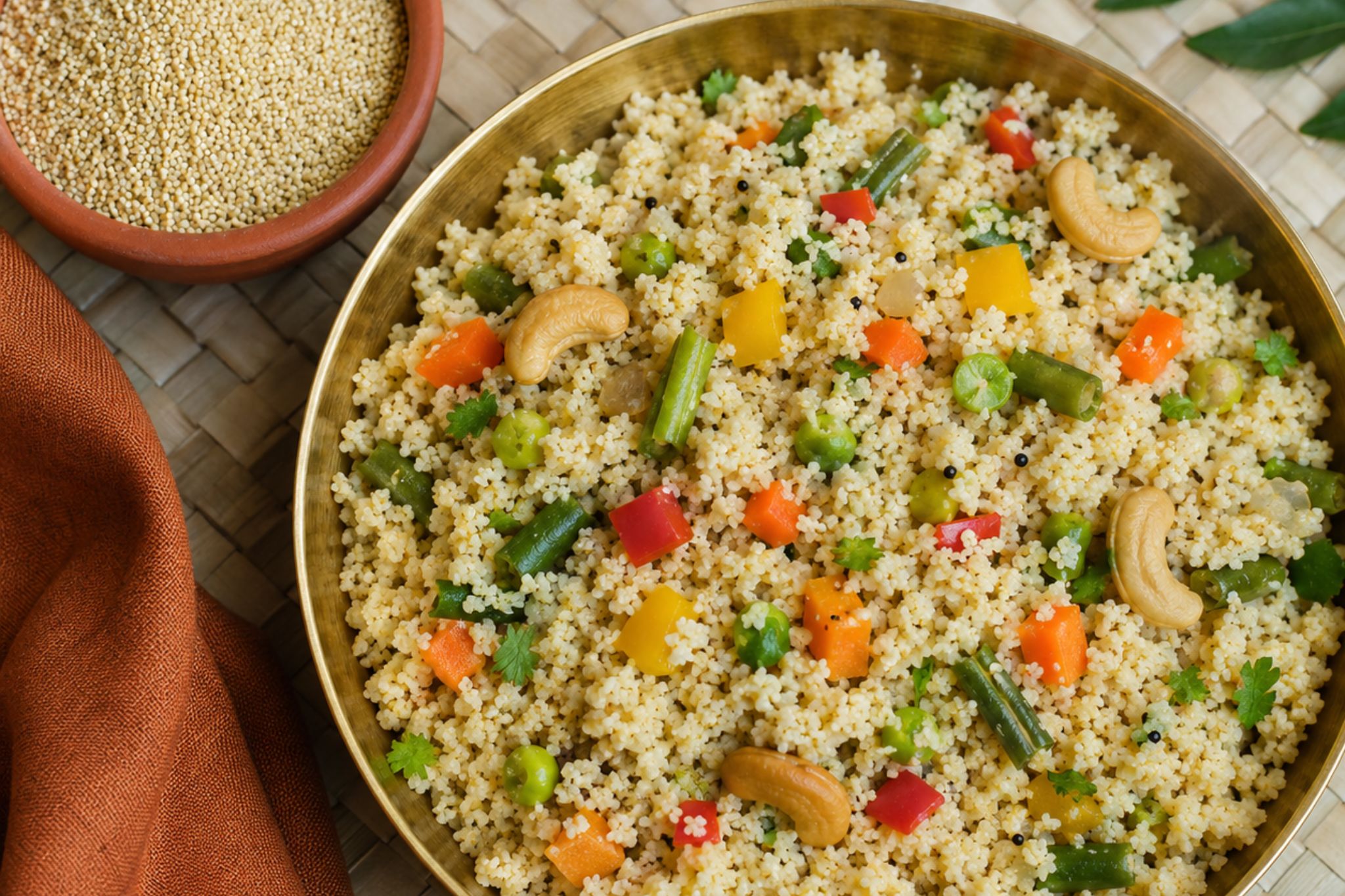
Of all the millets sold today, foxtail millet is usually the easiest one to switch to first. It looks close to rice once cooked, it has a mild nutty flavour rather than a strong earthy one, and it cooks in roughly the same amount of time as regular rice. Known as Thinai in Tamil, this small grain has been part of South Indian diets for thousands of years, and it is having a genuine comeback right now as more households look for a lighter alternative to polished rice.
This article covers foxtail millet from two angles only, its real, evidence backed health benefits, and the exact cooking ratios that get it right on the first try.
Why Foxtail Millet Is Worth Switching To
Foxtail millet carries around 8 grams of fibre per 100 grams and roughly 12 grams of protein, both noticeably higher than white rice. That protein number in particular stands out among grains, since most staple cereals fall well short of it. A study on foxtail millet based food products, published through the National Center for Biotechnology Information, found protein content across various foxtail preparations reaching into the double digits per 100 grams, reinforcing that this is not a marginal difference but a meaningful one for anyone tracking daily protein intake.
The glycemic index sits around 50, which places it firmly in the low to moderate range and well below white rice. What this means practically is that a plate of foxtail millet releases glucose into the bloodstream gradually rather than in a sharp spike, which helps avoid the energy crash and hunger rebound that often follows a heavy rice meal. This property is a big part of why foxtail millet is frequently recommended in blood sugar management diets alongside weight management plans.
Beyond fiber and protein, foxtail millet brings a reasonable amount of magnesium, phosphorus, and iron to the table, all of which play supporting roles in metabolic health and steady energy levels through the day. It is also naturally gluten free, which makes it a workable rice or wheat substitute for anyone avoiding gluten without needing to hunt down specialty products.
Foxtail millet also contains tryptophan, an amino acid that plays a role in slowing digestion and supporting a feeling of fullness after meals. This is one of the less talked about reasons it works well for weight management, since the effect goes beyond fibre alone and touches how satisfied you feel after eating, not just how full your stomach is in the moment. For people who find themselves reaching for a snack an hour or two after a rice meal, this is often the missing piece.
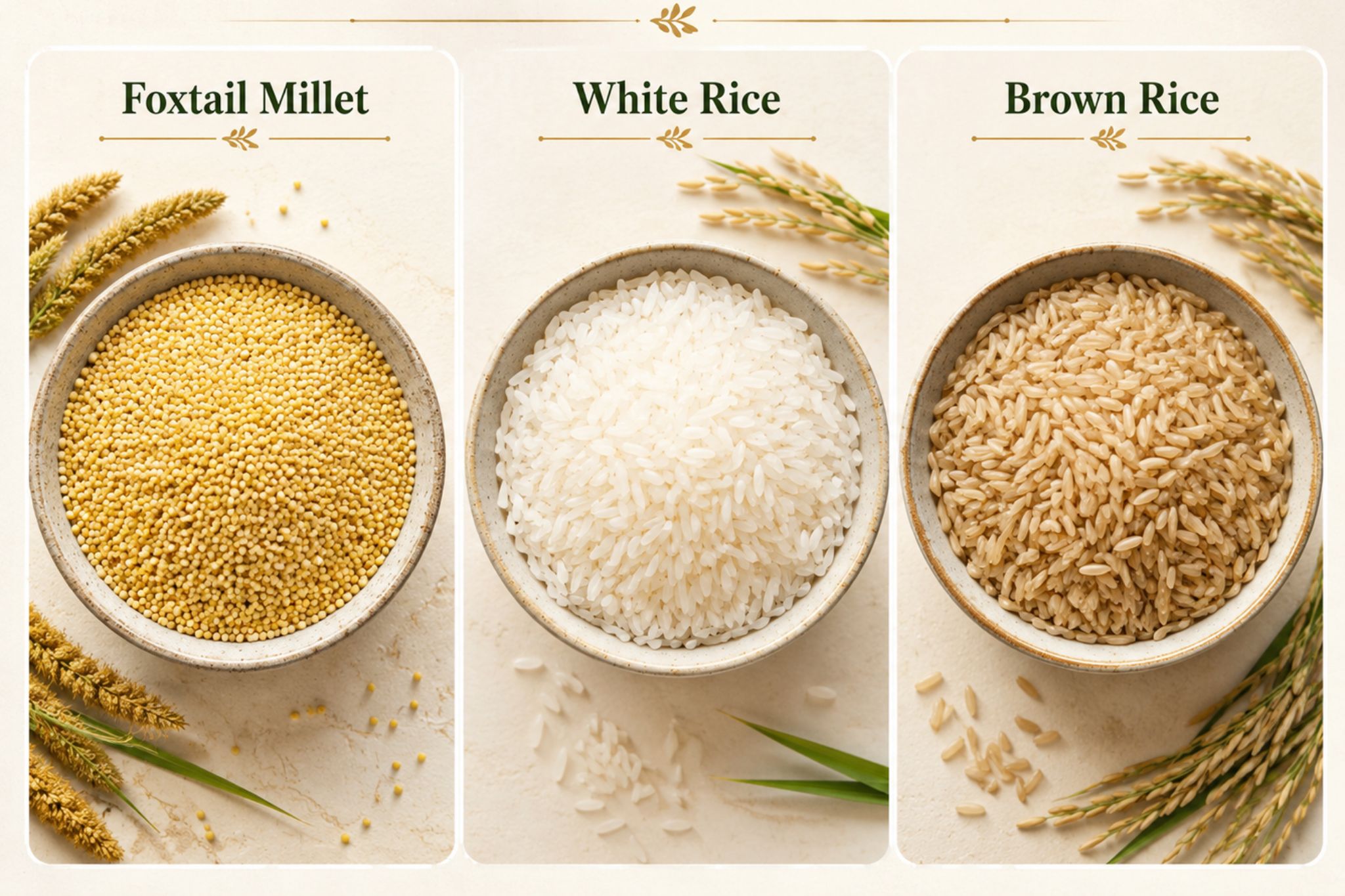
Foxtail Millet vs White Rice
| Grain | Glycemic Index (approx) | Protein per 100g |
|---|---|---|
| Foxtail Millet | 50 | 12g |
| White Rice | 70 to 85 | 7g |
| Brown Rice | 50 to 55 | 8g |
The protein gap alone is worth noting here. Even compared to brown rice, which already outperforms white rice on most nutritional counts, foxtail millet still comes out ahead on protein while matching it closely on glycemic index.
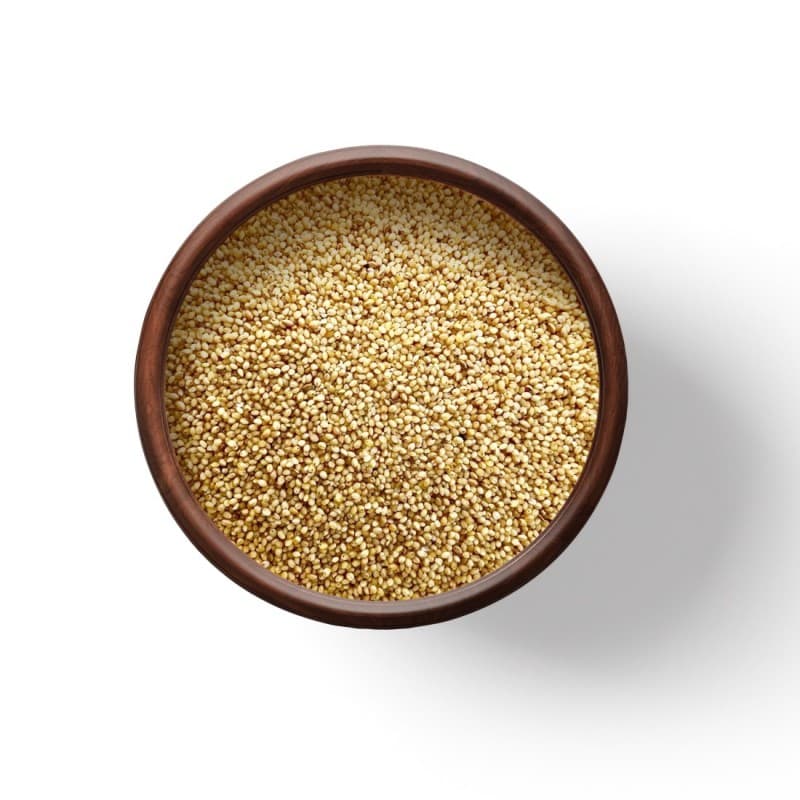
How to Cook Foxtail Millet the Right Way
Foxtail millet is genuinely one of the more forgiving millets to cook, but a few small steps make the difference between fluffy, separate grains and a sticky, clumped result.
Step 1: Rinse two to three times. Wash the millet under running water until it runs mostly clear, which removes surface starch and dust.
Step 2: Soak for 30 minutes. A short soak softens the grain enough to cook evenly without turning mushy. Unlike larger millets, foxtail millet does not need hours of soaking, and oversoaking can actually work against you here by making the final texture too soft.
Step 3: Use a 1 to 2 water ratio for rice-like texture. This is slightly less water than kodo or barnyard millet needs, and it is the main reason foxtail millet ends up closest to regular rice in look and bite. For a softer upma or porridge style texture, increase to 1 to 2.5.
Step 4: Simmer for 12 to 15 minutes. Bring the water to a boil, add the drained millet, cover, and reduce to low heat. Avoid lifting the lid too often, since that lets steam escape and can throw off the ratio.
Step 5: Rest for 5 minutes, then fluff with a fork. This final rest lets the grains settle and separate cleanly, the same principle used when resting cooked rice.
In a pressure cooker, one whistle on medium flame after soaking is typically enough. Because the grain is small and cooks quickly, a second whistle often overcooks it into a stickier texture than intended.
Quick Cooking Reference
| Method | Soak Time | Cook Time |
|---|---|---|
| Stovetop (pot) | 30 min | 12 to 15 min |
| Pressure Cooker | 30 min | 1 whistle |
| Instant Pot | 20 to 30 min | 6 to 8 min |
Everyday Ways to Use It
Because it looks and behaves so much like rice once cooked, foxtail millet slots into almost any rice based dish without much adjustment. It works well as a plain pulao with sautéed vegetables, as a base for curd rice, or as a substitute in variety rice preparations like lemon rice or tamarind rice.
For breakfast, foxtail millet upma follows the same steps as regular rava upma, just with the soaked and lightly cooked millet standing in for semolina. It also holds up well in a Thinai Pongal, a traditional South Indian preparation that pairs the millet with moong dal, cumin, and black pepper, and this version is a common choice during fasting days and festival mornings across Tamil Nadu.
A cooked cup of foxtail millet paired with dal, a vegetable side, and a small portion of curd makes a well rounded, filling meal that leans on the millet’s fibre and protein content to keep hunger at bay for longer stretches than an equivalent rice meal typically manages. This is the main reason it shows up so often in diet plans built around weight management and blood sugar control together.
Mistakes That Reduce the Benefits
The most common mistake is treating the water ratio the same way you would for rice, which usually means adding too much water. Because foxtail millet is smaller and absorbs water differently, a rice ratio often leaves it undercooked at the centre or, if left on heat longer to compensate, turns it mushy on the outside before the middle catches up.
Skipping the rinse step is another one worth avoiding, since unwashed millet can carry a faint bitterness from surface residue that a quick rinse removes entirely.
The third mistake is storing cooked millet the wrong way. It should be cooled to room temperature before refrigerating, and kept in an airtight container where it stays good for about three days. Reheating with a splash of water helps bring the texture back rather than drying it out in the microwave.
A less obvious mistake is buying heavily polished foxtail millet without realising it. Like rice, millet can be polished to look whiter and cook faster, but this process strips away part of the bran layer where much of the fibre and mineral content sits. Choosing an unpolished or minimally processed variety keeps the nutritional profile closer to what studies on the grain are actually measuring.
For anyone building a full weekly millet rotation, foxtail millet pairs well alongside barnyard millet and kodo millet, since rotating between a few different millets spreads out the micronutrient variety and keeps meals from feeling repetitive, which is often the real reason people abandon a grain switch within the first few weeks.