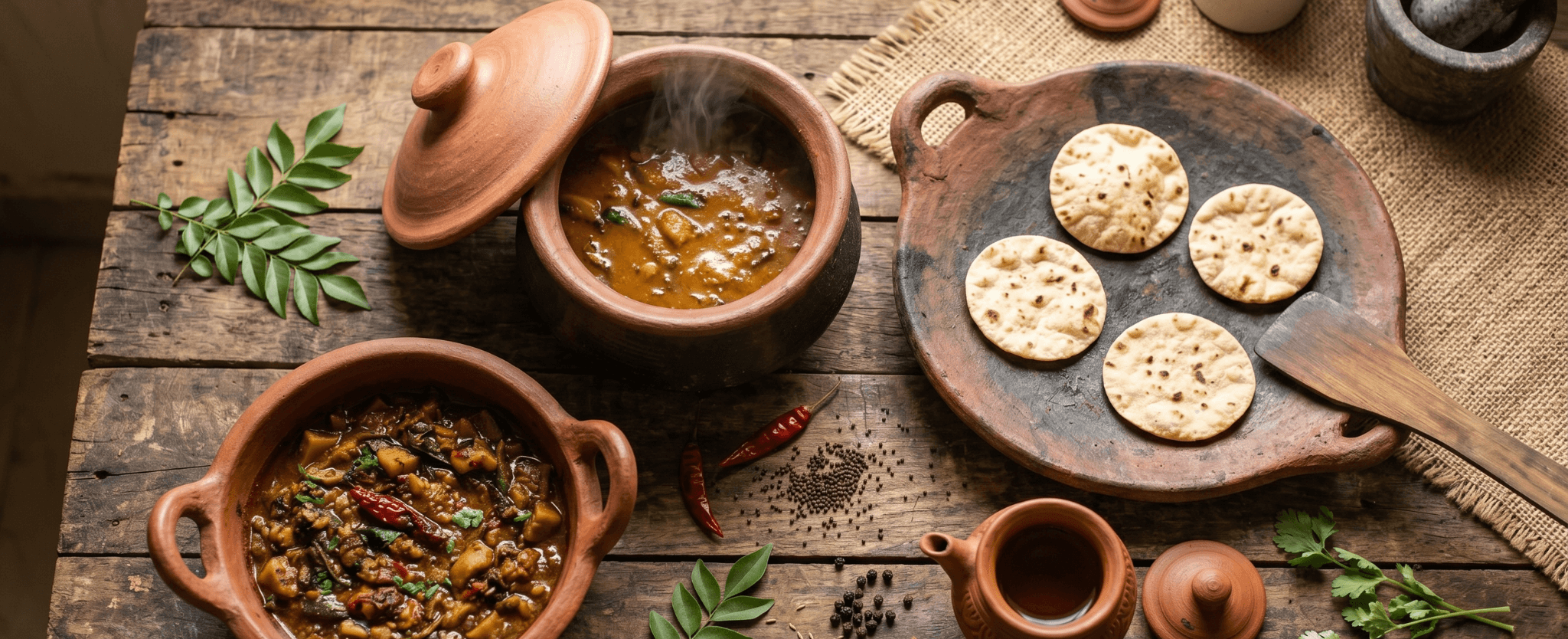
Most Indian households still have at least one earthen pot somewhere in the kitchen, even if it has been pushed to the back of a shelf to make room for stainless steel, non-stick, and hard-anodised alternatives. These clay pots did not disappear because they stopped working. They disappeared because convenience became the primary measure of kitchen value, and clay cookware demands patience, care, and a slightly different understanding of heat than modern cookware requires.
But the questions that prompted this article are practical and worth answering honestly: Does cooking in clay pots actually make food healthier? Is there a nutritional or physiological difference between food cooked in earthen pots versus metal or Teflon-coated alternatives? And if there is a real difference, is it significant enough to warrant bringing clay cookware back into regular use?
The answers, drawn from both traditional knowledge and available research, are more interesting than a simple yes or no. Clay cookware does offer genuine and measurable benefits in specific areas. It also has real limitations. This guide covers both sides honestly, along with practical guidance on how to select, season, use, and care for clay cookware so that it genuinely works for a modern Indian kitchen.
Ulamart’s range of earthen clay cookware includes traditionally made, unglazed clay pots suited to South Indian cooking methods. Pair with the pulses collection for clay pot dal and sambar, the heritage rice varieties for clay pot biriyani and kanji, and the spices range for tempering preparations that the slow heat of clay develops particularly well.
Why Clay Was the Original Indian Cookware
For most of recorded human history in the Indian subcontinent, clay was the default cooking material. Archaeological excavations at Indus Valley Civilisation sites dating back over four thousand years have uncovered fired clay cooking vessels, water storage pots, and serving ware. The material was universally available, required no mining or smelting, could be shaped by hand, and produced cookware that the environment itself provided and could eventually reclaim.
The shift away from clay in Indian kitchens happened in two distinct waves. The first was the gradual adoption of brass, copper, and iron cookware across the medieval period, driven by the superior durability of metal and its ability to withstand the high-heat cooking methods of certain regional traditions. The second was the rapid post-independence industrialisation that brought aluminium and eventually stainless steel into mass market availability at prices that clay cookware, which is fragile and requires regular replacement, could not compete with.
By the 1980s and 1990s, clay cookware had largely retreated to specific ritual and ceremonial uses in urban households, while rural and tribal communities continued using it daily. The current revival of interest in mitti ke bartan is partly driven by concern about the health implications of cooking in aluminium and Teflon-coated non-stick surfaces, and partly by a broader reconnection with traditional food practices that the millet and heritage grain revival has also been part of.
The Real Health Benefits of Clay Pot Cooking
Natural Alkalinity Balances Food pH
Clay is naturally alkaline. When food, particularly acidic preparations like tamarind-based sambar, tomato curries, or rasam, is cooked in an earthen pot, the alkaline minerals in the clay interact with the acidic compounds in the food and gently neutralise them. The result is a dish with a rounder, less sharp acidic profile that is easier on the stomach and less likely to trigger acidity or reflux in sensitive individuals.
This is one of the most practically observable differences between clay pot cooking and stainless steel or aluminium cooking for those who experience digestive acidity from tamarind-heavy South Indian preparations. The same sambar or rasam, cooked identically in clay versus steel, produces a measurably less sharp finished dish that most sensitive stomachs tolerate better.
Slow, Even Heat Distribution Preserves Nutrients
Clay conducts heat slowly and evenly, which is fundamentally different from the rapid, intense heat transmission of stainless steel, aluminium, and cast iron. This slow heat distribution has a direct impact on nutrient retention. High-heat cooking, particularly in thin-walled metal vessels, exposes food to temperatures that degrade heat-sensitive vitamins including vitamin C, B vitamins, and certain antioxidants relatively quickly.
The gentler, more gradual heat of clay cooking gives food time to cook through without the extreme surface temperatures that cause nutrient breakdown. The dal or vegetable preparation that slowly simmers in an earthen pot retains more of its original vitamin content than the same preparation cooked rapidly in a pressure cooker or at high heat in a steel vessel. The difference is not dramatic for every nutrient, but across the full range of heat-sensitive compounds it is real and cumulative.
Natural Mineral Contribution
Clay contains naturally occurring minerals including calcium, magnesium, phosphorus, sulphur, and iron. During cooking, trace amounts of these minerals leach into food, particularly in the presence of liquid and mild acidity. This mineral transfer is not large enough to replace dietary mineral sources but it is a genuine and benign contribution to the mineral content of food cooked regularly in earthen vessels.
Traditional Ayurvedic practitioners have long held that food cooked in clay is more mineralised than food cooked in metal. The scientific basis for this claim is the measurable leaching of mineral ions from clay into cooking liquid during the cooking process. Whether this constitutes a meaningful health contribution depends on how regularly clay cookware is used and what the rest of the diet provides.
Moisture Retention and Natural Basting
The porosity of unglazed clay allows moisture to circulate within the pot during cooking. As heat causes liquid to evaporate, it passes through the porous walls, cools slightly, and condenses back into the pot. This creates a natural self-basting environment inside the vessel that keeps food moist without the need to add excess water or oil. The result is a particularly juicy, tender quality in slow-cooked preparations like dal, biriyani, and braised vegetables that is difficult to replicate in metal cookware.
This moisture retention also means that clay pot cooking often requires less oil than metal cookware to achieve the same level of surface flavour development, which has a direct and positive implication for the overall fat content of the finished dish.
No Chemical Leaching
The health concerns around modern non-stick cookware centre primarily on perfluorooctanoic acid (PFOA) and polytetrafluoroethylene (PTFE), the compounds used in Teflon and similar coatings. At high temperatures, particularly when a non-stick pan is overheated or scratched, these compounds can degrade and release particles and gases into food. Research on the long-term health implications of low-level PFOA exposure is ongoing and the evidence is not yet definitive, but the precautionary case for avoiding degraded non-stick surfaces is reasonable.
Clay cookware contains none of these compounds. Unglazed traditional clay pots are made from natural earth, fired at temperature to harden, and contain no synthetic coatings, plasticisers, or chemical additives. The only compounds that interact with food are the naturally occurring minerals in the clay itself, which have been in human diets for as long as clay cookware has existed.
Important distinction: Commercially produced glazed clay cookware, particularly inexpensive imports, sometimes uses glazes that contain lead or cadmium. The health benefits discussed here apply specifically to unglazed or food-safe naturally glazed traditional clay pots, not to all ceramic or pottery cookware. When buying clay cookware, always confirm it is food-safe and free from synthetic glazes.
Clay Cookware vs Other Common Cookware Materials
| Factor | Clay (Earthen) | Stainless Steel | Non-stick (Teflon) |
|---|---|---|---|
| Heat distribution | Slow, even, gentle | Fast, direct, intense | Fast, surface-focused |
| Nutrient retention | High (low heat) | Moderate | Moderate |
| Chemical safety | No synthetic chemicals | Safe, inert | Risk if scratched/overheated |
| Mineral contribution | Trace minerals leach | None | None |
| pH interaction | Alkalises acidic food | Neutral | Neutral |
| Moisture retention | Excellent (porous) | Low | Moderate |
| Durability | Fragile, needs care | Very durable | Moderate (coating wears) |
| Maintenance | Needs seasoning, drying | Easy | Easy but delicate |
What Clay Cookware Is Best Used For
Clay cookware performs best in specific cooking contexts and is not a universal replacement for all metal cookware. Understanding where it excels helps in using it where it genuinely adds value rather than forcing it into contexts where it struggles.
Excellent For
- Dal and sambar: The slow heat and natural alkalinity of clay is ideal for lentil-based preparations. Dal cooked in an earthen pot has a depth of flavour and a smoother texture that steel pot dal rarely achieves.
- Biriyani and pulao: The self-basting moisture environment of clay produces rice that is perfectly cooked grain by grain without drying at the base, provided the heat is kept low and consistent.
- Curd setting: Setting curd in a clay pot produces a thicker, creamier result because the porous walls allow excess moisture to evaporate slowly, concentrating the curd.
- Water storage: Clay pots cool water naturally through evaporative cooling, the same mechanism as a desert cooler. Water stored in a clay pot in summer is genuinely cooler and has a distinctly cleaner taste than refrigerated water in plastic containers.
- Slow cooking vegetables: Root vegetables and dense gourds cooked slowly in clay develop a sweetness and tenderness that high-heat metal cooking cannot replicate.
- Marinating and fermenting: The slightly porous, breathable environment of clay is ideal for marinating meat, fermenting batter, and making pickles where controlled air exchange is beneficial.
Less Suited For
- High-heat frying and sauteing, which require the rapid temperature response that clay cannot deliver.
- Pressure cooking, as clay cannot withstand the sudden pressure and temperature changes involved.
- Quick weekday cooking when time is limited, since clay pots require preheating slowly and do not respond to sudden flame increases.
- Cooking highly alkaline preparations where the clay’s alkalinity might unbalance the dish’s flavour.
How to Choose Good Clay Cookware
Not all clay pots are equal in quality, safety, or cooking performance. Here is what to look for when selecting earthen cookware:
Unglazed vs Glazed
Traditional unglazed clay pots, the kind made by local kumbhars or potters using naturally occurring clay and fired without synthetic coatings, are the most nutritionally sound choice. The clay itself is the cooking surface, and its interaction with food is limited to the natural mineral leaching described earlier. Glazed clay pots are more visually appealing and easier to clean but require careful sourcing to confirm the glaze is food-safe and free from lead or cadmium, which are sometimes used in inexpensive commercial glazes.
Weight and Wall Thickness
Good quality clay cookware is uniformly thick-walled and heavier than it looks. Thin, lightweight pots are more likely to crack during use and distribute heat less evenly. Tap the pot gently with a knuckle. A clear, resonant ring indicates well-fired, dense clay. A dull thud suggests the clay was not fired adequately and is more likely to absorb excessive moisture, develop cracks, or leach unwanted minerals.
Surface Integrity
Examine the cooking surface and exterior for cracks, chips, or irregularities in the clay body. Small surface variations are normal in hand-thrown pots and are not a concern. Deep cracks or fissures that extend through the wall thickness are structural weaknesses that will worsen with heat exposure.
How to Season and Care for Clay Cookware
New clay pots must be seasoned before first use. Skipping this step is the most common reason clay pots crack during cooking. Seasoning seals the porous clay surface, strengthens the structure, and removes any raw earth taste from the pot.
Seasoning a New Clay Pot
- Submerge the new pot fully in cold water for at least 2 hours, and ideally overnight. This saturates the clay and prevents rapid moisture loss during the first heating.
- Remove from water and allow to air dry for 30 minutes. The pot should be damp but not dripping.
- Rub the interior and exterior generously with oil, using coconut oil or sesame oil for traditional results.
- Place the oiled pot on the lowest possible flame and heat very gradually for 15 to 20 minutes. Do not start on high heat.
- Allow to cool completely before washing with warm water only, no soap on first wash.
- Repeat the oil-and-heat process two to three times before the first actual cooking use.
Ongoing Care
| Care Factor | Best Practice |
|---|---|
| Washing | Warm water and a soft brush only. Avoid soap as it absorbs into the clay and affects taste. |
| Drying | Air dry completely after each wash before storing. Never stack wet clay pots. |
| Heat management | Always start on low heat and increase gradually. Never place a cold clay pot on high heat. |
| Soaking | If the pot develops a slightly musty smell, soak in rice water for 30 minutes and rinse. |
| Storage | Store in a well-ventilated, dry area. Avoid enclosed cabinets that trap moisture. |
| Cracking prevention | Never add cold water to a hot clay pot. Temperature shock is the primary cause of cracking. |
Bringing Clay Back into the Modern Kitchen
Clay cookware does not need to replace every vessel in the kitchen. It needs to find its right place, which is the slow-cooked dal that sits on the lowest flame for an hour, the pot of sambar that simmers through the afternoon, the clay vessel in which curd is set each evening, and the water pot that keeps drinking water cool and clean through the summer months.
Used in these contexts, clay cookware genuinely delivers on its traditional reputation. The food tastes different, in a way that is difficult to articulate but immediately recognisable to anyone who has eaten dal from a properly seasoned earthen pot. The depth, the roundness, the absence of metallic edge, these are real qualities produced by real differences in how clay interacts with food, heat, and moisture.
For reference on traditional Indian pottery traditions and regional clay cookware practices, the Craft Documentation by the Crafts Council of India provides well-documented regional context on traditional clay cookware making across South India.