Walk into any South Indian household and you will find turmeric tucked somewhere in the kitchen, and often a second, paler yellow powder sitting right beside it in the bathroom shelf. That second jar is usually kasturi manjal, the wild turmeric that grandmothers have sworn by for generations as a beauty aid rather than a cooking spice. Both come from the same botanical family, both carry that unmistakable earthy scent, and both are marketed today as natural skin brightening solutions. But are they actually interchangeable, or does one genuinely do a better job on the face than the other?
This comparison looks only at the skin brightening angle, since that is where most of the confusion lives. If you have ever stood in front of a shelf wondering whether to pick up the cooking turmeric or the specially labelled kasturi manjal for your weekly face pack, this should help you decide.
What Exactly Is Kasturi Manjal
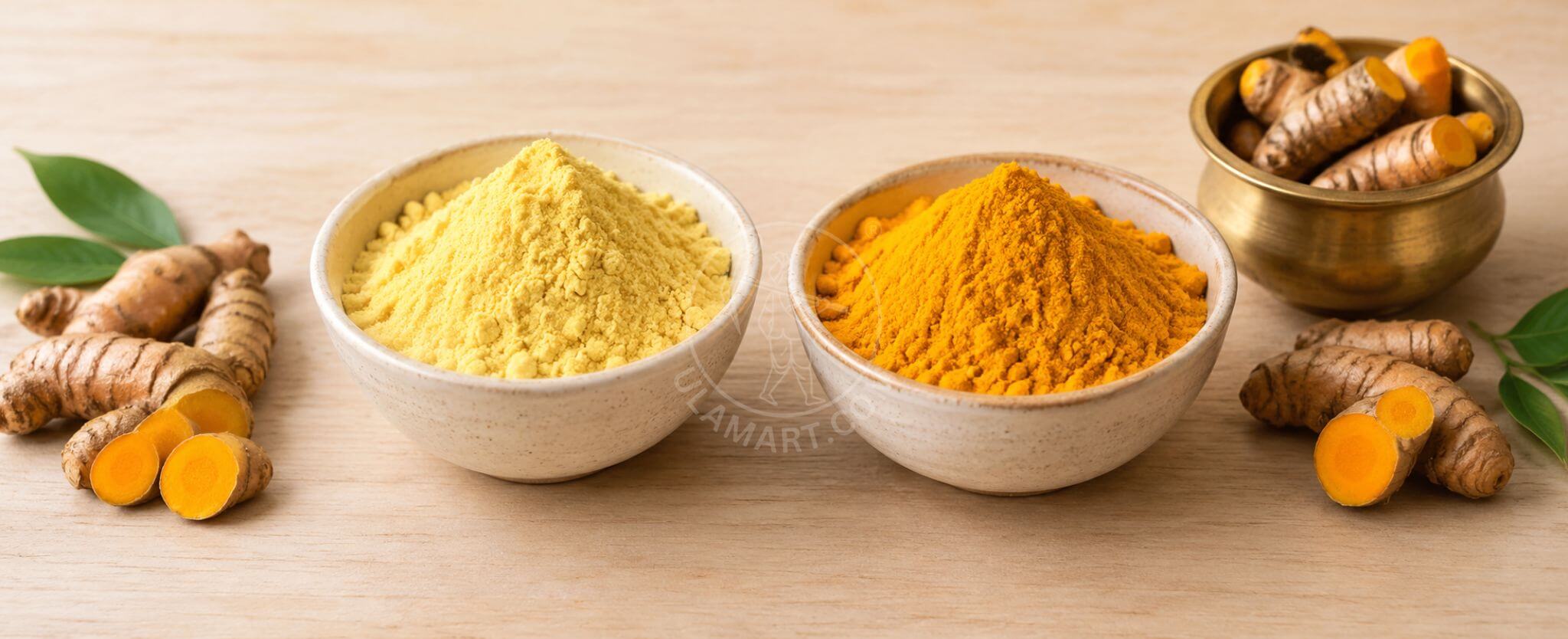
Kasturi manjal, known botanically as Curcuma aromatica, is often called wild turmeric or cosmetic turmeric. Unlike the turmeric we cook with, it is not primarily grown for culinary use. Its rhizome has a musky, slightly bitter fragrance, which is actually where the name kasturi comes from, a reference to musk. The plant is a distinct species from the culinary turmeric plant, which is part of why the two behave so differently once applied to skin.
Traditionally, kasturi manjal was never eaten. It was ground fresh or used as a dried powder exclusively for bathing rituals, bridal skincare, and postpartum care. Its low curcumin content compared to regular turmeric is actually the reason it became the preferred choice for the face, since curcumin is the pigment responsible for the deep yellow staining that regular turmeric is famous for.
What Regular Turmeric Brings to the Table
Regular turmeric, Curcuma longa, is the spice sitting in almost every Indian curry. It has a much higher curcumin concentration, which is exactly what gives it its intense anti-inflammatory and antioxidant reputation in Ayurveda and in modern nutrition research. When people talk about turmeric’s healing properties for the body, they are largely talking about curcumin.
On skin, this high curcumin content is a double edged sword. It does offer strong antioxidant and anti-inflammatory action, which can calm redness and support an even tone over time. But that same curcumin is a powerful natural dye. Anyone who has ever cooked with turmeric and later scrubbed a stained countertop knows exactly how stubborn that yellow tint can be, and skin is no exception.
Side by Side: Kasturi Manjal and Regular Turmeric
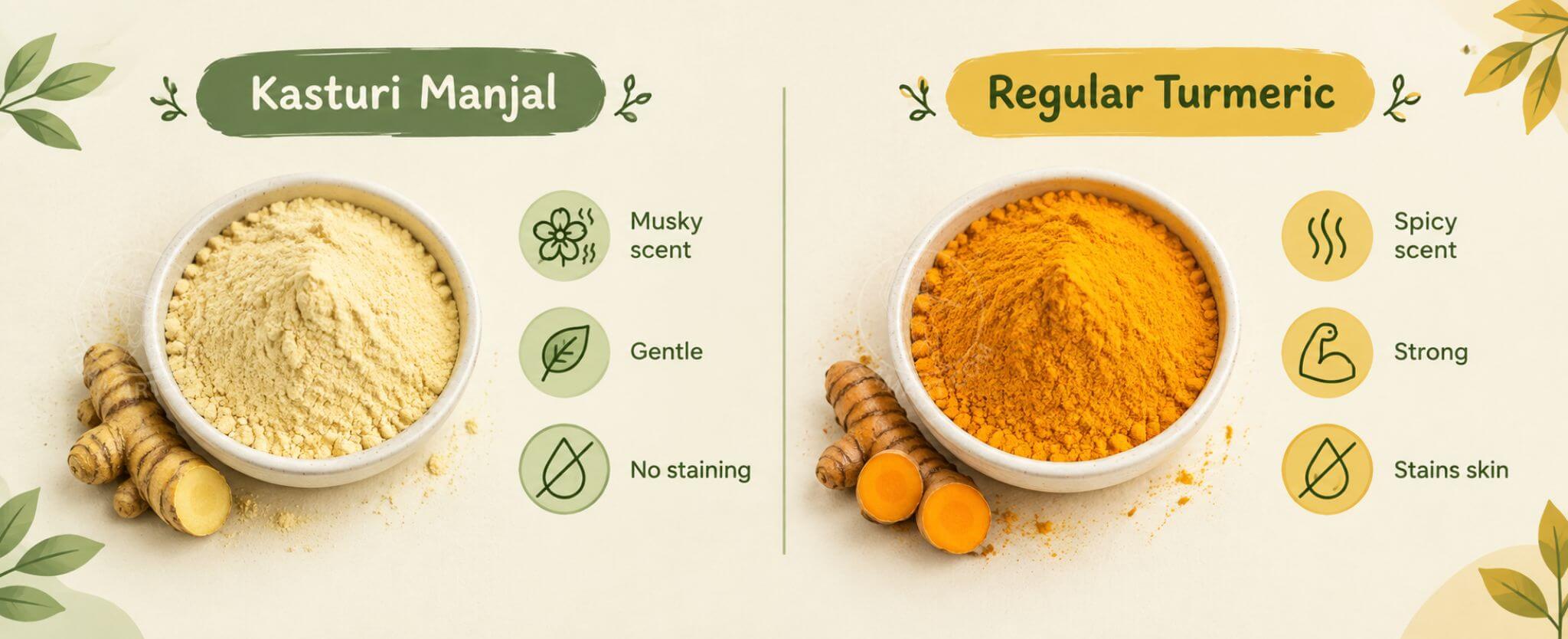
| Aspect | Kasturi Manjal | Regular Turmeric |
| Curcumin content | Low | High |
| Staining on skin | Minimal to none | Noticeable yellow tinge |
| Traditional use | Cosmetic and ritual bathing | Culinary and medicinal |
| Fragrance | Musky, mild bitterness | Sharp, earthy, spicy |
| Best suited for | Daily face packs, bridal skincare | Occasional spot treatment, healing masks |
This table sums up the practical difference most people actually care about: one is built for the face, the other is built for the kitchen and only borrowed for skincare when needed.
Which One Actually Brightens Skin Better
This is where most of the internet debate gets it wrong. Skin brightening is not only about how strong an ingredient is. It is about whether you can use it consistently without side effects, and this is exactly where kasturi manjal pulls ahead for regular, everyday use.
Because regular turmeric stains so easily, most people can only use it occasionally, maybe once every couple of weeks, and even then they need to mix it carefully with something like besan or yogurt and rinse thoroughly to avoid a yellow tint lingering for days. That inconsistency limits its real world brightening effect, no matter how potent curcumin is on paper.
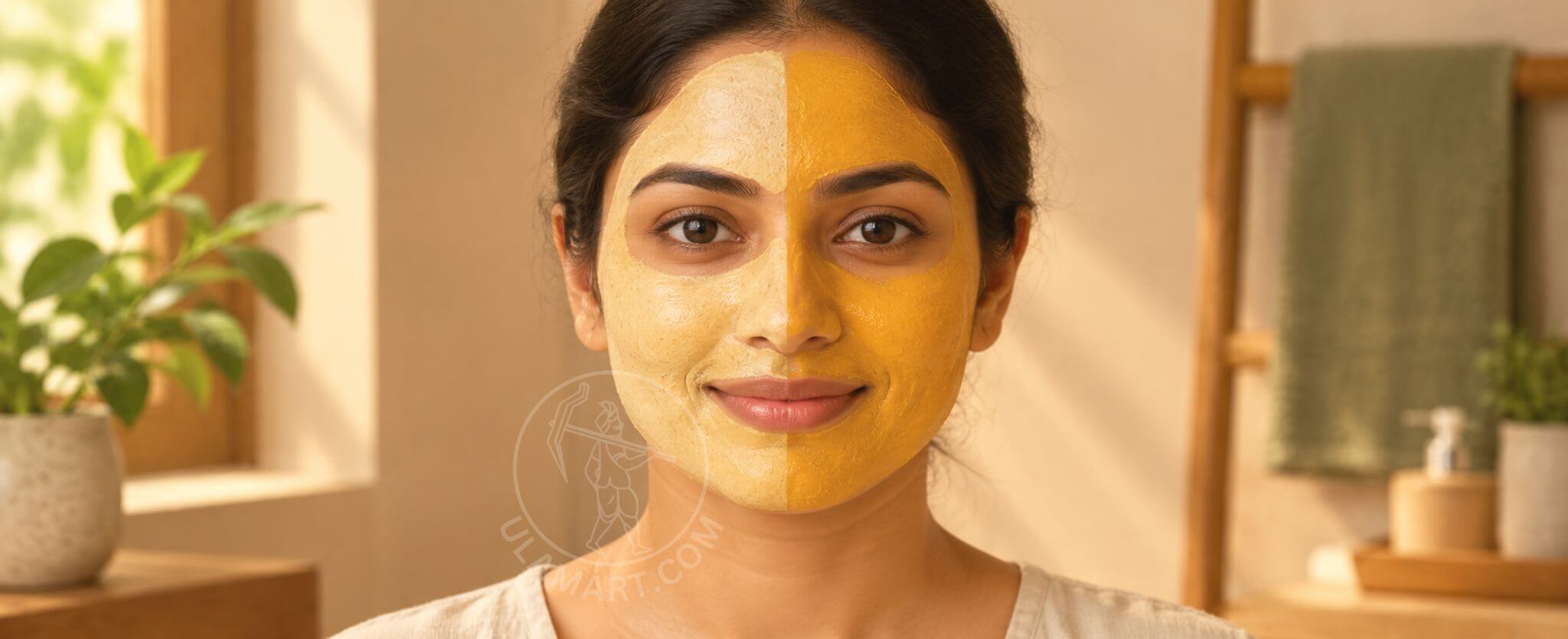
Kasturi manjal, on the other hand, can be used two to three times a week without staining concerns. Regular, gentle exfoliation combined with its natural oils helps remove dead skin cells, even out patchiness, and gradually bring out a healthier glow. The brightening effect here comes less from a single powerful compound and more from consistent, gentle use over weeks, which is honestly how most genuine skin improvements happen anyway.
For deeper pigmentation concerns, tan removal, or acne marks, regular turmeric’s higher curcumin content can offer a slightly stronger anti-inflammatory push, but only if you are willing to manage the staining trade-off and limit its use to targeted, occasional applications rather than a daily routine.
Sensitivity and Skin Type Considerations
People with sensitive or reactive skin often find kasturi manjal gentler. Its lower curcumin levels mean less risk of irritation, and it rarely triggers the burning or tightness some users report with strong turmeric pastes, especially when turmeric is mixed with heating ingredients like ginger or lemon.
Oily and acne-prone skin types can benefit from either, but kasturi manjal’s milder nature makes it more forgiving for daily use, while regular turmeric works well as an occasional spot application on active breakouts thanks to its stronger anti-inflammatory pull.
Dry skin types should be cautious with both, since turmeric in any form can be slightly drying if used without a moisturising base like milk, honey, or aloe gel mixed into the paste.
Combination skin, which is common across most skin types in a humid climate, tends to respond best to kasturi manjal used as a base ingredient in a regular routine, with regular turmeric brought in only during flare ups or before a special occasion when a quick brightening boost is needed rather than a long term staining risk.
Cost, Availability, and Shelf Life
Regular turmeric is inexpensive and available in every kitchen, which is exactly why so many people default to it for face packs without thinking twice. Kasturi manjal is priced slightly higher because it is grown specifically for cosmetic use and processed differently, but a small jar tends to last a long time since only a teaspoon is needed per application.
In terms of shelf life, both powders store well in an airtight container away from moisture and direct sunlight, typically staying fresh and potent for around a year. Kasturi manjal’s milder fragrance also means it does not overpower other ingredients in a face pack the way regular turmeric’s stronger spice note can, which is a small but real consideration if you are blending it with delicate ingredients like rose water or sandalwood.
How to Use Each for a Brightening Routine
If you are choosing kasturi manjal for regular use, a simple routine works well. Mix a teaspoon of kasturi manjal powder with rose water or raw milk to form a smooth paste, apply it evenly, leave it on for fifteen to twenty minutes, and rinse with lukewarm water. Because it does not stain, you can build this into a twice or thrice weekly habit without worrying about your skin looking yellow before an event. Many households pick up a jar of pure, unadulterated kasturi manjal powder online since sourcing the fresh rhizome locally is not always practical.
If you are reaching for regular turmeric instead, use it sparingly. A pinch mixed into a besan and yogurt base, applied once every ten to fourteen days, and rinsed off thoroughly with a gentle cleanser afterward, keeps the staining manageable while still letting you benefit from its stronger antioxidant punch.
A Quick Word on Quality
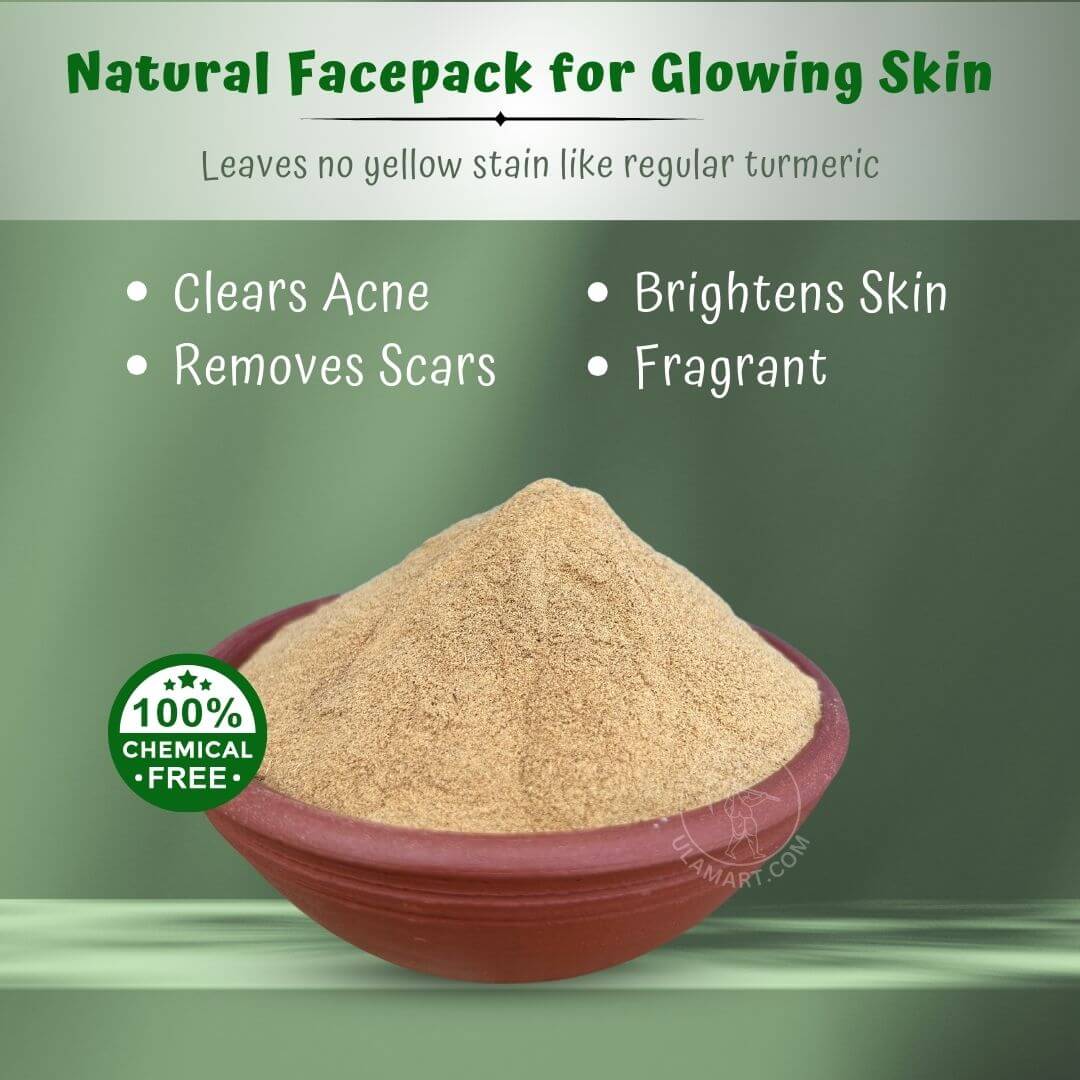
Not all kasturi manjal sold in the market is pure. Some are adulterated with regular turmeric or synthetic colourants to bulk up quantity, which defeats the entire purpose since the whole appeal of kasturi manjal is that it does not stain. When buying, look for a pale, almost off white to light yellow rhizome powder rather than the deep golden shade typical of cooking turmeric, and always do a small patch test on your wrist before applying anything new to your face, regardless of which powder you choose.
For most people building a regular skin brightening habit without the hassle of yellow stained pillowcases and collars, kasturi manjal from ulamart.com remains the more practical daily choice, while regular turmeric stays useful as an occasional, targeted treatment when your skin needs a stronger anti-inflammatory boost.