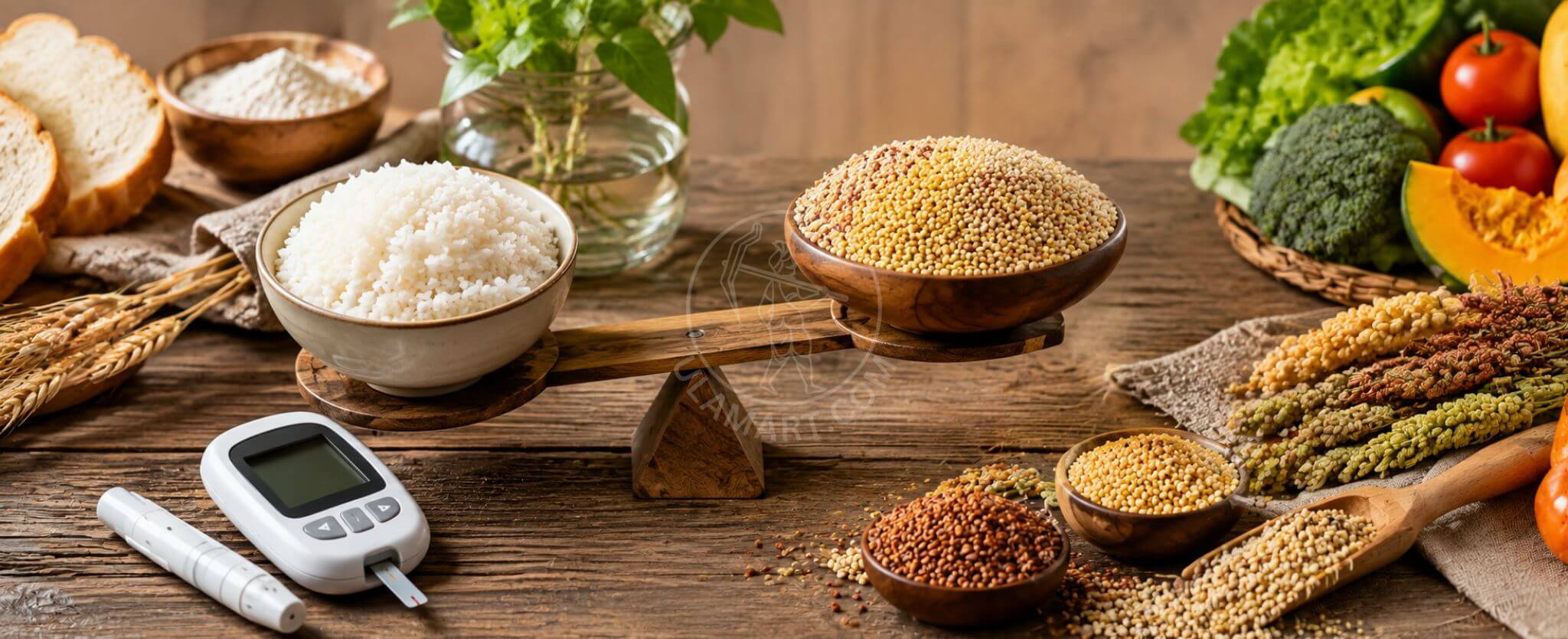
Managing blood sugar is a daily balancing act, and the grain sitting in the middle of your plate plays a bigger role in that balance than most people realize. Polished rice and refined wheat break down into glucose quickly, causing sharp spikes that put constant pressure on insulin response. Millets behave very differently. These small, ancient grains digest slowly, release glucose gradually, and have been part of South Indian diets for centuries, long before rice took over as the everyday staple.
- Why Glycemic Index Matters So Much for Diabetics
- Which Millets Actually Help the Most
- How Much to Eat and When
- Building a Simple Millet Diet Plan
- Common Mistakes to Avoid
- Making the Switch Stick
For anyone managing diabetes or trying to avoid it, the question is rarely whether millets help. Research has settled that fairly clearly. The real question is which millets to pick, how much to eat, and how to fit them into an Indian kitchen without turning every meal into a project.
Why Glycemic Index Matters So Much for Diabetics
The glycemic index, or GI, measures how quickly a food raises blood glucose after eating. Foods are scored on a scale of 0 to 100, with pure glucose sitting at 100. Anything above 70 is considered high GI, 56 to 69 is medium, and 55 or below is low GI. Low GI foods are digested and absorbed more slowly, which means a gentler rise in blood sugar and steadier energy levels through the day.
White rice sits at a GI of roughly 70 or higher, and refined wheat flour is not far behind. Millets, as a category, average around 53 on the GI scale, which is nearly a third lower than these everyday staples. A recent meta-analysis covering 65 global studies confirmed that millets consistently score lower than milled rice and refined wheat across nearly every variety tested, and that regular consumption measurably reduced fasting and post-meal glucose levels in people with diabetes over time, as detailed in this systematic review on millets and diabetes published by the National Center for Biotechnology Information.
That is not just a lab result. It translates directly into fewer post-meal energy crashes, better appetite control, and less strain on the pancreas over months and years.

Which Millets Actually Help the Most
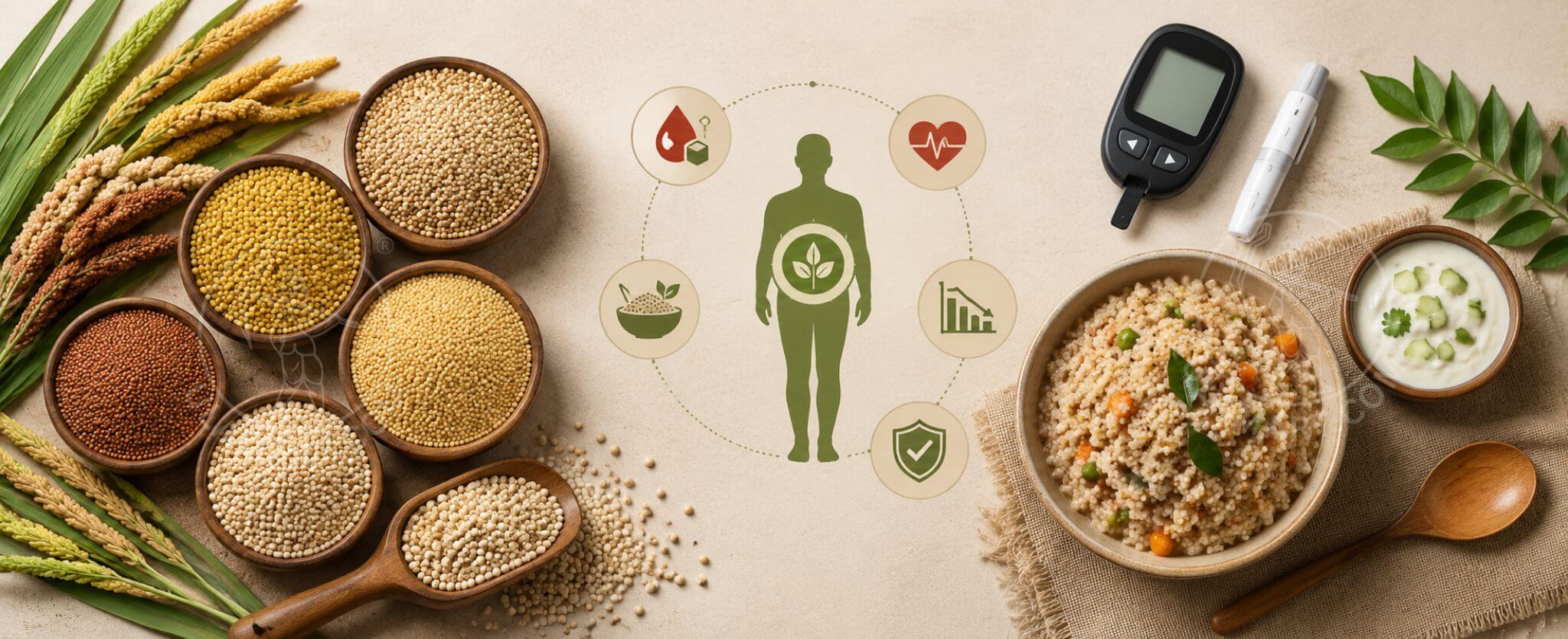
Not every millet performs the same way. Some fall into the low GI band, others sit in the medium range, and the difference matters if you are managing diabetes closely rather than just eating healthier in general.
| Millet | GI Category | Best Used For |
|---|---|---|
| Foxtail Millet (Thinai) | Low | Rice substitute, upma, khichdi |
| Barnyard Millet (Kuthiraivali) | Low | Idli, dosa batter, porridge |
| Little Millet (Samai) | Low to Medium | Pulao, curd rice alternative |
| Kodo Millet (Varagu) | Medium | Weight management meals, roti |
| Finger Millet (Ragi) | Medium | Roti, porridge, malt drinks |
| Pearl Millet (Kambu) | Medium | Roti, savoury porridge |
Foxtail millet and Barnyard millet tend to be the most forgiving choices for anyone newly switching over, since they cook similarly to rice and slot easily into familiar meals. The Little millet lies on the mid range and can be a part of your diet over the period. Kodo Millet, Finger Millet and Pearl Millet are excellent too, but they carry a slightly higher glycemic load, so portion control matters more with these two compared to foxtail or barnyard millet.
How Much to Eat and When
A common mistake is treating millets as a free food simply because they are healthier than rice. They still contain carbohydrates, and portion size still matters for blood sugar control.
A reasonable starting point is replacing one meal a day with a millet-based dish rather than switching every meal at once. This gives your digestive system time to adjust, since millets are higher in fibre than polished rice and can cause bloating if introduced too quickly in large amounts.
For an average adult with type 2 diabetes, roughly half a cup of cooked millet per meal, paired with a protein source like dal or curd and a generous portion of vegetables, is a sensible serving. Pairing millets with protein and fibre-rich vegetables slows glucose absorption even further, which is why a millet khichdi with moong dal tends to perform better on blood sugar than plain millet rice eaten alone.
Morning is often the easiest place to start. A bowl of ragi porridge or a foxtail millet upma keeps blood sugar steadier through the late morning compared to a wheat-based breakfast, which tends to cause a mid-morning energy dip.
Building a Simple Millet Diet Plan
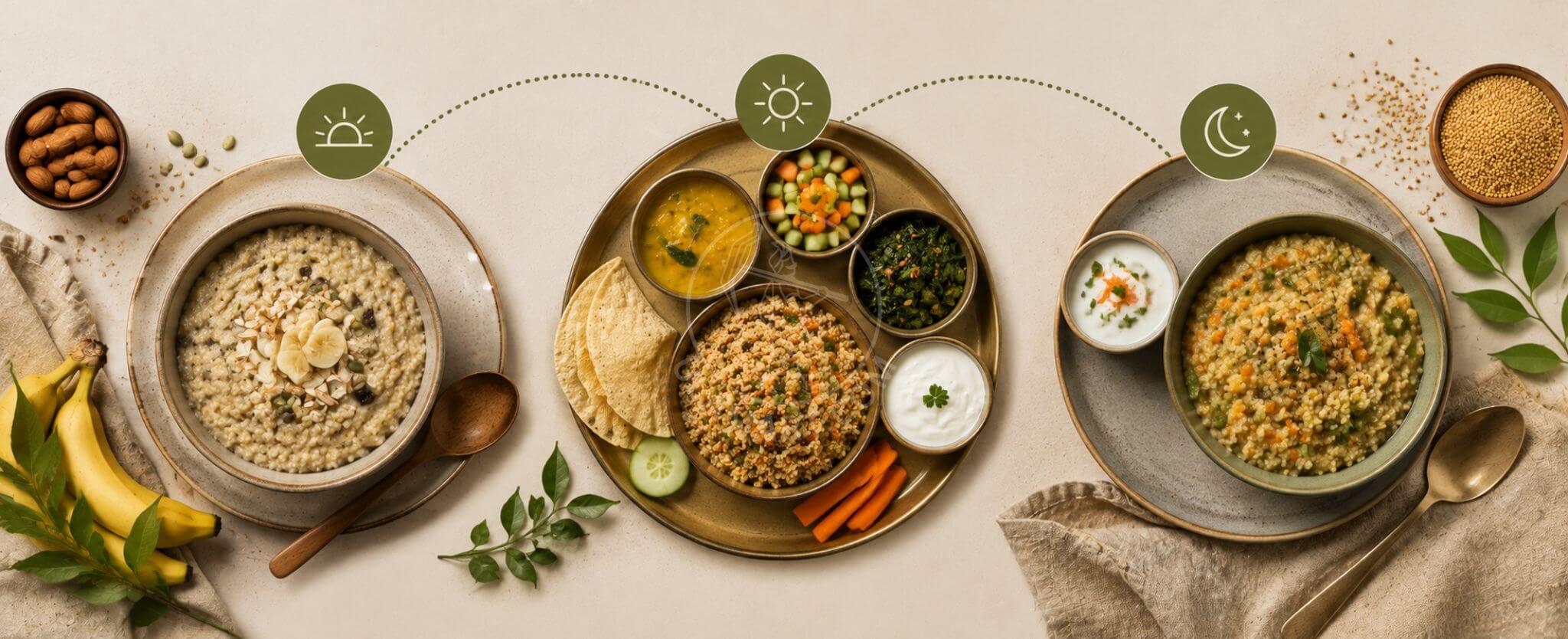
A diet plan does not need to be complicated to be effective. Most households manage the switch successfully by rotating two or three millet varieties through the week rather than relying on just one.
| Meal | Millet Option | Note |
|---|---|---|
| Breakfast | Ragi or Foxtail | Porridge or upma |
| Lunch | Barnyard or Little Millet | Replaces rice, pair with sambar |
| Dinner | Kodo Millet | Lighter portion, pair with vegetables |
Rotating varieties also spreads out the nutrient profile, since each millet brings a slightly different mix of fibre, magnesium, and protein. Finger millet, for instance, is notably rich in calcium, while barnyard millet has one of the highest fibre contents among the group.
If cooking plain millet feels repetitive, flours are an easy entry point. Millet Flours like Little Millet Flour, Kodo Millet flour, etc., makes a soft, slightly earthy roti that pairs well with any vegetable curry, and it holds up better than expected once you get the water ratio right. Swapping just the evening roti to a millet flour version is often enough to notice a difference in fasting sugar readings within a few weeks, though this should always be tracked alongside your regular blood sugar monitoring rather than replacing it.
Common Mistakes to Avoid
Cooking millets exactly like rice, with the same water ratio and timing, is one of the most frequent errors. Most millets need slightly more water and a longer soak than rice to cook through properly, and skipping this step results in a dense, undercooked texture that puts people off the switch entirely.
Another mistake is loading millet meals with excess ghee or deep-fried accompaniments, assuming the low GI grain cancels out the rest of the plate. It does not. The benefits of a low glycemic grain are easiest to see when the rest of the meal is balanced too.
Buying pre-mixed or highly processed millet products marketed as diabetic-friendly is worth a second look as well. Processing, especially fine milling and puffing, can raise the effective glycemic response of a millet compared to eating it in its more whole, minimally processed form. Whole grain or coarsely milled options generally serve blood sugar control better than heavily processed snack versions of the same millet.
Making the Switch Stick
The households that stick with millets long term usually do not try to overhaul their entire diet overnight. They pick one or two millets that suit their regional cooking style, learn the right water ratio and cooking time, and slowly build from there. Kerala households already familiar with puttu, for example, often find switching the puttu maavu base to a millet variety far easier than trying to introduce an entirely new dish.
For anyone still figuring out where to start, the broader nutrition guidance on whole grains and fibre-rich carbohydrates lines up closely with what works in an Indian kitchen, once you translate it into the millets and dishes covered here.
Diabetes management is rarely about one single change, but the grain on your plate three times a day is one of the few variables you have direct, daily control over. Choosing the right millet, cooking it the right way, and keeping portions sensible is a small shift that compounds meaningfully over months.
If you want to start simple, Ulamart’s range of millets includes most of these varieties already cleaned and ready to cook, so you are not stuck sourcing them from multiple places.