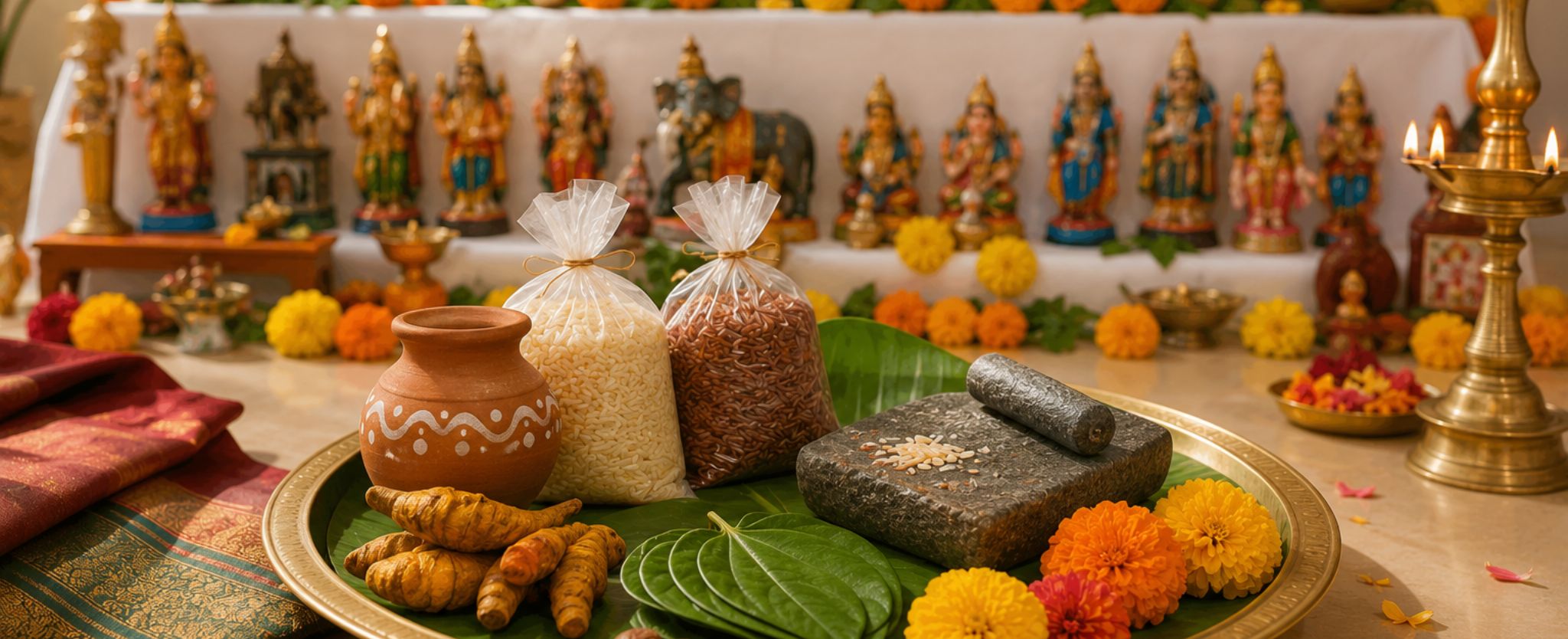
Navaratri golu season brings weeks of visitors walking through the door every evening, and every one of them leaves with a thamboolam tray in hand. The dolls on the steps get all the attention, but the return gift is what people actually remember once the festival ends. A well chosen return gift tells your guests something about your home, whether that is a love for heritage grains, a respect for handmade craft, or simply good taste in small things.
This navaratri golu gifting guide focuses on three categories that consistently work well as return gifts across Tamil Nadu, Andhra Pradesh, Karnataka and wherever golu is celebrated: heirloom rice, clay miniatures, and stone miniatures. Each one has its own charm, its own price range, and its own reason to make it into your thamboolam this year.
Why Rice, Clay, and Stone Work So Well as Return Gifts
Golu return gifts have quietly moved away from plastic trinkets over the last few years. Guests today notice when a gift feels considered rather than picked up in bulk from a wholesale market. Rice, clay, and stone share three qualities that make them stand out.
First, they connect to the festival itself. Neivedyam during golu is almost always rice based, so a small pack of a distinctive heirloom rice variety feels appropriate rather than random. Second, clay and stone miniatures echo the kitchen tools every South Indian household grew up around, from the ammikal to the ragi kal, so they carry instant recognition. Third, all three categories are reusable or edible, which means the gift does not end up forgotten in a drawer once Vijayadasami passes.
Navaratri Return Gift Ideas by Budget
| Budget Range | Suggested Category | Best For |
|---|---|---|
| Under Rs 150 | Single heirloom rice pack | Large guest lists, everyday visitors |
| Rs 150 to Rs 300 | Clay miniature or clay pen stand | Neighbours, close relatives |
| Rs 300 and above | Stone miniature ammikal or mortar | Family, sumangali gifting, kanya puja |
Heirloom Rice as a Thamboolam Return Gift
Rice return gifts work because they double as a household staple. A guest can open the pack the same week and use it in cooking, which is more than most return gifts can claim. For golu specifically, small packs of navara rice, mappillai samba, or black rice stand out because they are not varieties most guests buy for themselves in daily grocery runs.
A few pointers on choosing rice for return gifting this Navaratri:
Keep the pack size modest, around 250 grams to 500 grams, so it reads as a token rather than a grocery errand for the guest to carry home.
Pair the rice with a small printed card explaining the variety. Guests are far more likely to try an unfamiliar grain like organic ponni rice if they know what makes it different from what they usually cook.
If you are gifting across nine days to different guests, rotate two or three varieties rather than repeating the same one, so regular visitors do not receive the same pack twice.
Clay Miniatures for a Traditional Touch
Clay has always had a place in golu displays, from the kalasam to the small figurines lining the steps, so clay miniatures make natural return gifts. A clay pen stand suits guests who appreciate everyday utility, while a clay serving pot or a small clay house piece works well as a decorative keepsake for close family.
For guests with young children, a plantable ganesha or a seed ganesha adds a small ritual of its own once the festival is over, since the figurine can be planted and grows into an actual sapling. This is worth mentioning to guests directly, since not everyone recognises a plantable idol on sight.
Smaller decor pieces like the clay birds whistle or a handmade squirrel toy are gentle, low cost options for the kanya puja segment of your guest list, where young girls are the ones receiving gifts.
Clay Miniature Options at a Glance
| Clay Piece | Ideal Recipient |
|---|---|
| Clay pen stand | Working professionals, students |
| Plantable or seed ganesha | Guests who enjoy gardening |
| Clay birds whistle | Children during kanya puja |
| Clay serving pot | Close family, elders |
Stone Miniatures That Guests Actually Keep
Stone miniatures sit a notch above rice and clay in perceived value, which makes them well suited for closer relatives or your most senior guests. A stone mortar and pestle in miniature form is instantly recognisable to anyone who grew up watching a grandmother grind chutney by hand.
Two other pieces worth including in your golu gifting this year are the stone miniature ammikal, a tiny version of the traditional grinding stone, and the stone miniature ragi kal, which nods to the millet grinding stones many South Indian kitchens once relied on daily. Both fit easily into a thamboolam tray alongside betel leaves, turmeric, and fruit without adding bulk.
These pieces are heavier and slightly more expensive than clay or rice, so they suit smaller guest lists or the handful of relatives you want to gift something more memorable, rather than mass distribution across nine days of visitors.
Stone also has an advantage that rice and clay do not: it lasts for decades without any care beyond an occasional wash. Many households still use a full size ammikal that was gifted at a wedding thirty years earlier, so a miniature version carries some of that same sense of permanence, even at a fraction of the size and cost.
Building a Balanced Thamboolam Tray
A tray that leans entirely on one category tends to feel repetitive by the fourth or fifth night of golu. Mixing categories across your guest list keeps the gifting fresh and lets you match the gift to the relationship.
Sample Nine Day Gifting Rotation
| Day Range | Suggested Gift |
|---|---|
| Day 1 to 3 | Rice pack, single variety |
| Day 4 to 6 | Clay miniature piece |
| Day 7 to 9 | Stone miniature for select guests |
For the traditional betel leaf and turmeric portion of the thamboolam, keep the arrangement simple and let the rice, clay, or stone piece be the highlight the guest notices and talks about later. According to a cultural overview of the festival, the thamboolam exchange itself is rooted in the belief that whatever is given returns to the giver through the blessings of the goddesses honoured during the nine nights, which is part of why the gift is chosen with as much care as the golu display itself.
Whichever mix you choose, keeping the gifts within the golu theme rather than reaching for generic festival items is what makes a thamboolam memorable enough for guests to mention the following year.
Presentation Tips That Make a Small Gift Feel Bigger
The choice of item matters, but presentation is what a guest actually notices first when the tray reaches them. A rice pack in a plain plastic pouch reads very differently from the same pack tied with jute twine and a small handwritten tag.
A cotton or jute pouch works well for rice and clay pieces since it lets guests reuse the bag afterward instead of throwing it away. Stone miniatures, being heavier, are better wrapped in a small drawstring cloth bag rather than paper, which tends to tear under the weight. If you are gifting a clay pen stand or a small figurine, a strip of kraft paper with a wax seal style sticker keeps the packaging in line with the earthy, handmade feel of the gift itself.
A short handwritten note naming the golu theme for the year, or simply thanking the guest for visiting, adds a personal touch that costs nothing but is remembered far longer than the gift’s price tag would suggest.
Ordering Ahead for the Nine Nights
Navaratri gifting is rarely a one time purchase. Most households restock rice packs or clay pieces midway through the nine nights once they see how many guests are actually visiting each evening, so it helps to order in two smaller batches rather than one large one at the start.
For households expecting a large number of visitors across all nine days, it is worth placing an early order for the heirloom rice varieties and clay pieces you plan to use in the first half of the festival, then placing a second order once you have a clearer sense of your actual footfall. This avoids both running short on day six and overordering pieces that end up unused after Vijayadasami.
Stone miniatures, since they are meant for a shorter list of close guests, are easier to plan for in a single order placed well before the festival begins.