Ginger does not need introduction in Indian kitchens. It is in the chai before breakfast, in the tempering of the dal at lunch, in the marinade of the evening meal, and in the home remedy given the moment someone complains of a stomach ache or a cold. Its presence is so pervasive that it has become invisible, used on reflex rather than intention.
That invisibility is a kind of nutritional oversight. Ginger, known as inji in Tamil, adrak in Hindi, and allam in Telugu, is one of the most thoroughly researched medicinal plants in the world. Its bioactive compounds have been studied in clinical trials for nausea, inflammatory bowel disease, osteoarthritis, blood sugar regulation, cardiovascular health, and several forms of cancer. The evidence base is not thin or preliminary. It is deep, consistent, and clinically meaningful across multiple conditions.
This guide covers what ginger actually contains, how its active compounds work in the body, the specific health conditions where evidence is strongest, the difference between fresh and dried ginger and why it matters, and how traditional Indian medicine understood ginger’s properties long before laboratory science caught up. The goal is to convert a kitchen habit into an informed daily health practice.
What Ginger Actually Contains
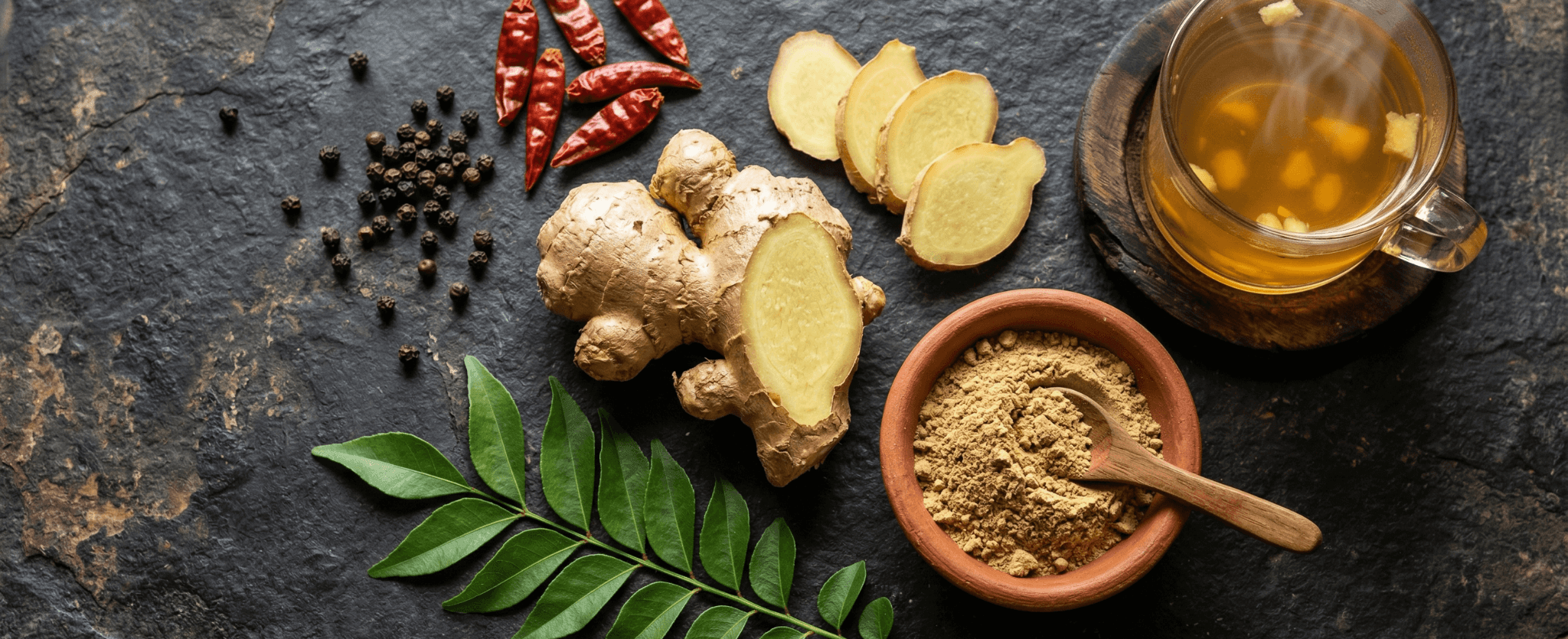
Ginger (Zingiber officinale) is a rhizome, not a root in the botanical sense, though it grows underground. The part of the plant used in cooking and medicine is the underground stem, which concentrates the bioactive compounds that give ginger its characteristic sharp heat and medicinal properties.
Gingerols: The Fresh Ginger Compounds
Gingerols are the primary bioactive compounds in fresh ginger. The most abundant and well-studied is 6-gingerol, which is responsible for ginger’s sharp pungency and most of its anti-nausea and anti-inflammatory effects. Gingerols inhibit the synthesis of prostaglandins and leukotrienes, the inflammatory signalling molecules that drive pain and inflammation in conditions like arthritis and inflammatory bowel disease. They also inhibit serotonin receptors in the gut that trigger the nausea reflex, which explains ginger’s longstanding use as a nausea remedy.
Shogaols: The Dried Ginger Compounds
When ginger is dried or cooked, gingerols undergo dehydration and convert to shogaols, primarily 6-shogaol. Shogaols are approximately two to three times more potent than their gingerol precursors in laboratory anti-inflammatory and antioxidant assays. They also show stronger activity against certain cancer cell lines in laboratory studies. This conversion is why dried ginger (sukku in Tamil) is considered more medicinally potent in Ayurvedic practice than fresh ginger, and why traditional preparations like sukku kaapi (dry ginger coffee) are used specifically for therapeutic purposes rather than flavour.
Zingerone, Paradols, and Volatile Oils
Zingerone develops when ginger is cooked and has documented antioxidant and anti-inflammatory properties alongside mild anaesthetic effects on gastrointestinal mucosa. Paradols are present in smaller quantities and contribute to ginger’s heat. The volatile essential oils of ginger, primarily zingiberene, beta-bisabolene, and camphene, are responsible for its characteristic aroma and have documented antimicrobial properties.
Fresh Ginger vs Dried Ginger: When to Use Which
| Property | Fresh Ginger (Inji) | Dried Ginger (Sukku) |
| Primary compound | Gingerols (6-gingerol dominant) | Shogaols (2 to 3x more potent) |
| Flavour profile | Sharp, bright, fresh pungency | Deeper, warmer, drier heat |
| Best for | Nausea, cooking, chai, marinades | Therapeutic preparations, rasam, sukku kaapi |
| Ayurvedic classification | Ardraka (moist, cooling effect after heat) | Shunti (dry, more heating, more medicinal) |
| Shelf life | 1 to 3 weeks refrigerated | Several months in airtight container |
Ginger and Digestion: The Strongest Evidence Base
Ginger’s effect on the digestive system is its most extensively studied and consistently confirmed benefit. The mechanisms are multiple and complementary, which is why ginger works across a wide range of digestive complaints rather than being specific to a single condition.
Accelerating Gastric Emptying
One of ginger’s most clinically significant digestive effects is accelerating gastric emptying, the rate at which food moves from the stomach into the small intestine. Delayed gastric emptying is associated with bloating, nausea, a feeling of fullness that persists long after eating, and acid reflux. A study published in the European Journal of Gastroenterology and Hepatology found that 1.2 grams of ginger taken before a meal accelerated gastric emptying by approximately 50 percent in healthy volunteers. This effect helps explain why ginger tea or ginger in chai before or after meals reduces post-meal heaviness so reliably.
Anti-Nausea: The Best-Documented Benefit
Ginger’s anti-nausea effect is the most rigorously studied of all its properties. Clinical trials have confirmed its effectiveness across multiple types of nausea including pregnancy-related morning sickness, chemotherapy-induced nausea, post-operative nausea, and motion sickness. A meta-analysis published in Obstetrics and Gynecology examining six randomised controlled trials concluded that ginger significantly reduced the severity of nausea and the number of vomiting episodes in pregnant women, with no adverse effects on pregnancy outcomes.
The mechanism involves gingerols and shogaols blocking 5-HT3 serotonin receptors in the gastrointestinal tract, the same receptors targeted by pharmaceutical anti-nausea drugs like ondansetron, but through a different binding mechanism that does not carry the side effects of pharmaceutical receptor blockade. This receptor interaction also explains why a simple ginger-lemon tea has been an effective morning sickness remedy in Indian households for generations.
Digestive Enzyme Stimulation
Ginger stimulates the secretion of digestive enzymes including lipase, amylase, and protease, improving the breakdown of fats, carbohydrates, and proteins respectively. It also increases bile secretion from the gallbladder, which is essential for fat digestion and absorption of fat-soluble vitamins. For people with sluggish digestion, particularly common in older adults and those with sedentary lifestyles, regular ginger consumption provides a meaningful digestive stimulant that works through the same pathway as traditional Ayurvedic deepana (digestive fire kindling) preparations.
Irritable Bowel Syndrome and Gut Motility
Ginger’s carminative effect, its ability to reduce gas accumulation in the intestinal tract, makes it one of the most practical dietary interventions for bloating and flatulence. It relaxes smooth muscle in the gastrointestinal tract while simultaneously stimulating peristaltic motility, reducing both gas retention and transit time. Preliminary clinical research on ginger supplementation in irritable bowel syndrome (IBS) has shown improvements in abdominal pain, bloating, and stool consistency in several small trials. Larger well-controlled trials are needed, but the mechanistic plausibility is strong.
Anti-Inflammatory Properties: What the Research Shows
Chronic inflammation is increasingly understood as the underlying driver of most non-communicable diseases: arthritis, type 2 diabetes, cardiovascular disease, Alzheimer’s disease, and certain cancers. Ginger addresses inflammation through several simultaneous pathways, giving it a breadth of anti-inflammatory action that few single-ingredient natural remedies can match.
COX-2 and 5-LOX Inhibition
Ginger inhibits both cyclooxygenase (COX-2) and 5-lipoxygenase (5-LOX), the two primary enzyme pathways through which the body produces pro-inflammatory prostaglandins and leukotrienes. This dual inhibition is significant because pharmaceutical anti-inflammatory drugs (NSAIDs) typically block only the COX pathway, leaving the 5-LOX pathway active and allowing a different class of inflammatory mediators to continue operating. Ginger’s simultaneous inhibition of both pathways provides a more complete anti-inflammatory effect.
Clinical Evidence in Arthritis
A randomised controlled trial published in Arthritis and Rheumatism compared ginger extract to placebo in patients with osteoarthritis of the knee. The ginger group showed statistically significant reductions in knee pain and improvements in knee function compared to the placebo group, with fewer adverse effects than standard NSAID treatment. A review of multiple clinical trials concluded that ginger extract produces clinically meaningful reductions in pain and disability in osteoarthritis patients, with a safety profile that compares favourably to pharmaceutical alternatives.
Traditional Indian practice of massaging warm ginger-infused oil into arthritic joints and drinking ginger-pepper preparations daily for joint pain is therefore not only traditional wisdom. It has a specific biochemical mechanism confirmed in controlled trials.
C-Reactive Protein and Systemic Inflammation
C-reactive protein (CRP) is the most widely used blood marker of systemic inflammation. Multiple clinical studies examining ginger supplementation have documented reductions in CRP levels, suggesting that regular ginger consumption contributes to lower baseline systemic inflammation. This effect is modest in individual studies but consistent across populations, suggesting that the cumulative benefit of daily ginger consumption over months and years contributes meaningfully to a lower inflammatory baseline.
Ginger’s Role in Immune Defense
The connection between ginger and immunity operates through several mechanisms, some direct and some through ginger’s anti-inflammatory and gut-supporting actions.
Antiviral Activity
Laboratory research has demonstrated that fresh ginger extract inhibits the attachment of human respiratory syncytial virus (RSV) to mucosal cells, preventing viral entry. Dried ginger (shogaols) shows activity against influenza A virus. These effects have been demonstrated in cell culture models and need further clinical confirmation, but they provide biological plausibility for the traditional use of ginger in managing respiratory infections and cold and flu symptoms.
Antibacterial Properties
Ginger compounds show meaningful antibacterial activity against a range of pathogens including Helicobacter pylori (associated with stomach ulcers), Staphylococcus aureus, E. coli, and Salmonella typhi. The volatile oils of ginger, particularly zingiberene and camphene, disrupt bacterial cell membranes and inhibit bacterial biofilm formation. These properties contribute to food safety when ginger is used in cooking and to the mild antibacterial function of ginger-containing preparations used for digestive infections.
Mucosal Immunity
Ginger’s warming quality increases blood flow and microcirculation to mucosal surfaces including the respiratory tract lining. Improved mucosal circulation enhances the delivery of immune cells and antibodies to these surfaces, which are the primary entry points for respiratory pathogens. The traditional practice of inhaling steam from ginger-infused water during respiratory infections is not merely symptomatic relief. It delivers volatile antibacterial compounds directly to the respiratory mucosa while the warmth itself supports mucosal immune cell activity.
For a broader view of how ginger works alongside other immune-supporting spices including turmeric and neem honey, the Ulamart guide on building immunity naturally with traditional foods covers the synergistic relationships between these ingredients in detail.
Blood Sugar Regulation and Cardiovascular Support
Blood Sugar
Ginger’s effects on blood glucose are less extensively studied than those of cinnamon, but the evidence that exists is consistent and encouraging. A randomised controlled trial published in the Iranian Journal of Pharmaceutical Research found that 2 grams of ginger powder daily for 12 weeks significantly reduced fasting blood glucose, HbA1c (the three-month blood sugar average), insulin resistance, and triglycerides in people with type 2 diabetes, compared to a placebo group.
The proposed mechanisms include gingerols inhibiting enzymes responsible for carbohydrate breakdown (alpha-glucosidase and alpha-amylase) and improving insulin sensitivity through GLUT4 receptor upregulation. Both mechanisms reduce the post-meal blood glucose spike that drives long-term diabetes complications. Combining ginger with cinnamon, which works through similar but partially distinct mechanisms, produces an additive blood sugar-moderating effect that traditional chai preparations with both spices deliver daily.
Ulamart’s guide on cinnamon benefits for blood sugar explores how cinnamon and ginger work together in traditional Indian spice combinations for metabolic health.
Cardiovascular Health
Ginger has documented antiplatelet activity, meaning it reduces the tendency of blood platelets to clump together and form clots. This effect is similar to but weaker than aspirin’s antiplatelet action. For people at elevated cardiovascular risk who are not on antiplatelet medication, regular ginger consumption contributes to a modest reduction in thrombotic risk. Ginger also reduces LDL cholesterol and triglycerides in several clinical studies, likely through its effect on lipid metabolism enzymes.
Ginger Health Benefits: Evidence Summary
| Benefit | Evidence Level | Key Mechanism |
| Nausea reduction | Strong (multiple RCTs) | 5-HT3 receptor blockade |
| Digestive acceleration | Strong | Gastric emptying stimulation |
| Anti-inflammatory | Strong (arthritis RCTs) | COX-2 and 5-LOX inhibition |
| Antiviral (RSV, influenza) | Preliminary (cell studies) | Mucosal receptor blocking |
| Blood sugar reduction | Moderate (several RCTs) | Alpha-glucosidase inhibition |
| Cholesterol reduction | Moderate | Lipid metabolism modulation |
Ginger in Ayurveda: What Classical Texts Say
In Ayurvedic pharmacology, ginger occupies a position of rare comprehensiveness. It appears in more formulations across more conditions than almost any other single ingredient, reflecting a traditional understanding of its multi-system action that modern research is now confirming.
Vishwabheshaja: The Universal Medicine
Ginger is called vishwabheshaja in Sanskrit Ayurvedic texts, meaning universal medicine. This title was not hyperbole. The Charaka Samhita lists ginger as beneficial across the following conditions: ama (metabolic toxins from incomplete digestion), vataja disorders (conditions of vata excess including joint pain, constipation, cold extremities, and nervous system disorders), kapha disorders (respiratory congestion, sluggish digestion, water retention), and cardiac conditions.
Ardraka and Shunti: Two Medicines in One Root
Ayurveda specifically distinguishes between fresh ginger (ardraka) and dried ginger (shunti) as having distinct medicinal properties, not merely different intensities of the same properties. Fresh ginger is considered appropriate for conditions requiring mucosal clearing and digestive stimulation. Dried ginger’s more concentrated shogaol content makes it more suitable for chronic conditions requiring deeper anti-inflammatory action, conditions of systemic cold and dampness, and formulations where stability over time is required.
Trikatu, one of the most fundamental Ayurvedic formulations, combines dried ginger (shunti), black pepper (maricha), and long pepper (pippali) in equal proportions. This combination is used to kindle digestive fire, improve the bioavailability of other medicines taken alongside it (through piperine’s absorption-enhancing effect), and treat respiratory congestion. Trikatu reflects a sophisticated understanding of pharmacokinetics, using piperine’s enzyme-inhibiting property to keep other medicinal compounds in the bloodstream longer.
How to Use Ginger Daily for Maximum Benefit
Fresh Ginger Preparations
- Adrak chai (ginger tea): 2 to 3 slices of fresh ginger simmered in 300 ml water for 5 minutes, strained and served with a small amount of honey. This is the simplest, most effective daily ginger delivery for digestive and immune support
- Ginger-lemon-honey morning water: Juice of half a lemon, 1 teaspoon freshly grated ginger, 1 teaspoon raw honey in 200 ml warm water. Anti-nausea, digestive stimulant, and immune support in a single morning preparation
- Fresh ginger in cooking: Add freshly grated ginger to tadkas, marinades, chutneys, and curry bases. The gingerols remain active in cooking at normal temperatures
- Ginger in rice preparations: A thumb-sized piece of fresh ginger pressure-cooked with millet or rice imparts flavour and digestive benefits to the entire preparation
Dried Ginger (Sukku) Preparations
- Sukku kaapi (dry ginger coffee): Dry ginger powder with a pinch of black pepper in hot water, sweetened with jaggery if desired. Traditional South Indian cold and flu remedy with strong shogaol content
- Trikatu blend: Equal parts dry ginger powder, black pepper powder, and long pepper or alternatively just dry ginger and black pepper. Quarter teaspoon in warm water before meals as a digestive fire preparation
- Sukku in rasam: The classic sukku milagu rasam of Tamil Nadu combines dry ginger and black pepper in a thin tamarind-tomato soup that delivers shogaol and piperine in the most bioavailable traditional preparation imaginable
- In spice blends: Dry ginger powder is a component of traditional garam masala and sambar powder, delivering its benefits through the daily seasoning of cooked food
Ulamart’s homemade sambar powder contains dry ginger alongside turmeric, coriander, and other traditional spices in a traditional South Indian blend.
Ginger with Other Spices: Synergies That Matter
Ginger works best when combined with specific companion spices that amplify or complement its actions.
- Ginger and turmeric: Anti-inflammatory synergy. Ginger’s COX and LOX inhibition works alongside turmeric’s NF-kB pathway inhibition to address inflammation from multiple directions simultaneously. Traditional golden milk with both is a well-founded therapeutic combination
- Ginger and black pepper: Bioavailability synergy. Piperine from black pepper delays the metabolism of gingerols in the liver, extending their time in the bloodstream. Adding a pinch of black pepper to ginger tea meaningfully increases ginger’s effective dose
- Ginger and honey: Antimicrobial synergy. Honey’s broad-spectrum antimicrobial compounds combine with ginger’s antibacterial volatile oils and antiviral gingerols. The traditional ginger-honey preparation for sore throat and respiratory infections addresses pathogens through complementary mechanisms
For a complete view of how turmeric works alongside ginger, see Ulamart’s guide to turmeric health benefits, which covers the NF-kB pathway in depth. Organic neem honey from Ulamart is ideal for the ginger-honey combination, adding the antimicrobial properties of neem to the synergy.
Daily Dosage and Who Should Use Caution
Practical Daily Dosage
Most clinical research on ginger has used doses between 1 and 3 grams of ginger powder per day (equivalent to approximately one teaspoon of ginger powder or two to three centimetres of fresh ginger root). This dose is easily achieved through normal cooking with fresh ginger, daily chai preparation, and occasional use of ginger-honey preparations. For targeted therapeutic use in conditions like morning sickness or arthritis, the clinical trial doses of 0.5 to 2 grams of dried ginger supplement per day were effective.
Cautions
- Blood-thinning medications: Ginger’s antiplatelet activity is mild but real. People on warfarin or other blood thinners should discuss significant increases in ginger consumption with their doctor, though normal culinary use at standard cooking quantities is generally considered safe
- Pregnancy: Culinary quantities of ginger are safe and beneficial during pregnancy for nausea. Therapeutic doses above 1 gram per day as a supplement during pregnancy should be discussed with an obstetrician, though clinical evidence consistently shows safety at doses used in nausea trials
- Gallstones: Ginger’s bile-stimulating effect may be contraindicated for people with active gallstones or gallbladder obstruction. Consult a doctor if you have known gallbladder conditions before significantly increasing ginger intake
- Surgery: Ginger should be discontinued approximately two weeks before elective surgery due to its antiplatelet properties
What Current Research Confirms
A comprehensive 2020 review published in Foods (MDPI) examined the evidence across 109 published studies on ginger’s health effects. The review confirmed strong evidence for anti-nausea, anti-inflammatory, and digestive effects, moderate evidence for blood sugar and cholesterol reduction, and preliminary evidence for antiviral and anticancer activity. The authors concluded that ginger’s multi-target mechanism of action, simultaneously addressing multiple pathological pathways, is its most distinguishing characteristic compared to single-mechanism pharmaceutical interventions.
The National Medicinal Plants Board of India classifies ginger as a priority medicinal plant under India’s national medicinal plant development programme, acknowledging both its documented clinical value and its importance to traditional medicine systems including Ayurveda, Siddha, and Unani.
The research backing behind ginger is not a recent discovery. It is the scientific verification of what every Indian household has practised instinctively for generations. The morning chai, the sukku rasam after a heavy meal, the ginger-honey given to a child with a cold: each of these practices reaches back to a time when food was the primary medicine and ginger was understood to be one of the most reliable tools available.
What modern science adds is not legitimacy. The practices were already legitimate. What science adds is mechanism: a precise vocabulary for what was always known to work. Ginger accelerates gastric emptying, blocks the serotonin receptors that cause nausea, inhibits both COX and LOX pathways of inflammation, blocks viral attachment at mucosal surfaces, improves insulin sensitivity, and reduces platelet aggregation. Knowing this does not change what ginger tastes like in a cup of adrak chai. It simply confirms that the chai was always doing something real.
Medical Disclaimer: This article is for general educational purposes only and does not constitute medical advice. People with diagnosed health conditions or those on medication should consult a qualified healthcare professional before using ginger therapeutically. Ginger is not a replacement for prescribed medication.