Have you ever wondered where your rice actually comes from? Not just “from a farm” in some vague, marketing-brochure way, but really, truly where it grows, who plants it, and how it reaches your kitchen?
Most of us have no idea. We pick up a bag of rice from a supermarket shelf, check the price, maybe glance at the brand name, and move on. There’s a massive disconnect between the field where food grows and the plate where we eat it. Somewhere in that gap, involving multiple middlemen, processing plants, and distribution centers, we lose something important. We lose the story. We lose the connection. And often, we lose the nutrition too.
At Ulamart, we believe there’s a better way. A way that’s actually the oldest way, before industrialization complicated everything. It’s called farm to table, and it’s not just a trendy phrase for us. It’s how we’ve built our entire business.
Let me take you on a journey. Not a marketing journey, but a real one. From the black soil fields of Tamil Nadu to your kitchen. This is the Ulamart story.
Why Direct Sourcing Matters
Before we dive into how we do things, let’s talk about why it matters.
The Traditional Supply Chain Problem
In a typical food supply chain, here’s what happens between a farmer and your dining table:
Farmer → Local Trader → Regional Aggregator → Processing Unit → Distributor → Wholesaler → Retailer → You
That’s at least six middlemen. Each one takes a cut. Each one adds time. Each one potentially compromises quality.
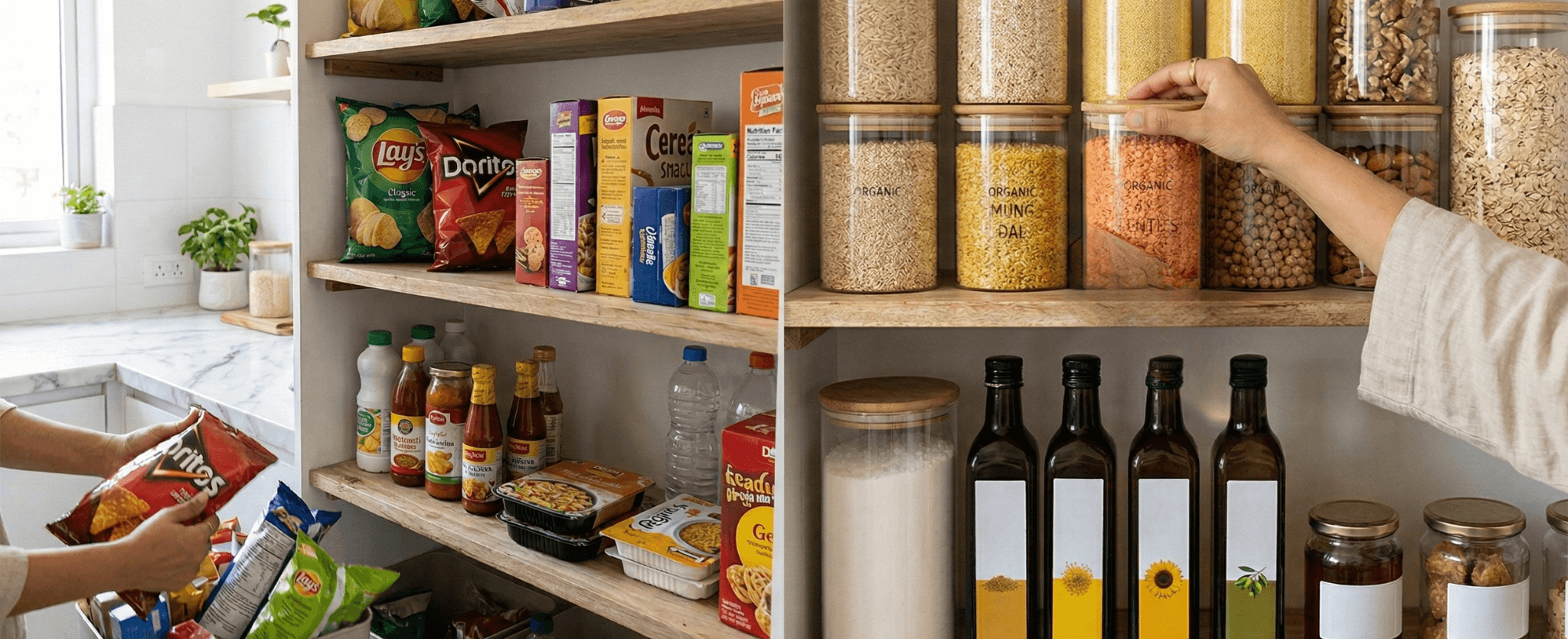
By the time that rice reaches you, several things have happened. The farmer got a fraction of what you paid. The rice might have been mixed with lower quality grains to increase profit margins. It’s been stored in who-knows-what conditions. And it’s been sitting in warehouses and on shelves for months, losing freshness and nutrients.
Here’s the really sad part: while you’re paying premium prices for “organic” rice, the farmer who actually grew it organically is barely making enough to sustain his family. The middlemen are the only ones truly benefiting.
The Ulamart Difference
Now, here’s our supply chain:
Farmer → Ulamart → You
That’s it. Just two steps. We buy directly from farmers, store and package ourselves, and deliver to you. No middlemen. No confusion about quality. No exploitation.
This isn’t just better for business. It’s better for everyone:
- Farmers get fair prices and direct payment
- You get fresher, authentic products at reasonable prices
- The environment benefits from reduced transportation and storage
- Traditional agriculture stays alive because farming becomes viable again
How We Find Our Farmers
You can’t just wake up one day and decide to work directly with farmers. Building these relationships takes time, trust, and a deep understanding of agriculture.
The Search Process
Our journey to find farmers starts in the villages where traditional varieties have been grown for generations. These aren’t the modern agricultural hubs you see on TV. These are small villages where farming knowledge has been passed down through families for centuries.
We look for farmers who:
- Grow traditional varieties (not modern hybrids)
- Practice organic methods (no chemical pesticides or fertilizers)
- Have generational farming knowledge (understand the crop intimately)
- Are committed to quality (not just focused on quantity)
This isn’t easy. Traditional farming is hard work with lower yields than modern methods. Many farmers have switched to commercial crops or given up farming entirely. Finding those who still maintain traditional practices is like searching for treasure.
Building Trust
The first time we visit a farmer, they’re skeptical. And rightfully so. They’ve heard promises before from traders who never followed through. They’ve been cheated by middlemen who shortchanged them. Why should they trust us?
We don’t ask for trust immediately. We earn it.
We start small. Maybe with one harvest. We pay fair prices, on time, in full. We visit their farms. We understand their challenges. We listen to their stories. Over time, trust builds.
Many of our farmer partners have been with us for years now. They’re not just suppliers. They’re partners in preserving India’s agricultural heritage.
Our Farmer Partnership Model
Once we establish a relationship with a farmer, here’s how our partnership works:
Fair Pricing
We don’t negotiate prices down to squeeze maximum profit. Instead, we discuss with farmers what they need to sustain their families and continue organic farming.
Our pricing considers:
- Cost of organic farming practices
- Time and labor involved
- Quality of the product
- Long-term sustainability
We pay 30-50% more than what middlemen typically offer. Yes, this costs us more. But it means farmers can actually make a living from traditional agriculture.
Direct Payment
We pay farmers directly, usually within 7 days of receiving the harvest. No waiting for months. No deductions for mysterious “quality issues.” No games.
Many farmers tell us this is revolutionary. They’re used to waiting 30-60 days for payment, often receiving less than promised.
Technical Support
We provide support where needed:
- Organic certification assistance
- Quality improvement guidance
- Storage recommendations
- Connection to organic farming networks
We’re not experts telling farmers how to farm. Their knowledge far exceeds ours. But we help with the business and certification aspects that can be confusing or expensive.
Long-term Commitment
We don’t just buy from farmers when prices are low and disappear when they need us. We commit to buying their entire organic harvest every season.
This gives farmers security. They know they have a guaranteed buyer. This makes them more willing to stick with traditional, organic methods instead of chasing higher-yielding commercial crops.
Quality Control: From Field to Package
Direct sourcing means we control quality at every step. Here’s our detailed quality process:
Stage 1: Pre-Harvest Assessment
Before harvest, we visit farms to:
- Verify organic farming practices
- Check crop health
- Estimate harvest timing
- Discuss any concerns
This isn’t about catching farmers doing something wrong. It’s about ensuring we’re all on the same page about what we’re growing and how.
Stage 2: Harvest Quality Check
When the crop is harvested, we:
- Inspect grain quality
- Check for any contamination
- Verify the variety is authentic
- Test moisture content
We’re looking for the characteristics that make traditional varieties special. Not just any rice, but Mappillai Samba with its distinct reddish-brown hue and nutty aroma. Not just any millet, but authentic Thinai with its golden color and small, uniform grains.
Stage 3: Processing Standards
Once we receive the harvest at our facility, minimal processing begins:
- Single-pass polishing (removes only outer husk)
- No bleaching or coating
- No mixing with other varieties
- Hand-sorting to remove broken grains and debris
- Cleaning and de-husking
- No polishing (keeps nutrients intact)
- Stone and debris removal
- Size sorting
- Cold-pressed using traditional wood presses
- Single pressing (no heat or chemicals)
- Filtered naturally
- Bottled immediately to preserve freshness
- Raw and unprocessed
- No heating (preserves enzymes)
- Simple filtering
- Direct from beehive to bottle
Stage 4: Testing and Certification
Every batch undergoes:
- Purity testing
- Pesticide residue testing (should be zero!)
- Moisture content verification
- Nutritional analysis (sample basis)
We maintain FSSAI certification and organic certification for all our products. But these aren’t just certificates on a wall. They represent real standards we maintain every single day.
Stage 5: Packaging and Storage
Packaging is done carefully:
- Food-grade, BPA-free materials
- Vacuum sealing for freshness (where applicable)
- Clear labeling with harvest date and origin
- Proper storage in climate-controlled facilities
We don’t believe in fancy packaging that adds cost without value. Our packages are simple but effective, designed to preserve quality while being environmentally responsible.
The Traditional Varieties We Source
Here’s a look at what we source and from where:
Rice Varieties Sourcing Map
| Rice Variety | Primary Source Region | Farming Method | Typical Farmers per Variety |
| Karuppu Kavuni | Chettinad, Tamil Nadu | Organic, Traditional | 15-20 |
| Mappillai Samba | Thanjavur, Tamil Nadu | Organic, Traditional | 25-30 |
| Kattuyanam | Sivaganga, Tamil Nadu | Organic, Traditional | 10-15 |
| Seeraga Samba | Karur, Tamil Nadu | Organic, Traditional | 20-25 |
| Navara Rice | Palakkad, Kerala | Organic, Ayurvedic farms | 8-10 |
| Poongar Rice | Tirunelveli, Tamil Nadu | Organic, Traditional | 12-18 |
Millet Varieties Sourcing Map
| Millet Type | Primary Source Region | Farming Method | Typical Farmers per Variety |
| Foxtail Millet | Dharmapuri, Tamil Nadu | Organic, Rain-fed | 30-40 |
| Little Millet | Salem, Tamil Nadu | Organic, Rain-fed | 25-35 |
| Barnyard Millet | Coimbatore, Tamil Nadu | Organic, Traditional | 20-25 |
| Pearl Millet | Dindigul, Tamil Nadu | Organic, Traditional | 35-45 |
| Finger Millet | Krishnagiri, Tamil Nadu | Organic, Rain-fed | 40-50 |
Why These Regions?
These aren’t random choices. Each region has specific soil types, climate conditions, and farming traditions that make them ideal for particular crops. Seeraga Samba from Karur has a distinct aroma you won’t find anywhere else. Karuppu Kavuni from Chettinad’s black soil is unmatched in quality.
By sourcing from the right regions, we ensure authenticity and superior quality.
Meet Our Farmers (Real Stories)
Let me introduce you to some of the farmers who make Ulamart possible:
Murugesan – The Karuppu Kavuni Expert
Murugesan’s family has been growing black rice in Chettinad for four generations. When we first met him five years ago, he was ready to give up. Black rice yields are lower than white rice, and traders were offering him pittance.
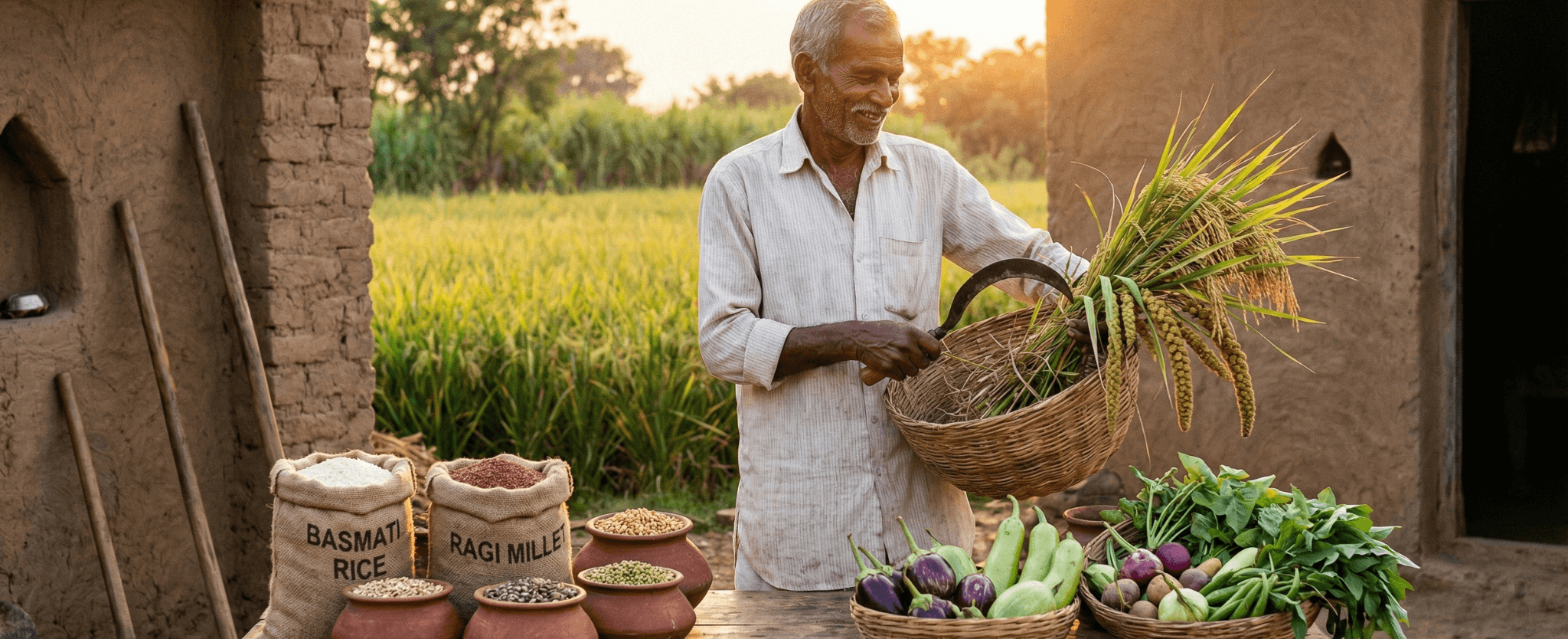
Today, Murugesan farms 5 acres of organic Karuppu Kavuni. His entire harvest comes to Ulamart. He’s taught three neighboring farmers organic black rice cultivation. His son, who had moved to Chennai for work, has returned to join the family farm.
“For the first time in my life, farming feels dignified,” he tells us. “I’m not begging traders to buy my crop. I have a partner who values what I grow.”
Lakshmi – The Millet Pioneer
Lakshmi started growing foxtail millet when her husband fell ill from pesticide exposure while farming conventional crops. She converted their 3 acres to organic millet farming eight years ago.
Other villagers laughed at her. “Millet is poor people’s food,” they said. “Why waste good land on it?”
Today, Lakshmi supplies us with premium organic foxtail millet. She’s become a local leader in organic farming, conducting workshops for other women farmers. Her husband has recovered and now helps with the farm.
“Millets saved my family twice,” she says. “First by removing the poison from our farming. Then by giving us a decent income through Ulamart.”
Krishnan – The Oil Master
Krishnan runs a small cold-press oil operation using century-old wooden presses. His grandfather’s generation made oil for the entire village. But when refined oil became cheap and popular, business dried up.
We found Krishnan when searching for authentic cold-pressed oils. His presses were gathering dust. His expertise was going to waste.
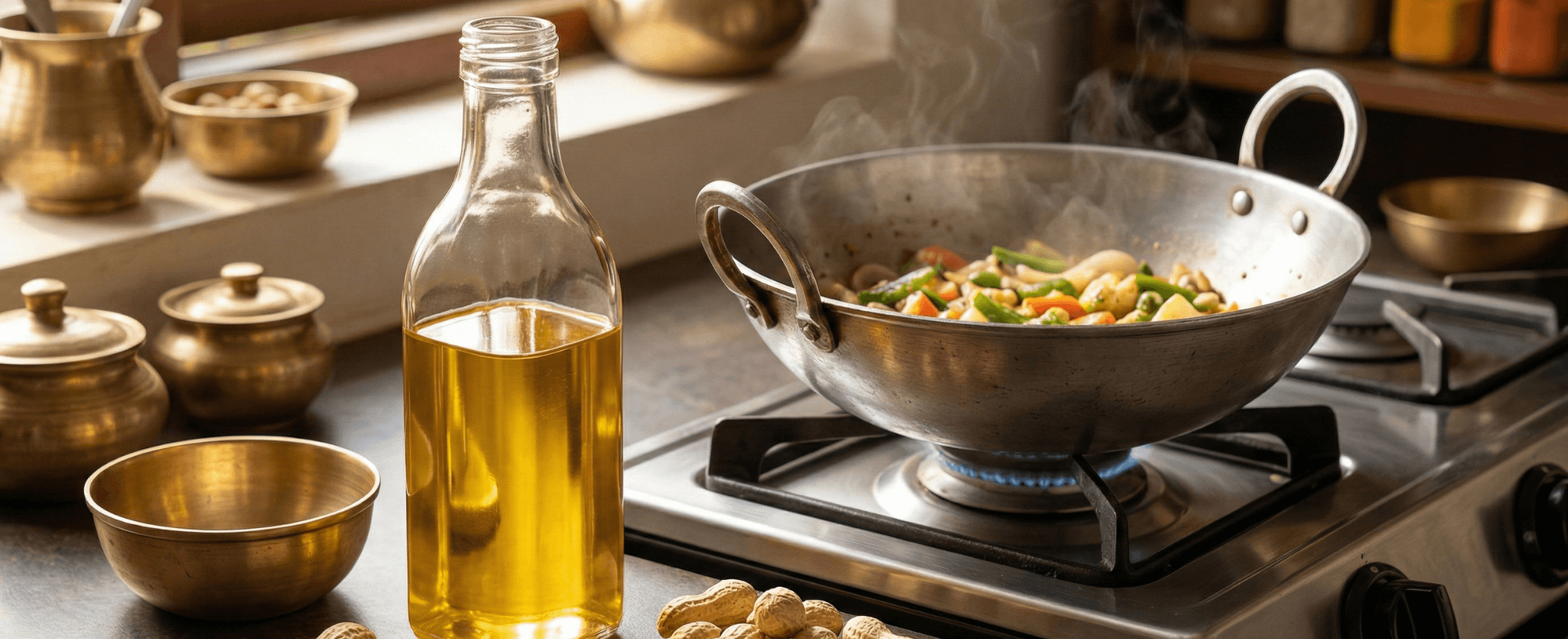
Now, Krishnan’s operation runs full-time, producing cold-pressed coconut, sesame, and groundnut oil for Ulamart. He’s trained two young apprentices who are learning the traditional pressing methods.
“These machines are more valuable than I knew,” Krishnan reflects. “Not just for making oil, but for preserving a way of life.”
Challenges We Face
Direct sourcing isn’t always easy. Let’s be honest about the challenges:
Lower Yields
Traditional varieties and organic methods produce lower yields than modern farming. We can’t just order more product when demand increases. We’re limited by what our farmers can organically produce.
This sometimes means products go out of stock. It’s frustrating, but it’s the price of authenticity.
Weather Dependence
When drought hits or rains fail, our farmers suffer, and so does our supply. We don’t have backup suppliers with hybrid crops stored in massive warehouses.
We’ve learned to work with nature’s rhythms rather than against them. Some years are abundant. Some years are lean.
Higher Costs
Paying fair prices and maintaining quality standards costs more than the middleman model. This means our products cost more than mass-market alternatives.
We’re okay with this. Quality and ethics aren’t negotiable for us.
Logistics Complexity
Collecting small batches from individual farmers across Tamil Nadu and Kerala is more complex than buying truckloads from one supplier.
We’ve built relationships with local transport partners who understand the importance of careful handling. It’s more work, but it’s worth it.
What This Means for You
When you buy from Ulamart, you’re not just buying rice or millet or oil. You’re participating in a different kind of food system.
You Know Where Your Food Comes From
Every product can be traced back to specific farms. While we can’t list every farmer on every package (there isn’t enough space!), we know the source of every batch.
Want to know where your Mappillai Samba came from? Ask us. We’ll tell you the region, the farming method, and even the harvest month.
You Get Authentic Products
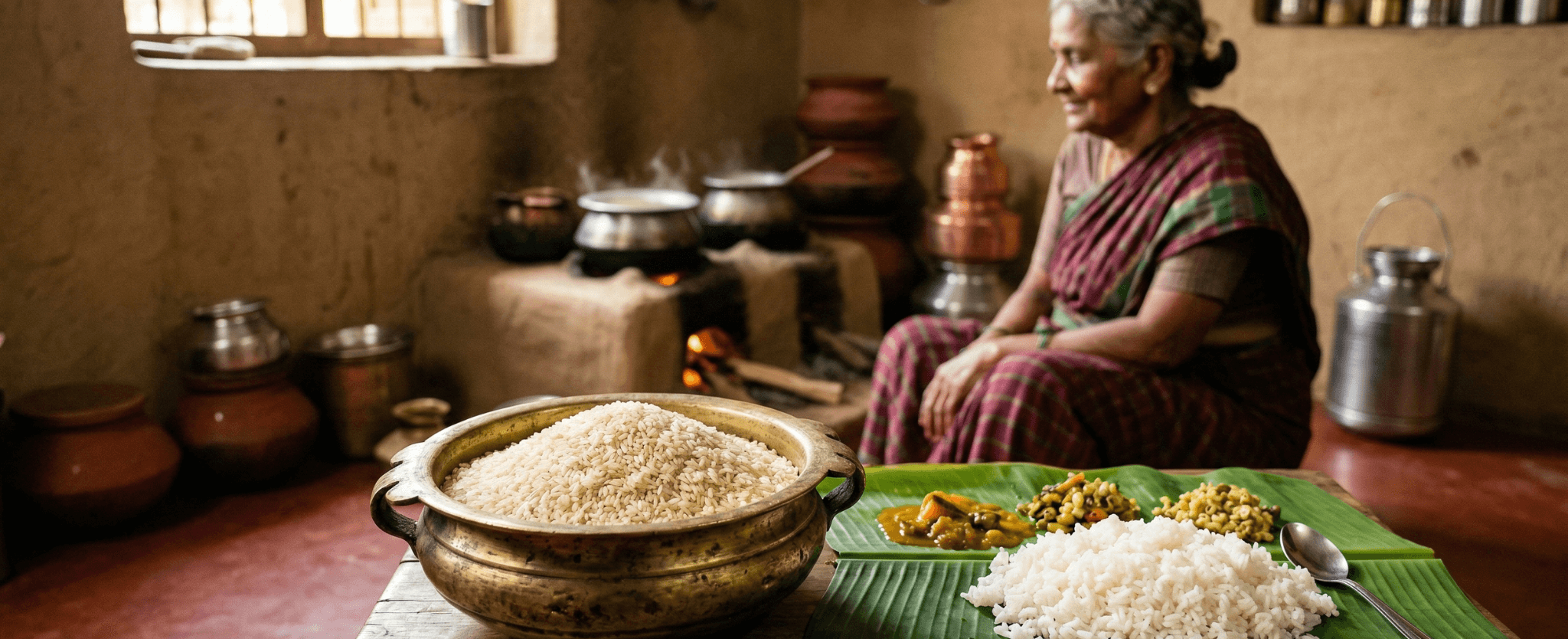
That Karuppu Kavuni you bought? It’s real black rice from Chettinad, not regular rice dyed black (yes, that’s a thing some sellers do). That cold-pressed coconut oil? It’s made the same way your great-grandmother’s oil was made.
Authenticity isn’t marketing speak for us. It’s a commitment.
You Support Sustainable Agriculture
Every purchase helps keep traditional, organic farming alive. You’re enabling farmers to continue practices that are better for the soil, water, and environment.
You’re voting with your wallet for a sustainable food future.
You’re Part of a Community
Ulamart customers aren’t just buyers. You’re part of a community that values tradition, quality, and fairness. Your choices help preserve agricultural heritage and support rural livelihoods.
Many customers tell us they feel good knowing their food purchase helps a farming family in Tamil Nadu. This connection, this meaning, is what shopping should include.
Looking Ahead: Our Vision
We dream of a future where:
- More farmers return to traditional, sustainable agriculture
- Traditional crop varieties thrive instead of disappearing
- Consumers have a real connection to where their food comes from
- Fair pricing is the norm, not the exception
We’re expanding our farmer network slowly and carefully. Quality over quantity. Relationships over transactions.
In the next five years, we aim to work with 500 farmer families across South India. We want to help revive rare traditional varieties that are on the verge of extinction. We want to build processing facilities that give farmers even more control over their products.
But we’ll only grow if we can maintain the direct connection that makes Ulamart special. We’ll never sacrifice relationship for scale.
The Bottom Line
Food is personal. It nourishes your body, connects you to culture, and shapes your health. It should come from people you can trust, grown with methods you can believe in, delivered with transparency you can verify.
That’s not the food system we have today. But it’s the food system we’re building at Ulamart, one farmer relationship at a time.
The next time you open a package of Ulamart rice or drizzle our cold-pressed oil, remember: there’s a real person behind that product. A person who woke up before dawn, worked in the hot sun, and carefully tended those crops with pride and knowledge passed down through generations.
That connection, from their farm to your table, is what makes food meaningful again.