Walk into any trendy health food store today, and you’ll find quinoa from Peru, chia seeds from Mexico, and acai berries from Brazil. These exotic superfoods come with exotic price tags and plenty of marketing hype. But what if I told you that one of the most powerful superfoods on the planet has been growing in Indian fields for over 5,000 years, and your grandmother probably cooked with it regularly?
Meet foxtail millet, or as it’s known in Tamil as “thinai” and in Kannada as “navane.” This tiny golden grain was once a staple across India, sustaining civilizations long before rice became the dominant crop. Then, somewhere along the way, we forgot about it. We traded ancient wisdom for modern convenience, swapping nutrient-dense millets for polished white rice.
But here’s the exciting news: foxtail millet is making a spectacular comeback, and for good reason. Modern science is discovering what our ancestors knew instinctively. This humble grain packs a nutritional punch that puts many trendy superfoods to shame.
Why Did We Stop Eating Foxtail Millet?
Before we dive into the benefits, let’s understand what happened. How did a grain that fed millions for millennia nearly disappear from our plates?
The answer is simple: the Green Revolution of the 1960s prioritized high-yielding varieties of wheat and rice. Government policies, subsidies, and distribution systems all favored these crops. Traditional grains like millets were labeled “inferior” or “food for the poor.” Urban populations began associating millets with poverty and backwardness.
The irony? While we were busy chasing the so-called superior grains, we were actually trading down nutritionally. We gave up robust health for empty calories.
Thankfully, the tide is turning. As lifestyle diseases like diabetes, obesity, and heart disease reach epidemic proportions, people are rediscovering the foods that kept their ancestors healthy and strong.
What Exactly is Foxtail Millet?
Foxtail millet (Setaria italica) gets its name from its appearance. The grain head looks like a fox’s bushy tail, swaying gracefully in the breeze. It’s one of the oldest cultivated grains, with evidence of its use dating back to 8,000 years ago in China and 5,000 years in India.
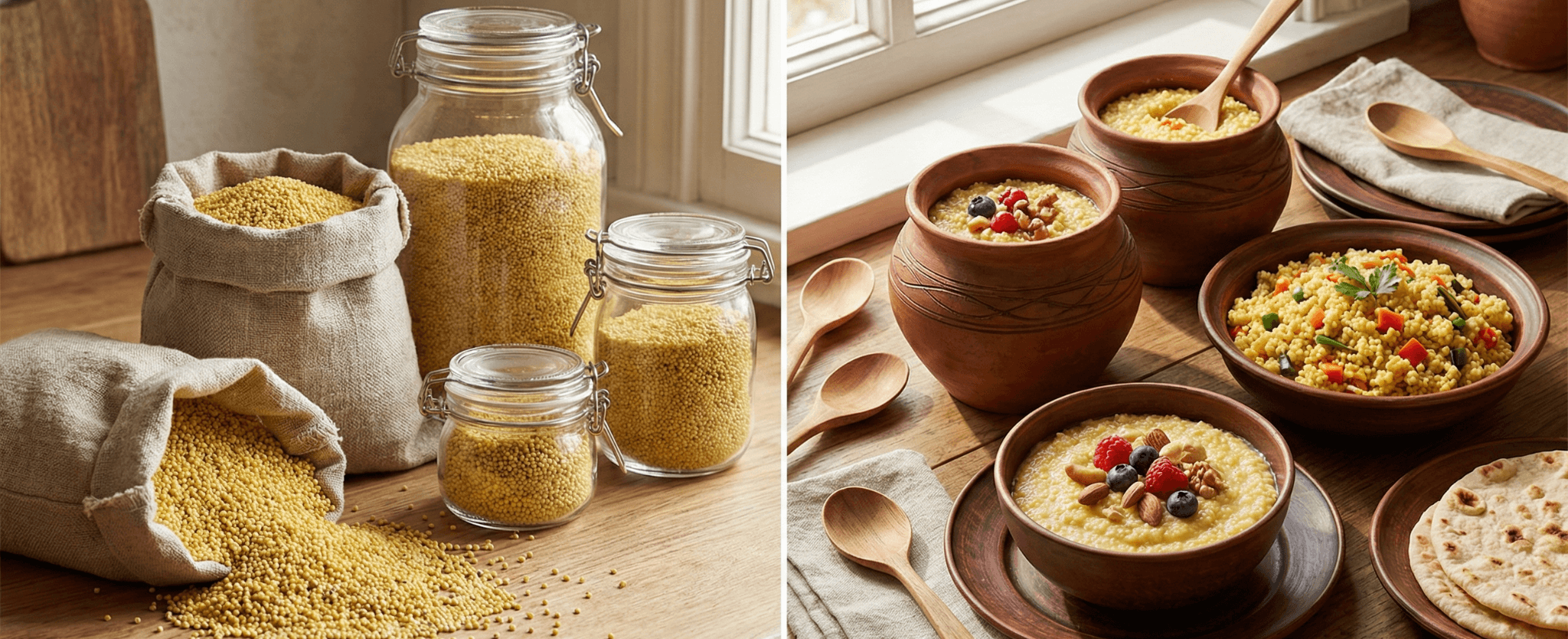
The grain itself is tiny, about the size of a mustard seed, with a beautiful golden-yellow color. Don’t let the small size fool you. These little grains are nutritional powerhouses.
In India, foxtail millet goes by different names depending on the region:
- Tamil: Thinai
- Telugu: Korra
- Kannada: Navane
- Hindi: Kangni or Kakun
- Marathi: Rala
- Bengali: Kaon
Nutritional Profile: Why Foxtail Millet is a True Superfood
Let’s look at what you’re actually getting when you eat foxtail millet. The numbers might surprise you.
Nutritional Comparison Table (Per 100g)
| Nutrient | Foxtail Millet | White Rice | Quinoa | Wheat |
| Calories | 351 kcal | 130 kcal | 368 kcal | 340 kcal |
| Protein | 12.3g | 2.7g | 14.1g | 11.8g |
| Fiber | 8.0g | 0.4g | 7.0g | 12.2g |
| Iron | 2.8mg | 0.2mg | 4.6mg | 3.2mg |
| Calcium | 31mg | 10mg | 47mg | 29mg |
| Magnesium | 81mg | 25mg | 197mg | 126mg |
| Phosphorus | 290mg | 68mg | 457mg | 288mg |
| Potassium | 250mg | 35mg | 563mg | 363mg |
| Zinc | 2.4mg | 0.5mg | 3.1mg | 2.7mg |
| Vitamin B1 | 0.59mg | 0.02mg | 0.36mg | 0.38mg |
| Vitamin B2 | 0.11mg | 0.01mg | 0.32mg | 0.12mg |
| Glycemic Index | 50-55 | 70-90 | 53 | 45-50 |
Key Takeaway: Foxtail millet outperforms white rice in every single category. It even holds its own against trendy superfoods like quinoa, and it’s grown right here in India.
What Makes These Numbers Matter?
Let’s break down why this nutritional profile is so powerful:
High Protein: At 12.3g per 100g, foxtail millet provides nearly as much protein as quinoa and more than four times the protein in white rice. This makes it excellent for vegetarians and anyone looking to increase their protein intake.
Rich in Fiber: Eight grams of fiber per 100g means better digestion, stable blood sugar, and lasting satiety. Compare that to white rice’s measly 0.4g.
Mineral Powerhouse: The iron content helps prevent anemia, calcium supports bone health, and magnesium plays a crucial role in over 300 bodily processes.
Low Glycemic Index: With a GI of 50-55, foxtail millet releases energy slowly and steadily, preventing blood sugar spikes and crashes.
10 Science-Backed Health Benefits of Foxtail Millet
1. Excellent for Diabetes Management
This is perhaps the most compelling reason why diabetics should embrace foxtail millet.
The low glycemic index combined with high fiber content makes foxtail millet ideal for blood sugar control. Studies have shown that replacing rice with foxtail millet can lead to significantly better post-meal blood sugar levels.
But there’s more. Foxtail millet contains compounds that may improve insulin sensitivity, meaning your body becomes more efficient at using the insulin it produces. For type 2 diabetics, this is a game-changer.
Research backing: A study published in the Journal of Food Science and Technology found that regular consumption of foxtail millet improved glycemic control in diabetic patients better than white rice consumption.
2. Heart Health Guardian
Your cardiovascular system will love foxtail millet for several reasons:
Magnesium content: The high magnesium levels help regulate blood pressure and reduce the risk of heart attacks and strokes. Magnesium deficiency is linked to increased heart disease risk, and most people don’t get enough of this crucial mineral.
Cholesterol management: Foxtail millet has been shown to reduce LDL (bad) cholesterol while maintaining or even increasing HDL (good) cholesterol. This favorable cholesterol profile is crucial for heart health.
Anti-inflammatory properties: Chronic inflammation is a major contributor to heart disease. The antioxidants in foxtail millet help reduce inflammation throughout the body, including in blood vessels.
3. Weight Loss Support
Trying to shed those extra pounds? Foxtail millet can help.
The high fiber and protein content work together to create a powerful satiety effect. You feel fuller for longer, which naturally reduces overall calorie intake. Unlike simple carbohydrates that leave you hungry shortly after eating, foxtail millet provides sustained energy and satisfaction.
Plus, the complex carbohydrates in millet are digested slowly, preventing the insulin spikes that can lead to fat storage. Your body burns fat more efficiently when blood sugar and insulin levels remain stable.
Practical benefit: People who replace their regular rice or wheat with foxtail millet often report feeling less hungry between meals and having fewer cravings for sugary snacks.
4. Digestive System Supporter
Foxtail millet is remarkably easy on the digestive system while supporting its healthy function.
The high fiber content acts as a prebiotic, feeding the beneficial bacteria in your gut. A healthy gut microbiome is linked to better immunity, improved mood, reduced inflammation, and even better weight management.
The fiber also promotes regular bowel movements and helps prevent constipation. Unlike some grains that can cause bloating or digestive discomfort, foxtail millet is generally well-tolerated, even by people with sensitive stomachs.
Bonus: Foxtail millet is gluten-free, making it perfect for people with celiac disease or gluten sensitivity.
5. Bone and Teeth Strengthener
The combination of calcium and phosphorus in foxtail millet makes it excellent for maintaining strong bones and teeth.
While we often think of dairy as the primary calcium source, plant-based calcium from millets can be just as effective. The phosphorus works synergistically with calcium, helping the body absorb and utilize this crucial mineral more efficiently.
This is particularly important for:
- Growing children who need calcium for development
- Women going through menopause who face increased osteoporosis risk
- Elderly individuals concerned about bone density
6. Thyroid Function Support
Foxtail millet contains compounds that support healthy thyroid function. The thyroid gland regulates metabolism, energy levels, and numerous hormonal processes.
The zinc and selenium in foxtail millet are particularly important for thyroid health. These minerals are essential for the production and conversion of thyroid hormones.
Important note: While foxtail millet supports thyroid health in most people, those with existing thyroid conditions should consult their healthcare provider, as millets can affect iodine absorption in some cases.
7. Immune System Booster
The combination of vitamins, minerals, and antioxidants in foxtail millet helps strengthen your immune system.
Zinc plays a crucial role in immune function, helping your body fight off infections. The B vitamins support energy production and help maintain healthy immune cells. The antioxidants protect cells from damage and support overall immune health.
Regular consumption of nutrient-dense foods like foxtail millet can help reduce the frequency and severity of common illnesses.
8. Brain Health and Cognitive Function
Foxtail millet provides several nutrients important for brain health:
B Vitamins: Particularly B1 (thiamine) and B2 (riboflavin), which are crucial for nerve function and cognitive performance. Thiamine deficiency has been linked to memory problems and cognitive decline.
Magnesium: This mineral helps protect the brain from stress and supports healthy nerve transmission.
Iron: Essential for delivering oxygen to the brain. Iron deficiency can lead to poor concentration, fatigue, and reduced cognitive performance.
9. Energy Sustainer
Unlike the quick energy spike and crash you get from simple carbohydrates, foxtail millet provides steady, sustained energy throughout the day.
The complex carbohydrates are digested slowly, releasing glucose gradually into your bloodstream. This means stable energy levels without the afternoon slump that often follows a rice-heavy lunch.
Athletes and active individuals appreciate this sustained energy, especially for endurance activities. The protein content also helps with muscle recovery and maintenance.
10. Anti-Aging Properties
The antioxidants in foxtail millet help combat oxidative stress, one of the primary drivers of aging.
Free radicals damage cells and accelerate aging, affecting everything from your skin to your internal organs. The antioxidants in foxtail millet neutralize these free radicals, helping protect your cells and potentially slowing the aging process.
While no food can stop aging, a diet rich in antioxidants can help you age more gracefully and maintain better health as you get older.
How to Cook Foxtail Millet: A Complete Guide
One of the best things about foxtail millet is how easy it is to cook. If you can cook rice, you can definitely cook foxtail millet.
Basic Cooking Method
Ingredients:
- 1 cup foxtail millet
- 2.5 cups water
- Salt to taste (optional)
Steps:
- Rinse: Wash the millet 2-3 times in water. This removes any dust and improves the taste.
- Toast (optional but recommended): Dry roast the washed and drained millet in a pan for 2-3 minutes over medium heat. This enhances the nutty flavor and makes the grains fluffier. Skip this if you’re short on time.
- Boil: Bring water to a boil in a pot. Add the millet and salt if using.
- Simmer: Reduce heat to low, cover, and cook for 15-20 minutes until the water is absorbed and the millet is tender.
- Rest: Turn off heat and let it sit covered for 5 minutes.
- Fluff: Use a fork to fluff the grains gently.
Result: Light, fluffy, slightly nutty-tasting grain that can be used in countless ways.
Pressure Cooker Method
For faster cooking:
- Use 1:2 ratio (1 cup millet to 2 cups water)
- Cook for 1 whistle on medium heat
- Let pressure release naturally
- Fluff and serve
Pro Cooking Tips
Perfect texture: For separate, fluffy grains, use less water (1:2 ratio). For softer, porridge-like consistency, use more water (1:3 ratio).
No soaking needed: Unlike some other millets, foxtail millet doesn’t need pre-soaking, making it convenient for quick meals.
Batch cooking: Cook a larger batch and store in the refrigerator for up to 5 days. Reheat as needed.
Enhance flavor: Add a bay leaf, cinnamon stick, or cardamom while cooking for subtle aromatic notes.
Delicious Foxtail Millet Recipes
Breakfast Ideas
Thinai (Foxtail Millet) Upma
A South Indian breakfast classic made healthier:
- Heat oil, add mustard seeds, curry leaves, and green chilies
- Add chopped onions and vegetables (carrots, beans, peas)
- Add cooked millet and mix well
- Season with salt and a squeeze of lemon
- Garnish with fresh coriander
Foxtail Millet Porridge
- Cook millet with extra water until soft and creamy
- Add milk (dairy or plant-based) and sweeten with jaggery or honey
- Top with nuts, seeds, and fresh fruits
- Add cinnamon or cardamom for flavor
Millet Dosa
- Grind soaked foxtail millet with urad dal
- Ferment overnight
- Make crispy dosas on a hot griddle
- Serve with chutney and sambar
Lunch and Dinner Options
Foxtail Millet Pulao
- Sauté whole spices (bay leaf, cinnamon, cloves) in ghee
- Add vegetables of your choice
- Add cooked millet and mix gently
- Garnish with fried cashews and raisins
Millet Khichdi
- Cook foxtail millet with moong dal
- Add turmeric, cumin, and vegetables
- Temper with ghee and serve hot
- Perfect comfort food that’s gentle on digestion
Thinai Sadam (Millet Rice)
- Simply cook foxtail millet like rice
- Serve with your regular curries and side dishes
- Use it as a direct replacement for rice in any meal
Vegetable Millet Biryani
- Layer partially cooked millet with spiced vegetables
- Add saffron milk and fried onions
- Cook on low heat until done
- A healthier version of traditional biryani
Snacks and Sweets
Foxtail Millet Ladoo
- Dry roast millet flour until aromatic
- Mix with jaggery powder and ghee
- Add cardamom and chopped nuts
- Shape into balls while warm
Millet Cutlets
- Mix cooked millet with mashed potatoes
- Add spices, herbs, and breadcrumbs
- Shape into patties and shallow fry
- Serve as a snack or appetizer
Thinai Payasam
- Cook millet in milk until soft
- Add jaggery and cardamom
- Garnish with nuts and saffron
- A traditional South Indian dessert
Making the Switch: Practical Tips
Week-by-Week Transition Plan
Week 1: Breakfast Replacement Start by replacing your regular breakfast cereal or upma with foxtail millet versions. Your digestive system gets time to adjust, and breakfast is typically the easiest meal to modify.
Week 2: Add as a Side Include cooked foxtail millet as a side dish to your regular meals. Try it with dal or curry instead of rice for one meal per day.
Week 3: Lunch Replacement Replace rice with foxtail millet for lunch. Most people find this easier than dinner replacement since they have more time to digest before bed.
Week 4: Full Integration By now, your body should be adjusted. Use foxtail millet in various meals throughout the day.
Tips for Picky Eaters
If you or your family members are resistant to change:
Mix it in: Start by mixing millet with rice in a 1:3 ratio. Gradually increase the millet proportion over several weeks.
Familiar preparations: Make dishes you already love using millet instead of rice. If your family loves pulao, make millet pulao. The familiar flavors make the transition easier.
Don’t announce it: Sometimes the best strategy is to simply serve millet-based dishes without making a big deal about the “healthy change.” Many people won’t even notice the difference if it’s well-prepared.
Start with sweets: Millet-based sweets and desserts are often more readily accepted because the natural sweetness of jaggery or honey masks any unfamiliar taste.
Buying and Storing Foxtail Millet
What to Look For When Buying
Color: Should be bright golden-yellow. Dull or grayish color indicates old or improperly stored millet.
Grain quality: Grains should be uniform in size and free from debris, stones, or excessive broken grains.
Smell: Fresh millet has a mild, pleasant, slightly nutty aroma. Any musty or rancid smell is a red flag.
Organic certification: Choose certified organic millet to ensure it’s free from pesticides and chemical fertilizers.
Source: Buy from reputable suppliers who can verify the authenticity and origin of the millet.
Storage Guidelines
- Store in an airtight container in a cool, dry place
- Keeps well for 6-8 months at room temperature
- For longer storage, refrigerate (lasts up to 12 months)
- Keep away from moisture and direct sunlight
- Check periodically for any signs of infestation or rancidity
Why Quality Matters
Not all foxtail millet is created equal. Millet grown using traditional organic methods retains more nutrients and tastes better than conventionally grown varieties. The processing method also matters. Minimally processed millet retains more of its nutritional value.
Buying directly from farmers or trusted organic suppliers ensures you’re getting authentic, high-quality millet that delivers the health benefits you’re seeking.
Common Questions and Concerns
“Does foxtail millet taste good?”
Foxtail millet has a mild, slightly nutty flavor that most people find pleasant. It’s much more neutral-tasting than some other millets, making it versatile and easy to incorporate into various dishes. The taste is subtle enough that it takes on the flavors of whatever you cook it with.
“Is it difficult to cook?”
Not at all! In fact, foxtail millet is one of the easiest millets to cook. It doesn’t require soaking, cooks faster than brown rice, and the cooking method is almost identical to cooking rice.
“Will my family accept it?”
This depends on how you introduce it. Gradual transition, familiar recipes, and proper cooking techniques usually lead to acceptance. Many families report that after a few weeks, they actually prefer millet to rice because it keeps them feeling better throughout the day.
“Is it more expensive than rice?”
Yes, foxtail millet typically costs more than regular white rice, but it’s comparable to or even cheaper than organic brown rice or quinoa. Consider it an investment in health that may save you money on healthcare costs in the long run.
“Can I eat it every day?”
Yes, foxtail millet can be eaten daily as part of a balanced diet. In fact, many traditional communities have been consuming millets daily for generations. Just ensure you’re also eating a variety of other whole grains, vegetables, proteins, and healthy fats for complete nutrition.
“Any side effects?”
Foxtail millet is generally safe for most people. However:
- Introduce it gradually to avoid digestive discomfort as your system adjusts
- Those with thyroid conditions should consult their doctor, as millets can affect iodine absorption in some individuals
- Ensure adequate iodine intake from other sources like iodized salt if consuming millets regularly
The Bigger Picture: Why This Matters
Choosing foxtail millet isn’t just a personal health decision. It’s also an environmental and social choice.
Environmental Benefits
Water conservation: Millets require significantly less water than rice. In a country facing increasing water scarcity, this matters.
Climate resilient: Foxtail millet grows well in drought conditions and poor soils, making it more sustainable than water-intensive crops.
Lower carbon footprint: Requires fewer inputs like fertilizers and pesticides, especially when grown organically.
Supporting Traditional Agriculture
When you buy traditional grains like foxtail millet, you’re supporting small farmers who are preserving ancient agricultural knowledge. You’re voting with your wallet for biodiversity and against monoculture farming.
Many farmers are returning to millet cultivation because of growing demand. Your purchase directly encourages this positive trend.
Final Thoughts: The Return of Ancient Wisdom
There’s something beautifully ironic about how we’re rediscovering foxtail millet. We spent decades dismissing it as “poor man’s food,” only to realize that it’s actually a nutritional treasure that surpasses most modern grains.
Our grandparents didn’t need scientific studies to tell them that millets were good for health. They could see it in their own vitality and in the absence of the chronic diseases that plague us today. Sometimes, the best way forward is to look back.
Foxtail millet isn’t just making a comeback; it’s reclaiming its rightful place as one of India’s most valuable food crops. The tiny golden grains that sustained civilizations for millennia are ready to nourish a new generation.
The question isn’t whether you should add foxtail millet to your diet. The real question is: what are you waiting for?
Ready to experience the power of traditional nutrition? Our certified organic foxtail millet is sourced directly from small farmers who use traditional, sustainable growing methods. Each batch is carefully cleaned and minimally processed to preserve maximum nutrition.
Start your journey back to ancestral wellness. One small grain, one big change.
Medical Disclaimer: This article is for informational purposes only and does not constitute medical advice. While foxtail millet offers many health benefits, it is not a substitute for professional medical treatment. Always consult your healthcare provider before making significant dietary changes, especially if you have existing health conditions, are pregnant, or are taking medications.