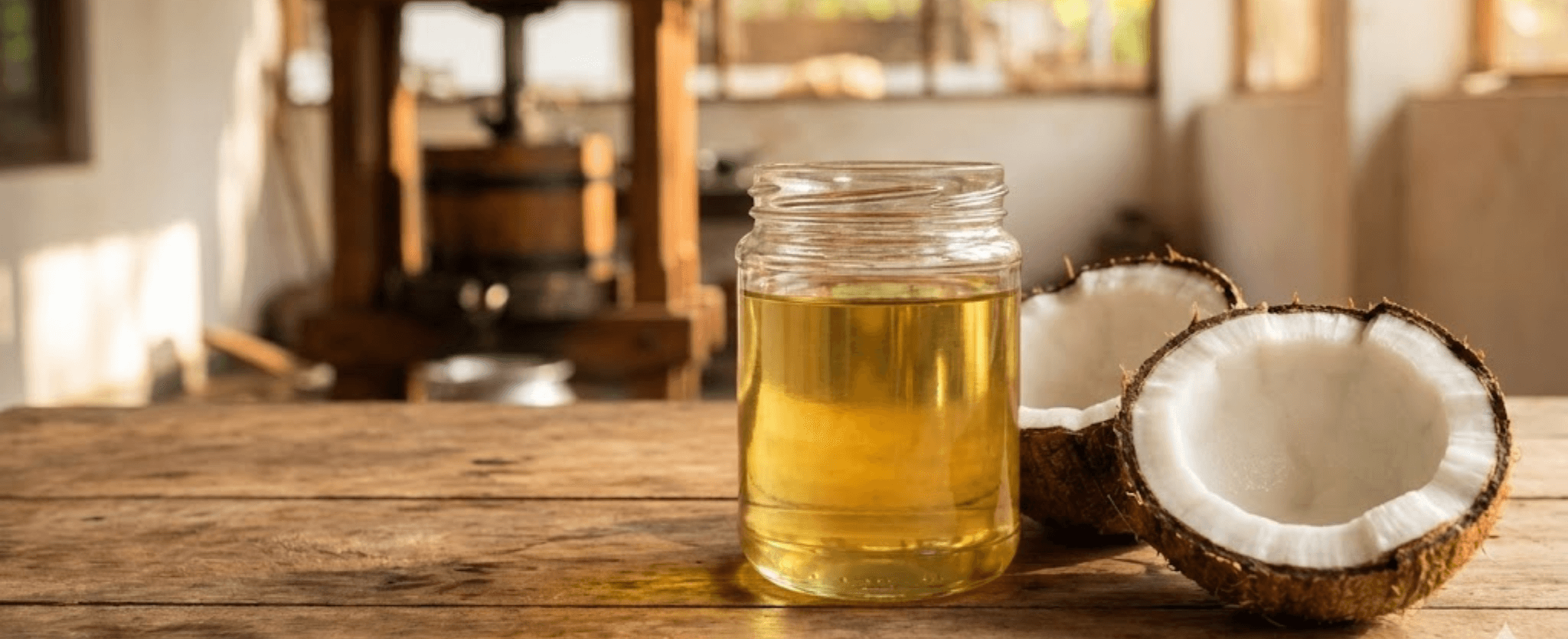
If you grew up in a South Indian household, you probably have vivid memories of coconut oil. The distinct aroma wafting through the kitchen. Your grandmother’s insistence on using it for everything from cooking to hair care. The reassuring sizzle when mustard seeds hit hot coconut oil in the kadai.
Then somewhere along the way, many of us abandoned coconut oil. We were told it was “unhealthy” because of saturated fat. We switched to refined oils with fancy labels promising heart health. We modernized our kitchens and left tradition behind.
But here’s what’s fascinating: while we were busy avoiding coconut oil, researchers were discovering that our grandmothers were right all along. Not only is coconut oil perfectly healthy for cooking, but the traditional way of making it (wood-pressed, also called cold-pressed) makes it even better.
Let’s dive deep into why coconut oil deserves a place back in your kitchen, and why the method of extraction matters more than you might think.
The Coconut Oil Controversy: Sorting Fact from Fiction
First, let’s address the elephant in the room. You’ve probably heard that coconut oil is “bad for you” because it’s high in saturated fat. This oversimplified message dominated nutrition advice for decades.
Here’s what actually happened:
In the 1960s-1980s, research suggested that saturated fat raised cholesterol levels and increased heart disease risk. Coconut oil, being about 90% saturated fat, got lumped into the “avoid completely” category. But this research was looking at highly processed, hydrogenated coconut oil, not the natural, virgin coconut oil our ancestors used.
Recent research has revealed a more nuanced picture. Not all saturated fats are the same. The type of saturated fat in coconut oil (mostly medium-chain triglycerides or MCTs) behaves very differently in the body compared to the long-chain saturated fats found in processed foods.
Multiple studies now show that virgin coconut oil, especially cold-pressed varieties, can actually be part of a healthy diet when used appropriately. The key is quality and moderation.
What Makes Wood-Pressed Coconut Oil Different?
Before we talk about benefits, let’s understand what wood-pressed (cold-pressed) actually means and why it matters.
The Traditional Wood-Pressing Method
Wood-pressed coconut oil is made using traditional wooden presses called “chekku” or “ghani.” Here’s how the process works:
- Fresh coconuts are selected (not copra/dried coconut)
- Coconut meat is extracted and sometimes sun-dried briefly
- Wooden press slowly crushes the coconut meat
- Oil extraction happens through pressure alone, no heat or chemicals
- Natural filtering removes solid particles
- Bottling happens immediately to preserve freshness
The entire process happens at temperatures below 50°C (122°F), which is why it’s called “cold-pressed.” The wooden press rotates slowly, generating minimal friction and heat.
Modern Extraction Methods (What to Avoid)
Compare this to how most commercial coconut oil is made:
Refined Coconut Oil (RBD – Refined, Bleached, Deodorized):
- Uses dried copra (often with mold and contamination)
- High-heat extraction (over 200°C)
- Chemical solvents to extract maximum oil
- Bleaching to remove color
- Deodorizing to remove smell
- Sometimes hydrogenation
Expeller-Pressed (Better but not ideal):
- Uses mechanical pressure
- Generates significant heat (up to 90-120°C)
- No chemicals, but heat damages nutrients
- Often needs refining to be palatable
Why Wood-Pressed Wins: The Comparison
| Feature | Wood-Pressed (Cold) | Expeller-Pressed | Refined (RBD) |
| Processing Temperature | Below 50°C | 90-120°C | Above 200°C |
| Aroma | Natural coconut scent | Mild to moderate | None (deodorized) |
| Flavor | Rich coconut flavor | Mild coconut | Neutral/bland |
| Nutrients Preserved | Maximum | Moderate | Minimal |
| Antioxidants | High | Medium | Very low |
| Chemical Processing | None | None | Yes |
| Smoke Point | 177°C (350°F) | 177°C | 232°C (450°F) |
| Price | Premium | Medium | Low |
| Shelf Life | 18-24 months | 12-18 months | 24+ months |
The Trade-off: Refined oil has a higher smoke point and longer shelf life, but loses almost all the beneficial compounds that make coconut oil special. You’re essentially getting flavorless fat with minimal nutritional value.
Top 8 Benefits of Cooking with Wood-Pressed Coconut Oil
Now let’s explore why wood-pressed coconut oil deserves a spot in your kitchen.
1. Heat Stability and Safety
One of coconut oil’s greatest strengths for cooking is its stability at high temperatures. The saturated fat structure means it doesn’t oxidize easily when heated.
When cooking oils oxidize, they form harmful free radicals and compounds that can damage your health. Polyunsaturated oils (like sunflower or corn oil) oxidize quickly when heated. Coconut oil remains stable.
Practical benefit: You can sauté, stir-fry, and shallow fry with wood-pressed coconut oil without worrying about creating harmful compounds. The smoke point of 177°C (350°F) is perfect for most home cooking.
2. Contains Beneficial MCTs (Medium-Chain Triglycerides)
About 65% of coconut oil is made up of medium-chain triglycerides, particularly lauric acid (making up about 50% of the total).
MCTs are metabolized differently than other fats. They go straight to the liver where they’re used for immediate energy or converted to ketones. They’re less likely to be stored as body fat compared to long-chain fatty acids.
Practical benefit: Some people report feeling more energized and satisfied when cooking with coconut oil. It’s particularly popular with people following ketogenic diets.
3. Natural Antimicrobial Properties
Lauric acid, the primary MCT in coconut oil, has powerful antimicrobial properties. When digested, it forms monolaurin, which can help fight harmful bacteria, viruses, and fungi.
Studies show that lauric acid can help fight pathogens like Staphylococcus aureus (staph infections) and Candida albicans (yeast infections).
Practical benefit: Food cooked in coconut oil may stay fresh slightly longer. The antimicrobial properties may also support gut health and immunity.
4. Rich in Antioxidants (Only in Cold-Pressed)
Wood-pressed coconut oil retains natural antioxidants like vitamin E and polyphenols that are destroyed in refined oils.
These antioxidants help protect your cells from damage, support healthy aging, and may reduce inflammation in the body.
Practical benefit: You’re not just adding fat to your food. You’re adding protective compounds that support overall health.
5. Enhances Flavor of Traditional Dishes
Let’s not ignore the obvious: coconut oil tastes amazing in the right dishes.
South Indian cooking was developed with coconut oil. The flavors were designed to work together. When you make sambar, rasam, avial, or thoran with coconut oil, it tastes authentic in a way that no other oil can replicate.
Practical benefit: Your traditional recipes will taste the way they’re supposed to taste. That nostalgic flavor you remember from childhood? That’s coconut oil.
6. Supports Nutrient Absorption
Many vitamins are fat-soluble, meaning they need fat to be absorbed properly. Vitamins A, D, E, and K all require dietary fat for absorption.
The MCTs in coconut oil may actually enhance the absorption of these nutrients compared to some other oils.
Practical benefit: When you sauté vegetables in coconut oil, you’re helping your body absorb more of their nutrients.
7. May Support Heart Health (When Used Properly)
Recent research suggests that virgin coconut oil may actually support heart health by:
- Increasing HDL (good) cholesterol
- Improving the HDL to LDL cholesterol ratio
- Providing antioxidants that protect against oxidative damage
A 2018 study found that virgin coconut oil improved lipid profiles in healthy adults when used in moderation as part of a balanced diet.
Important note: This doesn’t mean unlimited amounts. Like all fats, moderation is key. But it does mean coconut oil isn’t the villain it was once made out to be.
8. Long Shelf Life Without Refrigeration
Thanks to its saturated fat content and natural antioxidants, wood-pressed coconut oil stays fresh for 18-24 months without refrigeration.
It’s naturally resistant to rancidity, especially compared to oils high in polyunsaturated fats that can go rancid within months.
Practical benefit: You can buy larger quantities without worrying about waste. It’s perfect for the Indian climate where refrigerator space is precious.
How to Use Coconut Oil in Your Kitchen
Coconut oil isn’t suitable for every dish. Here’s a practical guide:
Perfect For:
South Indian Cooking:
- Sambar and rasam tempering
- Avial and thoran
- Kerala fish curry
- Coconut rice
- Payasam and other sweets
Breakfast Dishes:
- Dosa (on the tawa)
- Idli (brushing before steaming)
- Appam
- Puttu
Stir-Frying and Sautéing:
- Vegetable stir-fries
- Cabbage poriyal
- Beans thoran
- Mixed vegetable curry
Baking:
- Can replace butter or other oils in many recipes
- Works beautifully in cookies and cakes
- Great for vegan baking
Not Ideal For:
High-Heat Deep Frying:
- The smoke point (177°C) is too low for deep frying
- Use groundnut or sesame oil for deep frying instead
Delicate Flavored Dishes:
- If you want the coconut flavor, great
- If you don’t, choose a more neutral oil
- Mediterranean or East Asian dishes often don’t pair well
Salad Dressings (Generally):
- Coconut oil solidifies at room temperature
- Not ideal for cold applications unless that’s the texture you want
Pro Cooking Tips
Temperature Matters:
- Use medium heat for most cooking
- Watch for the smoke point (you’ll see wisps of smoke)
- Lower heat preserves more nutrients
Measure Before Melting:
- Coconut oil is solid at room temperature
- Measure as a solid (like butter) before heating
- 1 tablespoon solid = 1 tablespoon melted
Storage Tips:
- Store in a cool, dark place
- No need to refrigerate
- Keeps for 18-24 months unopened
- Use within 6-8 months after opening for best quality
Starting Amount:
- If you’re new to cooking with coconut oil, start with small amounts
- Your palate needs time to adjust
- Gradually increase as you get used to the flavor
How to Choose Quality Wood-Pressed Coconut Oil
Not all “cold-pressed” or “virgin” coconut oil is created equal. Here’s what to look for:
Quality Indicators
Extraction Method:
- Look for “wood-pressed” or “cold-pressed” on the label
- Should specify “no heat treatment”
- Avoid anything labeled “refined,” “RBD,” or “deodorized”
Color:
- Should be clear to slightly yellowish
- Not pure white (suggests over-processing)
- Not dark (suggests old or contaminated copra)
Aroma:
- Fresh coconut smell when you open the container
- Not too strong or unpleasant
- No rancid or musty odor
Texture:
- Solid and white at room temperature (below 24°C)
- Melts quickly in your hands
- Smooth texture, not grainy
Certifications:
- FSSAI approved
- Organic certification (ensures no pesticides)
- Traditional cold-pressed verification
Packaging:
- Glass bottles are ideal
- Food-grade plastic acceptable
- Avoid clear containers (light damages oil)
- Check manufacturing and expiry dates
Red Flags to Avoid
- Very cheap prices (quality extraction costs more)
- No mention of cold-pressed or extraction method
- Labeled as “cooking oil” without specifics
- Claims of being “cholesterol-free” (all plant oils are cholesterol-free, this is marketing)
- Overly processed appearance (too clear, no coconut aroma)
Common Myths About Coconut Oil Debunked
Let’s clear up some common misconceptions:
Myth 1: “All saturated fat is bad” Reality: Saturated fats are a diverse group. The MCTs in coconut oil behave differently than saturated fats in processed foods.
Myth 2: “Coconut oil will clog your arteries” Reality: Recent research shows virgin coconut oil doesn’t increase heart disease risk in healthy individuals when used in moderation.
Myth 3: “Refined oil is cleaner and safer” Reality: Refining removes beneficial compounds and may introduce chemical residues. Traditional cold-pressed oil is actually purer.
Myth 4: “Higher smoke point always means better” Reality: Smoke point matters, but so do nutrients and stability. Coconut oil’s smoke point is perfect for most cooking methods.
Myth 5: “Coconut oil makes you lose weight magically” Reality: While MCTs may slightly boost metabolism, coconut oil is still 120 calories per tablespoon. It’s not a weight loss miracle, just a healthier fat choice.
The Environmental and Social Angle
Choosing traditional wood-pressed coconut oil supports:
Small-Scale Farmers: Traditional pressing methods are typically done by small producers, not industrial factories.
Sustainable Practices: Wooden presses use minimal electricity. The process is environmentally gentle.
Traditional Knowledge: Supporting wood-pressed oil helps preserve ancient extraction methods that might otherwise disappear.
Local Economies: Most wood-pressed coconut oil comes from small producers in Kerala, Tamil Nadu, and Karnataka, supporting rural livelihoods.
Making the Switch: What to Expect
If you’re transitioning from refined oil to wood-pressed coconut oil, here’s what to expect:
Week 1:
- The coconut flavor might seem strong
- Start with dishes where coconut naturally fits
- Use it for tempering spices first
Week 2-3:
- Your taste buds adjust
- You’ll start appreciating the authentic flavor
- Experiment with different South Indian recipes
Week 4 onwards:
- Coconut oil becomes your preferred choice for appropriate dishes
- You notice the difference in taste and how you feel
- Your kitchen smells more like your grandmother’s!
Adjustment Tips:
- Don’t replace all your oil at once
- Mix 50-50 with your current oil initially
- Use for specific recipes that traditionally call for it
- Let your family adjust gradually
Final Thoughts: Is Wood-Pressed Coconut Oil Worth It?
The short answer: absolutely yes, if you cook South Indian food, value traditional methods, and want to reconnect with ancestral wisdom.
Wood-pressed coconut oil isn’t cheap. It costs 2-3 times more than refined oil. But you’re paying for:
- Traditional extraction that preserves nutrients
- Support for small-scale producers
- Pure, chemical-free oil
- Authentic flavor that refined oil cannot match
- Peace of mind about what you’re feeding your family
Think of it this way: you probably spend extra money on organic vegetables, heritage rice, and quality spices. Your cooking oil deserves the same attention. It’s the foundation of flavor and nutrition in every dish you make.
Our grandmothers didn’t need scientific studies to tell them coconut oil was good. They had generations of evidence in the form of healthy, energetic families. Now science is catching up to what tradition knew all along.
The real question isn’t whether wood-pressed coconut oil is worth it. The question is: what’s the cost of continuing to cook with refined, over-processed oils that offer nothing but empty calories?
Ready to experience authentic, wood-pressed coconut oil? Our traditional cold-pressed coconut oil is made using century-old wooden presses, with zero heat or chemical treatment. Sourced directly from Kerala’s coconut groves and pressed to order for maximum freshness.
Bring the authentic taste of South Indian cooking back to your kitchen. Your grandmother would approve.
Quick FAQ
Q: Can I use coconut oil for North Indian cooking? A: You can, but the coconut flavor might not suit all North Indian dishes. It works well for some curries but may not be ideal for tandoori or Mughlai dishes.
Q: Why is my coconut oil solid? A: This is normal! Coconut oil solidifies below 24°C (76°F). Simply warm the container in hot water or scoop what you need and it will melt in the pan.
Q: How much coconut oil should I use daily? A: 1-2 tablespoons per day is a reasonable amount for most people as part of a balanced diet. It’s still a calorie-dense fat, so moderation matters.
Q: Can diabetics use coconut oil? A: Yes, coconut oil doesn’t impact blood sugar directly. However, diabetics should consult their healthcare provider about total fat intake.
Q: Does coconut oil need to be organic? A: Organic certification ensures no pesticides were used on the coconuts. While beneficial, non-organic cold-pressed oil is still far superior to refined oil.
Medical Disclaimer: This article is for informational purposes only. While coconut oil can be part of a healthy diet, individual needs vary. Consult your healthcare provider or nutritionist for personalized dietary advice, especially if you have existing health conditions or specific dietary restrictions.